
依规治党

Search documents
更加科学有效地把权力关进制度笼子——论学习贯彻习近平总书记二十届中央纪委五次全会重要讲话精神
Xin Hua She· 2026-01-14 02:19
Group 1 - The core viewpoint emphasizes the importance of institutionalizing power to ensure strict governance within the Communist Party of China, as highlighted by Xi Jinping during the fifth plenary session of the 20th Central Commission for Discipline Inspection [1] - The construction of regulations and systems has been prioritized since the 18th National Congress, resulting in unprecedented numbers of regulations being formulated and revised, showcasing significant achievements [1] - The necessity of enhancing the effectiveness of institutional execution and ensuring that regulations are strictly adhered to is underscored, with a focus on preventing loopholes and ensuring equality before the law [1] Group 2 - The implementation of the Central Eight Regulations has effectively addressed long-standing issues of corruption and misconduct, leading to a significant transformation in party and government conduct [2] - The revised "Regulations on Strict Economy and Opposition to Waste in Party and Government Agencies" aims to combat extravagance and promote a culture of frugality within government institutions [3] - The establishment of a comprehensive regulatory framework, including various guidelines aimed at reducing burdens on grassroots officials and enhancing political work, strengthens the governance capabilities of the Communist Party [3] Group 3 - The emphasis on the execution of regulations is critical, with leaders expected to model compliance and promote transparency in party and government affairs [4] - The role of leadership, particularly that of the "first responsible person," is crucial in ensuring effective implementation of regulations and fostering a culture of accountability among party members [4] - The commitment to institutional governance and adherence to regulations is seen as essential for achieving the goals of modernization in China [4]
织密扎牢管党治党制度笼子
Zhong Yang Ji Wei Guo Jia Jian Wei Wang Zhan· 2026-01-13 23:46
Core Points - The article emphasizes the importance of institutional governance within the Communist Party of China, highlighting the need to put power into a "system cage" as a key task for strict governance of the Party in the new era [3][4][5] - It discusses the continuous innovation and improvement of the Party's internal regulations and systems under the guidance of Xi Jinping's thoughts, aiming to enhance the Party's leadership and organizational structure [4][5][6] - The article outlines various new regulations and amendments aimed at strengthening the Party's internal governance, including the introduction of the first comprehensive regulation on ideological and political work [6][7][8] Group 1: Institutional Governance - The article states that the Party's self-revolution focuses on institutional governance, which is a distinctive feature of the Party's management and governance [3][4] - It mentions the implementation of the Central Eight Regulations as a starting point for improving Party conduct and governance [3][4] - The article highlights the necessity of integrating legal governance and regulatory governance to create a complementary system [5][6] Group 2: Regulatory Innovations - The article details the issuance of new regulations, such as the "Regulations on the Responsibility System for Ecological Environment Protection" to enhance ecological governance [5][6] - It notes the revision of the "Regulations on Saving and Opposing Waste in Party and Government Agencies" to tighten financial management and resource usage [5][6] - The introduction of the "Regulations on the Discussion and Decision-Making Procedures for Party Member Disciplinary Actions" aims to standardize disciplinary processes within the Party [6][7] Group 3: Strengthening Execution and Supervision - The article emphasizes the need for strict enforcement of regulations and the importance of supervision in ensuring compliance with Party rules [11][12] - It discusses the role of disciplinary inspection agencies in monitoring the implementation of regulations and addressing violations [11][12] - The article highlights the importance of education and training for Party members to enhance their understanding and adherence to regulations [15][19]

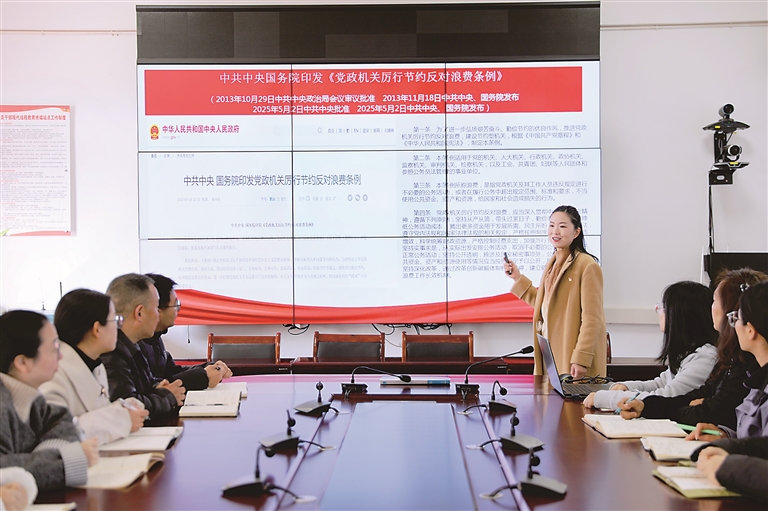
更加科学有效地把权力关进制度笼子
Xin Lang Cai Jing· 2026-01-13 21:58
Group 1 - The core viewpoint emphasizes the importance of institutionalizing power to ensure strict governance within the Communist Party of China, as highlighted by Xi Jinping during the fifth plenary session of the 20th Central Commission for Discipline Inspection [1] - The construction of regulations and systems has been prioritized since the 18th National Congress, leading to unprecedented achievements in institutional development [1] - The need for effective enforcement of regulations is stressed, with a focus on making systems both comprehensive and practical, while ensuring equal adherence to rules without exceptions [1][4] Group 2 - The implementation of the Central Eight Regulations has effectively addressed issues of corruption and misconduct, marking a significant shift in party discipline and governance [2] - New regulations aimed at curbing extravagance and waste in party and government agencies are set to be enforced by 2025, promoting a culture of frugality [3] - The importance of leadership accountability in executing regulations is underscored, with a call for leaders to set an example and enhance transparency in governance [4]
人民日报评论员:更加科学有效地把权力关进制度笼子
Xin Hua She· 2026-01-13 16:41
Core Viewpoint - The article emphasizes the importance of institutionalizing power to ensure effective governance and discipline within the Communist Party of China, as highlighted by Xi Jinping's speech at the Fifth Plenary Session of the 20th Central Commission for Discipline Inspection [1]. Group 1: Institutional Framework - The establishment and revision of regulations have been unprecedented since the 18th National Congress, showcasing the Party's commitment to strengthening institutional frameworks [1]. - The focus is on making regulations more specific and actionable to enhance their effectiveness and ensure strict enforcement [1]. Group 2: Addressing Corruption and Misconduct - The implementation of the Central Eight Regulations has successfully addressed long-standing issues of corruption and misconduct, demonstrating the effectiveness of strict regulations [3]. - New regulations, such as the revised "Regulations on Strict Economy and Opposition to Waste in Party and Government Organs," aim to combat extravagance and promote a culture of frugality [4]. Group 3: Leadership and Execution - The success of institutional enforcement relies heavily on the commitment of leadership, particularly the "first person in charge," to model compliance and transparency [5]. - There is a call for increased awareness among party members regarding the importance of regulations as both a constraint and a protective measure [5]. Group 4: Broader Implications - The article suggests that other countries can learn from the Chinese Communist Party's experience in enhancing political discipline and governance through improved institutional frameworks [4]. - The commitment to institutional governance is seen as essential for achieving the goals of Chinese-style modernization [6].
人民日报评论员:更加科学有效地把权力关进制度笼子——论学习贯彻习近平总书记二十届中央纪委五次全会重要讲话精神
Xin Hua She· 2026-01-13 16:38
Group 1 - The core viewpoint emphasizes the importance of institutionalizing power to ensure effective governance and discipline within the Communist Party of China, as highlighted by Xi Jinping's speech at the Fifth Plenary Session of the 20th Central Commission for Discipline Inspection [1][6] - The article discusses the need for a more scientific and effective approach to institutionalize power, focusing on improving the execution of regulations and ensuring they are not overly complex while being effective [1][5] - It stresses the significance of equal enforcement of regulations, with no exceptions or privileges, to ensure that the rules are genuinely adhered to and serve as a deterrent against misconduct [2][4] Group 2 - The implementation of the Central Eight Regulations post-18th National Congress is noted as a significant step in addressing corruption and improving party conduct, leading to a transformation in public perception and party integrity [3][4] - The revised regulations aimed at reducing waste in party and government agencies are set to further tighten controls and promote a culture of frugality, reflecting a shift in mindset among officials [4][5] - The article highlights the necessity for leaders, especially those in key positions, to lead by example in executing regulations, thereby enhancing transparency and accountability within the party [5][6]
坚持依法治国和依规治党有机统一
Ren Min Ri Bao· 2026-01-12 01:35
Group 1 - The core viewpoint emphasizes the importance of integrating the rule of law and party regulations to ensure the long-term governance of the party and the stability of the state [2][3][4] - The "Twelve Adherences" outlined in the "Xi Jinping Thought on the Rule of Law Learning Outline (2025 Edition)" highlight the organic unity of governing the country by law and governing the party by regulations as a significant milestone [2][3] - The mutual complementarity of the rule of law and party regulations is essential for achieving the goals of modernizing the national governance system and governance capacity [3][4][5] Group 2 - The rule of law serves as a foundational role in establishing regulations for the state, defining boundaries for power, and ensuring good governance [7][8] - The relationship between the party and the law reflects the political and legal relationship, emphasizing that the party must operate within the framework of the constitution and laws [8][9] - The effective implementation of the rule of law is crucial for the party's governance and the realization of the people's sovereignty [8][10] Group 3 - The integration of disciplinary regulations and legal enforcement is necessary to enhance governance effectiveness and ensure that both the party and the state operate within established legal frameworks [16][19] - The reform of the national supervision system aims to create a robust oversight mechanism that integrates party supervision with legal enforcement, addressing past issues of fragmented oversight [18][19] - The continuous improvement of the party's internal regulatory system is vital for maintaining discipline and ensuring compliance with both party and state laws [15][19]
坚持依法治国和依规治党有机统一(深入学习贯彻习近平新时代中国特色社会主义思想·习近平法治思想学习贯彻众论)
Ren Min Wang· 2026-01-12 01:24
Group 1 - The core viewpoint emphasizes the importance of integrating the rule of law and party regulations to ensure the long-term governance of the party and the stability of the state [2][3][4] - The publication of the "Xi Jinping Thought on the Rule of Law Learning Outline (2025 Edition)" systematically explains the significance and core essence of Xi Jinping's legal thought, highlighting the organic unity of governing the country by law and governing the party by regulations as a milestone [2][3] - The mutual complementarity of the rule of law and party regulations is rooted in their shared essence and aligned goals, ultimately serving the objective of building a modern socialist country under the rule of law [3][4][5] Group 2 - The integration of the rule of law and party regulations is essential for modernizing the national governance system and governance capabilities, ensuring that both frameworks work together to enhance governance effectiveness [4][5][6] - The rule of law serves as a foundational role in establishing regulations for the state and society, providing a legal framework that supports the development of party regulations [7][8][9] - The relationship between the party and the law reflects the broader political and legal relationship, emphasizing that the party must operate within the constitutional and legal framework to maintain its leadership role [8][9][10] Group 3 - The effective implementation of party regulations relies on the rule of law, which provides a necessary environment and foundation for the enforcement of party discipline [10][11][12] - The integration of disciplinary measures and legal enforcement is crucial for enhancing governance effectiveness, ensuring that both frameworks are aligned and mutually reinforcing [16][18][19] - The reform of the national supervision system aims to create a robust oversight mechanism that integrates party supervision with legal enforcement, addressing past issues of fragmented oversight [18][19][20]
省纪委监委理论学习中心组深入学习习近平法治思想
Shan Xi Ri Bao· 2025-12-20 00:05
Core Viewpoint - The meeting emphasizes the importance of deeply understanding and implementing Xi Jinping's rule of law thought, focusing on the "twelve persistences" to enhance the standardization, legalization, and normalization of disciplinary inspection and supervision work [1][2] Group 1 - The provincial disciplinary inspection and supervision agencies are urged to apply legal thinking and methods to strengthen discipline and anti-corruption efforts, ensuring high-quality supervision and law enforcement to support the construction of a rule-of-law society in Shaanxi [1] - The meeting highlights the need to focus on the decisions made by Xi Jinping and the Central Committee regarding the improvement of the legal system, promoting lawful administration, and accelerating the establishment of a rule-of-law society [2] - There is a call to enhance legal awareness, thinking, and literacy among officials, ensuring that work is conducted according to legal authority, rules, and procedures throughout all aspects of supervision and accountability [2] Group 2 - The meeting stresses the organic unity of governing the country by law and governing the Party by regulations, aiming to improve the mechanisms for integrating discipline and law [2] - It emphasizes the importance of addressing corruption and misconduct that affects the public, focusing on resolving urgent issues faced by the people and protecting their legal rights [2] - The initiative to advance the standardization, legalization, and normalization of disciplinary inspection work is highlighted, with an aim for inspectors to become models of respecting and abiding by laws and regulations [2]
理论视野丨把握好坚持依法治国和依规治党有机统一基本要求
Zhong Yang Ji Wei Guo Jia Jian Wei Wang Zhan· 2025-11-27 00:24
Core Viewpoint - Xi Jinping's rule of law thought is a significant innovation in the theory of socialist rule of law with Chinese characteristics, serving as the fundamental guideline for comprehensively governing the country according to the law in the new era [3][4][5] Group 1: Importance of Rule of Law - The rule of law is essential for the modernization of China, providing a foundation for stability and long-term benefits [5] - Comprehensive governance according to the law is a fundamental requirement and important guarantee of socialism with Chinese characteristics, representing a profound revolution in national governance [5][7] - The historical achievements of comprehensive governance according to the law highlight the practical power of Xi Jinping's rule of law thought [4][5] Group 2: Integration of Law and Party Regulations - The concept of "integrating governance according to the law and party regulations" is one of the twelve key principles of Xi Jinping's rule of law thought, emphasizing the political guarantee role of party regulations in national development [6][9] - The integration of governance according to the law and party regulations is crucial for the comprehensive advancement of both, relying on the connection between national laws and party regulations [7][9] - Achieving this integration requires a coordinated approach to improve both the legal system and the party's internal regulations, ensuring they complement and support each other [8][9] Group 3: Legislative and Regulatory Framework - There is a need to enhance the legal framework to provide comprehensive legal norms for governance according to the law, focusing on key areas and emerging fields [8] - The party's internal regulatory system has been significantly improved, aiming to establish a robust framework that supports party governance [8] - Efforts are being made to ensure the coordination and alignment of party regulations with national laws, fostering a mutually reinforcing relationship [9]

业务聚焦丨有效发挥法规制度激励约束作用
Zhong Yang Ji Wei Guo Jia Jian Wei Wang Zhan· 2025-10-15 00:34
Group 1 - The core viewpoint emphasizes the importance of institutional governance and rule-based management in enhancing the effectiveness of disciplinary inspection and supervision work in Hanzhong City, Shaanxi Province [1] - The focus is on three main areas: learning, establishing, and executing regulations to improve the standardization and legalization of disciplinary inspection and supervision [1][2] Group 2 - The initiative includes regular learning and training sessions to ensure that all personnel are well-versed in party regulations and laws, fostering a culture of compliance [1][2] - The establishment of comprehensive systems for supervision and accountability is highlighted, including the development of guidelines for managing problem clues and handling disciplinary cases [2] - The implementation of strict execution of regulations is emphasized, ensuring that all actions are in accordance with established laws and procedures, with a focus on dynamic updates to regulatory documents [3]