
共建共治共享

Search documents
以高效能治理助推城市现代化转型
Xin Lang Cai Jing· 2026-01-20 17:50
Core Viewpoint - The article emphasizes the importance of efficient urban governance as a key driver for high-quality urban development, particularly in Chengdu, which aims to become a model for modern urban transformation through effective governance practices [1]. Group 1: Governance Framework - Efficient governance relies on a clear, collaborative, and smoothly operating modern work system, breaking down departmental barriers and enhancing top-level coordination [2]. - Chengdu is establishing a "big city management" framework that coordinates various departments to address cross-domain governance challenges through regular "comprehensive consultations" and "joint strategies" [2]. Group 2: Grassroots Governance - The focus is on decentralizing governance to enhance responsiveness and resource allocation at the grassroots level, integrating various local forces into a rapid response mechanism [3]. - The "micro-grid" governance system allows for real-time problem detection and resolution at the community level, significantly improving the agility and precision of grassroots governance [3]. Group 3: Smart Governance - Digital technology is crucial for transforming urban governance, with Chengdu implementing a "smart city" initiative that integrates IoT, big data, and AI into urban management [4]. - The city's "urban brain" connects vast amounts of real-time data across various sectors, enabling proactive governance and efficient resource allocation [5]. Group 4: Community Engagement - Chengdu promotes community participation through various platforms, enhancing residents' sense of ownership and responsibility in local governance [8]. - Initiatives like resident councils and community planning have empowered citizens to actively participate in decision-making processes, fostering a collaborative governance environment [8]. Group 5: People-Centric Governance - The ultimate goal of efficient governance is to enhance the quality of life for citizens, with Chengdu focusing on citizen satisfaction as a key measure of governance success [9]. - The city actively collects public feedback to inform governance decisions and ensures transparency in major projects, reinforcing a citizen-centered approach [10]. Group 6: Future Innovations - Chengdu's governance model aims to deepen data integration and business collaboration, breaking down data silos and enhancing predictive capabilities [12]. - The city seeks to establish a more mature multi-party governance system, encouraging community organizations and market entities to participate actively in local governance [13].
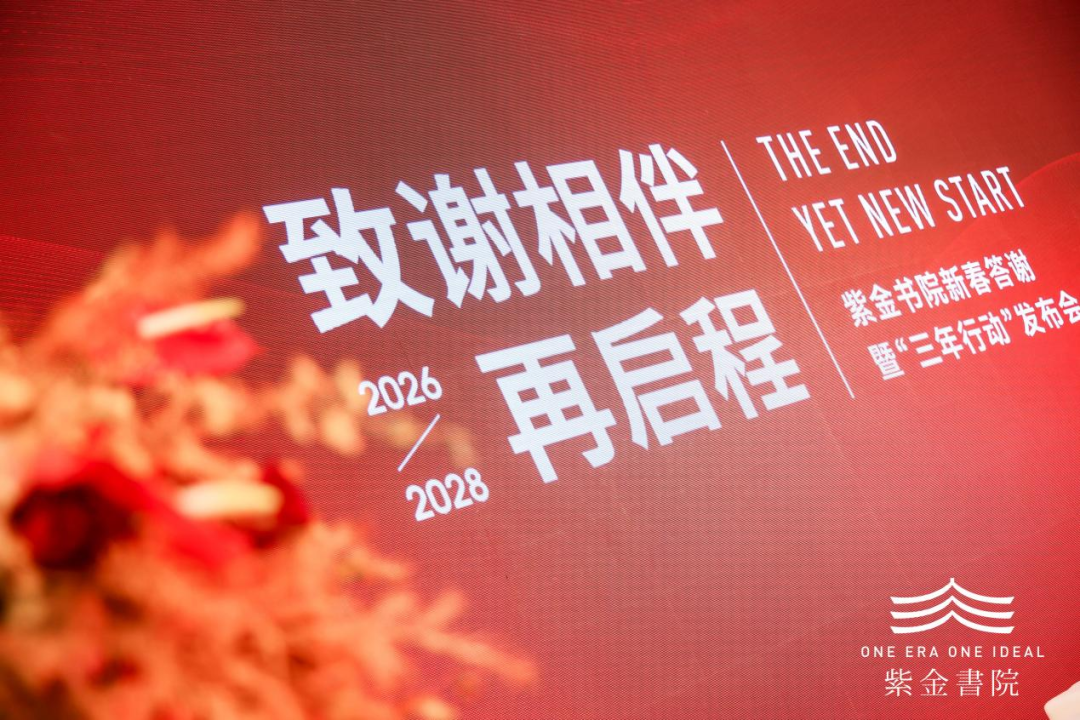
紫金书院发布“三年陪伴行动”:投入百万,“好房子”到“好社区”的治理升维
Xin Lang Cai Jing· 2026-01-20 13:41
Core Insights - The event held by Zijin Academy focused on community development post-delivery and introduced a three-year action plan aimed at transforming homeowners from "residents" to "co-builders" [1][22] Group 1: Three-Year Action Plan - The company announced a commitment of 1 million yuan over three years to enhance public spaces, maintain green areas, and optimize community governance mechanisms [1][22] - The "54321 plan" was introduced, which includes a budget of 400,000 yuan in the first year, 300,000 yuan in the second year, and 200,000 yuan in the third year to support a green space maintenance volunteer alliance [5][26] - An additional 100,000 yuan will be allocated for a reward program to encourage residents to report maintenance issues in public areas [7][28] Group 2: Quality Improvement Initiatives - The company has completed 42 quality upgrades since the project's inception in 2022, covering various aspects such as structure, waterproofing, materials, and appliances [3][24] - Eight major quality upgrade plans were announced based on homeowner votes, with the top three priorities being enhancing the homecoming experience, improving the quality of landscape walls, and optimizing children's activity areas [3][24] Group 3: Community Engagement and Governance - The company emphasized the importance of community participation in maintaining and improving the living environment, transitioning from a passive to an active approach in identifying issues [7][28] - A transparent management system for the green space maintenance fund was established, with a total fund size exceeding 3.7 million yuan, including donations and investment returns [11][32] Group 4: Industry Context and Future Outlook - The event symbolized a shift in the real estate industry towards creating sustainable community value in response to market challenges, moving from a focus on short-term gains to long-term community engagement [18][39] - The delivery completion rate of the project reached 76% by the time of the event, indicating strong market recognition of the product's quality [19][40]

巴彦淖尔市让治理“暖流”浸润城乡
Xin Lang Cai Jing· 2026-01-19 21:15
Core Insights - The article highlights the effective grassroots governance network in Bayannur City, which has significantly improved community services and residents' satisfaction through a "triangular" micro-governance mechanism involving party groups, grid workers, and building leaders [1][2]. Group 1: Governance Mechanism - The "triangular" micro-governance mechanism has been established to enhance community service delivery, covering 802 villages and communities [1]. - The mechanism has resolved 25 neighborhood disputes and addressed 85 community service issues, such as gas installations and road repairs [2]. - The governance model has transformed passive problem reception into proactive risk detection, effectively resolving conflicts at their inception [2]. Group 2: Conflict Resolution - The Bayannur City has implemented a comprehensive social security governance center to address complex disputes, integrating administrative, judicial, and social mediation resources [3][4]. - From January 2024 to December 2025, the center handled 11,441 cases, resolving 8,522 and recovering approximately 478 million yuan for the involved parties [3]. - A notable case involved resolving a group dispute over mortgage refunds, which had persisted for up to three years, resulting in the return of all deposits [3]. Group 3: Community Engagement and Innovation - The introduction of a points-based incentive system in villages encourages community participation in activities like cleaning and conflict resolution, with over 608 exchanges recorded [5]. - Digital technology has been integrated into grassroots governance, exemplified by a digital management platform established with an investment of 650,000 yuan [5][6]. - The installation of sensors in homes of elderly residents has enhanced safety and health monitoring, demonstrating a commitment to transparency and community welfare [6]. Group 4: Performance Metrics - Bayannur City has established 6,332 basic grids, formed 3,568 grid party groups, and deployed 6,553 dedicated grid workers, achieving a conflict resolution success rate of 97.4% [6].
北京紫金书院发布“三年陪伴行动”,未来三年投入百万
3 6 Ke· 2026-01-19 03:41
Core Insights - Beijing New Field Real Estate Development Co., Ltd. has launched a "Three-Year Accompaniment Action," committing to invest 1 million yuan over the next three years to enhance public spaces, green space maintenance, and community governance mechanisms, aiming to transform homeowners from "residents" to "co-builders" [1] Group 1: Quality Upgrade Plans - The company announced eight quality upgrade plans based on homeowner votes, prioritizing improvements in homecoming experience, landscape wall quality, and children's activity area optimization [2] - Additional ongoing improvements include enhancing green hedges around walls, public area safety, regular renovation of brick pathways, and creating pet-friendly facilities [2] Group 2: Financial Commitment and Community Engagement - The "54321 Plan" will allocate 1 million yuan over three years, with 400,000 yuan in the first year for green space maintenance volunteer alliances, and 100,000 yuan for public area improvement suggestions [3] - The "Green Space Maintenance Supplement Fund" has reached 3,703,968 yuan, with 3,467,135 yuan from donations and 236,833 yuan in investment returns, ensuring transparency and community oversight [4] Group 3: Sustainable Community Development - The event symbolizes a shift in the real estate industry towards creating sustainable value, focusing on long-term community engagement rather than short-term profit [5] - The commitment to "accompanying responsibility" reflects a deeper understanding of homeowner needs, emphasizing the importance of a long-term partnership in enhancing asset value [6] Group 4: Project Performance and Market Position - As of the event date, the delivery completion rate for the project has reached 76%, indicating efficient operations and strong market recognition of product quality [7]
闻雪而动,让城市更加温暖从容
Xin Lang Cai Jing· 2026-01-18 19:30
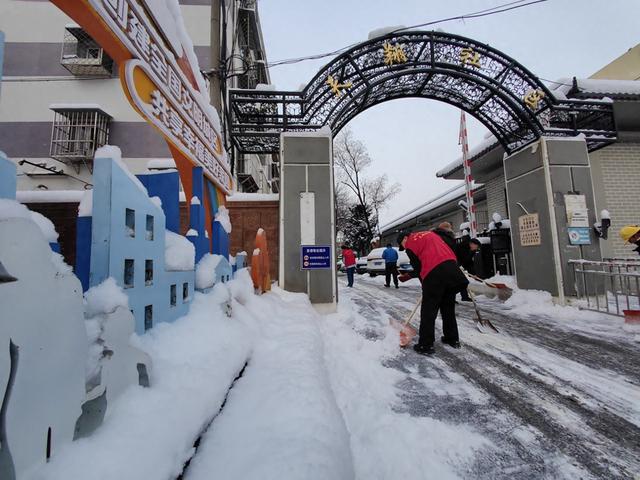
Core Viewpoint - The recent snowfall in Beijing has highlighted the city's efficient snow removal operations, showcasing both a top-down, technology-driven approach and a grassroots, community-driven effort to ensure public safety and maintain urban functionality during adverse weather conditions [1][4]. Group 1: Snowfall Details - The snowfall in Beijing from January 17 to January 18 was characterized by a significant accumulation, with most areas experiencing snow depths of 0 to 6 centimeters, while regions like Fangshan and Mentougou saw depths of 9 to 20 centimeters [2]. - The snowfall was described as a typical east wind return snowfall for the North China region, with fluffy snowflakes contributing to the picturesque winter scenery [2]. Group 2: Snow Removal Operations - A total of 112,000 personnel were mobilized for snow removal efforts, alongside over 9,000 vehicle deployments and more than 10,000 mechanical snow removal devices utilized [2]. - The operations were coordinated among various departments, including meteorological and traffic management, to ensure timely and effective snow removal, particularly in critical areas such as overpasses and subway entrances [2]. Group 3: Community Involvement - A call to action was issued by the Beijing Municipal Committee for Urban Environment Management, encouraging citizens to participate in snow removal efforts, fostering a sense of community and shared responsibility [3]. - The initiative saw participation from various groups, including party members, community workers, and volunteers, emphasizing the collective effort to maintain the city's livability during winter [3]. Group 4: Policy Implementation - The recent snowfall marked the first practical application of the revised "Three Guarantees" responsibility system in Beijing, which mandates local businesses and units to clear snow in front of their premises [4]. - The policy was adapted to account for the weekend timing of the snowfall, allowing for a more humane approach to enforcement while ensuring public safety [4]. Group 5: Urban Governance - The dual approach of utilizing advanced technology for snow removal alongside community volunteer efforts reflects the city's modern governance capabilities and the spirit of cooperation among its residents [1][5]. - This collaborative effort not only addresses immediate challenges but also contributes to a more harmonious and livable urban environment in the long term [5].
北京11.2万人次上街扫雪铲冰
Xin Lang Cai Jing· 2026-01-18 06:06
Core Viewpoint - The article highlights the collective efforts of Beijing's citizens and government in responding to the first snowfall of 2026, emphasizing the importance of community involvement in snow removal and urban management [1] Group 1: Snow Removal Efforts - A total of 112,000 personnel were mobilized for snow removal and ice clearing operations across the city [1] - Over 9,000 snow removal vehicles and more than 10,000 mechanical snow removal devices were deployed [1] - The initiative aimed to minimize the impact of snowfall on daily life and ensure public safety during adverse weather conditions [1] Group 2: Community Involvement - The city issued a call for citizens and organizations to participate in snow removal, highlighting the "shared responsibility" concept [1] - Many community members, including party officials, local businesses, and volunteers, took proactive steps to contribute to the snow clearing efforts [1] - The "Three Packages" responsibility system, which encourages local management and community participation, was emphasized as a key component of urban governance [1] Group 3: Urban Management Innovations - The article discusses the recent revisions to the "Three Packages" responsibility system, which empowers individuals to supervise and report violations within their designated areas [1] - This initiative is seen as a practical application of the updated urban management measures, aiming to enhance community engagement in city governance [1] - The experience gained from this snow removal campaign is expected to provide valuable insights for urban governance innovations across other cities in China [1]
锐评|扫雪铲冰,美好家园感谢您的一臂之力
Xin Lang Cai Jing· 2026-01-18 05:01
Core Viewpoint - The recent snowfall in Beijing has prompted a citywide initiative for snow removal and ice management, highlighting the importance of community involvement and cooperation in urban governance [1][3]. Group 1: Snow Removal Efforts - Over 91,000 personnel and more than 8,600 vehicles were deployed for snow removal and ice management as of 8 AM on the 18th [3]. - Emergency response teams, including over 4,000 highway emergency personnel, were prepared with various machinery to ensure effective snow removal [3]. - The initiative emphasizes the need for community participation, with calls for government officials and citizens to engage in snow clearing efforts [3][4]. Group 2: Urban Management Initiatives - The "Three Responsibilities at the Door" initiative, a city management measure first introduced in Beijing, has been revised and implemented since January 15, enhancing the supervisory rights of responsible parties [4]. - The snow removal campaign serves as a practical application of the revised "Three Responsibilities at the Door" initiative, aiming to transform management subjects into active participants in urban governance [4]. - The campaign reflects the concept of "co-construction, co-governance, and sharing," fostering a sense of responsibility and community among residents [4].
“门前三包”赋码 扫码可报乱象
Xin Lang Cai Jing· 2026-01-15 22:30
Core Viewpoint - The newly revised "Three Packages" management measures in Beijing aim to enhance urban governance by involving citizens in reporting issues related to public space maintenance, with a focus on cleanliness, appearance, and orderliness. Group 1: Key Changes in the Management Measures - The responsibility scope has been updated from "maintaining hygiene, greenery, and social order" to "ensuring cleanliness, maintaining a tidy appearance, and promoting an orderly environment" [2] - Merchants are now only required to cooperate within their capacity, such as cleaning up garbage and waste, rather than managing greenery, which is now the responsibility of the landscaping department [2] - The new measures prohibit merchants from setting up unauthorized barriers like locks and railings, ensuring public spaces remain clean and accessible [2] Group 2: Inclusion of Subway Stations - Subway station entrances are now included in the "Three Packages" responsibility framework, addressing previous management ambiguities [3] - The management responsibilities for subway entrances include maintaining cleanliness, tidiness of structures, and preventing illegal parking [3] - The subway management units are tasked with addressing issues like improper parking of shared bikes and stalls that disrupt the environment [3] Group 3: Responsibilities of Shared Mobility and Delivery Services - Shared bike companies must appoint personnel to manage parking and ensure timely removal of bikes obstructing public spaces [4] - Delivery platforms and operators are required to supervise their personnel to ensure proper parking practices [4] Group 4: Citizen Engagement and Reporting Mechanism - A new QR code system allows citizens to report issues related to the "Three Packages" directly, facilitating community involvement in urban management [6] - The QR code provides access to report problems such as littering, snow removal, and unauthorized installations, with options to upload photos and pinpoint locations on a map [6] - The initiative is currently being piloted in several districts, with plans for citywide implementation [6]
地铁站口首次纳入“门前三包”
Xin Lang Cai Jing· 2026-01-15 19:28
Core Viewpoint - The newly revised "Beijing Door Responsibility System" aims to enhance urban governance by including various stakeholders in the management of public spaces, particularly around subway stations, thereby improving the overall order and cleanliness of the city [1][2]. Group 1: Revision of the Responsibility System - The revised regulations clarify the responsibilities of businesses, shifting from "maintaining hygiene, greenery, and social order" to "ensuring cleanliness, maintaining a tidy appearance, and ensuring an orderly environment" [2][3]. - Businesses are now only required to avoid damaging existing greenery and facilities, as maintenance of these is the responsibility of specialized urban management units [3]. Group 2: Inclusion of Subway Stations - For the first time, subway station entrances are included in the "Door Responsibility" framework, with specific responsibilities outlined for cleanliness, appearance, and order [4]. - The regulations mandate that subway management units must address issues such as illegal parking and improper placement of shared bicycles, with a duty to report unresolved issues to relevant authorities [4]. Group 3: Promotion of Community Participation - The new regulations encourage community involvement through a "co-governance code," allowing citizens to report issues directly via a mobile platform, thus transforming them into active participants in urban management [5][6]. - The initiative has already been implemented in several districts, with plans for city-wide expansion, enhancing the ease of reporting and monitoring urban issues [6].
地铁站口被首次纳入 北京“门前三包”新规正式实施
Bei Jing Shang Bao· 2026-01-15 07:33
Core Viewpoint - The newly revised "Beijing's Responsibility System for the Three Packages in Front of the Door" aims to enhance urban management by redefining responsibilities and including new areas such as subway entrances [1][2] Group 1: Revised Responsibilities - The responsibilities have shifted from "maintaining hygiene, greenery, and social order" to "ensuring cleanliness, maintaining a tidy appearance, and creating an orderly environment" [1] - The new regulations prohibit the unauthorized installation of barriers such as locks and bollards in public spaces, specifically targeting behaviors that occupy parking spaces [1] Group 2: Inclusion of Subway Entrances - Subway entrances are now included in the "Three Packages" responsibility area, defined by the subway land boundary [1] - Responsibilities at subway entrances include timely removal of garbage, waste, and snow, as well as maintaining the cleanliness of building facades and outdoor advertising [1] Group 3: Shared Mobility and Delivery Responsibilities - Shared bicycle companies must manage vehicle parking and ensure timely removal of improperly parked bikes from public areas [2] - Delivery platforms are required to supervise their personnel to ensure proper parking practices [2] Group 4: Community Participation and Reporting - The regulations promote a "co-construction, co-governance, and sharing" approach, encouraging merchants and citizens to participate in urban management [2] - Citizens can report issues via a QR code system, which is being expanded citywide, facilitating both reporting and management inspections [2]