关税减让

Search documents
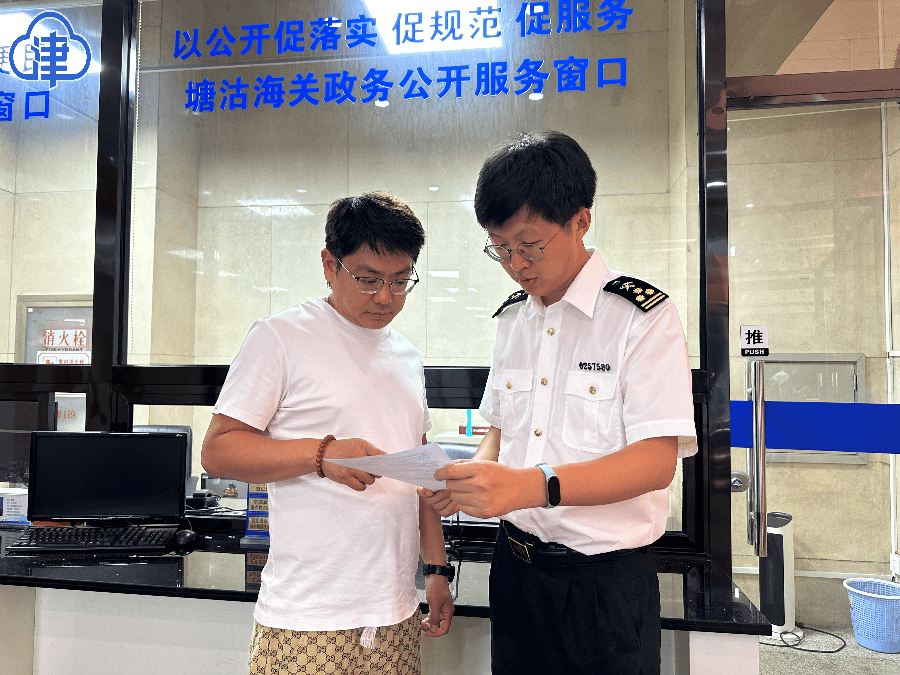
今年前7个月,天津海关为本市出口上合组织国家货物签发原产地证书5700份
Sou Hu Cai Jing· 2025-08-18 18:12
Group 1 - A cargo ship carrying 190 tons of sesame from Pakistan arrived at Tianjin Port, which will undergo processing to meet China's sesame oil consumption needs [1] - The sesame from Pakistan benefits from high yield and oil content due to its favorable geographical and climatic conditions, and the import tariff has been reduced from 10% to 0% under the China-Pakistan Free Trade Agreement, saving over 1.7 million yuan in tariff costs this year [1] - In the first seven months of this year, the value of imports from Shanghai Cooperation Organization (SCO) countries at Tianjin Port reached 1.36 billion yuan, resulting in a tariff reduction of 66 million yuan, with significant benefits for seafood, fruits, and grains [1] Group 2 - Besides the China-Pakistan Free Trade Agreement, China has signed and implemented other free trade agreements with SCO countries, enhancing the international competitiveness of exported products [3] - The rapid processing of origin certificates by customs has facilitated exports, with one company reporting a 20% year-on-year increase in exports to SCO countries, amounting to over 3 million yuan [3] - The issuance of origin certificates has allowed clients to save 150,000 yuan in tariffs, demonstrating the financial benefits of these agreements [3] Group 3 - In the first seven months of this year, Tianjin Customs issued 5,700 origin certificates for goods exported to SCO countries, with a total value of 3.43 billion yuan, reflecting year-on-year growth of 6.4% and 18.9% respectively [4]

泰国财政部长:我们新的贸易提议对90%的美国进口商品提供关税减让。
news flash· 2025-07-08 02:08
Core Viewpoint - Thailand's new trade proposal offers tariff reductions on 90% of U.S. imported goods [1] Group 1 - The Thai Finance Minister announced a significant trade initiative aimed at enhancing trade relations with the United States [1] - The proposal is designed to provide tariff concessions that could potentially benefit a wide range of U.S. products entering the Thai market [1]
中方依法审批管制物项出口,美方相应取消对华限制措施,中美确认伦敦框架细节
Huan Qiu Wang· 2025-06-27 23:00
Group 1 - The core viewpoint of the articles indicates that the U.S. and China have made significant progress in trade negotiations, particularly regarding the framework for implementing the Geneva consensus, which includes China's commitment to expedite rare earth exports to the U.S. and the U.S. agreeing to lift certain restrictions on China [1][2][3] - The Chinese Ministry of Commerce has confirmed that it will approve export applications for controlled items that meet the criteria, while the U.S. will correspondingly remove a series of restrictive measures against China [2][3] - The discussions in London were a follow-up to the June 5th phone call between the leaders of both countries, which aimed to break the deadlock in trade relations [3][5] Group 2 - Analysts suggest that the recent agreements could lead to more certainty and predictability in U.S.-China trade, which would be beneficial for both nations [3] - The outcome of the London talks is seen as a test of the sincerity of both parties in fulfilling their commitments, with the potential to establish a more robust mutual trust mechanism [5] - The U.S. is also preparing for negotiations with other major trade partners, with a focus on reaching agreements before the July 9 deadline [6][8] Group 3 - The European Union is also preparing for the possibility of not reaching a satisfactory agreement with the U.S., indicating a cautious approach to ongoing trade discussions [6][7] - There are indications that the U.S. may extend the July 9 deadline for trade negotiations, suggesting flexibility in its approach to reaching agreements with various partners [8] - The U.S. trade deficit has reportedly increased, highlighting the complexities and challenges of the current trade policies and tariffs imposed by the Trump administration [8]
红利持续释放 实施三年来 RCEP交出了怎样的“成绩单”?
Yang Shi Wang· 2025-05-25 16:07
Core Points - RCEP, the world's largest free trade agreement, has been in effect for four years, involving 15 member countries including ASEAN, China, Australia, Japan, South Korea, and New Zealand [1] - The agreement aims to enhance regional economic cooperation through tariff reductions, trade facilitation, and investment opportunities, particularly in response to U.S. tariff policies [1][3] Tariff Reductions - Tariff reduction is a core policy of RCEP, providing market opportunities and cost advantages for businesses [3] - Since the implementation of RCEP, Fujian Province has issued RCEP origin declarations worth over 10.31 billion yuan, ranking first in the country [3] Impact on Daily Life - RCEP significantly influences consumer access to imported goods from member countries, such as fruits and snacks from Thailand, New Zealand, Vietnam, Japan, Malaysia, and South Korea [4] - The implementation of RCEP has streamlined customs processes, allowing perishable goods like fresh flowers to be exported to Singapore within two hours, saving at least 12 hours compared to previous procedures [6][7] Trade Statistics - Over 90% of products within the RCEP region are expected to achieve zero tariffs gradually [7] - In May, the export of fresh-cut flowers from Xiamen Airport to RCEP countries reached 840,000 units, a year-on-year increase of nearly 400% [7] E-commerce Benefits - RCEP has enabled Chinese cross-border e-commerce companies to reduce export costs, with specific products like paper towels seeing a reduction in import tariffs from 10% to 0% in Thailand [9] - A cross-border e-commerce company reported a significant increase in sales from 50,000 yuan to 2 million yuan within a month due to tariff reductions [9] Smart Service Platform - The RCEP Tariff Policy Smart Service Platform was launched to help businesses navigate complex tariff regulations and maximize benefits [10][12] - The platform uses big data and AI to provide businesses with easy access to tariff information and guidance on the best agreements to utilize [12][14] Enhanced Logistics - RCEP has improved logistics efficiency, with new shipping routes established to facilitate trade between China and RCEP member countries [15][17] - Xiamen Port has opened 106 RCEP routes, enhancing its position as a logistics hub in Southeast Asia [17] Economic Significance - RCEP plays a crucial role in maintaining a multilateral trade system and promoting regional economic integration, contributing to over 30% of China's total foreign trade in 2022 and 2023 [18]