
关键矿产供应链安全

Search documents
我国对出口稀土严控之后,五角大楼马上让采购10亿美元关键矿产
Sou Hu Cai Jing· 2025-10-13 14:02
Core Points - The Chinese Ministry of Commerce announced stricter controls on rare earth exports, effective from November 8, 2025, targeting heavy and medium rare earth elements, including five newly added elements: holmium, erbium, thulium, europium, and ytterbium [1] - The announcement is part of a broader trend of increasing export restrictions on rare earth products, which began in 2023 and 2024, with previous measures including export licensing for gallium and germanium [1][3] - The U.S. Department of Defense plans to spend up to $1 billion on critical minerals, including rare earth metals, to establish strategic reserves and mitigate supply chain risks, with a focus on domestic and allied sources [3][5] Group 1: Chinese Export Controls - The new export controls require companies to report end-users and specific applications for rare earth elements, affecting industries reliant on these materials [1] - The measures are framed as necessary for national security and are not outright bans, but rather enhanced management of exports [1][7] - The controls apply to both Chinese and foreign companies, requiring approval for products containing over 0.1% Chinese rare earths [3] Group 2: U.S. Response and Procurement Plans - The U.S. Defense Logistics Agency's procurement plan emphasizes the importance of heavy and medium rare earths for defense applications, including the F-35 fighter jet [4][5] - The procurement plan follows previous investments by the U.S. Department of Defense in rare earth processing facilities, indicating a long-term strategy to diversify supply chains away from China [5][8] - Following the announcement of the procurement plan, U.S. rare earth companies saw stock price increases, reflecting investor optimism about domestic production stimulation [5] Group 3: Market Implications - The tightening of export controls by China has led to increased global price volatility for rare earths and related materials, with significant price increases observed in 2024 [7] - The U.S. government's focus on building strategic reserves and enhancing domestic production capabilities is a direct response to China's dominant position in the rare earth market, where China accounts for 61% of global mining output and over 90% of processing [1][7] - The competitive dynamics between China and the U.S. in the critical minerals sector are intensifying, with both countries implementing measures to secure their supply chains [7]

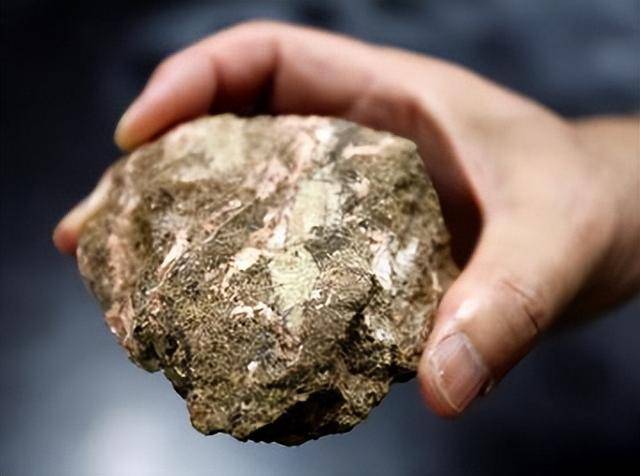
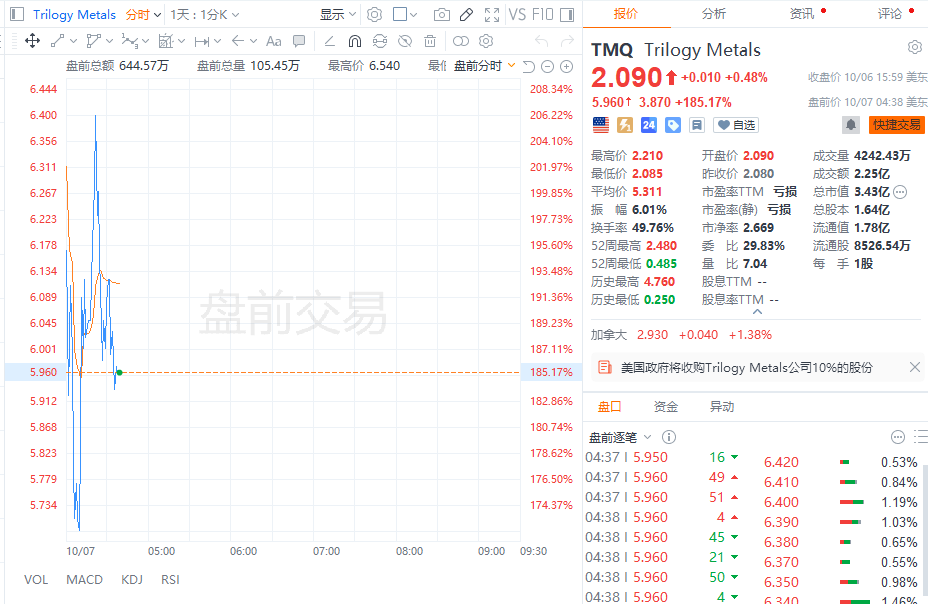
美国政府入股,这家矿业公司股价飙升近200%
Hua Er Jie Jian Wen· 2025-10-07 08:44
Core Insights - The U.S. government's strategy of directly investing in mining companies to secure critical mineral supplies is significantly altering the industry landscape and generating substantial market enthusiasm [1][3] - The recent approval of the Ambler Road Project and the investment in Trilogy Metals highlights the direct impact of government intervention on the value of strategic industries and related companies [1][4] Government Investment Details - The U.S. government has invested $36.5 million in Trilogy Metals for a 10% equity stake, along with warrants to purchase an additional 7.5% of the company in the future [4] - The Ambler Road Project aims to construct an industrial road to the Ambler mining district, which is rich in essential metals like copper, cobalt, gallium, and germanium, crucial for modern industry and defense [4] Strategic Shift in Supply Chain Security - The investment marks a more aggressive approach by the Trump administration to ensure the security of critical mineral supply chains, following similar actions with other companies like MP Materials and Lithium Americas [5] - These government-favored companies are at different development stages, with MP Materials projected to generate $285 million in sales by 2025, while Trilogy Metals and Lithium Americas are still in early development phases with no significant sales revenue [5]
七国集团声明草案:七国集团领导人将共同努力确保关键矿产供应链安全。
news flash· 2025-06-16 14:51
Core Points - The G7 leaders are committed to ensuring the security of critical mineral supply chains [1] Group 1 - The G7 statement emphasizes the importance of collaboration among member countries to secure supply chains for key minerals [1]