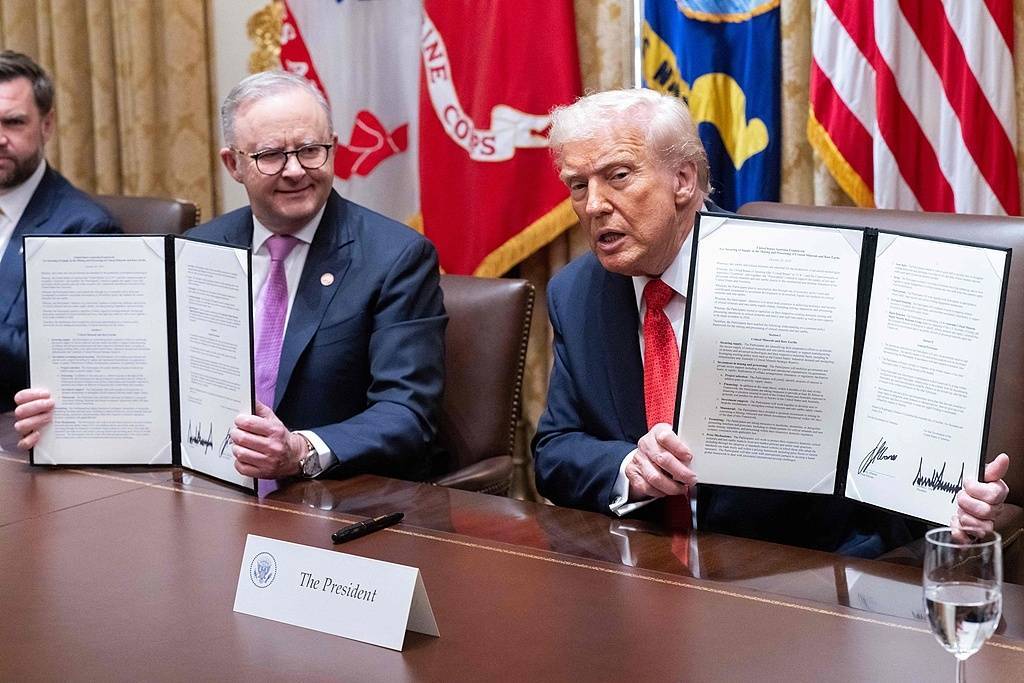
关键矿产供应链安全

Search documents
今日财经要闻TOP10|2026年2月5日
Xin Lang Cai Jing· 2026-02-05 11:53
Group 1 - The core point of the article is the resumption of the US-Iran nuclear talks originally scheduled for February 6, following urgent lobbying from multiple Middle Eastern leaders to the Trump administration to avoid military action and maintain diplomatic channels [1][4] - The talks will now take place in Oman, despite earlier resistance from the US regarding the change of venue from Istanbul [1][4] - At least nine countries in the Middle East have contacted the White House at high levels to urge the US not to cancel the meeting, reflecting regional concerns about potential military escalation [1] Group 2 - Iranian Foreign Minister Zarif confirmed that the US-Iran talks will occur on February 6 in Muscat, Oman, and expressed gratitude for Oman's arrangements [2] - An Iranian official previously stated that the talks were canceled due to new conditions imposed by the US and disagreements on negotiation topics, rather than the location change [3][4] - US officials indicated that the refusal to change the meeting format and location was based on concerns that a bilateral format could undermine multilateral coordination [4][12] Group 3 - An Iranian senior official claimed that the US leaking information about the cancellation of talks indicates a lack of sincerity [9][10] - The Iranian stance is that they will not accept negotiations on issues outside the nuclear topic [10]
美日欧在关键矿产领域宣布建立战略伙伴关系
Xin Lang Cai Jing· 2026-02-04 19:29
Group 1 - The core point of the article is that the US and EU will sign a memorandum of understanding within the next 30 days to enhance the security of critical mineral supply chains [1] - The US and EU will identify and support projects in mining, recycling, processing, and refining sectors [1] - The trade initiative may include coordinated trade policies, price floors, standard-based markets, price differential subsidies, or purchase agreements [1]
美国将主办G7部长会议讨论关键矿产供应链
Jin Rong Jie· 2026-01-12 03:04
Core Viewpoint - The G7 ministerial meeting hosted by the United States this week will focus on rare earth issues and the global supply chain of critical minerals [1] Group 1: Meeting Details - The Canadian government announced that Finance Minister François-Philippe Champagne will meet with G7 officials in Washington on Sunday and Monday [1] - U.S. Treasury Secretary Scott Bessenet will lead discussions on the global supply chain of critical minerals [1] - Officials from Australia, South Korea, India, Mexico, and the European Union are expected to participate in the talks [1] Group 2: Focus Areas - The discussions will emphasize the security of critical raw materials and global supply chain issues [1] - Japan's Finance Minister Shunichi Suzuki indicated that the meetings will address minerals essential for military production and the technology industry [1]
格陵兰矿企Amaroq透露:美国政府正洽谈注资,锁定金、铜及稀有金属供应
Hua Er Jie Jian Wen· 2026-01-09 12:20
Group 1 - The core viewpoint of the articles highlights the renewed interest in Greenland's mineral resources, particularly in light of U.S. government considerations for investment in key mineral projects to secure supply chains and reduce dependency on external sources [1][2] - Amaroq, a mining company operating in southern Greenland, is in negotiations with U.S. government agencies regarding potential investment opportunities, which may include purchase agreements, infrastructure support, and credit lines [1][2] - The strategic value of rare metals like germanium and gallium, essential for the semiconductor, defense, and high-tech industries, is emphasized as a key reason for U.S. interest in Greenland's mineral reserves [2] Group 2 - Despite skepticism regarding the economic feasibility of mining in extreme cold conditions, Amaroq remains optimistic, drawing parallels between Greenland's projects and major mineral mines in Russia and Alaska that operate under similar conditions [3] - The unique geographical advantage of Greenland, with many mineral deposits located near deep-water fjords, facilitates easier maritime transport, potentially lowering logistics costs [3] - Climate change has led to the exposure of rock formations in Greenland, making the extraction of strategic resources more feasible, which aligns with U.S. interests in addressing supply chain vulnerabilities [2][3]
地缘因素引爆大宗狂欢!机构上调金价目标至5000美元,白银再飙涨,铜价再创里程碑
Di Yi Cai Jing· 2026-01-06 02:25
Group 1: Commodity Market Movements - Concerns over supply shortages and geopolitical tensions, particularly regarding Venezuela, have led to significant movements in the commodity market, with silver rising over 6% and gold nearing $4500 per ounce [1] - The industrial metals market also saw gains, with copper reaching historical highs, driven by strong demand from sectors like electric vehicles and artificial intelligence [1][6] Group 2: Gold Price Forecasts - UBS has raised its gold price target to $5000 per ounce, citing increasing demand for gold as a safe-haven asset amid concerns over U.S. fiscal sustainability and geopolitical risks [3] - Goldman Sachs predicts gold prices could rise to $4900 per ounce, with potential for even higher prices if political or financial risks escalate [2][3] Group 3: Silver Market Dynamics - Silver prices have surged, with a closing increase of 7.95% in COMEX silver futures, driven by both safe-haven demand and structural growth in industrial applications [3] - The silver market has been in a state of supply-demand imbalance since 2021, with increasing demand from sectors like electric vehicles and solar panels [3] Group 4: Industrial Metals Supply Concerns - The London Metal Exchange reported a collective rise in industrial metals, with copper prices increasing over 4% due to supply concerns from major mines [6] - Analysts highlight that the copper market is facing a supply crunch, exacerbated by labor strikes and geopolitical tensions, which could lead to a significant market gap [6][7] Group 5: U.S. Tariff Implications - The potential for the U.S. to impose tariffs on copper imports for the electricity and construction sectors has added volatility to the market, with significant increases in copper inventories in the U.S. [7] - UBS notes that the U.S. holds a substantial portion of global copper inventories, but its consumption is low, raising concerns about supply for other regions [7]

地缘因素引爆大宗狂欢!机构上调金价目标至5000美元,白银飙涨近8%,铜价再创里程碑
Di Yi Cai Jing· 2026-01-05 23:08
Group 1: Commodity Market Movements - Global commodity markets experienced significant fluctuations due to concerns over supply shortages and geopolitical tensions, particularly regarding Venezuela, leading to a resurgence in precious metals [1] - Gold prices surged, reaching a peak of $4,467 per ounce, driven by increased demand for safe-haven assets amid U.S. military actions in Venezuela and other geopolitical developments [2][3] - Industrial metals also saw a collective rise, with copper prices breaking historical records, driven by strong demand from sectors like electric vehicles and artificial intelligence [5][6] Group 2: Gold Price Forecasts - UBS raised its gold price target for 2026 to $5,000 per ounce, citing concerns over U.S. fiscal sustainability and a continued preference for gold as a risk-hedging asset [3] - Goldman Sachs projected gold prices could reach $4,900 per ounce, with potential for further upside due to ongoing geopolitical risks and monetary policy changes [2][3] - The demand for gold ETFs is expected to remain high, with analysts suggesting that if political or financial risks escalate, gold prices could potentially rise to $5,400 per ounce [3] Group 3: Silver Market Dynamics - Silver prices saw a significant increase, with futures rising by 7.95%, driven by both safe-haven demand and structural growth in industrial applications, particularly in electric vehicles and solar panels [3][4] - The silver market has been in a state of supply-demand imbalance since 2021, with increasing demand outpacing the ability to expand production quickly [3] - A survey indicated that 57% of respondents expect silver prices to exceed $100 per ounce next year, reflecting strong market sentiment [4] Group 4: Copper Supply Concerns - The copper market is facing supply concerns due to production interruptions at major mines, with analysts predicting a global refined copper production of 26.9 million tons and a market shortfall of 308,000 tons this year [6][7] - The potential for U.S. tariffs on copper imports has added to market volatility, with significant increases in copper inventories in U.S. warehouses as traders prepare for possible trade restrictions [7] - UBS noted that the U.S. holds about half of the global copper inventory, but its consumption accounts for less than 10% of global demand, indicating risks for supply in other regions [7]
美国将为韩国锌业74亿美元关键矿产冶炼厂项目提供支持
Xin Lang Cai Jing· 2025-12-15 13:22
Core Viewpoint - The world's largest metal smelting company, Korea Zinc, plans to invest approximately $7.4 billion to build a smelting plant in the United States, supported by the U.S. government and other investors, to expand the supply of critical materials needed for chip manufacturing, defense, and aerospace [1][3][4] Group 1: Investment and Strategic Importance - Korea Zinc's project will involve a joint venture named "Crucible Joint Venture LLC," with $1.94 billion of funding coming from this venture, which includes the U.S. government, strategic investors, and Korea Zinc itself [4] - The new smelting facility will have refining capabilities for zinc, lead, copper, gold, and silver, and will also refine strategic minerals such as antimony, germanium, and gallium, which are widely used in semiconductor, satellite, and night vision device manufacturing [5] Group 2: Market Context and Positioning - Despite the reduction of electric vehicle-related subsidies by the Trump administration, the U.S. government's priority to secure non-Chinese sources of critical minerals has created strategic development opportunities for smelting companies [2][5] - Korea Zinc aims to position itself as a national security supplier by establishing smelting processing capacity in the U.S. and collaborating with government and defense sectors, betting on geopolitical factors, defense demand, and grid construction needs for more sustainable market benefits than the current short-term downturn in the electric vehicle industry [2][5] Group 3: Corporate Governance and Stock Performance - Korea Zinc is currently facing a prolonged corporate control dispute, initiated last year when its largest shareholder, Yongfeng Group, and Ambo Kai Investment Group launched a hostile takeover bid [6] - On the Seoul stock market, Korea Zinc's shares rose by 4.9% at close, with an intraday increase of up to 26%, while Yongfeng Group's shares fell by 2.8% [6]
美政府将扩大对关键矿产企业股权投资 强化战略供应链布局
智通财经网· 2025-12-04 22:33
Core Viewpoint - The U.S. government is increasingly investing in key mineral companies to enhance supply chain security and support the development of the technology industry, marking a shift in strategy for ensuring stable and controllable supply sources [1][2] Group 1: Government Investment Strategy - The U.S. government has invested over $1 billion in key mineral and mining companies over the past year, focusing on rare metals, battery materials, and high-performance magnets [1] - Notable investments include a $400 million acquisition of a 15% stake in MP Materials, a $670 million investment in magnet manufacturer VMC, and a $35.6 million stake in Trilogy Metals [1] - The government aims to strengthen its industrial base in global resource competition through these investments, which are expected to become more common in the future [1][2] Group 2: Industry Collaboration and Demand - There is a growing collaboration between the U.S. government and mineral companies, driven by increasing demand for high-performance metals and materials in various industries, including missile guidance systems, radar, jet engines, electric vehicles, and energy storage [2] - The equity investment strategy is seen as a crucial tool for building a more complete mineral supply system and supporting the development of emerging industries [2] - U.S. officials emphasize the importance of exploring more collaborative approaches with the industry to create a robust foundation for critical material supply through both capital and policy support [2]


稀土资源用不完的美国,和澳大利亚强强联手,开采挑战严峻!
Sou Hu Cai Jing· 2025-11-05 08:11
Core Points - The signing of the "U.S.-Australia Critical Minerals and Rare Earths Supply Security Framework Agreement" aims to enhance cooperation in critical minerals and rare earths between the two countries [1][3] - Both governments will invest $1 billion each over the next six months for exploration, development, and processing of critical minerals [1] - The agreement establishes a U.S.-Australia Critical Minerals Supply Security Response Group to identify priority minerals and analyze supply chain vulnerabilities [1][3] Group 1: Strategic Importance - The agreement is a significant step for the U.S. to achieve dominance in critical minerals and energy [3] - It elevates U.S.-Australia cooperation in critical resources to an unprecedented level, injecting new strategic meaning into bilateral relations [3][7] - The collaboration aims to reduce dependence on other countries, particularly China, for critical mineral supply chains, thereby enhancing supply security [7][10] Group 2: Resource and Technology Complementarity - Australia possesses abundant rare earth resources and mature mining technology, while the U.S. has significant advantages in industrial transformation and research capabilities [5] - This partnership is expected to create a complementary relationship between resources and technology, boosting competitiveness in the global critical minerals sector [5] Group 3: Global Context and Challenges - The cooperation reflects a broader global trend where countries are strengthening control over strategic resources to safeguard national interests [8] - Despite confidence in the partnership, challenges remain, particularly in Australia's relatively weak rare earth processing capabilities, with over 80% of global processing currently concentrated in China [10] - The U.S. will still need to invest in long-term development, as Australia cannot meet all U.S. demands [10] Group 4: Trade Relations and Policy Implications - Australia's disappointment with U.S. tariff policies may impact its interests, although it aims to maintain and develop relations with China simultaneously [12] - The agreement's implementation will face challenges related to technology, supply chains, and trade policies, necessitating ongoing adjustments and advancements by both countries [12]

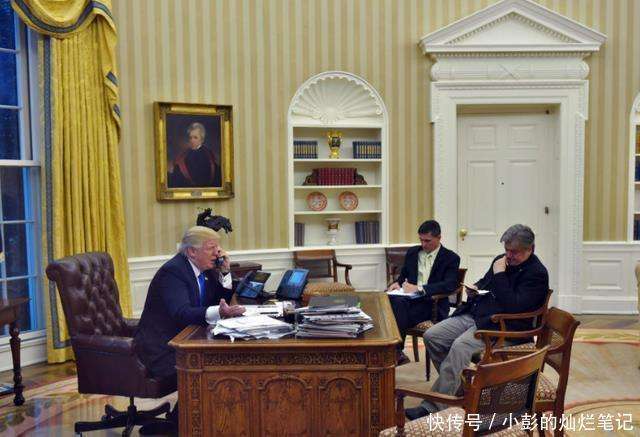
释新闻|美澳签关键矿物协议,特朗普“一年后”会得到很多稀土吗?
Sou Hu Cai Jing· 2025-10-21 14:52
Core Points - The U.S. and Australia signed a significant mineral agreement aimed at countering China's dominance in the critical minerals market [1][3] - Both countries will invest a total of $1 billion each over the next six months to support joint projects [3][5] - The agreement includes the establishment of a joint task force to coordinate policies and investment projects related to critical minerals [5][6] Investment and Financial Details - The total investment for critical mineral projects is expected to exceed $3 billion in the next six months [5] - The U.S. Export-Import Bank will issue seven letters of intent to provide over $2.2 billion in financing, unlocking up to $5 billion in total investment [5] - Specific projects, such as a gallium refining plant in Western Australia, will receive significant government funding, with a planned annual output of 100 tons [6] Strategic Implications - The agreement is seen as a response to China's tightening of export controls on critical minerals [3][9] - Australia holds the fourth-largest rare earth reserves globally, and the partnership aims to enhance the supply chain security for both nations [3][10] - The agreement includes provisions for cooperation on pricing, licensing approvals, and government reviews of projects [7] Industry Challenges - Analysts express skepticism about the timeline for achieving significant supply increases, suggesting it may take 5 to 7 years rather than the one year suggested by U.S. President Trump [10][11] - Australia, despite its strong mining capabilities, relies heavily on China for processing its minerals, with over 90% of its lithium being sent to Chinese refineries [10] - The Australian opposition leader highlighted concerns about the country's investment channels and the lengthy project approval processes [10]