养老保障

Search documents
储蓄率呈“断崖式”下跌,近半数国人没有存款?央行:是它在作怪
Sou Hu Cai Jing· 2025-06-24 11:43
Core Viewpoint - The savings rate of Chinese residents has plummeted to a historic low of 24.3% in 2024, down from 45.7% in 2020, primarily due to the long-term pressure of high housing prices on household economic structures [1][4]. Group 1: Impact of High Housing Prices - High housing prices have led to a significant decline in household savings, with nearly half of respondents indicating they have little to no savings [1][4]. - The average household debt in China is 512,000 yuan, with over 80% attributed to housing loans, averaging 418,000 yuan [4]. - Monthly mortgage payments consume 42.3% of household income, far exceeding the international warning line of 30%, severely limiting disposable income for savings [4]. Group 2: Consequences of Declining Savings Rate - The drastic drop in savings rates poses serious social challenges, including significant risks to pension security, with a projected pension gap exceeding 10 trillion yuan by 2035 [7]. - Families' ability to withstand financial shocks is greatly diminished, as many are burdened with substantial mortgage debts, making them vulnerable to unemployment or health crises [9]. - The decline in savings is expected to lead to reduced consumer demand, undermining economic growth, as families with low savings will cut back on spending during economic downturns [9]. Group 3: Proposed Solutions - To address the crisis, it is essential to implement dual strategies: increasing the proportion of residents' income in GDP and improving income distribution [9]. - Additionally, creating more job opportunities is crucial to enhance household income levels and mitigate the impact of high housing prices on savings rates [9].


各地消费金融业务发展潜力:华北、华东养老保障水平较高,华南、西北人口结构相对年轻
Sou Hu Cai Jing· 2025-05-13 10:58
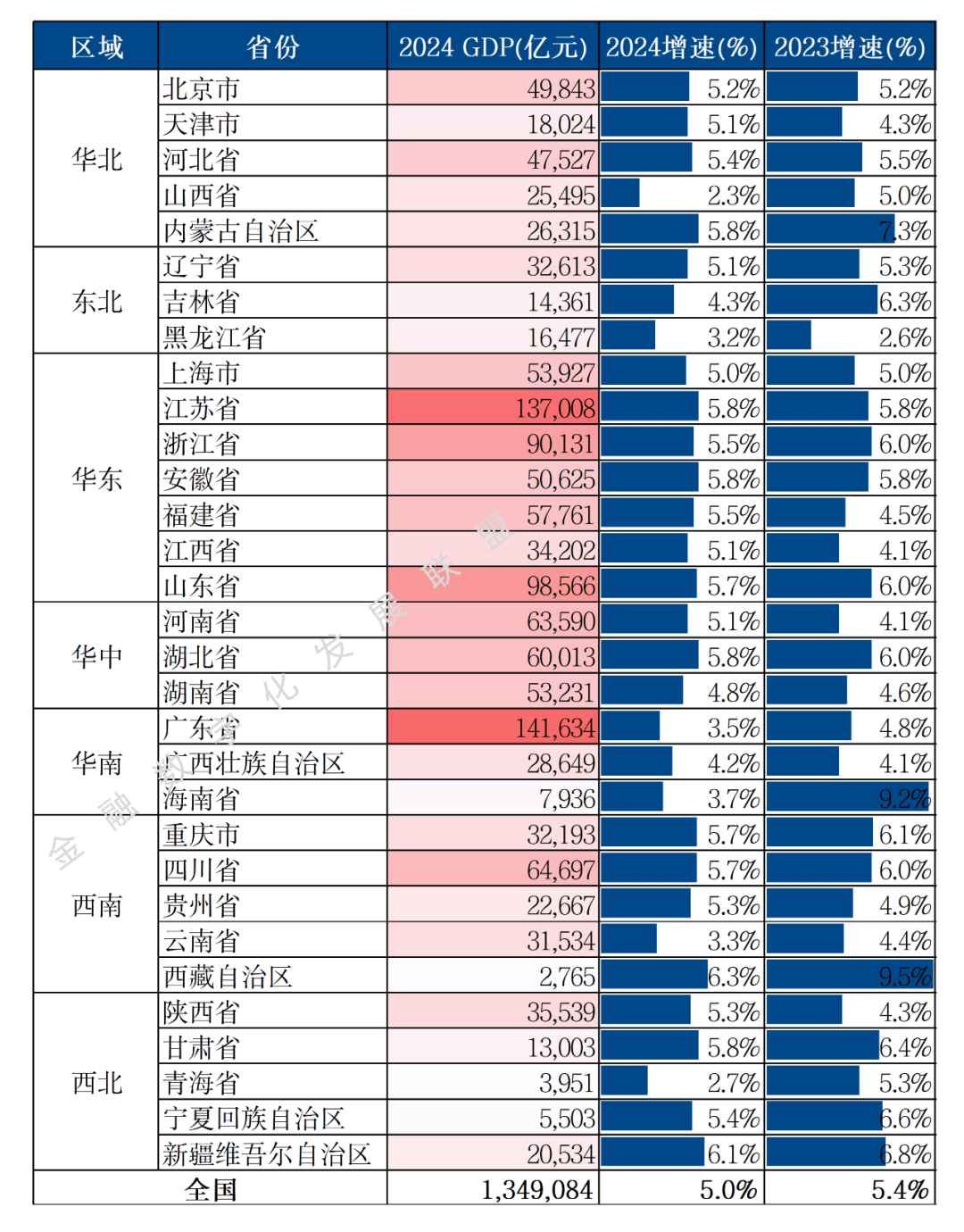
Economic Growth Overview - In 2024, China's GDP reached 134.9 trillion yuan, with a year-on-year growth of 5.0% [1] - The East China region led with a GDP of 52.2 trillion yuan, while Guangdong became the first province to exceed 14 trillion yuan in GDP, reaching 14.2 trillion yuan [1][2] - 21 provinces and municipalities outpaced the national average growth rate of 5.0%, with strong growth observed in central and western provinces [1] Regional GDP Performance - Beijing's GDP for 2024 was 4.9843 trillion yuan, growing by 5.2% [2] - Guangdong's GDP growth rate was 3.5%, lower than its previous year's growth of 4.8% [2] - Jiangsu and Zhejiang provinces reported GDPs of 13.7 trillion yuan and 9.0 trillion yuan, respectively, both with growth rates above 5% [2] Per Capita GDP Insights - In 2023, China's per capita GDP was 89,358 yuan, reflecting a 4.7% increase from the previous year [4] - Beijing's per capita GDP surpassed 200,000 yuan, ranking first nationally, while Gansu's was only 48,000 yuan, about a quarter of Beijing's [4][5] - The top ten provinces by per capita GDP included four from East China and three from North China, indicating regional disparities [4] Urbanization and Population Trends - By the end of 2024, China's urbanization rate reached 67.0%, with urban residents increasing by 10.83 million [8] - The total population decreased by 1.39 million, with urban populations growing while rural populations declined [8] - High coverage rates of pension insurance in urban areas, such as Beijing at 87%, indicate potential for consumer finance growth [8][11] Demographic Structure - In 2023, 15% of the population was aged 65 and older, with significant regional variations in age distribution [12][14] - Regions like Northeast China exhibited higher aging rates, while provinces such as Henan and Guangxi had a younger demographic profile [12][14] - The changing demographic structure impacts consumer finance, with older populations increasing demand for financial products [15]
个税起征点1万/月、淡化“重点高中”、设AI失业保障...80份两会热门提案合集
吴晓波频道· 2025-03-08 19:23
Core Viewpoint - The annual National Two Sessions serve as an important window for understanding China's future development and reform directions, focusing on people's livelihoods and innovation-driven narratives [2]. Group 1: Social Welfare and Elderly Care - Recommendations include supporting banks to innovate "silver finance" services and launch safe financial products for the elderly [3]. - A proposal to double the basic pension for urban and rural residents over the next decade [4]. - Suggestions to increase paid leave for children caring for elderly parents, with flexible arrangements [6]. - Advocacy for universities to offer elderly care programs and establish a tiered system for home care talent [7]. Group 2: Family and Reproductive Health - Proposals to eliminate the divorce cooling-off period in the Civil Code [8]. - Recommendations for stricter enforcement of parental leave and the introduction of a "father's leave" system [9]. - Suggestions to extend maternity leave to no less than six months and paternity leave to at least 30 days [10]. - Calls for measures to protect women's reproductive health and address declining birth rates [14]. Group 3: Healthcare and Medical Insurance - Proposals to integrate commercial health insurance with public health insurance for better patient support [17]. - Recommendations to lower health insurance fees for urban and rural residents and to include early cancer screening in health insurance [18]. - Suggestions for establishing a special fund for rare disease medical assistance [18]. Group 4: Agricultural Development - Recommendations to lower the threshold for migrant workers to settle in cities and establish a housing security system [19]. - Proposals to enhance black soil protection and promote organic farming practices [20]. - Suggestions to improve the integration of rural industries and streamline land use regulations [21]. Group 5: AI and Technology - Proposals to establish "AI empowerment special funds" to subsidize small and medium enterprises for AI equipment purchases [25]. - Recommendations for legislation to regulate AI writing and address misinformation generated by AI [26][27]. - Suggestions to promote the deployment of high-speed optical networks to enhance AI competitiveness [28]. Group 6: Education and Employment - Recommendations to strengthen the prevention of sexual abuse education for minors and adjust the timing of high school entrance exams [30][32]. - Proposals to improve vocational education systems and promote a model of order-based training [39]. - Suggestions to include flexible employment in workers' compensation insurance and extend the age limit for participation [44]. Group 7: Consumer and Economic Policies - Recommendations to enhance support for minority cultural products in e-commerce [54]. - Proposals for unified conditions for trade-in programs across provinces and cities [55]. - Suggestions to issue various types of consumption vouchers to benefit low-income groups [57]. Group 8: Legislative Proposals - Recommendations to adjust the age of criminal responsibility and establish laws for juvenile punishment [58][59]. - Proposals for stricter regulations on academic integrity and the establishment of a blacklist for companies involved in harassment [63]. - Suggestions to enhance penalties for financial fraud and improve the legal framework for AI management [65][66].