
压力测试

Search documents
美联储将压力测试意见征询期延长至 2026 年 2 月 21 日。
Sou Hu Cai Jing· 2025-11-21 18:52
Group 1 - The Federal Reserve has extended the comment period for its stress test proposals until February 21, 2026 [1]
全线大涨!美联储,重磅发布!
券商中国· 2025-10-25 02:16
Core Viewpoint - The U.S. banking industry is facing significant changes due to the Federal Reserve's comprehensive reform of the annual "stress tests" for large banks, which aims to enhance transparency and improve capital planning [2][3][8]. Summary by Sections Reform of Stress Tests - The Federal Reserve announced a comprehensive reform of the annual "stress tests" for large banks, focusing on improving the design of models related to credit losses, operational risks, and securities [3][8]. - The new framework will require regulatory agencies to disclose key models and scenario details before the execution of the stress tests each year [2][8]. Market Reaction - Following the announcement of the reform, stock prices of major financial institutions surged, with Goldman Sachs rising over 4% and other banks like JPMorgan Chase and Citigroup increasing by more than 2% [2][10]. - Market expectations of further interest rate cuts by the Federal Reserve are believed to have contributed to the rise in bank stocks, with the probability of a rate cut in December jumping from approximately 91% to 98.5% [10]. Stress Test Scenarios - The most severe scenario for the 2026 stress tests includes a global recession, significant declines in risk asset prices, and a rise in the unemployment rate to around 10% [4][5][6]. - The scenario assumes a 54% drop in stock prices over the first three quarters, alongside a widening corporate bond spread of 5.7 percentage points [5][6]. Internal Disagreements - There are notable divisions within the Federal Reserve regarding the proposed reforms, with some officials expressing concerns that the changes may undermine the credibility of the stress tests [10][11]. - Critics argue that the reforms could lead to a more rigid and less effective testing process, potentially providing a false sense of security to banks [10][11]. Historical Context - The "stress tests" were introduced as a regulatory measure following the 2008 financial crisis to assess banks' resilience during hypothetical economic downturns [8].


美联储降息概率:96.7%?
Sou Hu Cai Jing· 2025-10-25 00:38
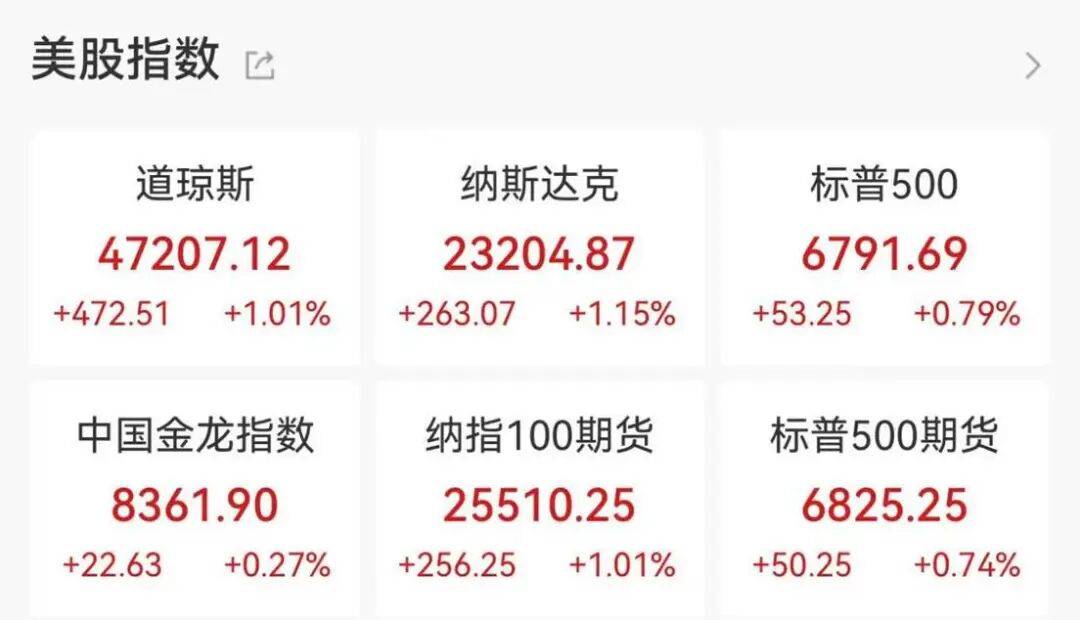
Market Performance - All three major U.S. stock indices reached record closing highs on October 24, with the Dow Jones up 1.01% at 47,207.12 points, the Nasdaq up 1.15% at 23,204.87 points, and the S&P 500 up 0.79% at 6,791.69 points [1][3] - The indices recorded approximately a 2% increase for the week [3] Economic Indicators - The U.S. Consumer Price Index (CPI) for September showed a year-over-year increase of 3% and a month-over-month increase of 0.3%, both slightly below economists' expectations of 3.1% and 0.4% respectively [3] - The core CPI, excluding food and energy, also rose 3% year-over-year and 0.2% month-over-month, again lower than market expectations [3] - Following the mild inflation data, market participants increased bets on the Federal Reserve continuing to lower interest rates, with a 96.7% probability of a 25 basis point cut in the upcoming meeting [3] Federal Reserve Developments - The Federal Reserve announced a comprehensive reform plan for its annual "stress tests" of large banks, aiming to enhance transparency and public accountability [7] - The plan includes annual disclosures of key stress test details, including models and scenarios used, and a change in the data date for balance sheets from December 31 to September 30 [7][8] - The most stringent scenario for the 2026 stress test will require banks to assess their responses to a global economic recession, stock and real estate market crashes, and a double-digit unemployment rate [8] Trade Policy Insights - Nearly 50 economists, including former Federal Reserve Chairs Ben Bernanke and Janet Yellen, urged the U.S. Supreme Court to overturn most of the tariffs imposed by the Trump administration, arguing that these tariffs were based on a misunderstanding of the global economy [10] - The economists stated that trade deficits between the U.S. and other countries are a "normal phenomenon" and that tariffs cannot rectify these deficits [10]




隔夜美股 |三大指数齐创历史新高 道指史上首次收在47000点上方
智通财经网· 2025-10-24 23:34
Market Performance - The three major U.S. indices reached historical highs, with the Dow Jones Industrial Average closing above 47,000 for the first time [1] - The Dow increased by 472.51 points, or 1.01%, to close at 47,207.12 points; the Nasdaq rose by 263.07 points, or 1.15%, to 23,204.87 points; and the S&P 500 gained 53.25 points, or 0.79%, to 6,791.69 points [1] - Ford Motor Company saw a significant increase of 12% in its stock price, while semiconductor stocks also performed well, with Intel up 0.31% and AMD up 7.63% [1] Economic Indicators - The U.S. Consumer Price Index (CPI) for September rose by 0.3% month-over-month, with a year-over-year increase of 3.0%, slightly above August's 2.9% [1] - Core CPI, excluding food and energy, increased by 0.2% month-over-month, with a year-over-year change from 3.1% in August to 3.0% in September [1] European Market Performance - The DAX30 index in Germany rose by 21.17 points, or 0.09%, to 24,240.26 points; the FTSE 100 in the UK increased by 61.27 points, or 0.64%, to 9,639.84 points [2] - The CAC40 index in France saw a slight decline of 0.15 points, while the Euro Stoxx 50 index rose by 5.32 points [2] Commodity Prices - Light crude oil futures for December delivery fell by $0.28 to $61.50 per barrel, a decrease of 0.47% [2] - Spot gold decreased by 0.31%, priced at $4,112.75 [4] Cryptocurrency Developments - Bitcoin rose by 0.78% to $110,972.20, while Ethereum increased by nearly 1.9% to $3,930.88 [2] - JPMorgan Chase plans to allow institutional clients to use their Bitcoin and Ethereum holdings as collateral for loans by the end of the year [2] Company News - WeRide (WRD.US) and Uber (UBER.US) launched Robotaxi public operations in Riyadh, marking a significant milestone for autonomous vehicle deployment in Saudi Arabia [8] - AMD (AMD.US) stock surged by 7.63% after reports that IBM (IBM.US) can run quantum error correction algorithms using AMD chips, with IBM's stock also rising by 7.88% [8] Analyst Ratings - Wedbush raised Intel's (INTC.US) target price from $20 to $30 [9] - Deutsche Bank lowered Blackstone Group's (BX.US) target price from $188 to $166 [9]


美联储改革压力测试 将公布保密模型和经济场景设计过程
Sou Hu Cai Jing· 2025-10-24 19:22
Core Viewpoint - The Federal Reserve is implementing comprehensive reforms to its annual stress tests for large banks, aiming to increase transparency by disclosing previously confidential models and the process for designing hypothetical economic downturn scenarios [1] Group 1: Reform Details - The Federal Reserve will provide more information on how stress tests operate, including the public disclosure of previously confidential models and soliciting feedback [1] - The process for designing hypothetical economic recession scenarios, which form the basis of stress tests, will also be made public [1] Group 2: Reactions and Implications - Federal Reserve Vice Chair Bowman stated that these reforms will bring much-needed transparency to the stress testing process [1] - However, Federal Reserve Governor Barr strongly opposed the reforms, arguing that revealing too many details could weaken the tests and reduce their credibility [1] - Barr warned that banks might adjust their balance sheet data to meet minimum capital requirements, which are intended to protect against potential losses [1]
美国四大银行:Q3回购超210亿,财报喜中有忧
Sou Hu Cai Jing· 2025-10-15 04:14
Core Insights - The four major U.S. banks significantly increased their stock buyback programs following the June Federal Reserve stress tests, with a total buyback exceeding $21 billion in the third quarter, up from $11.5 billion in the same period last year [1] - Citigroup showed the largest increase in buybacks, repurchasing five times more than in the third quarter of last year, as the bank plans to buy back $20 billion in stock over the next few years [1] - Regulatory changes have lowered key capital requirements, enhancing banks' willingness to return capital to shareholders [1] Group 1: Stock Buybacks - The total stock buyback by the four major banks in the third quarter reached over $21 billion, compared to $11.5 billion in the same quarter last year, indicating a significant increase [1] - Citigroup's stock buyback increased fivefold compared to the previous year, reflecting its commitment to returning value to shareholders [1] - The banks' dividend payouts also grew approximately 10% year-over-year, further demonstrating their focus on shareholder returns [1] Group 2: Regulatory Environment - The Federal Reserve's stress tests indicated a smaller decline in asset prices than anticipated for 2024, leading to a decrease in capital requirements for most large banks [1] - Regulatory officials are expected to announce reforms to the stress testing process soon, which may further impact banks' capital management strategies [1] Group 3: Earnings Reports - JPMorgan Chase, Citigroup, Wells Fargo, and Goldman Sachs reported revenues that exceeded analysts' expectations, marking a positive start to the third-quarter earnings season [1] - Despite strong earnings, some bank executives expressed concerns about potential issues in the lending environment, which could dampen shareholder optimism [1]


美联储理事巴尔呼吁银行资本要求与压力测试脱钩并个性化定制
Sou Hu Cai Jing· 2025-09-25 18:27
Core Viewpoint - The Federal Reserve Governor Barr emphasizes the need to separate bank capital levels from stress test results and customize them more closely based on individual bank conditions [1] Group 1: Stress Testing and Capital Requirements - Barr is seeking ways to maintain the rigor of stress tests amid industry calls for easing these tests [1] - He opposes increasing the transparency of stress tests and linking them to formulaic capital requirements, arguing it could lead to less targeted capital levels that do not adequately reflect a bank's unique business model, risk exposure, and risk profile [1] - Stress tests were introduced after the 2008 financial crisis to enhance banks' ability to withstand future economic shocks and assess their performance during hypothetical economic downturns [1] Group 2: Regulatory Approach - Barr believes that regulators should not weaken the stress testing process but should maintain its rigor [1] - He advocates for personalized capital requirements based on factors such as a bank's capital structure, risk level, complexity, and financial activities [1] - Barr has been a strong supporter of these stress tests [1]
美联储巴尔:保持压力测试的动态性和严谨性至关重要。
Sou Hu Cai Jing· 2025-09-25 17:09
Group 1 - The core viewpoint emphasizes the importance of maintaining dynamic and rigorous stress testing by the Federal Reserve [1]
“华尔街之王”杰米·戴蒙最新访谈,详述职业生涯的震撼时刻
聪明投资者· 2025-07-24 06:52
Core Viewpoint - Jamie Dimon has transformed JPMorgan Chase into the most dominant bank in the U.S. over the past two decades, demonstrating resilience through various crises and emphasizing the importance of a strong balance sheet and risk management [3][20][100]. Group 1: Jamie Dimon's Career and Philosophy - Dimon's career highlights include overcoming a significant setback when he was unexpectedly fired from Citigroup in 1998, which he viewed as a lesson in separating self-worth from professional circumstances [4][26]. - He emphasizes the importance of having a "fortress balance sheet," advocating for companies with strong capital and conservative financial practices [6][100]. - Dimon believes in aligning management incentives with shareholder interests and stresses the importance of rigorous stress testing beyond regulatory requirements [7][100]. Group 2: JPMorgan's Resilience and Strategy - Under Dimon's leadership, JPMorgan was the only major bank to emerge unscathed during the 2008 financial crisis, acquiring Bear Stearns and later First Republic Bank during the recent banking turmoil [20][21]. - The bank's strategy focuses on maintaining a conservative approach to leverage and accounting, which has allowed it to withstand economic downturns better than its competitors [90][96]. - Dimon has consistently prioritized risk management, stating that understanding and appropriately pricing risk is crucial for long-term success [72][82]. Group 3: Mergers and Acquisitions - The merger between Bank One and JPMorgan in 2004 was strategically logical, allowing both banks to consolidate their strengths and reduce costs [101][110]. - Dimon was aware of the importance of managing the merger effectively to avoid internal conflicts that often derail such transactions [111][112]. Group 4: Leadership and Management Practices - Dimon has implemented a culture of accountability and transparency within JPMorgan, ensuring that employees are incentivized to act ethically and responsibly [99][113]. - He has rejected excessive risk-taking behaviors that are often incentivized in the banking industry, focusing instead on sustainable growth and profitability [96][113].
山东出台20条举措稳外资 支持优质外资长期投资省内上市公司
Zheng Quan Shi Bao Wang· 2025-07-03 07:10
Group 1 - The Shandong Provincial Department of Commerce and the Provincial Development and Reform Commission have jointly issued the "Shandong Province 2025 Action Plan for Stabilizing Foreign Investment," which includes 20 specific measures across four areas [1][2] - The plan encourages foreign investment in listed companies and promotes orderly opening in the biopharmaceutical sector, aiming to deepen and innovate based on the national framework for stabilizing foreign investment [1][2] - Key measures include implementing a pre-access national treatment and negative list management system, expanding pilot programs in telecommunications, healthcare, and education, and supporting foreign-funded enterprises in conducting clinical trials for overseas-listed cell and gene therapies [1][2] Group 2 - The plan emphasizes the importance of the new "Management Measures for Strategic Investment by Foreign Investors in Listed Companies," facilitating connections between listed companies and foreign funds, and enhancing policy promotion to support long-term foreign investment [2][3] - Shandong aims to increase support for foreign enterprises' reinvestment in key sectors such as modern marine, high-end equipment, and biopharmaceuticals, while also focusing on attracting investment from major sources like Europe, Singapore, Japan, South Korea, and Hong Kong [2][3] - A mechanism for regular tracking of major foreign investment projects is established, with a focus on projects with expected investments exceeding $100 million, alongside efforts to enhance financial support for foreign enterprises in technology, green, and inclusive sectors [3]