可降解材料

Search documents
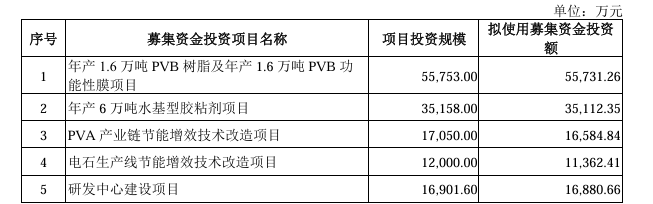
双欣环保深交所IPO提交注册 拟募资18.6538亿元
Zhi Tong Cai Jing· 2025-10-27 11:11
Core Viewpoint - Inner Mongolia Shuangxin Environmental Protection Materials Co., Ltd. (Shuangxin Environmental Protection) has applied for a change in its IPO review status to "submitted for registration" on the Shenzhen Stock Exchange, with a fundraising target of 1.86538 billion yuan [1] Company Overview - Shuangxin Environmental Protection specializes in the research, production, and sales of products along the polyvinyl alcohol (PVA) industrial chain, including PVA, special fibers, vinyl acetate (VAC), and calcium carbide [1] - The company is recognized as the third-largest PVA producer in China, contributing approximately 13% to the national total PVA output with a projected production of 116,900 tons in 2024 [2] - The company has an annual calcium carbide production capacity of 870,000 tons, ranking 8th nationally, and its sales of commercial calcium carbide exceed 500,000 tons, accounting for 2.86% of the national total [2] Financial Information - The net proceeds from the stock issuance will be allocated to various projects, including the construction of a PVA product pilot plant and replenishing working capital, with a total investment of approximately 1.8778842 billion yuan [3][4] - The company reported revenues of 5.061 billion yuan, 3.783 billion yuan, 3.486 billion yuan, and 1.797 billion yuan for the years 2022, 2023, 2024, and the first half of 2025, respectively [4] - Net profits for the same periods were 808 million yuan, 558 million yuan, 521 million yuan, and 281 million yuan [4] Key Financial Metrics - As of June 30, 2025, total assets amounted to 6.2358 billion yuan, with equity attributable to shareholders of the parent company at 4.8743 billion yuan [5] - The company's debt-to-asset ratio was 20.69% for the first half of 2025, showing a decrease from 26.62% in 2022 [5] - Basic earnings per share were 0.33 yuan for the first half of 2025, down from 0.94 yuan in 2022 [5]

众鑫股份(603091):首次覆盖报告:全球化战略推进,海外基地优势显著
GUOTAI HAITONG SECURITIES· 2025-10-15 07:22
Investment Rating - The report assigns an "Accumulate" rating to the company with a target price of 96.97 CNY [4][10]. Core Insights - The company's global capacity layout effectively addresses uncertainties in the foreign trade environment, with a focus on expanding overseas production bases [2][28]. - The company has maintained rapid revenue growth, primarily from environmentally friendly packaging for food service, with 98% of its revenue derived from this segment [28][30]. - The report highlights the company's commitment to sustainable growth through continuous technological innovation and capacity expansion, particularly in Thailand [41][28]. Financial Summary - Total revenue is projected to grow from 13.26 billion CNY in 2023 to 30.41 billion CNY by 2027, reflecting a compound annual growth rate (CAGR) of 22.7% from 2019 to 2024 [3][28]. - Net profit attributable to shareholders is expected to increase from 2.31 billion CNY in 2023 to 7.24 billion CNY in 2027, with a significant growth rate of 69.4% in 2026 [3][10]. - The earnings per share (EPS) is forecasted to rise from 2.26 CNY in 2023 to 7.08 CNY in 2027 [3][10]. Industry Analysis - The biodegradable materials industry is experiencing high demand due to increasing global environmental regulations and consumer preferences for sustainable products [18][21]. - The report notes that the company is well-positioned in the biodegradable materials market, which is expected to see continued growth as traditional plastic alternatives gain traction [18][21]. - The competitive landscape includes domestic and international players, with the company leveraging its technological advancements and overseas production capabilities to enhance its market share [16][28].
惠城环保20251012
2025-10-13 14:56
Summary of Huicheng Environmental Conference Call Company Overview - **Company**: Huicheng Environmental - **Industry**: Environmental and Chemical Recycling Key Points and Arguments Product Quality and Market Position - The quality of Huicheng Environmental's reformed oil is better than expected, with aromatic content increased to 84%-85% [2][3] - The company has partnered with United Petrochemical for testing, expecting positive application results [2][3] - The hydrogenation unit is projected to start production in January 2026, which will address oxygen content issues [2][7] Financial Performance and Pricing - Current aromatic prices are high, around 6,000-6,800 RMB per ton, with a potential premium of 3,000 RMB after hydrogenation, bringing the total price close to 10,000 RMB [2][4] - The profit from the 200,000-ton project without premium is estimated at 200-300 million RMB, which could rise to 600-700 million RMB with premiums [2][8] - The target profit for Q4 this year is set at 100 million RMB [2][8] Expansion Plans - Huicheng Environmental plans to build a total capacity of approximately 10 million tons in the next 3-5 years across various locations, including Guangdong, Hunan, and Tianjin [3][9][12] - Specific projects include a 3 million-ton project in Guangdong and a 1.8 million-ton project in Yueyang, with approvals expected by the end of this year [3][9][12] Technological Innovations - The company utilizes a catalyst that directly contacts plastic for solid-gas conversion, achieving over 90% yield [3][17] - Innovative reverse flow bed technology addresses temperature gradient issues during deep cracking, enhancing efficiency [3][17][18] - The company’s process is designed to minimize liquid phase crossover, significantly improving yield [3][17] Strategic Partnerships and Financing - Initial funding for projects will primarily come from bank loans, covering about 70% of the required capital [3][13] - Local governments and enterprises show high investment enthusiasm, facilitating financing [3][13] - Collaboration with China Resource Recycling is planned to enhance raw material sourcing [3][20] Market Demand and Customer Base - Major customers include United Petrochemical, Lito, and Maohua Petrochemical, with contracts signed with companies like Amcor and L'Oréal for polypropylene trials [2][4] - The demand for Huicheng's products is strong due to superior quality and green labeling, with prices for recycled plastics expected to be competitive [3][15] Regulatory and Certification Outlook - The company anticipates receiving official certifications and support from industry associations, which may enhance its market position [3][19] Future Projections - The company expects to achieve full production capacity by early 2026, with ongoing experiments to optimize processes for future expansions [3][27] - The pricing strategy post-hydrogenation is set to reflect the added value, with contracts already established for supply [3][28] Challenges and Considerations - The company faces challenges in managing raw material quality and ensuring efficient processing, particularly with mixed plastics [3][29] - Continuous adjustments in operational conditions are necessary to optimize product distribution and quality [3][25] Additional Important Information - The company is committed to maintaining a leading position in the recycling technology sector, with a focus on innovative processes that enhance yield and reduce costs [3][16] - Huicheng Environmental is exploring the potential for expanding its processing capabilities to include other types of plastics in the future [3][29]
最新获奖!9款海外医疗器械
思宇MedTech· 2025-09-28 03:51
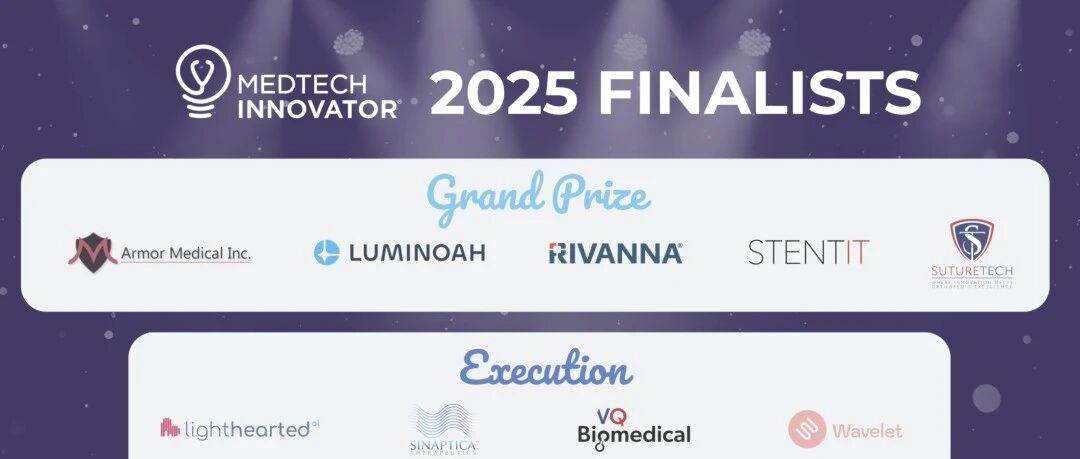
Core Insights - MedTech Innovator (MTI) announced the finalists for the 2025 awards, showcasing five early-stage startups competing for a $350,000 non-equity prize at The MedTech Conference in San Diego [1][2] - Each finalist has already received $25,000 and will present their innovations to a panel of experts and attendees for voting [1] - MTI has been selecting promising startups since 2013, providing them with funding and access to guidance from leading manufacturers, investors, and healthcare providers [1] Finalists for the Grand Prize - Armor Medical (Atlanta, USA): Early monitoring system for obstetric hemorrhage [3] - Luminoah (Charlottesville, Virginia, USA): Portable closed-loop enteral nutrition system [6] - Rivanna Medical (Charlottesville, Virginia, USA): AI-assisted ultrasound guidance system for monitoring subtle changes in microcirculation and hemodynamics [8] - STENTiT (Eindhoven, Netherlands): Biodegradable vascular regeneration stent [10] - SutureTech (Durham, North Carolina, USA): RapidFix™ soft tissue fixation system for chronic limb-threatening ischemia [12] Finalists for the Execution Award - LightHearted AI Health (London, UK): AI laser detection for heart disease [14] - Sinaptica Therapeutics (Cambridge, USA): Non-invasive neural modulation system [16] - VQ Biomedical (Apex, North Carolina, USA): Intravascular oxygenation catheter [19] - Wavelet (New Haven, Connecticut, USA): Non-invasive fetal EEG monitoring system [21] Industry Trends - Clinical needs drive innovation, focusing on areas such as obstetric hemorrhage, Alzheimer's disease, respiratory failure, and fetal monitoring [21] - Significant technological intersections are observed, including AI combined with optical and imaging technologies, biodegradable materials, and closed-loop nutrition systems [24] - There is a notable disparity in the feasibility of bringing innovations to market, ranging from those already receiving FDA 510(k) approval to those still in animal testing [25] Implications for the Industry - MTI serves as a global benchmark for medical technology innovation, influencing the opportunities for domestic startups to propose competitive solutions in critical healthcare areas [26] - Urgent clinical needs in maternal safety, neurodegenerative diseases, and respiratory monitoring highlight the potential for growth in these sectors [28]
中金:政策推动可降解塑料行业发展 PBAT产能利用率低
智通财经网· 2025-09-26 08:49
Group 1 - The core viewpoint is that the implementation of policies aimed at plastic pollution control is expected to significantly boost the demand for biodegradable materials, particularly biodegradable plastics [1][2] - Since the release of the policy by the National Development and Reform Commission and the Ministry of Ecology and Environment in 2020, various provinces and industries have issued related implementation opinions and plans, which, if executed, could lead to rapid growth in the demand for biodegradable materials [1] - The main application areas for biodegradable plastics in the future are expected to be biodegradable films and express packaging [1] Group 2 - The current market price of PBAT is at a historical low of 9,850 yuan/ton as of September 21, 2025, with a low capacity utilization rate of 15.8% projected for 2025 [2] - The average operating rates for raw materials BDO, PTA, and AA in August were 45%, 74%, and 53% respectively, indicating a challenging market environment for PBAT [2] - PLA market prices have been under pressure, with the average price stabilizing at 17,200 yuan/ton as of September 21, 2025, reflecting a 1.7% decline since the beginning of the year and a 42.7% drop from the 2021 peak [3] Group 3 - Companies involved in the biodegradable plastic industry include PBAT producers such as Jinfat Technology (600143.SH), Changhong High-Tech (605008.SH), and Hengli Petrochemical (600346.SH), as well as PLA producers like Haizheng Biomaterials (688203.SH), Jindan Technology (300829.SZ), and Lianhong Xinke (003022.SZ) [4] - Raw material suppliers include adipic acid producers like Hualu Hengsheng (600426.SH) and Huafeng Chemical (002064.SZ), and BDO suppliers such as Sanwei Co., Ltd. (603033.SH) and Zhongtai Chemical (002092.SZ) [4]
恒鑫生活(301501):纸塑餐饮具龙头 新消费客户共成长
Xin Lang Cai Jing· 2025-09-22 10:39
Core Viewpoint - The company is a leading enterprise in the paper and plastic dining utensils industry, demonstrating steady growth in performance with a focus on R&D and production capabilities [1][2][3] Financial Performance - In 2024, the company achieved a revenue of 1.59 billion yuan, representing a year-on-year increase of 11.86%, and a net profit attributable to shareholders of 220 million yuan, up 2.82% year-on-year [1] - For the first half of 2025, the company reported a revenue of 871 million yuan, a year-on-year growth of 18.81%, and a net profit of 125 million yuan, increasing by 19.7% [1] - From 2019 to 2024, the compound annual growth rate (CAGR) for revenue and net profit attributable to shareholders was 24% and 25.6%, respectively [1] Market Position and Competitive Advantages - The company has established a robust competitive edge through three main factors: 1. A comprehensive production capability across the entire process of paper and plastic dining utensils, allowing for a diverse product line tailored to customer needs [2] 2. Strong relationships with high-quality clients, with the top five customers accounting for 41.27% of sales in 2024, including well-known brands like Luckin Coffee and Starbucks [2] 3. Scale advantages from multiple advanced production lines, achieving an annual production capacity of 9 billion units of dining utensils [2] Global Expansion and Future Growth - The company is accelerating its global layout by establishing a subsidiary in Thailand in February 2024 to mitigate trade friction risks, with existing U.S. customer orders gradually shifting to the Thai factory [3] - The breakthrough in PHA technology is expected to become a new growth engine, as PHA materials offer superior degradation and application properties compared to other biodegradable materials [3] - The company has obtained the world's first DIN certificate for PHA-coated paper products, indicating significant advancements in PHA material applications [3] Revenue and Profit Forecast - Projected revenues for 2025, 2026, and 2027 are estimated at 1.878 billion, 2.125 billion, and 2.315 billion yuan, respectively, with net profits of 246 million, 280 million, and 317 million yuan [3]
恒鑫生活(301501):纸塑餐饮具龙头,新消费客户共成长
Huafu Securities· 2025-09-22 05:34
Investment Rating - The report assigns a "Hold" rating to Hengxin Life [5][6] Core Views - Hengxin Life is a leading company in the paper and plastic food service products industry, demonstrating steady growth with a projected revenue of 1.59 billion yuan in 2024, an increase of 11.86% year-on-year, and a net profit of 220 million yuan, up 2.82% year-on-year [3][26] - The company has a robust competitive edge through a rich product line, strong customer relationships, and production scale advantages [4][39] - Global expansion is accelerating, with the establishment of a subsidiary in Thailand to mitigate trade risks, and the PHA technology is expected to become a new growth engine [4][50] Summary by Sections Company Overview - Hengxin Life specializes in the R&D, production, and sales of paper and plastic food service products, utilizing raw materials such as original paper, PLA particles, and traditional plastic particles [3][12] - The company has developed proprietary technologies in PLA modification, coating, and molding, becoming a supplier for many well-known domestic and international brands [3][12] Competitive Advantages - The company has three core competitive advantages: 1. **Industry Chain and Product Line Advantage**: Full-process production capabilities allow for a diverse product line tailored to customer needs [4][39] 2. **Brand and Customer Advantage**: Stable relationships with major clients, with the top five customers accounting for 41.27% of sales in 2024 [4][39] 3. **Production Scale Advantage**: Multiple advanced production lines enable an annual capacity of 9 billion units, supporting large-scale customization and rapid delivery [4][39] Global Expansion and Technology - The establishment of a subsidiary in Thailand in February 2024 aims to counter trade friction risks, with existing U.S. orders gradually shifting to the Thai factory [4][50] - The breakthrough in PHA technology opens up long-term growth potential, as PHA offers superior degradation and application properties compared to other biodegradable materials [4][50][53] Financial Forecast and Investment Recommendations - Revenue projections for 2025-2027 are 1.88 billion, 2.13 billion, and 2.31 billion yuan, with net profits of 246 million, 280 million, and 317 million yuan respectively [5][58] - The company is positioned to benefit from the global "plastic ban" trend, enhancing its market penetration and serving international clients effectively [5][63]
调研速递|恒鑫生活接受投资者调研,聚焦业绩、产能及产品竞争力等要点
Xin Lang Zheng Quan· 2025-09-15 11:52
Core Viewpoint - Hefei Hengxin Life Technology Co., Ltd. held an online investor meeting to address concerns regarding company performance, capacity, and product competitiveness [1] Group 1: Performance and Financials - The company reported that Q2 revenue and net profit were significantly below market expectations, but the H1 2025 revenue and net profit attributable to shareholders still showed stable growth, with no need for future listing fee provisions [2] - For Q3, the company indicated that specific financial data would be disclosed in upcoming periodic reports [3] Group 2: Product Development and Market Position - Hengxin Life has achieved mass production capability for PHA products, although large-scale production has not yet commenced; production timelines depend on industry development and customer demand [4] - The company aims to strengthen its competitive advantage in PHA products as environmental awareness grows, and plans to deepen cooperation with raw material suppliers while gradually promoting products based on customer needs [4] Group 3: Strategic Development - The company's future strategy includes enhancing global presence, increasing R&D investment, implementing fundraising projects, improving talent systems, and strengthening corporate governance and information disclosure [5] - The company is well-positioned to respond to the rapid growth of biodegradable products due to global plastic bans, although it may face challenges such as policy implementation delays and intensified trade frictions [5] Group 4: Stock Performance and Market Response - The company acknowledged that stock price fluctuations are influenced by macroeconomic conditions, industry policies, and market sentiment, and it plans to enhance investor confidence through performance improvement and better governance [6] Group 5: Compliance and Production Capacity - The company's PLA and PHA products comply with new regulations in Shanghai, and it has the flexibility to adjust production structures to meet market demand [7] - The Thailand factory is set to commence production in 2025 and has begun shipping since April, while the Hainan production base is expected to positively impact performance due to the implementation of the Hainan closure policy [8]
两大化工龙头,尼龙材料大项目公示
DT新材料· 2025-09-14 16:05
Group 1 - Huafeng Chemical has announced a new project for a digital workshop to produce 3,000 tons of specialty nylon annually, expected to start in September 2025 and be completed by September 2027 [2] - The company is the only domestic enterprise that masters both the adipic acid method and the butadiene method for producing hexamethylenediamine, establishing a complete industrial chain from benzene to nylon 66 [2] - Cangzhou Xuyang Chemical is planning a new nylon materials project with an annual capacity of 230,000 tons, which includes four production lines and various equipment [3][4] Group 2 - Cangzhou Xuyang's existing projects include a 150,000 tons/year caprolactam production project and a 300,000 tons/year caprolactam production project, among others [4] - By 2025, Cangzhou Xuyang's total caprolactam production capacity is expected to reach 750,000 tons/year, making it the second largest globally [4] - The company reported a revenue of 10.311 billion yuan and a net profit of 238 million yuan in 2024 [4]

【前瞻分析】2025年生物医用材料行业区域、企业竞争分析
Sou Hu Cai Jing· 2025-09-03 10:15
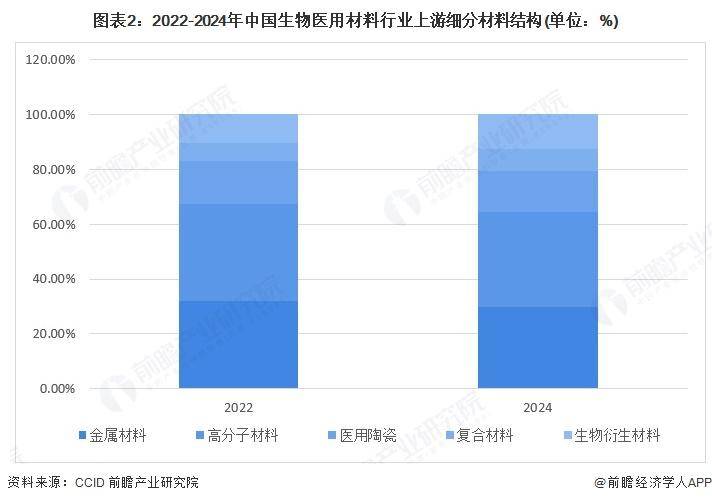
Industry Overview - In 2022, the structure of the upstream materials in China's biomedical materials industry showed a high proportion of metal and polymer materials. By 2024, composite materials and bio-derived materials are expected to gain market share due to advancements in 3D printing technology and increased demand in the medical aesthetics sector, while metal materials, polymer materials, and medical ceramics may see slight declines in market share due to substitution effects and market competition [1][2]. Competitive Landscape - The competitive landscape of the biomedical materials industry can be divided into three tiers based on revenue: - Tier 1 companies have revenues exceeding 2 billion yuan, including companies like Lepu Medical, Haohai Biological, and Dabo Medical. - Tier 2 companies have revenues between 1 billion and 2 billion yuan, represented by Weigao Orthopedics, Xinmai Medical, and Blue Sail Medical. - Tier 3 companies have revenues below 1 billion yuan, including Guoci Materials, Bairen Medical, and Zhenghai Biological [3][6]. Business Layout Comparison - Companies such as Aojing Medical, Weigao Orthopedics, and Haohai Biological derive nearly 100% of their revenue from biomedical materials, while others have a relatively low proportion of revenue from this segment [5][6]. Business Planning and Innovation - The business planning in the biomedical materials sector is characterized by diversification, focusing on technological innovation, market expansion, and industry chain integration. Leading companies are investing in R&D and international expansion, while smaller firms are seeking breakthroughs through differentiated technologies such as regenerative medicine and 3D printing. Future competitive cores are expected to revolve around biodegradable materials, smart devices, and precision medicine [7][9]. Company-Specific Strategies - Guoci Materials focuses on new material platforms, achieving a 70% market share in nano-alumina materials for dental implants and high-end aesthetic restorations, with products entering over 20 countries [9]. - Aojing Medical specializes in regenerative repair implants, with products widely used in various surgical fields and a strong international market presence [9]. - Weigao Orthopedics is adjusting its business model to address procurement policies and is expanding into new fields such as minimally invasive spine and arthroscopic surgery [10]. - Lepu Medical's core business is cardiovascular intervention materials, with products like the NeoVas bioabsorbable stent and MemoSorb® fully degradable occluders [10]. - Xinmai Medical is focusing on drug-coated stents and has entered special review channels for innovative medical devices [10]. Revenue and Market Share Insights - The revenue of key companies in the biomedical materials sector varies significantly, with Weigao Orthopedics reporting 14.51 billion yuan from its orthopedic materials, representing 100% of its total revenue [6]. - Lepu Medical generated 33.27 billion yuan from cardiovascular system materials, accounting for 54.51% of its total revenue [6]. Future Trends - The industry is expected to see increased emphasis on biodegradable materials and smart medical devices, driven by policy support and technological advancements [7].