和平主义

Search documents
三问日本右翼丨高市早苗的右翼立场从何而来?
Yang Guang Wang· 2025-11-21 10:50
Core Viewpoint - The recent statements made by Japanese Prime Minister Sanae Takaichi regarding Taiwan reflect a dangerous shift in Japan's political landscape, influenced by rising right-wing ideologies and her own extreme views [1][6]. Group 1: Background and Ideological Roots - Takaichi's right-wing stance can be traced back to her upbringing in a conservative household that emphasized loyalty to the emperor and military nationalism [3]. - Her political ideology was further shaped during her time at the Matsushita Institute of Government and Management, a breeding ground for right-wing politicians in Japan [3]. - Takaichi's opposition to acknowledging Japan's wartime atrocities dates back to her early political career, indicating a long-standing commitment to revisionist history [2][4]. Group 2: Political Career and Actions - Takaichi's political career began in 1993, and she has consistently shifted to the right, gaining attention from influential figures like Shinzo Abe [4]. - Her actions, such as visiting the Yasukuni Shrine and denying historical events like the Nanjing Massacre, have solidified her reputation as a right-wing politician [4][5]. - The recent election of Takaichi as Prime Minister was marked by compromises with right-wing factions within her party, reflecting the current political climate in Japan [5][6]. Group 3: Implications for Japan's Foreign Policy - Takaichi's statements regarding Taiwan suggest a potential shift away from Japan's post-war pacifist policies, indicating a willingness to adopt a more confrontational stance towards China [6][7]. - The Japanese government is reportedly considering revisions to its national security strategy, which may include increasing defense spending and altering its nuclear policy [6]. - Takaichi's approach may lead to heightened tensions in the region and a departure from Japan's traditional diplomatic stance, as she seeks to consolidate her political support domestically [7].
国际社会须高度警惕复活军国主义的图谋
Yang Shi Xin Wen Ke Hu Duan· 2025-11-20 13:39
Core Viewpoint - The recent remarks by Japanese politician Sanae Takaichi regarding Taiwan represent a blatant betrayal of Japan's pacifist constitution and a provocative interference in China's internal affairs, raising concerns about the revival of militarism in Japan [1][3]. Group 1: Historical Context and Implications - Takaichi's linking of "Taiwan issues" with Japan's "survival crisis" is reminiscent of Japan's historical militaristic justifications for foreign invasions, suggesting a potential return to militaristic ideologies [1][2]. - The concept of "survival crisis" has historically been used by Japanese militarists to justify aggressive actions, indicating a dangerous precedent in current political rhetoric [2][3]. Group 2: Domestic and International Reactions - Analysts highlight that Takaichi's statements are not isolated but reflect a broader right-wing movement in Japan aiming to revive militarism and escape post-war constraints, which poses risks to regional peace and stability [3][4]. - The remarks have significantly harmed the political foundation of Sino-Japanese relations, leading to a deterioration in bilateral exchanges across various fields [4]. Group 3: Future Outlook - The current trajectory of Japan's right-wing policies, particularly regarding defense and historical issues, threatens to push the country towards disaster rather than genuine revival, with increasing strategic uncertainty in the region [3][4]. - China has warned that if Japan does not retract its erroneous statements, it will have to take severe countermeasures, with all consequences falling on Japan [4].
蓝厅观察丨国际社会须高度警惕复活军国主义的图谋
Yang Shi Xin Wen Ke Hu Duan· 2025-11-20 13:28
Core Viewpoint - The recent remarks by Japanese politician Sanae Takaichi regarding Taiwan represent a blatant betrayal of Japan's pacifist constitution and a gross interference in China's internal affairs, provoking concerns about the revival of militarism in Japan [1][3][5]. Group 1: Historical Context - Japanese militarism has historically used the concept of "survival crisis" as a pretext for foreign aggression, linking Taiwan's situation to Japan's own national security [3][5]. - Takaichi's statements raise fears of Japan repeating its militaristic past, as they echo the logic used by Japan during its invasions of China and other Asian countries [5][10]. Group 2: Current Political Climate - Analysts suggest that Takaichi's actions are not isolated but part of a broader right-wing movement in Japan seeking to revive militarism and escape the constraints of the post-war system [8][10]. - There is a growing concern that Japan is on a dangerous path towards rearmament and militaristic expansion, which could destabilize regional peace and increase the risk of conflict [10][11]. Group 3: Impact on Sino-Japanese Relations - The remarks by Takaichi have severely damaged the political foundation of Sino-Japanese relations, pushing them to their lowest point in recent years, with the responsibility lying entirely with Japan [11][13]. - The promotion of military intervention in the Taiwan Strait by Takaichi has hurt the sentiments of the Chinese people, who suffered from Japanese militarism, and has negatively affected people-to-people exchanges between the two nations [13][15]. Group 4: Future Implications - The relationship between China and Japan, which has potential for extensive cooperation, is contingent upon historical issues and the Taiwan question, which are fundamental to the bilateral relationship [15]. - China has warned that if Japan does not retract its erroneous statements, it will have to take severe countermeasures, with all consequences borne by Japan [15].

日本学者石田隆至:民间交流让日本人反思错误“中国观”
Huan Qiu Shi Bao· 2025-09-17 22:43
Core Viewpoint - The article discusses the ongoing historical recognition gap between Japan and China, highlighting the need for Japan to confront its wartime history to foster better relations with China [1][2][3] Group 1: Historical Context - Japan's reluctance to acknowledge its wartime actions and its attempts to influence other countries' participation in commemorative events reflect a lack of historical reflection and a colonial mindset [1] - The rise of historical revisionism in Japan is causing concern among individuals from China and the Korean Peninsula living in Japan, indicating a dangerous trend in historical understanding [2] Group 2: Personal Insights - The scholar shifted focus from studying India's anti-colonial movement to addressing Japan's historical issues and its relations with China and Korea due to the rise of historical revisionism in the 1990s [2] - The scholar perceives a growing disconnect in Japan's understanding of China, with an increase in skepticism towards China even in friendly exchanges [2] Group 3: Role of Scholars - The scholar emphasizes the importance of bridging the cognitive gap between Japan and China by providing accurate information about Chinese society and addressing misconceptions held by the Japanese public [3] - The expectation from the Chinese public is for Japan to sincerely confront its history and reflect on its wartime actions rather than avoiding or distorting the truth [3]
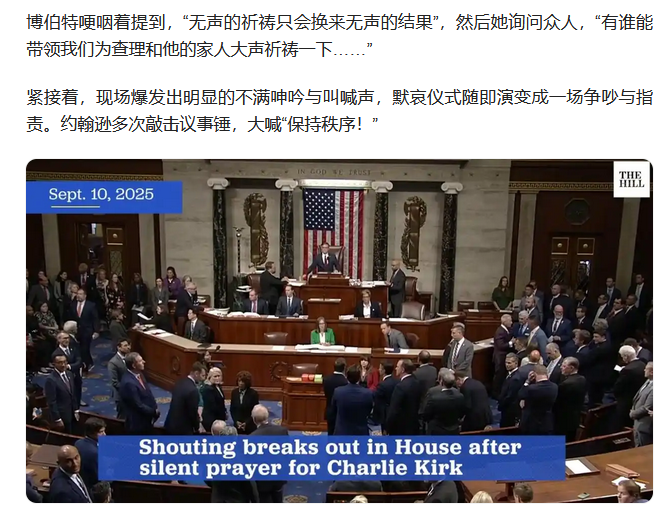
子弹终结辩论,maga旗手陨落
Hu Xiu· 2025-09-12 05:30
Core Points - The assassination of Charlie Kirk marks a significant escalation in political violence in the United States, reflecting a deepening political polarization and the normalization of hate politics [3][20][26] - Kirk's death has sparked a divided response on social media, with conservative figures mourning him while left-leaning individuals mock his demise, indicating a troubling trend of dehumanization in political discourse [12][14][15] Group 1: Incident Overview - Charlie Kirk was shot and killed during a public speaking event in Utah, attended by approximately 3,000 people [1][2] - The shooting is being investigated by the FBI, with initial assessments suggesting it was a single perpetrator act, and the motive remains unclear [2][3] - Utah's governor labeled the incident a "political assassination," and former President Trump ordered flags to be flown at half-staff in Kirk's honor [2][8] Group 2: Charlie Kirk's Background - Kirk, born in 1993, became politically active after the 2008 financial crisis and co-founded Turning Point USA at the age of 18 to promote conservative views among youth [4][5] - He transformed Turning Point USA into a well-funded media organization, gaining millions of followers through social media and his radio show [5][6] - Kirk's confrontational style and controversial statements have made him a polarizing figure, appealing to many young conservatives while inciting significant opposition [5][6][21] Group 3: Political Climate and Reactions - The political landscape has become increasingly hostile, with both parties condemning violence while maintaining their ideological frameworks [11][12] - Social media has amplified the divide, with many on the left openly mocking Kirk's death, reflecting a broader trend of dehumanization in political rhetoric [12][14][15] - The incident highlights the fragility of civil discourse and the potential for political violence to escalate further, as seen in the reactions from both sides of the political spectrum [20][24][26]
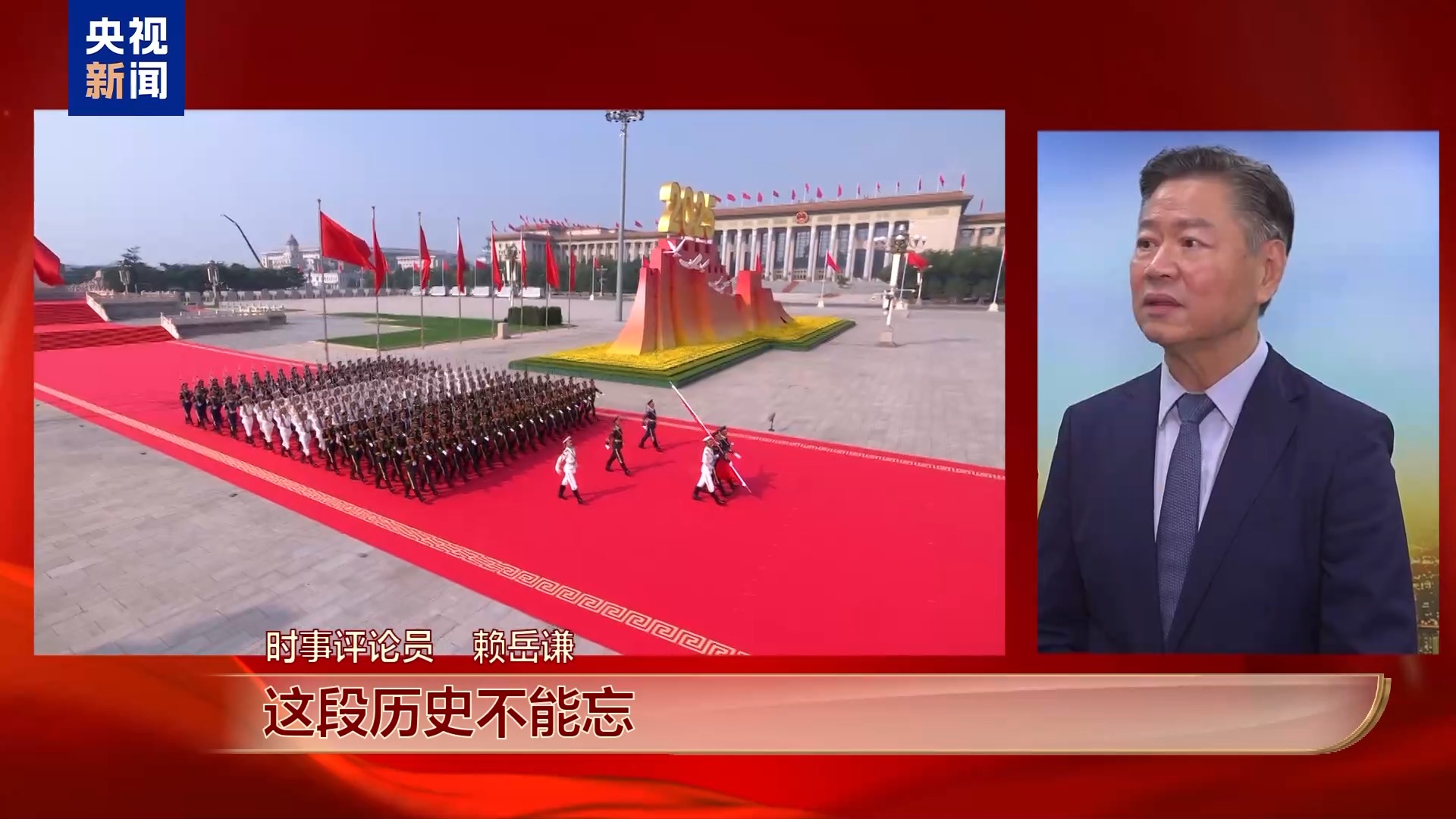
“期待实现中华民族伟大复兴” 纪念大会引发台湾岛内舆论关注
Yang Shi Xin Wen Ke Hu Duan· 2025-09-04 02:01
Group 1 - The commemoration of the 80th anniversary of the victory in the Chinese People's Anti-Japanese War and the World Anti-Fascist War has drawn attention from Taiwan, with some individuals expressing hope for the great rejuvenation of the Chinese nation [1] - Xi Jinping's speech emphasized the importance of remembering history and promoting peace, while rejecting militarism and fascism [3] - The military parade on September 3 is seen as a demonstration of national strength and a significant ceremony to honor the martyrs and remember history, highlighting the need for self-reliance and national prosperity [5] Group 2 - The military parade serves as a reminder of the painful lessons of the past, urging the Chinese people to cherish peace and warning countries that have engaged in aggression to reflect on their actions [7] - The rise of mainland China and the rejuvenation of the Chinese nation evoke a sense of pride among Chinese people, with aspirations for complete unification in the future [8]
日本有识之士呼吁正视侵略历史、推动和平合作
Xin Hua She· 2025-08-14 15:44
Group 1 - The seminar held in Tokyo on the 80th anniversary of Japan's unconditional surrender emphasized the need for Japan to confront its history of aggression and colonialism, advocating for dialogue and cooperation with Asian countries to build stable relationships [1][2] - Former Prime Minister Yukio Hatoyama stated that true patriotism involves acknowledging historical facts and correcting past mistakes, asserting that Japan's responsibility for wartime actions cannot be considered fulfilled until the affected nations express that they will no longer pursue claims [1] - The chairman of the "Inheriting and Developing the Murayama Statement" called for remembrance of important historical documents and the promotion of friendly relations between Japan and Asian countries, criticizing the ongoing denial of Japan's wartime actions by some government officials [1] Group 2 - Professor Yamada Akira highlighted that Japan's peace stance should focus on not becoming a new aggressor, stressing the importance of fostering friendly relations with China and warning against hostile rhetoric [2] - Political scholar and former diplomat Kazuhiko Togo emphasized that Japan must prioritize developing relations with China and establishing stable mutual trust through diplomacy and dialogue [2] - Media expert Tomoyuki Kimura pointed out that the majority of Japanese people were born after the war and must take responsibility for the past, advocating for humility in acknowledging history and the need for reconciliation with victims [2]
德国泡泡:“借古喻今”的演讲与抱团取暖的和平主义者们
Xin Lang Cai Jing· 2025-08-04 09:29
Group 1 - The article discusses a recent event in Berlin commemorating the 80th anniversary of the United Nations Charter, highlighting its relevance to current geopolitical issues, particularly the conflicts in Ukraine and Gaza [7][10][11] - The event featured prominent speakers, including former UN Assistant Secretary-General Michael von der Schulenburg, who emphasized the importance of adhering to the UN Charter for maintaining international peace and resolving conflicts [15][16][17] - Schulenburg argued that the UN Charter should not only be seen as a prohibition against military force but also as a commitment to resolving conflicts through negotiation and peaceful means [16][17] Group 2 - The event was characterized by a strong leftist sentiment, with speakers criticizing NATO's role in the Ukraine conflict and advocating for peace negotiations [10][11][18] - Sevim Dağdelen, a representative of the left-wing party, highlighted NATO's expansion as a root cause of the conflict and called for unity among the Global South to reshape international order [18][19] - Reiner Braun, a peace activist, condemned the militarization of the EU and NATO, urging citizens to take action for peace and to rethink security structures [22][23] Group 3 - The article also reflects on the broader context of German-Chinese relations and the challenges faced in academic exchanges, particularly in the field of Chinese studies in Germany [24][25][28] - The author suggests that Germany could benefit from a more nuanced understanding of China, drawing parallels with historical academic exchanges and advocating for constructive dialogue [28][29]

高呼“日本人优先” 极右翼势力如何撬动日本政局
Xin Hua She· 2025-07-23 13:50
Core Viewpoint - The recent increase in seats for the far-right party in Japan's House of Councillors election has raised concerns about the potential rightward shift in Japanese politics and its implications for social cohesion and foreign relations [1][5]. Election Results - In the July 20 election, the ruling coalition of the Liberal Democratic Party (LDP) and Komeito suffered significant losses, losing their majority [2]. - The far-right party, established in 2020, increased its seats from 1 to 15, surpassing the threshold needed to independently propose non-budget-related legislation [2]. - The party's rise is characterized by its "Japan First" slogan, opposition to globalization, and strong nationalist rhetoric, positioning it as an extreme right-wing entity [2]. Voter Sentiment and Economic Context - Discontent among voters, particularly among conservative supporters of the LDP, has been linked to economic challenges, including rising food prices and dissatisfaction with the government's response [3]. - The party's proposals to enhance food self-sufficiency and reduce taxes resonate with voters facing economic pressures [3]. - The stark contrast between the economic struggles of Japanese citizens and the spending power of foreign tourists has fueled resentment, contributing to the party's appeal [3]. Information Dissemination and Social Media Influence - The shift in information consumption from traditional media to social media has allowed the far-right party to amplify negative sentiments and attract disillusioned voters [4]. - The party's strategy mirrors that of far-right movements in Europe, leveraging social media to exploit public dissatisfaction with traditional parties [4]. Political Implications and Future Outlook - The rise of the far-right party may signal a shift in Japan's political landscape, with potential implications for social dynamics and policy direction [5]. - The party's influence has already prompted the ruling LDP to address foreigner-related policies more directly, indicating its growing impact on political discourse [6]. - Analysts warn that if the far-right continues to gain traction, it could lead to a more aggressive foreign policy stance and strained relations with neighboring countries [6][7].
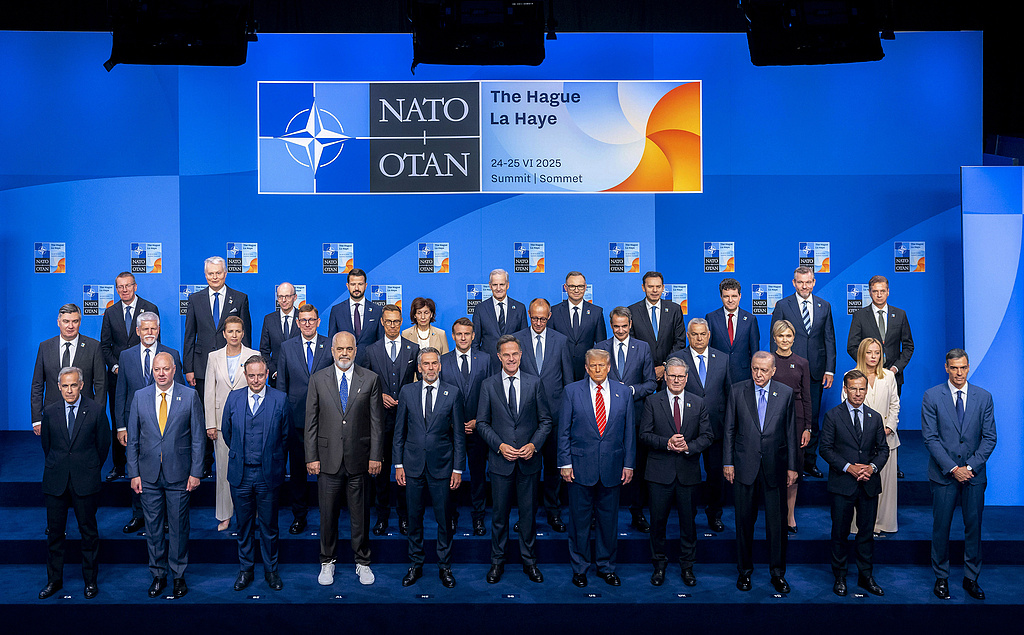
【环时深度】“硬刚”美国军费要求,西班牙有哪些考量?
Huan Qiu Shi Bao· 2025-06-26 22:34
Core Viewpoint - Spain has resisted U.S. pressure to increase its defense spending to 5% of GDP, committing only to 2.1%, reflecting its independent stance within NATO and the EU [1][3][4] Defense Spending and NATO Relations - At the NATO summit, leaders agreed to raise defense spending to 5% of GDP by 2035, but Spain's Prime Minister Sanchez firmly stated that Spain would not follow this directive, maintaining its commitment to 2.1% [3][4] - Spain's position has drawn criticism from the U.S., with President Trump labeling Spain as "NATO's new villain" and threatening repercussions in trade negotiations [3][4] - Only Belgium and Slovakia openly supported Spain's stance against the 5% requirement, highlighting Spain's isolation on this issue [4] Historical Context and Public Sentiment - Spain's reluctance to prioritize defense spending is rooted in its historical context, particularly the legacy of the Franco dictatorship, which neglected military funding [5][6] - The Spanish public has a cautious attitude towards military expansion, influenced by a long-standing pacifist tradition [7][8] Economic Considerations - Spain's defense budget for 2024 is approximately €17.2 billion, a 9.3% increase from 2023, but still only 1.28% of GDP, the lowest among NATO countries [5][8] - The government prefers to allocate resources to social welfare rather than military spending, with Sanchez emphasizing the need to avoid jeopardizing public services [8][9] Independent Foreign Policy - Spain seeks to maintain an independent foreign policy, balancing relations with the U.S. and China, and advocating for closer economic ties with China despite U.S. warnings [10][11] - Spain's unique geographical position influences its security perceptions, leading to a different threat assessment compared to Eastern European countries [9][12] Support for Ukraine and Regional Stability - Spain has been a strong supporter of Ukraine, providing military aid and emphasizing the need for dialogue with Russia to resolve the conflict [11][12] - Spain's diplomatic efforts extend to maintaining stable relations with North African countries, focusing on regional security and cooperation [12]