
国际制裁

Search documents
伊朗外长与联合国秘书长通话 美国宣布对伊朗实施新制裁
Yang Guang Wang· 2026-01-16 03:57
Group 1 - Iranian Foreign Minister Zarif expressed the expectation for the UN Secretary-General and the Security Council to strongly condemn the terrorist actions during the unrest and the illegal interference by the US in Iran's affairs [1] - US President Trump has postponed the decision on whether to launch military strikes against Iran, with military options still on the table but uncertainty increasing [1] - The US Treasury announced sanctions against multiple individuals and entities in Iran, as well as several foreign companies associated with Iran [1] Group 2 - The Iraqi government has explicitly rejected the use of its territory, airspace, or waters as a launchpad for military actions against any country [1] - Turkish Foreign Minister Cavusoglu stated that Turkey opposes any military action against Iran and supports resolving current issues through dialogue [1]
伊朗骚乱第二周:警方向示威者发射催泪弹,里亚尔继续暴跌
Jin Shi Shu Ju· 2026-01-07 02:32
Core Insights - The protests in Iran have escalated significantly, with a strong police crackdown occurring in Tehran's Grand Bazaar, which is considered the economic heart of the country [2] - The Iranian currency, the rial, has depreciated to a historic low of 1,470,000 rials per dollar, reflecting severe economic distress [4] - The protests, initially sparked by dissatisfaction over currency devaluation, have evolved into broader political demands, with demonstrators openly criticizing the Supreme Leader [2][3] Economic Context - Iran's economic troubles are primarily attributed to harsh international sanctions, which have been exacerbated by the failure of nuclear negotiations with the U.S. [3] - Since last summer, the Iranian rial has lost approximately 60% of its value against the U.S. dollar, contributing to record-high inflation levels domestically [3] Social Unrest - The protests have spread to 88 cities, resulting in at least 1,200 arrests and 29 reported deaths, indicating a significant escalation in civil unrest [4] - The current wave of protests is notably centered in impoverished communities and small towns, contrasting with previous protests that were primarily driven by the urban middle class [4] Government Response - The Iranian government has acknowledged the economic grievances of the protesters but has resorted to deploying security forces to control the situation [4] - Internet disruptions have been implemented to hinder communication among protesters, with a reported 40% drop in national internet traffic [4] International Reactions - U.S. President Trump has warned that the U.S. will intervene if the Iranian government responds violently to the protests, raising speculation about potential military actions [5] - A pro-government rally occurred in Isfahan, where participants expressed support for price controls while denouncing inflation and the U.S. [5]
1美元换140万!资源、文明、人口样样不缺,伊朗为何反而成了负资产?
Xin Lang Cai Jing· 2026-01-04 23:35
Core Viewpoint - The article discusses the severe economic crisis in Iran, highlighting the extreme devaluation of its currency, with 1 USD equating to 1.4 million Iranian rials, and explores the underlying causes of this situation, including external sanctions and internal economic mismanagement [1][2]. Group 1: Economic Breakdown - The article identifies a "break in the economic lifeblood," detailing how the failure of the "shadow fleet" and rampant money printing have contributed to the crisis, exacerbated by external "Snapback" sanctions that have cut off vital resources [1][2]. - It emphasizes the role of a privileged economy that has drained the last drops of nourishment from the country, leading to widespread economic despair [1][2]. Group 2: Social Disparity - The stark contrast between the elite and the general populace is highlighted, with citizens scavenging for food while the wealthy elite in northern Tehran enjoy luxury cars and private zoos, illustrating a painful societal divide [1][2]. - The Revolutionary Guard's control over the economic empire is noted as a significant factor contributing to public despair and societal fragmentation [1][2]. Group 3: Geopolitical Dynamics - The article questions why nuclear capability remains an elusive dream for Iran, suggesting that there are unspoken rules among the "P5" nations regarding the prevention of Iran's nuclear ambitions, indicating a complex geopolitical landscape [1][2]. - It discusses the surprising consensus among major powers in addressing the Iranian nuclear issue, framing it as a brutal power game [1][2]. Group 4: Future Uncertainties - The article raises concerns about the future of Iran, mentioning the targeted elimination of top elites and the significant technological gap represented by military assets like the S400 and F35, which contribute to a sense of despair [1][2]. - It posits that the internal strife and external pressures may create a power vacuum behind the aging leadership, potentially leading to further instability [1][2]. - The narrative concludes that Iran's tragedy is a result of both internal decay and external strangulation, despite its rich resources and historical significance [1][2].
突发!美国财政部宣布:制裁!
券商中国· 2026-01-01 01:23
Core Viewpoint - The article discusses the recent sanctions imposed by the U.S. on companies operating in Venezuela's oil sector and highlights military actions against drug trafficking vessels, indicating a significant escalation in U.S. pressure on Venezuela and its ties with Iran [2][4][5]. Group 1: U.S. Sanctions and Military Actions - On December 31, 2025, the U.S. Treasury's Office of Foreign Assets Control announced sanctions against four companies operating in Venezuela's oil sector and froze four related oil tankers [4]. - The U.S. has intensified its pressure on Venezuela, conducting at least three interception operations against oil tankers near Venezuela since December 10, 2025, claiming to seize the crude oil onboard [4]. - The U.S. State Department and Treasury announced sanctions against a total of 10 entities and individuals from Iran and Venezuela, citing Iran's ongoing provision of conventional weapons to Venezuela as a threat to U.S. interests [4][5]. Group 2: Venezuela's Military Response - On December 31, 2025, the Venezuelan National Armed Forces reported the destruction of the 40th drug-related aircraft during a special operation in Apure state, claiming it was a threat to territorial sovereignty [7]. - Throughout 2025, Venezuela has destroyed 40 drug-related aircraft, with President Maduro stating that the armed forces will remain vigilant against crime and drug trafficking [7][8]. - The Venezuelan military has intercepted 9 drug trafficking aircraft within 24 hours, marking a record in their anti-drug operations [7].


印度拒收俄罗斯原油后,多艘俄油轮在黄海排起长队,对中国赔钱清仓大甩卖?
Sou Hu Cai Jing· 2025-12-23 06:19
Group 1 - India's recent decision to stop importing Russian crude oil has drawn significant international attention, marking a shift in the energy landscape and posing new challenges for Russia's energy strategy [1][3] - The Indian refiners' change in stance is attributed to increased compliance, financial, and secondary sanction risks due to heightened U.S. sanctions against Russia, leading to a reassessment of risk versus reward [3] - Russia's response to India's decision has been to pivot its sales strategy towards China, offering discounts of up to $35 per barrel, which is a historical high, indicating the urgency of the situation for Russia [1][3] Group 2 - Russia's oil and gas revenues have decreased by 34% year-on-year, highlighting the financial strain and the necessity to maintain cash flow amidst the current economic conditions [3] - The breakeven price for Urals crude oil is typically between $41 and $46 per barrel, and selling below this range not only results in losses but also impacts Russia's long-term energy strategy [3] - China's ability to acquire Russian crude at low prices does not equate to a straightforward benefit, as most Chinese refineries are not interested in high-sulfur heavy crude without significant discounts [5] Group 3 - The evolving dynamics of the Russia-India relationship suggest that China's influence in energy cooperation with Russia may increase, reflecting the complexities of international energy relations [7] - While China can currently leverage Russian resources, the long-term dependency on Russian energy remains a critical question, especially in light of the shifting geopolitical landscape [7] - Russia's need for a stable and diversified export system is underscored by the current geopolitical tensions, particularly in the context of U.S.-China relations [5][7]
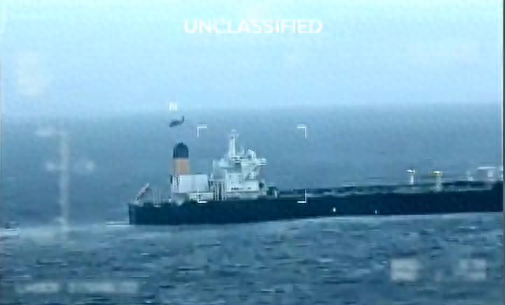
10天内第2次!美国再扣委内瑞拉油轮,委谴责“盗窃和劫持”
Xin Lang Cai Jing· 2025-12-21 16:37
Core Viewpoint - The United States has intercepted a sanctioned Venezuelan oil tanker in international waters, marking the second such seizure in ten days, which has been condemned by Venezuelan officials as acts of "theft and hijacking" [1][4][6]. Group 1: U.S. Actions - On December 20, the U.S. Coast Guard, supported by the Department of Defense, intercepted a tanker previously docked in Venezuela [4]. - This operation follows President Trump's announcement of a "blockade" against all sanctioned tankers entering or leaving Venezuela, occurring just days after the first seizure on December 10 [4][6]. - The U.S. has deployed multiple naval vessels in the Caribbean under the pretext of anti-drug operations, with no evidence provided to substantiate claims of drug trafficking [6]. Group 2: Venezuelan Response - Venezuelan Vice President and Oil Minister Rodriguez condemned the U.S. actions as "piracy" and a violation of international law, asserting that the U.S. attempts to impose a colonial model on Venezuela will ultimately fail [6]. - The Venezuelan government plans to appeal to the United Nations Security Council and other multilateral organizations for appropriate actions against the U.S. [6]. - Venezuelan Foreign Minister Arreaza accused the U.S. of fabricating false news to justify the theft of Venezuelan resources, including oil, land, and minerals [6].
俄罗斯油价跌至战争以来最低点!欧洲强力武装乌克兰部队
Sou Hu Cai Jing· 2025-12-17 15:08
Group 1 - The core viewpoint is that international sanctions are causing a significant decline in Russian oil prices, which have reached their lowest point since the onset of the war [1][3] - Russian oil companies are forced to sell oil at increased discounts due to the sanctions, with prices dropping by 28% over the past three months [5][6] - The average selling price of Russian oil is around $40 per barrel [6] Group 2 - Ukrainian military actions have severely impacted the Russian energy system, including attacks on oil platforms in the Caspian Sea [7][9] - A recent airstrike halted production at the Filanovsky platform, leading to the shutdown of over 20 oil wells, which significantly weakens Russia's financial resources for the war [9] - Oil revenue constitutes a substantial portion of the Russian government's budget, making these disruptions critical [9] Group 3 - Europe is planning to significantly strengthen the Ukrainian military, including post-war support for Kyiv [11][12] - The plan aims to provide Ukraine with security guarantees similar to NATO's Article 5, including the deployment of European troops and extensive use of U.S. intelligence [12] - The expected size of the Ukrainian armed forces will remain around 800,000 even during "peacetime," indicating a long-term commitment to military strength [12][14] Group 4 - Western countries, including the UK, are committed to continuing arms supplies to Ukraine, with the UK announcing a £600 million defense aid package to help Kyiv counter Russian drones during winter [14][16]
美对委祭新制裁、没收石油 马杜罗:不会退缩!
Xin Hua She· 2025-12-12 07:47
Core Viewpoint - The U.S. government has intensified sanctions against Venezuela, including the seizure of an oil tanker and the imposition of new sanctions on individuals and entities linked to President Maduro, indicating a strategic approach to deter oil transportation from Venezuela [1][2][3]. Group 1: U.S. Actions - The U.S. Treasury updated its sanctions list to include three nephews of Maduro's wife and six additional oil tankers [2]. - The U.S. military seized a large oil tanker near Venezuela, described as the largest seized to date, which was allegedly involved in transporting oil for Iran and Venezuela [2][3]. - The U.S. plans to confiscate the oil aboard the seized tanker, which is linked to the Iranian Revolutionary Guard, a sanctioned entity [3]. Group 2: Venezuelan Response - President Maduro condemned the U.S. actions as "piracy" and stated that Venezuela would pursue legal and diplomatic avenues to ensure its oil can be sold globally [4][5]. - Maduro emphasized that the Venezuelan people would not be intimidated by U.S. threats and would continue to defend their sovereignty and resources [4][5]. Group 3: International Reactions - Russian President Putin expressed support for Maduro during a phone call, reaffirming the commitment to strengthen bilateral relations and cooperation in various sectors [6]. - The ongoing U.S. military presence in the Caribbean, justified by anti-drug operations, has raised concerns about potential military intervention in Venezuela [6].
白宫:这艘油轮上的石油,美国将没收
Xin Hua She· 2025-12-12 07:40
Core Viewpoint - The U.S. government is seizing a tanker near Venezuela, which is linked to oil activities under U.S. sanctions, and plans to confiscate the oil onboard [1] Group 1: U.S. Government Actions - The U.S. is taking legal steps to seize the tanker, including questioning the crew and gathering evidence [1] - The oil onboard the tanker is intended for the Iranian Islamic Revolutionary Guard Corps, an entity under U.S. sanctions [1] Group 2: Political Reactions - Former President Trump stated that the U.S. military has seized the tanker and will retain the oil onboard [1] - The Venezuelan Foreign Minister condemned the seizure as an act of "international piracy" [1]
委内瑞拉:将诉诸法律和外交途径保证石油贸易
中国能源报· 2025-12-12 03:53
马杜罗:委内瑞拉将诉诸法律和外交途径保证石油贸易。 ▲ 委内瑞拉总统马杜罗(央视新闻客户端资料图 ) 当地时间11日,委内瑞拉总统马杜罗表示,该国将诉诸相应的法律和外交途径以确保石 油可以销往世界各地。 End 罗德里格斯表示,该事件已被定性为"卑劣的抢劫",暴露出美国觊觎并企图占有委内瑞 拉石油这一真相。罗德里格斯称,美国在加勒比海域动用包括驱逐舰、潜艇及"杰拉尔德 ·R·福特"号航母在内的"超常规模"军事部署,是扰乱贸易并窃取委内瑞拉资源的蓄意行 动。 委内瑞拉重申对本国资源的合法捍卫立场,要求国际海事组织启动所有国际机制,以捍卫 航行自由与海上贸易。 美在委附近海域扣押油轮 美国白宫新闻秘书莱维特11日说,美方前一天在委内瑞拉附近海域扣押的油轮将被带到 一处美国港口,美方准备没收油轮所载石油。同一天,美国财政部在官网发布公告,更新 委内瑞拉相关个人和实体制裁名单,包括增加6艘油轮为制裁对象。 美国总统特朗普10日说,美军在委内瑞拉附近海域扣押一艘油轮,并称将"留下"油轮所 载石油。美司法部长邦迪称,美方对这艘"用于运输委内瑞拉和伊朗石油的油轮"执行扣 押令,并称该油轮"因参与支持外国恐怖组织的非法石油运 ...
