
外周免疫耐受

Search documents
2025年诺贝尔化学奖,揭晓!这个热门新材料
DT新材料· 2025-10-08 10:00
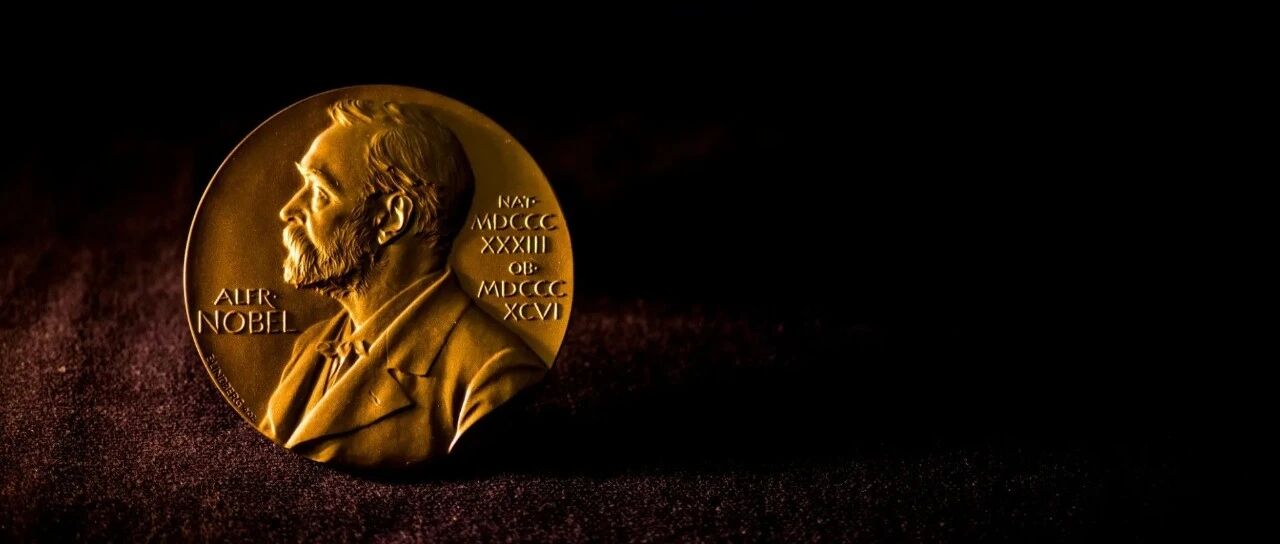
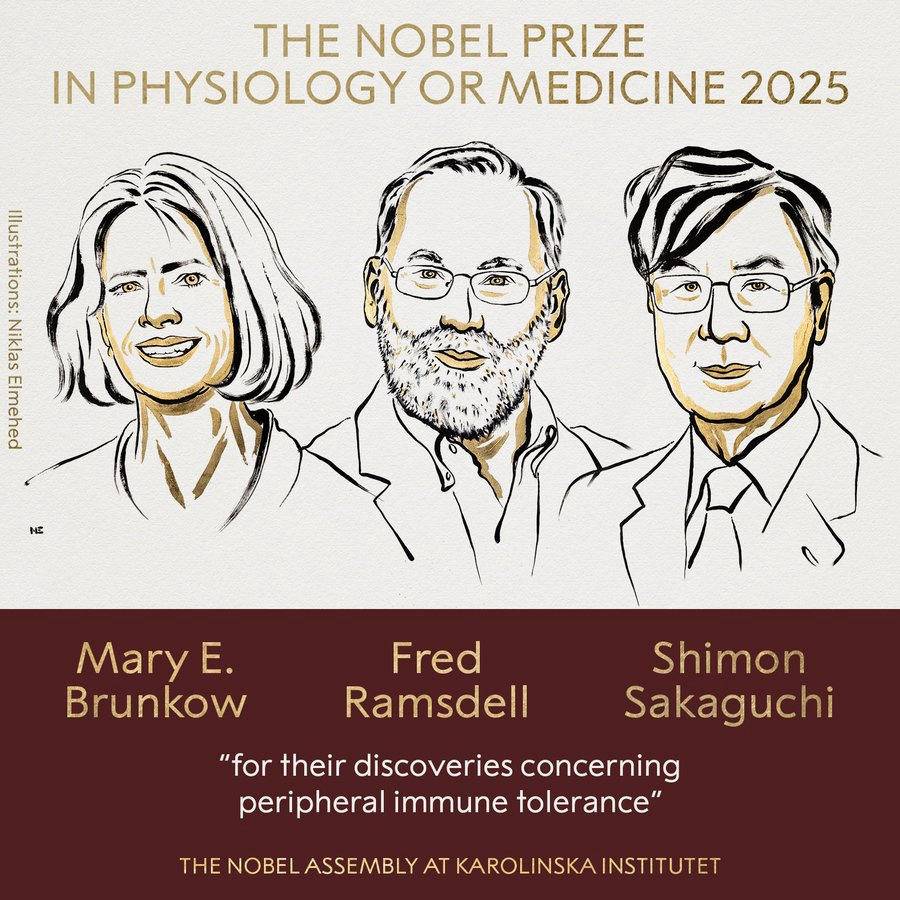
Group 1 - The 2025 Nobel Prize in Chemistry was awarded to Susumu Kitagawa, Richard Robson, and Omar M. Yaghi for their development of metal-organic framework materials, with a prize amount of 11 million Swedish Krona [2] - Since 1901, the Nobel Prize in Chemistry has been awarded 116 times to a total of 195 individuals, including 8 women [4] - The youngest laureate was Frédéric Joliot at age 35, while the oldest was John B. Goodenough at age 97; both Frederick Sanger and Karl Barry Sharpless have won the award twice [4] Group 2 - The Nobel Prize in Chemistry from 2001 to 2024 highlights various significant contributions, including protein design, quantum dot synthesis, and lithium-ion battery development [5][6] - The 2025 Nobel Prize in Physics was awarded to John Clarke, Michel H. Devoret, and John M. Martinis for their discoveries in macroscopic quantum mechanics [5] - The 2025 Nobel Prize in Physiology or Medicine was awarded to Mary E. Brunkow, Fred Ramsdell, and Shimon Sakaguchi for their research on peripheral immune tolerance, which has implications for precision medicine and biotechnology [5]

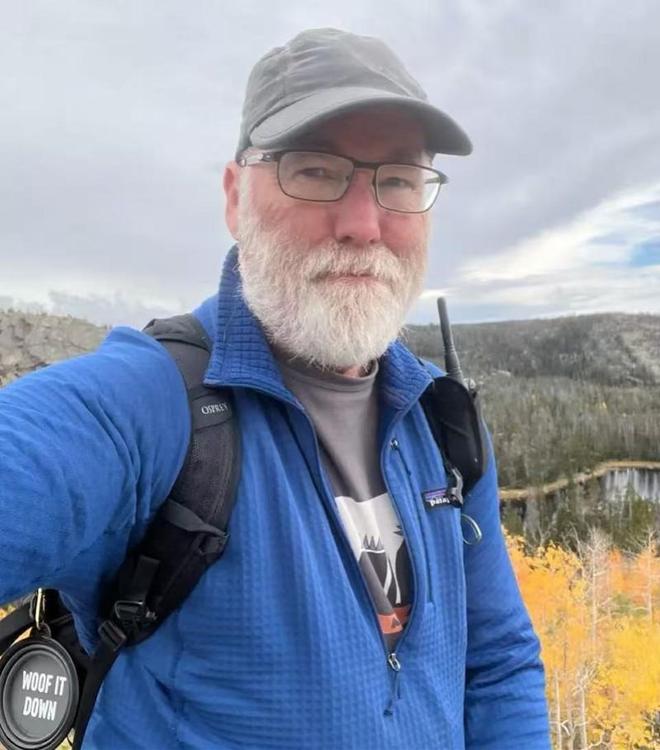
失联诺奖得主回忆得奖前后:山中露营被困,计划回西雅图庆祝
Nan Fang Du Shi Bao· 2025-10-08 08:57
Group 1 - The Nobel Prize in Physiology or Medicine for 2025 was awarded to scientists Mary E. Brunkow, Fred Ramsdell, and Shimon Sakaguchi for their contributions to the understanding of peripheral immune tolerance mechanisms [6][9] - The prize amount is 11 million Swedish Krona, approximately 8.32 million RMB, which will be shared among the three winners [6] - The research breakthroughs by the winners have significant clinical implications, particularly in the treatment of autoimmune diseases [9][10] Group 2 - Fred Ramsdell, born in 1960, is active in both basic research and the biotechnology industry, focusing on the development of immune-related therapies [10] - Ramsdell's work aims to translate foundational discoveries in immunology into interventions for autoimmune diseases and cancer [10] - The Nobel Committee faced challenges in contacting Ramsdell to inform him of his award due to his remote camping trip, which highlights the personal aspect of scientific achievements [4][5]
刚刚,2025诺贝尔物理学奖,揭晓!
DT新材料· 2025-10-08 06:42
Group 1 - The 2025 Nobel Prize in Physics was awarded to American scientists John Clarke, Michel H. Devoret, and John M. Martinis for their discovery of "macroscopic quantum mechanical tunneling and energy quantization in circuits" [2] - John Martinis led Google's team that announced the achievement of "quantum supremacy" in 2019 with the development of the "Sycamore" quantum processor [2] - The prize amount for the 2025 Nobel Prize is 11 million Swedish Krona, equivalent to approximately 834.526 million RMB, remaining the same as in 2024 [2] Group 2 - As of 2024, the Nobel Prize in Physics has been awarded 118 times, with six years having no awards: 1916, 1931, 1934, 1940, 1941, and 1942 [3] - From 1901 to 2024, a total of 227 individuals have received the award, with John Bardeen being the only person to win it twice, in 1956 and 1972 [3] Group 3 - The youngest laureate of the Nobel Prize in Physics is British physicist Lawrence Bragg, who won in 1915 at the age of 25 for contributions to the analysis of crystal structures using X-rays [5] - The oldest laureate is American physicist Arthur Ashkin, who won in 2018 at the age of 96 for groundbreaking inventions in laser physics [6] - Among the 224 Nobel Prize winners in Physics, only five are women, including Marie Curie, Maria Goeppert-Mayer, Donna Strickland, Andrea Ghez, and Anne L'Huillier [6] Group 4 - The Nobel Prize website highlights three significant achievements in physics: the discovery of X-rays, advancements in photographic technology, and the invention of energy-saving lamps [7][8] - Wilhelm Röntgen was awarded the first Nobel Prize in Physics in 1901 for the discovery of X-rays, which are still used in medical diagnostics today [7] - The invention of the charge-coupled device by Willard Boyle and George Smith, awarded in 2009, was a major breakthrough in digital camera technology [7] - The 2014 Nobel Prize in Physics was awarded to Akasaki Shuji, Amano Hiroshi, and Nakamura Shuji for their invention of high-brightness blue light-emitting diodes, which revolutionized lighting technology [8] Group 5 - The 2025 Nobel Prize in Physiology or Medicine was awarded to Mary E. Brunkow, Fred Ramsdell, and Shimon Sakaguchi for their contributions to peripheral immune tolerance, which enhances understanding of the immune system and supports advancements in precision medicine and biotechnology [10]
港股异动 | 和铂医药-B(02142)早盘涨超8% 诺奖聚焦外周免疫耐受 市场关注Treg细胞疗法潜力
Zhi Tong Cai Jing· 2025-10-08 03:39
Core Viewpoint - The announcement of the Nobel Prize in Physiology or Medicine is expected to ignite a surge in the research and development of Treg cell therapy technologies and innovative drugs [1] Company Summary - HBM4003, a next-generation antibody targeting the CTLA-4 pathway developed by the company, has shown excellent safety characteristics in clinical studies and has demonstrated clear efficacy signals in multiple tumor types, including colon cancer, liver cancer, and neuroendocrine tumors [1] - The company's antibody HBM1022, targeting the CCR8 pathway, is considered a highly promising candidate in its pipeline, potentially leading to breakthroughs in tumor immunotherapy [1] Industry Summary - The recent Nobel Prize recognition in the field of "peripheral immune tolerance" is likely to stimulate interest and investment in Treg cell therapies and related innovative treatments within the biopharmaceutical industry [1]
诺奖释放Treg细胞疗法潜力 和铂医药持续推进CTLA-4及CCR8抗体研发
Zheng Quan Shi Bao Wang· 2025-10-08 02:28
Core Insights - The Nobel Prize in Physiology or Medicine was awarded to Mary E. Brunkow, Fred Ramsdell, and Shimon Sakaguchi for their groundbreaking work in the field of peripheral immune tolerance, specifically the discovery of regulatory T cells (Treg) and the identification of the transcription factor Foxp3 as their "identity switch" [1] Group 1: Treg Cell Significance - Treg cells are unique "brake cells" in the immune system that specifically express CD4 molecules, functioning to precisely inhibit the overactivation of other immune cells, thereby preventing autoimmune diseases and regulating inflammatory responses [1] - Key proteins such as CTLA-4 and CCR8 are essential for Treg cells to perform their "immune brake" function, making them critical therapeutic targets in the biopharmaceutical field [1] Group 2: Innovation in Drug Development - Several innovative pharmaceutical companies are accelerating their development of Treg-related therapies, with companies like HBM focusing on the CTLA-4 target [2] - HBM's new generation antibody HBM4003 shows higher affinity for the CTLA-4 molecule, improved tumor tissue penetration, and significantly reduced systemic side effects, demonstrating promising safety and efficacy signals in clinical studies for various cancers [2] - HBM is also developing the HBM1022 antibody targeting CCR8, which effectively identifies and kills CCR8-positive Treg cells, positioning it as a potential breakthrough in tumor immunotherapy [2]
诺奖宣布后,获奖人竟“失联”:一位正徒步旅行至今联系不上,一位看到外地号码以为是“垃圾信息”!秘书长:我请求他们,有空给我回电话
Mei Ri Jing Ji Xin Wen· 2025-10-07 15:51
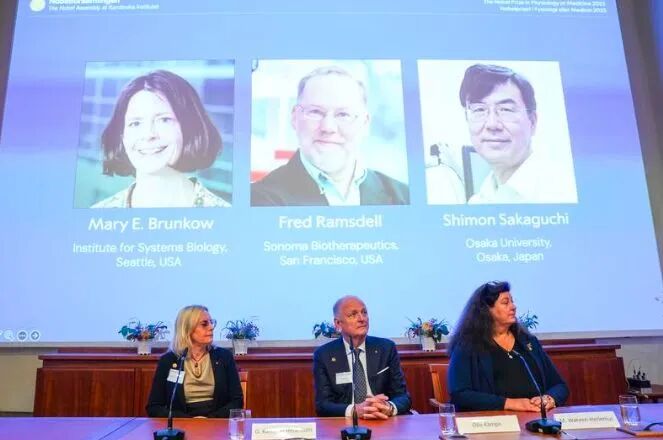
Core Points - The 2025 Nobel Prize in Physiology or Medicine was awarded to scientists Mary E. Brunkow, Fred Ramsdell, and Shimon Sakaguchi for their groundbreaking discoveries in peripheral immune tolerance mechanisms [1][3] - The prize amount is 11 million Swedish Krona, approximately 8.34 million RMB, to be shared among the winners [3] Group 1: Research Contributions - The winners identified regulatory T cells as "guardians" of the immune system, which prevent immune cells from attacking the body's own tissues [4][8] - They discovered the "master switch" gene Foxp3, which controls the development and function of these key cells, explaining why the immune system does not attack itself [4][8] - Their findings have laid the groundwork for new research areas and have facilitated the development of therapies for diseases such as type 1 diabetes and rheumatoid arthritis [8] Group 2: Background of Winners - Mary E. Brunkow, born in 1961, obtained her PhD in molecular biology from Princeton University in 1991, focusing on the intersection of biomedicine, immunology, and systems biology [3] - Fred Ramsdell, born in 1960, has been active in both basic research and the biotechnology industry, working on translating immunological discoveries into therapeutic strategies [3] - Shimon Sakaguchi, born in 1951, is a professor at Osaka University and has received multiple awards for his pioneering work in immune regulation [3] Group 3: Historical Context - Sakaguchi's initial discovery in 1995 contradicted the prevailing belief that immune tolerance was solely achieved through central tolerance in the thymus [5][6] - Brunkow and Ramsdell focused on a mutant mouse model, "scurfy," which exhibited uncontrolled T cell proliferation due to a genetic defect, leading to their identification of the Foxp3 gene in 2001 [7] - The integration of these discoveries by Sakaguchi in 2003 provided a comprehensive understanding of immune regulation mechanisms [8]
唠科|避免人体“内战”的免疫“安全卫士”——2025年诺贝尔生理学或医学奖成果解读
Xin Hua She· 2025-10-07 11:35
Core Insights - The 2025 Nobel Prize in Physiology or Medicine was awarded to three scientists for their groundbreaking discoveries in peripheral immune tolerance, which have significant implications for the treatment of autoimmune diseases and cancer [10][13]. Group 1: Key Discoveries - The three laureates, Mary Brunkow, Fred Ramsdell, and Shimon Sakaguchi, identified regulatory T cells that prevent the immune system from attacking the body’s own cells, thus avoiding "internal wars" within the immune system [8][13]. - Sakaguchi's research in 1995 established that regulatory T cells are a special subset of T cells that protect against autoimmune diseases [14][16]. - Brunkow and Ramsdell's 2001 study linked mutations in the FOXP3 gene to rare autoimmune diseases, highlighting its critical role in the development of regulatory T cells [17][20]. Group 2: Clinical Implications - The discoveries have opened a new research field in peripheral immune tolerance, which could advance treatments for cancer, autoimmune diseases, and organ transplantation [10][13]. - Current data indicates that autoimmune diseases, such as type 1 diabetes and rheumatoid arthritis, affect approximately 10% of the population, underscoring the clinical significance of these findings [24].

免疫系统的“刹车”找到了!2025诺奖解密外周免疫耐受,它是治疗自身免疫病和癌症的新希望?
Yang Zi Wan Bao Wang· 2025-10-07 06:50
Core Viewpoint - The 2025 Nobel Prize in Physiology or Medicine was awarded to two American scientists, Mary E. Brencoe and Fred Ramsdell, along with Japanese scientist Shimon Sakaguchi, for their discoveries in the field of peripheral immune tolerance, which is crucial for preventing autoimmune diseases [1][6]. Group 1: Immune System and Autoimmune Diseases - The immune system functions as a "health guardian," responsible for combating pathogens and maintaining internal balance by eliminating mutated or dead cells [6]. - Autoimmune diseases occur when the immune system mistakenly attacks normal cells, leading to conditions such as rheumatoid arthritis and systemic lupus erythematosus [6]. - The key to why not everyone develops severe autoimmune diseases lies in the immune system's "recognition correction" mechanism, known as immune tolerance [6]. Group 2: Mechanisms of Immune Tolerance - Immune tolerance is divided into "central tolerance," which eliminates immune cells that recognize self-antigens during development, and "peripheral tolerance," which acts as a "brake system" to protect self-tissues while eliminating threats [6][7]. - The Nobel Prize-winning research focused on the "brake system," identifying regulatory T cells (Treg) as crucial components in peripheral tolerance [6][8]. Group 3: Clinical Applications and Challenges - The findings open new avenues for treating autoimmune diseases, organ transplantation, and cancer therapy [8][9]. - For autoimmune diseases, low-dose interleukin-2 (IL-2) can enhance Treg cells to restore immune balance [8]. - In organ transplantation, increasing Treg activity can reduce rejection responses, improving graft survival [9]. - In cancer treatment, strategies to weaken local Treg cells are necessary to allow immune cells to attack tumors effectively [9]. - Current therapies face challenges in precision and safety, with ongoing research needed to develop effective clinical applications [10].

科普|避免人体“内战”的免疫“安全卫士”——2025年诺贝尔生理学或医学奖成果解读
Xin Hua She· 2025-10-07 05:13
Core Insights - The article discusses the groundbreaking discoveries by three scientists, Mary Brenner, Fred Ramsdell, and Shimon Sakaguchi, regarding regulatory T cells, which act as "safety guards" in the immune system, preventing it from mistakenly attacking the body's own cells [1][6]. Group 1: Immune System Understanding - The immune system is likened to an army that protects the body from pathogens, but pathogens can disguise themselves, complicating the immune response [1]. - Traditionally, it was believed that immune tolerance was achieved solely through a central process in the thymus, where immune cells are screened to prevent them from attacking the body [2]. Group 2: Key Discoveries - In the 1980s, Sakaguchi's research revealed that mature T cells could regulate immune responses and suppress self-reactive T cells, leading to the identification of regulatory T cells [3]. - Subsequent research by Brenner and Ramsdell provided critical evidence supporting Sakaguchi's findings, linking genetic mutations in mice to immune system dysfunction [4][5]. Group 3: Clinical Implications - The discoveries have significant clinical implications, paving the way for new therapies for autoimmune diseases and cancer, with over 200 related studies currently in clinical trials [6][7]. - Autoimmune diseases affect approximately 10% of the global population, highlighting the importance of these findings in developing treatment methods [7].
2025年诺贝尔生理学或医学奖揭晓 三位科学家获奖
Ren Min Wang· 2025-10-07 02:52
Core Points - The 2025 Nobel Prize in Physiology or Medicine has been awarded to Marie Brlenko, Fred Ramsdell, and Simon Sakaguchi for their groundbreaking discoveries in peripheral immune tolerance [1] - The Nobel Committee recognized their identification of regulatory T cells as "bodyguards" of the immune system, which prevent the immune system from harming the body [1] - Their findings have laid the foundation for new research areas and stimulated the development of new therapies for conditions such as cancer and autoimmune diseases [1] Individual Contributions - Marie Brlenko, born in 1961, holds a PhD from Princeton University and is currently a senior project manager at the Institute for Systems Biology in Seattle, USA [2] - Fred Ramsdell, born in 1960, obtained his PhD from UCLA in 1987 and works as a scientific advisor [2] - Simon Sakaguchi, born in 1951, received his medical doctorate from Kyoto University in 1976 and is currently a distinguished professor at Osaka University’s Immunology Frontier Research Center in Japan [2]