
癌症治疗

Search documents
ImmunityBio stock price crash: buy the dip or sell the rip?
Invezz· 2026-03-24 19:25
Core Viewpoint - ImmunityBio Inc (NASDAQ: IBRX) faces significant pressure following a warning letter from the FDA regarding misleading promotional claims about its bladder cancer drug, Anktiva, which has led to a sharp decline in stock price despite strong year-to-date performance [1][2][3] Regulatory Concerns - The FDA accused ImmunityBio of misbranding Anktiva, suggesting it could cure or prevent all cancers without clinical evidence, which violates federal law [2][3] - This formal violation could result in financial penalties, increased oversight, and delays in future drug applications, impacting the company's credibility and regulatory standing [3][4] Financial Performance - ImmunityBio reported a loss of approximately $351 million last year, raising concerns about its financial health, especially with an Altman Z-Score of -5.91 indicating distress-level risk [4] - Despite the recent downturn, IBRX shares have increased by about 250% since the beginning of 2026, driven by explosive sales growth and international approvals [2][8] Insider Activity - Recent insider selling, including a $1.78 million divestment by director Barry J. Simon, has negatively affected investor sentiment, suggesting a cautious approach may be warranted [5] Growth Potential - The company's net product revenue surged 700% year-on-year to $113 million in 2025, primarily due to the rapid adoption of Anktiva in the U.S. market [8] - Wall Street analysts maintain a bullish outlook, with a consensus rating of "strong buy" and a mean price target of nearly $15, indicating potential for over 100% upside [9] Strategic Outlook - ImmunityBio is transitioning from a research-focused biotech to a global commercial entity, having secured regulatory approval for Anktiva in Macau and operating in 33 countries [10][11] - A supplemental Biologics License Application (sBLA) filed with the FDA could expand Anktiva's market reach, while the company may benefit from shortages in traditional bladder cancer treatments [10][11]



BioLineRx Ltd. (NASDAQ: BLRX) Earnings Report and Clinical Development Update
Financial Modeling Prep· 2026-03-23 19:04
Core Insights - BioLineRx Ltd. is a biopharmaceutical company focused on developing treatments for oncology and rare diseases, currently in the clinical development stage [1] Financial Performance - For the earnings report on March 23, 2026, BioLineRx reported an earnings per share (EPS) of -0.38, matching the estimated EPS, while generating revenue of $514,000, which surpassed the estimated revenue of $492,000 [2][6] - The company has a negative price-to-earnings (P/E) ratio of approximately -3.24 and a negative earnings yield of about -30.83%, indicating current losses [4][6] - The price-to-sales ratio stands at 0.84, suggesting the stock is valued at less than its sales per share, which may attract growth-oriented investors [4][6] Clinical Development - BioLineRx is advancing its clinical pipeline with a Phase 1/2a clinical trial of GLIX1 for glioblastoma (GBM), set to begin by the end of March 2026, with patient enrollment expected shortly thereafter [3][6] Financial Health - The company has a debt-to-equity ratio of about 0.58, indicating a moderate level of debt, and a current ratio of approximately 2.09, suggesting a strong ability to cover short-term liabilities with short-term assets [5]

百济神州归母净利14.2亿扭亏 近四年研发费492.6亿占营收60%
Chang Jiang Shang Bao· 2026-03-02 00:34
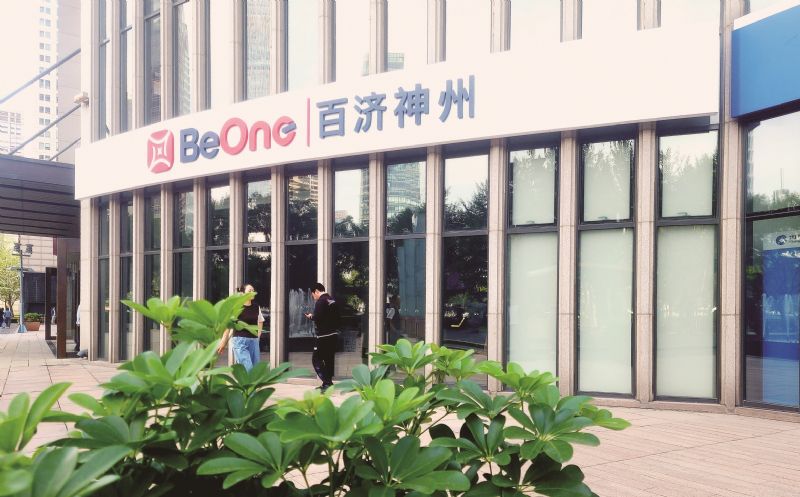
Core Insights - After turning profitable, BeiGene (688235.SH, 06160.HK, NASDAQ: BGNE) has demonstrated significant growth momentum, with 2025 revenue reaching 38.205 billion yuan, a year-on-year increase of 40.4%, and a net profit of 1.422 billion yuan, recovering from a loss of 4.978 billion yuan in the previous year [2][3] Financial Performance - In 2025, BeiGene's product revenue was 37.77 billion yuan, up 39.9% year-on-year [2] - The company reported a net profit of 1.422 billion yuan for 2025, compared to a loss of 4.978 billion yuan in the same period last year [2] - The company had a cumulative net loss of approximately 59.1 billion yuan from 2017 to 2024, averaging over 20 million yuan in daily losses [2] Revenue Drivers - The growth in product revenue for 2025 was primarily driven by the sales of Baiyueze (Zebutinib), licensed products from Amgen, and Baizean (Tislelizumab) [3][4] - Baiyueze's global sales reached 28.067 billion yuan in 2025, marking a 48.8% increase, solidifying its position as a global leader in the BTK inhibitor market [3] - Sales in the U.S. totaled 20.206 billion yuan, up 45.5%, while Europe and China saw increases of 66.4% and 33.1%, respectively [3] R&D Investment - BeiGene has consistently invested over 10 billion yuan in R&D for four consecutive years, with cumulative R&D expenses reaching 49.264 billion yuan, accounting for approximately 60% of total revenue during this period [6][7] - R&D expenses for 2025's first three quarters were 11.159 billion yuan, a 9.77% increase year-on-year, representing about 40% of the revenue for that period [6] Product Development - Baiyueze is noted for having the broadest range of approved indications among BTK inhibitors globally, with over 45 clinical trials conducted across more than 30 countries [7] - Baizean is positioned as a cornerstone product in BeiGene's solid tumor portfolio, with ongoing clinical development in over 33 countries and more than 15,800 participants enrolled [8] - The company plans to submit new indication applications for Baizean in the U.S. and China in the first half of 2026 [8] Future Outlook - BeiGene anticipates strong financial performance in Q4 2025 and throughout the year, highlighting its competitive advantages in clinical development and a differentiated R&D pipeline [9]

乔布斯亲儿子,干VC了
投中网· 2026-03-01 07:39
Core Viewpoint - Reed Jobs, son of Steve Jobs, has launched a venture capital fund focused on innovative medical projects, particularly those aimed at curing cancer, with an initial fund size exceeding $200 million [4][11]. Group 1: Background and Motivation - Steve Jobs passed away from pancreatic cancer in 2011, leaving a legacy that deeply influenced Reed Jobs, who initially aspired to be a doctor to combat cancer [4][7]. - Reed Jobs' journey into venture capital was driven by a desire to participate in the incubation of projects that could advance scientific and medical development [4][11]. Group 2: Career Development - After his father's death, Reed Jobs shifted his academic focus from medicine to history, eventually earning a master's degree from Stanford University [7][12]. - In 2015, he joined the Emerson Collective, a foundation established by his mother, where he began investing in healthcare, initially as a limited partner in established funds [11][12]. Group 3: Investment Strategy and Achievements - Reed Jobs' investment strategy evolved to focus on supporting research teams with innovative ideas that are not yet commercially viable, particularly in cancer treatment [12][13]. - By 2025, the Emerson Collective had invested in over 40 biotech startups, with 8 companies achieving valuations over $200 million through IPOs or acquisitions [13]. Group 4: New Ventures and Future Plans - In 2023, Reed Jobs founded his own venture capital fund, Yosemite, with a mission to ensure cancer is no longer a fatal disease, starting with a fund size of $263 million [13][14]. - The second phase of Yosemite's fundraising has already raised $200 million, with plans to reach a total of $350 million, indicating strong investor interest [14]. Group 5: Broader Impact and Challenges - Reed Jobs has expressed concerns about the state of the U.S. healthcare system, highlighting issues such as outdated technology and declining public trust in institutions [18][19]. - He has considered political involvement to influence healthcare policy but remains focused on his venture capital efforts, aiming to invest in 25 companies through Yosemite [19].

Iovance Biotherapeutics Explodes Over 20% — Early Trial Data Sparks Investor Frenzy
Benzinga· 2026-02-24 19:14
Core Insights - Iovance Biotherapeutics shares are experiencing a surge due to positive early data from a pilot clinical trial for its TIL cell therapy in advanced soft-tissue sarcomas, showing a 50% confirmed objective response rate among the first six evaluable patients [1][2] Market Opportunity - The trial targets patients with advanced undifferentiated pleomorphic sarcoma (UPS) or dedifferentiated liposarcoma (DDLPS), with over 8,000 patients diagnosed annually in the U.S. and Europe, indicating a significant market opportunity [2] Future Plans - The company plans to initiate a single-arm registrational trial in Q2 2026 and will engage with the U.S. FDA for expedited approval, while also exploring lifileucel in other high-grade soft tissue sarcoma subtypes [3] Technical Analysis - The stock is currently trading 3.77% above its 20-day simple moving average (SMA) and 5.5% below its 100-day SMA, indicating short-term strength but potential long-term resistance [4] - The RSI is at 50.00, suggesting neutral conditions, while the MACD at 0.15 indicates bearish pressure, reflecting mixed momentum for the stock [5] Analyst Consensus - The stock carries a Buy Rating with an average price target of $11.50, with recent analyst actions including Barclays raising its target to $10.00 and Chardan Capital lowering its target to $17.00 [6]


Eli Lilly's Experimental Cancer Drug Cuts Recurrence Risk In Early-Stage Lung Cancer Patients
Yahoo Finance· 2026-02-19 18:30
Group 1: Clinical Trial Results - Eli Lilly announced positive topline results from the Phase 3 LIBRETTO-432 clinical trial for Retevmo (selpercatinib), showing a significant improvement in event-free survival for early-stage non-small cell lung cancer patients [1][2] - The trial demonstrated that selpercatinib significantly reduced the risk of disease recurrence or death in patients with RET fusion-positive non-small cell lung cancer [2][4] - This trial is the first randomized Phase 3 study evaluating a selective RET kinase inhibitor as adjuvant therapy, highlighting the importance of genomic testing in cancer treatment [3] Group 2: Safety and Enrollment - The overall safety profile of selpercatinib was consistent with previous studies, with detailed results expected to be presented at an upcoming medical congress [4] - The trial enrolled 151 patients who received either selpercatinib or placebo, marking a significant advancement in the treatment of early-stage lung cancer [4] Group 3: Market Performance and Stock Analysis - Eli Lilly shares have increased by 21.33% over the past 12 months, indicating a strong upward trend, and the stock is currently trading above its key support level of $1033.50 [6] - The stock is positioned closer to its 52-week highs than lows, suggesting continued strength in its price action [6] - The stock carries a Buy Rating with an average price target of $1141.70, with recent analyst upgrades from Deutsche Bank, JP Morgan, and Cantor Fitzgerald [8]

维立志博-B(09887):维利信?于复发性或转移性三阴性乳腺癌IB/II期试验的首例患者用药
Zhi Tong Cai Jing· 2026-02-11 01:21
Group 1 - The core point of the article is that the first patient has successfully received treatment with the drug Opalizumab (LBL-024) in a Phase Ib/II clinical trial for recurrent or metastatic triple-negative breast cancer (TNBC) [1] - The clinical trial is an open-label, multi-center study led by Professor Yin Yongmei from Jiangsu Provincial People's Hospital, aiming to evaluate the efficacy and safety of Opalizumab alone or in combination with albumin-bound paclitaxel for TNBC patients [1] - The drug Opalizumab is a bispecific antibody targeting both PD-L1 and 4-1BB, and it is the first targeted therapy for the 4-1BB receptor to reach the registration clinical stage for extra-pulmonary neuroendocrine carcinoma [2] Group 2 - In two clinical trials in China, Opalizumab has shown encouraging efficacy signals and good safety profiles, whether used as a monotherapy or in combination with chemotherapy for advanced extra-pulmonary neuroendocrine carcinoma [3] - The company received approval from the National Medical Products Administration (NMPA) in April 2024 to conduct a single-arm registration clinical trial and obtained breakthrough therapy designation (BTD) in October 2024 for treating advanced extra-pulmonary neuroendocrine carcinoma [3] - Cancer is a leading cause of morbidity and mortality globally, with breast cancer being the second most common cancer after lung cancer, and TNBC represents a subtype with high malignancy and poor prognosis, accounting for about 15% to 20% of all breast cancer cases [4]
维立志博-B(09887):维利信™于复发性或转移性三阴性乳腺癌IB/II期试验的首例患者用药
智通财经网· 2026-02-10 08:46
Core Viewpoint - The announcement highlights the successful administration of the first patient in a Phase Ib/II clinical trial for the treatment of recurrent or metastatic triple-negative breast cancer (TNBC) using the bispecific antibody, Opalizumab (LBL-024), which targets PD-L1 and 4-1BB [1] Group 1: Clinical Trial and Drug Development - The Phase Ib/II clinical trial is an open-label, multicenter study led by Professor Yin Yongmei from Jiangsu Provincial People's Hospital, aiming to evaluate the efficacy and safety of Opalizumab alone or in combination with albumin-bound paclitaxel for TNBC patients [1] - Opalizumab is the first bispecific antibody targeting both PD-L1 and 4-1BB, showing potential as a leading therapy for advanced pulmonary neuroendocrine carcinoma and demonstrating promising clinical activity in various indications [1][2] - The drug has received several regulatory designations, including Breakthrough Therapy Designation (BTD) from the NMPA in October 2024 and Orphan Drug Designation from the FDA in November 2024 for neuroendocrine carcinoma [2] Group 2: Market Need and Cancer Statistics - Cancer remains a leading cause of morbidity and mortality globally, with breast cancer being the second most common cancer, accounting for approximately 2.3 million new cases annually [3] - In China, the incidence of breast cancer continues to rise, with an estimated 360,000 new cases and 75,000 deaths each year, highlighting the urgent need for effective treatments, particularly for TNBC, which represents 15% to 20% of all breast cancer cases [3] - TNBC is characterized by high malignancy, recurrence rates, and poor prognosis, indicating a significant unmet clinical need for more effective treatment options beyond standard chemotherapy [3]
维立志博-B(09887) - 自愿公告 - 维利信TM(PD-L1/4-1BB双特异性抗体奥帕替苏...
2026-02-10 08:30
香港交易及結算所有限公司及香港聯合交易所有限公司對本公告的內容概不 負 責,對 其 準 確 性 或 完 整 性 亦 不 發 表 任 何 聲 明,並 明 確 表 示,概 不 對 因 本 公 告 全部或任何部份內容而產生或因倚賴該等內容而引致的任何損失承擔任何責 任。 Nanjing Leads Biolabs Co., Ltd. 南 京 維 立志博生物科技股份有限公司 (於 中 華 人 民 共 和 國 成 立 的 股 份 有 限 公 司) (股 份 代 號:9887) 維 利 信™是一種同時靶向PD-L1與4-1BB的 雙 特 異 性 抗 體,為 針 對 肺 外 神 經 內 分泌癌的全球首款達到註冊臨床階段的靶向4-1BB受 體 的 療 法。於 非 小 細 胞 肺 癌、小 細 胞 肺 癌 及 肺 外 神 經 內 分 泌 癌 這3種適應症的II期 或 註 冊 臨 床 試 驗 中, 維 利 信™展 現 出 同 類 第 一 或 同 類 最 佳 臨 床 活 性 潛 力。維 利 信™亦有望成為治療 晚 期 肺 外 神 經 內 分 泌 癌 的 首 款 獲 批 藥 物。憑 藉 我 們 自 主 研 發 並 具 有 知 識 產 ...
以人为本,携手抗癌这份防癌抗癌指南请收好
Xin Lang Cai Jing· 2026-01-30 18:44
Core Viewpoint - The 27th "World Cancer Day" on February 4, 2026, emphasizes a human-centered approach to cancer prevention, screening, and treatment, highlighting that one-third of cancers are preventable and one-third are curable [1] Group 1: Cancer Prevention - Smoking cessation and avoiding secondhand smoke are crucial, as smoking is the primary cause of lung cancer; quitting smoking can reduce lung cancer risk by 50% after 10-15 years [1] - A balanced diet rich in fresh fruits, vegetables, whole grains, and quality proteins is essential; avoiding moldy foods, high-salt preserved foods, and processed meats can lower cancer risk [1] - Regular physical activity of at least 150 minutes per week and limiting alcohol consumption are recommended to reduce the risk of various cancers [1] Group 2: Early Detection - Regular screening is vital for early cancer detection, with specific recommendations for different types of cancer: - Lung cancer screening for individuals over 50 with a smoking history of 20 pack-years, using low-dose spiral CT annually [2] - Colorectal cancer screening starting at age 45 with fecal occult blood tests and colonoscopy if results are abnormal [3] - Stomach cancer screening for individuals over 40 in high-risk areas or those infected with Helicobacter pylori, using regular gastroscopy [4] - Liver cancer screening for long-term drinkers and patients with hepatitis B or cirrhosis, with semi-annual serum alpha-fetoprotein tests and liver ultrasounds [5] - Breast cancer screening for women starting at age 40 with mammograms every 1-2 years, and high-risk women starting at age 35 annually [6] - Cervical cancer screening for women over 25 with cytology tests, and HPV testing for those over 30 [7] - Prostate cancer screening for men starting at age 50 every 2 years, and high-risk men starting at age 45 annually with PSA tests and digital rectal exams [8] Group 3: Treatment and Support - Upon cancer diagnosis, patients should avoid pseudoscientific treatments and seek care from reputable medical institutions, utilizing precision radiotherapy and targeted therapies to improve survival rates and quality of life [9] - Psychological support is crucial during cancer treatment, with professional counseling, peer support, music therapy, and rehabilitation exercises recommended to enhance mental and physical well-being [9] - The call for collective societal effort emphasizes that everyone should take responsibility for their health, combining healthy habits, proactive screening, scientific treatment, and social support to build a comprehensive defense against cancer [9]