
太空采矿

Search documents
太空采矿何时成真
Xin Lang Cai Jing· 2026-01-02 22:40
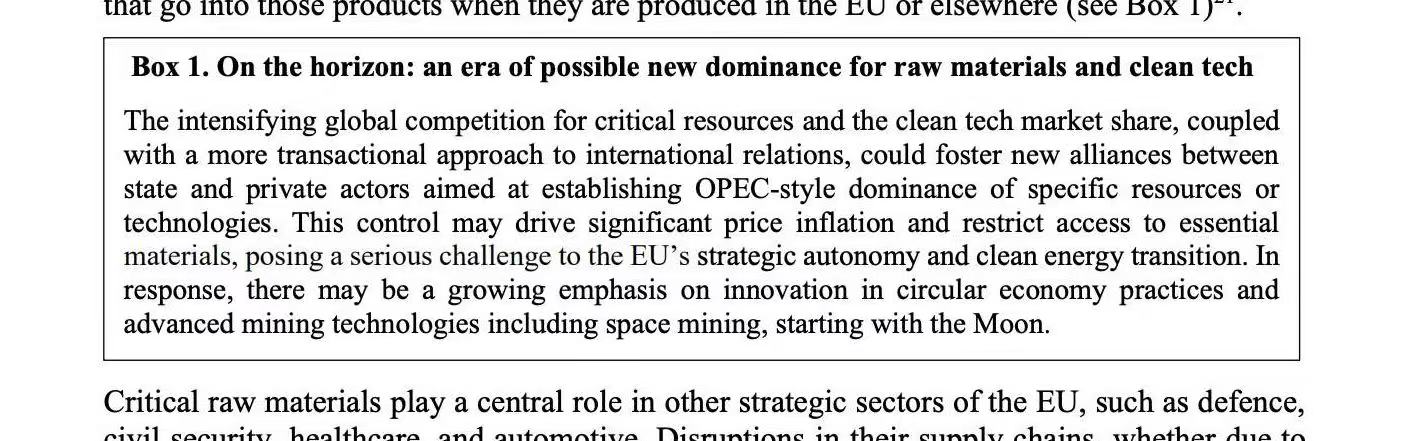
Group 1: Core Insights - Space mining is transitioning from science fiction to reality, with the EU emphasizing the need for advanced mining technologies, including lunar mining, to secure critical materials for low-carbon energy technologies [1] - The Moon is rich in elements such as oxygen, silicon, titanium, manganese, and aluminum, as well as helium-3, a stable nuclear power material, while Mars has over 160 known mineral resources [1] - The economic potential of space mining is immense, with NASA estimating that a single asteroid, 16 Psyche, contains precious metals valued at over $80 trillion [2] Group 2: Industry Developments - Companies like AstroForge and Interlune are making strides in space mining, with AstroForge completing a $40 million Series A funding round and Interlune planning to launch a lunar mining machine by 2025 [3] - The initial investment for lunar mining is projected to be in the hundreds of billions, excluding transportation and processing costs, highlighting the financial challenges facing the industry [3] - The international legal framework surrounding space mining is complex, with the Outer Space Treaty establishing that space resources are the common heritage of mankind, yet countries like the US and Japan have domestic laws that contradict this principle [4]
研讨太空采矿与深空制造
Xin Lang Cai Jing· 2025-12-19 16:22
Core Viewpoint - The global deep space exploration is transitioning from a focus on technological breakthroughs to a balanced emphasis on significant scientific discoveries and resource development [1] Group 1: Conference Overview - The "Frontiers of Extraterrestrial Resource Development Technology and Development Strategy - Space Mining and Deep Space Manufacturing" academic seminar was held in Bozhou, Anhui, organized by the Chinese Academy of Engineering [1] - The seminar was supported by various institutions including the National Space Administration's Deep Space Exploration Innovation Center and the Bozhou Municipal Government [1] - Key experts in attendance included academicians from various universities and organizations, with nearly a hundred representatives from over 30 units participating [1] Group 2: Discussion Topics - Experts discussed strategies for resource development and utilization of typical extraterrestrial bodies such as asteroids and the Moon [1] - The conference covered key technology systems, industry traction mechanisms, and major engineering application scenarios related to extraterrestrial resource exploration, mining, and in-situ manufacturing [1] - There was a systematic exchange on the full-chain technology paths for extraterrestrial resource exploration, mining, and construction, along with prospects for the deep space economy and industry development [1]
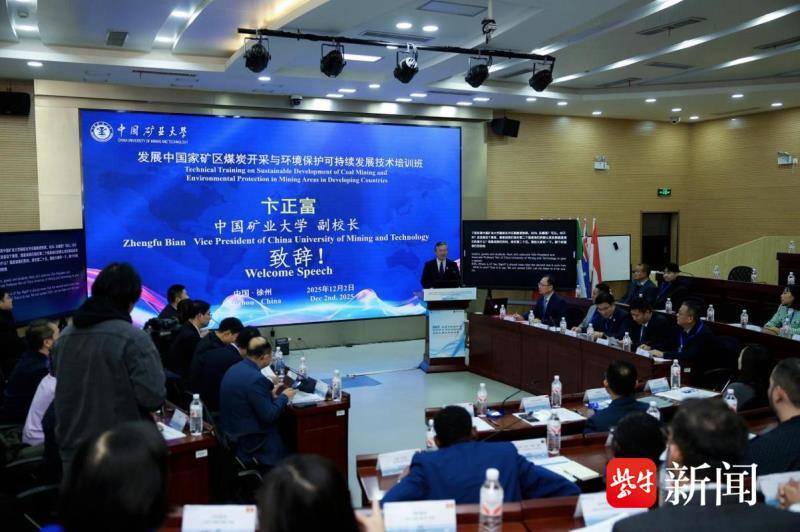
矿大举办“发展中国家矿区煤炭开采与环境保护可持续发展技术培训班”
Yang Zi Wan Bao Wang· 2025-12-18 09:25
Group 1 - The training program on sustainable coal mining and environmental protection, hosted by the Ministry of Science and Technology and organized by China University of Mining and Technology, successfully concluded after 16 days with 20 participants from nine developing countries [1][3] - The program aimed to address global challenges of energy security and climate change, sharing technological achievements and practical experiences in intelligent mining and green mine construction [3] - Training topics included space mining, coal-water co-extraction, ecological restoration, and mine safety, with discussions on common and unique issues in mineral development across different countries [3] Group 2 - Experts engaged in in-depth discussions on themes such as "space mining," "gas disaster management under carbon neutrality goals," "coal-water co-extraction in ecologically fragile western mining areas," and "mineral resources and geological exploration technology" during the seminar sessions [3] - The training program was supported by over thirty units, including the International Exchange and Cooperation Office, the Office of Foreign Cooperation and Development, the Scientific Research Institute, and the College of Environment and Surveying [3]

向中国提交稀土申请后,欧盟终于认清现实,对华“脱钩”并非易事
Sou Hu Cai Jing· 2025-11-08 07:38
Core Insights - The EU is increasingly concerned about its reliance on China for rare earth supplies following China's implementation of export restrictions, with only half of the approximately 2000 export applications approved [1][4] - The establishment of a "special communication channel" between the EU and China aims to stabilize the supply of rare earth materials for EU industries, with China agreeing to prioritize EU companies' export applications [1][4] - Despite these efforts, the EU acknowledges that it will continue to depend on China for rare earth resources in the short term due to the complexity and high costs associated with domestic mining and refining [2][4] Group 1 - The EU has submitted around 2000 rare earth export applications to China, with only half receiving approval, highlighting the challenges of decoupling from Chinese supply [1][4] - The EU's Economic Security Committee member stated that if China does not ease export restrictions, the EU's supply chains will face severe disruptions [1] - The EU is also exploring domestic rare earth resources, particularly in Estonia, to reduce dependence on China [1][2] Group 2 - The EU's plan to develop local rare earth resources faces significant challenges due to the complexity and high costs of extraction and refining processes [2] - The EU's high-tech manufacturing sectors, including electric vehicles, are heavily reliant on rare earths, with nearly 100% of these materials currently imported from China [2] - The EU previously proposed advanced mining technologies, including "space mining," to reduce reliance on China, but this has been met with skepticism due to technological limitations [2] Group 3 - EU member states have been warned that reducing dependence on Chinese rare earths is a difficult task, as many export applications remain unapproved [4] - The EU has proposed a general licensing system for rare earth exports to streamline the approval process, but this is still under discussion [4] - Analysts suggest that the EU may need to make concessions to China, such as lifting export controls on electric vehicles, to secure more rare earth imports [5] Group 4 - China's Ministry of Commerce has expressed a willingness to deepen cooperation with the EU, emphasizing the potential for mutual benefits and the need for a favorable trade environment [5][6] - The Chinese government has indicated that cooperation should be prioritized over setting economic barriers, signaling a potential path for improved trade relations [6]
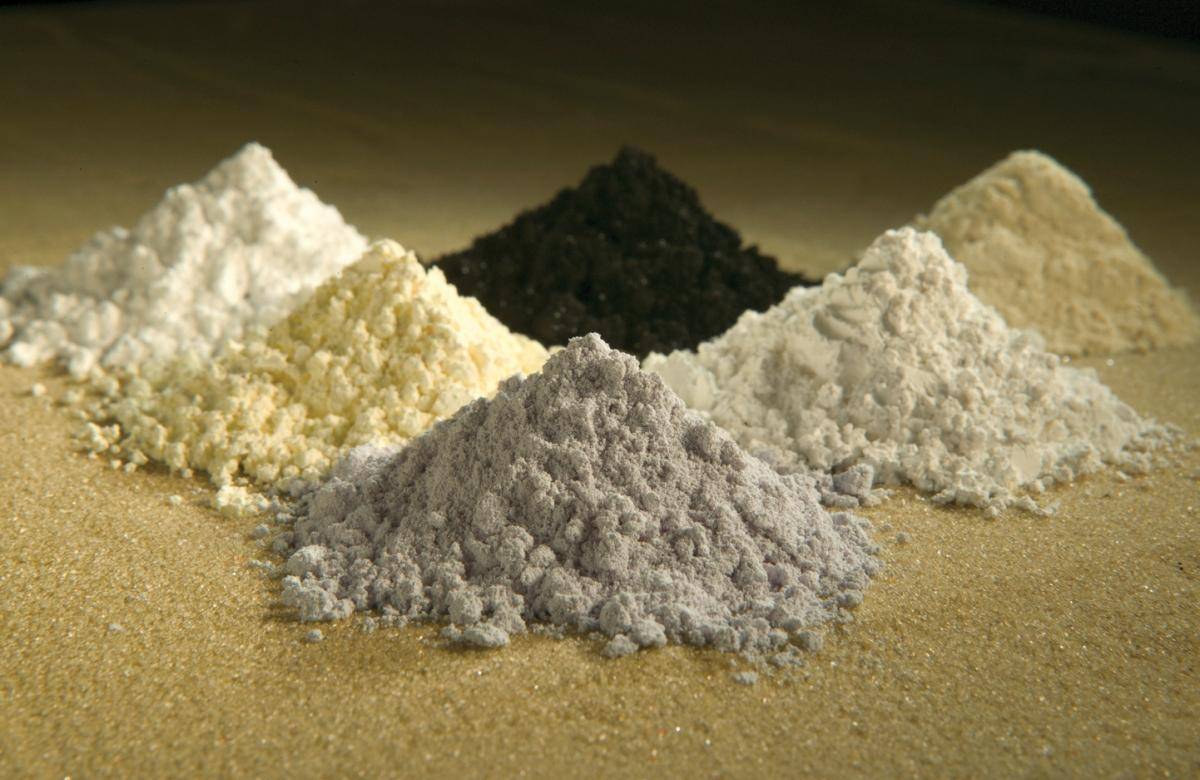
G7要对中国稀土下黑手?中方放弃WTO特权,一招反制!
Sou Hu Cai Jing· 2025-10-03 08:36
Group 1 - G7 countries are focusing on reducing dependence on China's rare earth industry, proposing measures such as setting minimum export prices, imposing punitive tariffs, and introducing carbon tax mechanisms [1] - The EU's dependence on Chinese rare earths is significantly higher than that of the US, with China's rare earth magnet exports to the EU increasing by 21% in August, reaching 2,582 tons, while exports to the US decreased to 590 tons [3] - China leads in the entire rare earth industry chain, especially in rare earth magnet manufacturing, with exports reaching 6,164 tons in August, a year-on-year increase of over 15% [5] Group 2 - China has implemented targeted export controls on rare earths, requiring export licenses for certain categories and controlling exports based on the strategic risk of the destination country [6] - In September, China announced it would no longer seek new "special and differential treatment" from the WTO, which is seen as a strategic adjustment rather than a concession [8] - This decision reflects China's transition from being a "rule taker" to a "rule maker" in international trade, as it begins to propose new frameworks in areas like cross-border e-commerce and green development [9] Group 3 - The G7's plans are viewed as self-damaging and unlikely to disrupt China's rare earth advantages, while China is strategically adjusting its export policies and WTO status to maintain its interests and gain the upper hand in international trade [12] - China's approach is characterized as a planned and strategic counterattack rather than mere defense [14]


欧盟要去月亮上挖矿?
第一财经· 2025-09-11 13:16
Core Viewpoint - The European Union is exploring space mining as a potential solution for sourcing raw materials necessary for renewable energy technologies, particularly focusing on lunar resources due to the scarcity of essential metals like lithium, copper, and nickel within the EU [2][3]. Group 1: Space Mining Initiatives - The EU Commission's annual Strategic Foresight Report highlights the need for advanced mining technologies, including space mining, as a response to the challenges posed by reliance on non-EU countries for critical materials [2][3]. - Luxembourg is positioned as a hub for space mining in Europe, planning to utilize robotics for extracting resources from the Moon and asteroids, which are rich in rare earth metals and precious metals [3][4]. - The European Space Resources Innovation Centre (ESRIC) was established in 2020 to focus on the scientific, technological, and economic aspects of space resource utilization, aiming to lay the groundwork for a future space economy [4]. Group 2: Demand for Key Minerals - The demand for key minerals is surging due to the energy transition, with estimates indicating that the global copper mining requirement over the next 25 years will equal the total mined in history [6]. - The EU anticipates a twelvefold increase in lithium demand for batteries by 2030 compared to 2020 levels, and a twenty-onefold increase by 2050, while currently lacking any lithium mining operations within its borders [6]. - The EU is heavily reliant on imports for rare earth materials, with nearly 100% dependence, which poses risks of supply disruptions and price volatility, exacerbating vulnerabilities in critical sectors [6]. Group 3: Recycling Efforts - To address the shortfall in critical materials, the EU is encouraging the establishment of rare earth recycling industries, exemplified by Heraeus Group's construction of Europe's largest rare earth magnet recycling plant [7]. - Despite the strategic importance of the recycling facility, it has struggled to achieve profitability, with the company indicating that it has not yet reached full production capacity [7].
欧盟要去月亮上挖矿?还有这些国家也在推动太空资源挖掘
Di Yi Cai Jing· 2025-09-11 10:29
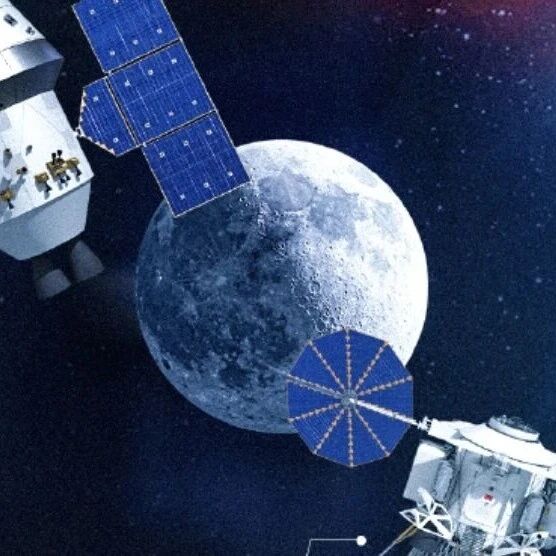
Core Viewpoint - The European Union (EU) is exploring space mining, particularly targeting the Moon, as a potential source for raw materials essential for renewable energy technologies due to reliance on non-EU countries being challenged [1][3]. Group 1: Space Mining Initiatives - The EU Commission's annual Strategic Foresight Report highlights the need for advanced mining technologies, including space mining, to secure critical materials like lithium, copper, nickel, and rare earth metals [1][3]. - Luxembourg is positioned as a hub for space mining in Europe, planning to utilize robotics for extracting resources from the Moon and asteroids, which are rich in practical metals and precious metals [3][4]. - The European Space Resources Innovation Centre (ESRIC) was established in 2020 to focus on the scientific, technological, and economic aspects of space resource utilization [4]. Group 2: Demand for Key Minerals - The demand for key minerals is surging due to the energy transition, with estimates indicating that the global copper mining requirement over the next 25 years will equal the total mined in history [5]. - The EU anticipates a 12-fold increase in lithium demand for batteries by 2030 compared to 2020 levels, and a 21-fold increase by 2050, while currently lacking any lithium mining operations within its borders [5]. - The EU is heavily reliant on imports for rare earth materials, with nearly 100% dependence, which poses risks of supply disruptions and price volatility [5]. Group 3: Challenges in Resource Recovery - Despite the strategic importance of rare earth recycling, a facility established by Heraeus in Germany to recover rare earth magnets is struggling to achieve full production capacity and is currently operating at a loss [6].
中美在稀土问题上突然“握手言和”了?中国对美出口暴涨6倍,五角大楼4亿美元亲自下场
Sou Hu Cai Jing· 2025-07-29 10:33
Group 1 - The core point of the news highlights the complex dynamics between China and the U.S. in the rare earth sector, with China's exports to the U.S. surging sixfold while the U.S. invests $400 million to support domestic rare earth companies [1][2] Group 2 - The U.S. rare earth industry has shifted from being a global leader to relying on foreign sources, with significant dependence on China for materials needed in advanced technologies like the F-35 fighter jet [2] - The recent surge in China's rare earth exports to the U.S. is misleading, as the volume is still down 38.1% compared to the same period last year, indicating a focus on civilian rather than military applications [3] Group 3 - The U.S. faces three major challenges in rebuilding its rare earth supply chain: high extraction costs compared to China, reliance on Chinese technology for separation and purification, and insufficient support from allies like Australia and Canada [6] Group 4 - China's strategy appears to be a calculated move, maintaining strict controls on military rare earth exports while ensuring a steady supply for civilian use, which may undermine U.S. domestic companies [9] - The introduction of RMB-denominated rare earth futures by the Shanghai Futures Exchange could potentially shift global pricing power in the rare earth market, enhancing China's influence [9][11] Group 5 - The competition between China and the U.S. in the rare earth sector extends beyond trade disputes to include space mining, financial regulations, and technological standards, with future dominance in these areas being crucial for both nations [11][12]
太空采矿,离现实还有多远(瞰前沿)
Ren Min Ri Bao· 2025-05-16 22:02
Core Viewpoint - The development of space mining technology, exemplified by China's first space mining robot, highlights the growing interest in extraterrestrial resource extraction to address potential resource depletion on Earth [1][2]. Group 1: Reasons for Space Mining - Space mining aims to acquire extraterrestrial resources to mitigate the potential depletion of Earth's mineral resources [2]. - The Moon and asteroids in the solar system are rich in resources, including Helium-3, thorium, rare earth elements, and various metals, which are scarce on Earth [2][3]. - Near-Earth asteroids are particularly attractive due to their concentrated resources and lower technical barriers for extraction [2]. Group 2: Challenges in Space Mining - Space mining presents significant challenges, including operating in microgravity environments, which complicates the stability and efficiency of traditional mining equipment [4][5]. - Other challenges include resource utilization technology, extreme radiation, deep space communication, energy supply, and transportation logistics [4][5]. - The high fuel costs associated with transporting mined resources back to Earth and the need for sustainable energy sources for long-term missions are critical hurdles [5]. Group 3: Current Research and Future Prospects - Research in space mining is still in its early stages, focusing on resource exploration, drilling technology, and in-situ resource utilization [6]. - International efforts are advancing in areas such as autonomous robotics, efficient energy systems, and materials technology, with successful tests conducted by countries like Japan and the USA [6]. - The long-term vision for space mining includes supporting the establishment of lunar and Martian bases and fostering a space economy [6][8]. Group 4: Future of Space Mining Robots - Future space mining robots are envisioned to be fully autonomous "space factories" with self-repair capabilities and adaptability across celestial bodies, relying on advancements in AI, materials science, and energy technology [6][7].