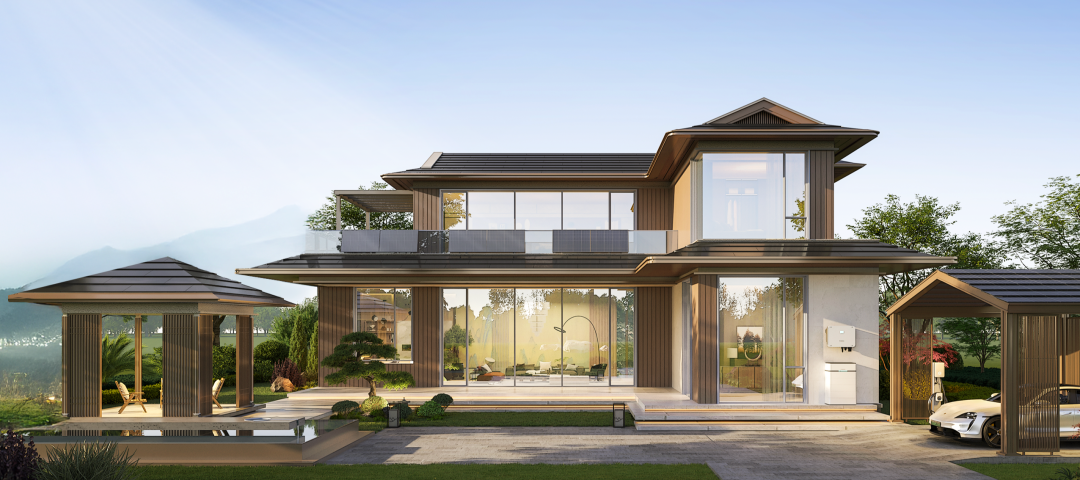
建筑光伏一体化

Search documents
幕墙清洗项目可行性研究报告-全景调研分析及投资可行性研究
Sou Hu Cai Jing· 2025-12-15 03:06
Group 1 - The feasibility study report provides a comprehensive analysis of project viability, focusing on market demand, resource supply, construction scale, technology, equipment selection, environmental impact, funding, and profitability [2][12] Group 2 - The curtain wall cleaning industry involves specialized cleaning services for building facades, utilizing manual labor, smart cleaning robots, and drones, ensuring safety while maintaining aesthetic and structural integrity [4] Group 3 - The global curtain wall cleaning market is projected to reach approximately 359.1 billion yuan in 2024, driven by urbanization and the increasing number of super-tall buildings in Asia-Pacific countries [5] - The Chinese curtain wall cleaning market is expected to grow to around 71.8 billion yuan in 2024, benefiting from advancements in smart and eco-friendly technologies that enhance cleaning efficiency and safety [7] Group 4 - The competitive landscape of the curtain wall cleaning industry includes traditional manual cleaning companies, those adopting innovative technologies like robots and drones, and regional service providers, with key players such as Hebei Daqi Environmental Engineering Co., Ltd. and Guangdong Lingdu Intelligent Technology Development Co., Ltd. [9] Group 5 - By 2030, the development of a new model for the general aviation industry characterized by high-end, intelligent, and green features is expected to significantly support the growth of the curtain wall cleaning industry in China [10]


光伏巨头紧急澄清;华为申请注册“齐界”商标……盘前重要消息有这些
证券时报· 2025-11-12 23:59
Group 1 - The Shanghai Stock Exchange International Investor Conference opened on November 12, with the China Securities Regulatory Commission emphasizing the stability and potential of the Chinese economy, and plans to deepen investment and financing reforms [2] - The China Photovoltaic Industry Association released a statement denying rumors circulating online about the industry, asserting that these are false and harmful to the sector's reputation [3] - The National Energy Administration issued guidelines to promote the integrated development of distributed renewable energy, encouraging the construction of integrated facilities in transportation hubs and the development of new energy in rural areas [4] Group 2 - The Ministry of Education and six other departments released opinions on strengthening science and technology education in primary and secondary schools, aiming to establish a comprehensive education system by 2030 [5] - JA Solar Technology clarified recent rumors about the company, stating that misleading information has been circulated online, which could harm the company's reputation [6] - Contemporary Amperex Technology Co., Ltd. announced that its fifth-generation lithium iron phosphate battery products have begun mass production [7] Group 3 - Zhejiang Dongri, a company that has seen stock price increases, clarified that it is not involved in "brain-computer interface" business [8] - Shunfa Hengneng, another company with rising stock prices, is gradually investing in various clean energy businesses [9] - Century Huatong plans to repurchase shares worth between 500 million to 1 billion yuan to reduce registered capital [13]
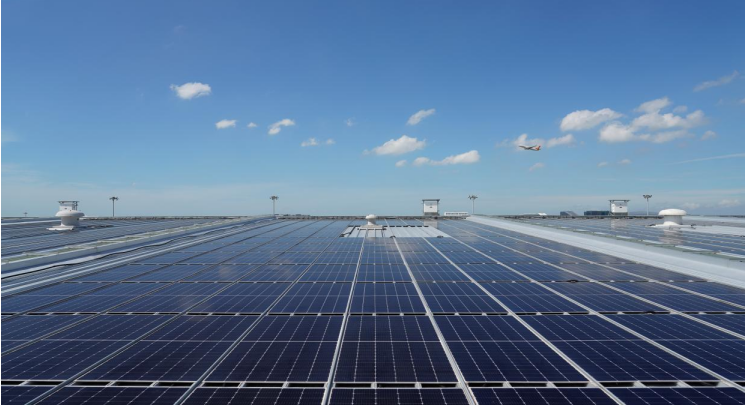
面对极端天气光伏电站该如何守护工商业屋顶
Xin Hua Wang· 2025-10-17 02:54
Core Insights - The article highlights the resilience of integrated photovoltaic (BIPV) systems developed by LONGi Green Energy and Sentech in the face of extreme weather events, particularly Typhoon Haikui, which caused significant damage to traditional solar installations [1][2][3] - The integration of photovoltaic technology into building structures is presented as a dual-value model, providing both energy generation and enhanced structural protection against severe weather [3] Group 1: Impact of Typhoon Haikui - Typhoon Haikui resulted in severe damage across various regions in Guangdong, with multiple factories experiencing roof damage and economic losses [1] - Traditional solar installations faced significant risks during the typhoon, while the BIPV projects by LONGi and Sentech remained intact, showcasing their superior resilience [1] Group 2: Technological Advancements - The BIPV products, such as LONGi Longtop 5, demonstrate advanced wind resistance capabilities, withstanding pressures up to 11.2 kPa, equivalent to a Category 17 super typhoon [3] - The use of seamless roofing panels and water diversion technology effectively eliminates leakage risks, enhancing the overall safety of the installations [3] Group 3: Strategic Value for Businesses - The integration of photovoltaic systems into building designs transforms them from mere additions to essential protective layers, providing three core values: asset safety, operational continuity, and unified green benefits [2] - The shift towards building-integrated photovoltaics represents a significant advancement in addressing the challenges posed by extreme weather, moving away from the traditional model that increased risks [3]
技术创新支持光伏电站历经台风考验 实现绿色收益与安全统一
Ke Ji Ri Bao· 2025-10-15 14:17
Core Insights - The article highlights the resilience of integrated photovoltaic (PV) systems developed by Longi Green Energy and Sentech in the face of severe weather events, particularly Typhoon "Hagupit" [1][3]. Group 1: Performance During Typhoons - Longi Green Energy's integrated PV projects successfully withstood the impacts of Typhoon "Hagupit," demonstrating their robustness [1]. - The PV system at Shenzhen Baoan International Airport maintained functionality despite heavy truck traffic and strong winds, effectively preventing roof damage [1]. - The East Environmental Power Plant in Shenzhen remained leak-proof during heavy rainfall, ensuring operational continuity [1]. Group 2: Technological Innovations - The key to achieving "zero damage" during storms lies in advanced technology, including flexible connection techniques that mitigate stress from strong winds [5]. - The seamless roofing panels and water diversion technology eliminate leakage risks, enhancing the overall durability of the systems [5]. - The new building-friendly PV roof system shows a 23% improvement in wind resistance compared to traditional PV solutions [5]. Group 3: Strategic Integration of PV Systems - The projects redefine the relationship between buildings and PV systems, transitioning from being mere additions to becoming integral protective layers of the structure [5]. - This integration allows for a dual value proposition of "power generation + protection," ensuring structural integrity and power supply during disasters [5].

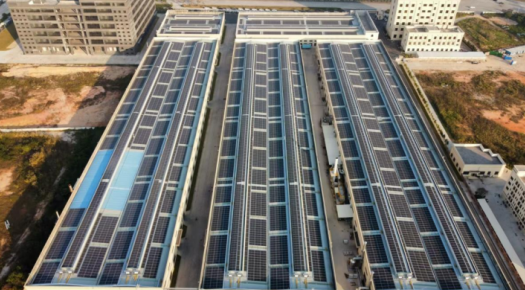
历经台风,工商业屋顶如何“安然无恙”
Jing Ji Wang· 2025-10-14 09:38
Core Insights - The article highlights the resilience of integrated photovoltaic (BIPV) systems developed by LONGi Green Energy and Sentech in the face of extreme weather events, particularly Typhoon "Hagupit" [1][5][6] Group 1: Impact of Typhoon "Hagupit" - Typhoon "Hagupit" caused significant economic losses in Guangdong, with multiple instances of roof damage and structural failures reported [1] - Traditional photovoltaic systems were found to exacerbate roof vulnerabilities during the typhoon, leading to increased risks [1] Group 2: Performance of BIPV Projects - BIPV projects by LONGi and Sentech demonstrated reliable performance during the typhoon, with systems at various sites remaining intact and operational [2][3] - Specific examples include the Taishan Diheng Power Plant and Shenzhen Baoan Airport, where the BIPV systems maintained power supply and structural integrity [2][4] Group 3: Technological Advancements - The BIPV products feature advanced flexible connection technology, allowing them to withstand wind pressures up to 11.2 kPa, equivalent to a Category 17 super typhoon [6] - The LONGi Hi ROOF S system shows a 23% improvement in wind resistance compared to traditional photovoltaic solutions, underscoring the technological edge of integrated systems [6] Group 4: Value Proposition for Businesses - The integration of photovoltaic systems into building structures offers dual benefits of energy generation and enhanced safety, positioning them as essential for modern construction [5][7] - The article emphasizes that for commercial property owners, safety translates to significant economic benefits, making BIPV a preferred choice in the context of increasing extreme weather events [7]
华宝新能:聚焦消费级全场景光伏储能解决方案 上半年营收、净利大幅增长
Zhong Zheng Wang· 2025-08-23 09:59
Core Insights - The company reported significant growth in revenue and net profit for the first half of 2025, with revenue reaching 1.637 billion yuan, a year-on-year increase of 43.32%, and net profit of 123 million yuan, up 68.31% [1] Group 1: Market Performance - North America remains a core market for the company, with revenue growth of 42.86% year-on-year [1] - The European market showed exceptional performance, with a revenue increase of 106.42% year-on-year [1] - The Asian market (excluding China) also experienced a revenue growth of 31.92% year-on-year [1] Group 2: Sales Channels - The company has established a comprehensive global channel network consisting of an independent website, third-party e-commerce platforms, and offline retail [1] - Revenue from the brand's independent website increased by 55.25%, accounting for 29.41% of total revenue [1] - Collaborations with major retailers such as Costco, Lowe's, Home Depot, and Best Buy resulted in a 45.85% year-on-year revenue growth from offline channels, with products available in over 10,000 stores [1] Group 3: Research and Development - The company invested 76.16 million yuan in R&D during the first half of the year, with a total of 1,939 patents globally, including 661 patents in the photovoltaic field, marking a 49.89% year-on-year increase [2] - New innovative products launched include the Jackery HomePower 2000 Ultra and the 3000 Pro 2 outdoor power supply, which received the Sullivan certification for being the lightest and smallest in its category [2] - The company led the establishment of the first domestic industry standard for portable photovoltaic modules, filling a gap in standardization within the portable photovoltaic sector [2] Group 4: Awards and Recognition - The company has received a total of 110 international industrial design awards, including the prestigious Red Dot Supreme Award and the CES Innovation Award [2] - It has been recognized for three consecutive years with the Seal Awards for sustainable development products, highlighting its dual strengths in technology and design [2]
碲化镉玻璃:给房子穿上发电“外衣”
Ke Ji Ri Bao· 2025-07-20 23:35
Core Viewpoint - The innovation of cadmium telluride (CdTe) photovoltaic glass represents a breakthrough in the construction and energy sectors, aiming to address the challenges of the photovoltaic industry amidst intense competition [1][3]. Group 1: Product Features and Applications - CdTe photovoltaic glass can generate electricity even under indoor lighting conditions, with higher efficiency outdoors, making it suitable for various applications such as office building facades, factory roofs, and residential sunrooms [1][2]. - The glass has excellent fire resistance and thermal insulation properties, allowing it to replace many traditional building materials while also being suitable for building-integrated photovoltaics (BIPV) projects [2][3]. Group 2: Technological Development and Production - The production of CdTe photovoltaic glass involves overcoming several technical challenges, including semiconductor doping, crystal growth, and laser processing, with a total thickness of the CdTe film layer being approximately 3 micrometers [2][3]. - The company has developed its own production equipment after years of research, achieving a product yield rate exceeding 97% and matching international advanced levels in product and equipment performance [2][3]. Group 3: Market Strategy and Future Goals - The company aims to increase the conversion efficiency of CdTe photovoltaic glass to over 18% and is focusing on expanding new application scenarios to find growth opportunities in a saturated market [3]. - The integration of CdTe photovoltaic glass in architectural designs is becoming more common, with recent applications in significant projects, indicating a shift towards innovative building materials in the construction industry [3].
阳光新能源推出建筑光伏一体化电站新品
Huan Qiu Wang· 2025-04-28 01:55
Core Insights - Sunshine New Energy recently launched its new family energy station and published a guide for zero-carbon living, aiming to provide users with a comprehensive approach to sustainable energy solutions [1][3] Product Features - The new BIPV (Building-Integrated Photovoltaics) energy station features aesthetic, functional, and intelligent upgrades, including a new photovoltaic tile design that integrates seamlessly with various roof types [1] - The product breaks away from traditional color limitations, offering innovative color options that cater to user preferences for personalization [1][3] Technological Advancements - The energy station is designed for full roof coverage and optimized shadow management, allowing for higher energy generation and more flexible electricity usage [3] - The HEMS (Home Energy Management System) has evolved to connect the entire energy chain of generation, storage, and consumption, enabling smart control of household appliances [3] - AI technology is utilized to learn household energy habits, proactively managing backup power and optimizing energy usage strategies, resulting in an 8% reduction in electricity costs [3] Safety and Reliability - The product features a unique five-dimensional three-level protection system and a storm protection mode for extreme weather conditions, ensuring seamless energy storage and backup [3] Market Research and Trends - Sunshine New Energy collaborated with Xiaohongshu to release the "Zero Carbon Living Guide," which visualizes technological pathways and includes extensive user research and real-world case studies [3] - The report is based on over 3.7 billion interactions related to villa design and photovoltaic topics on Xiaohongshu, along with surveys of over a thousand high-net-worth families, focusing on trends in energy independence, cost reduction, and safety [3] Future Outlook - Experts predict that future home living will prioritize not only comfort but also sustainable aesthetics, with expectations for energy self-sufficiency, reduced consumption, uninterrupted power supply, enhanced safety, and AI-driven smart living [3]