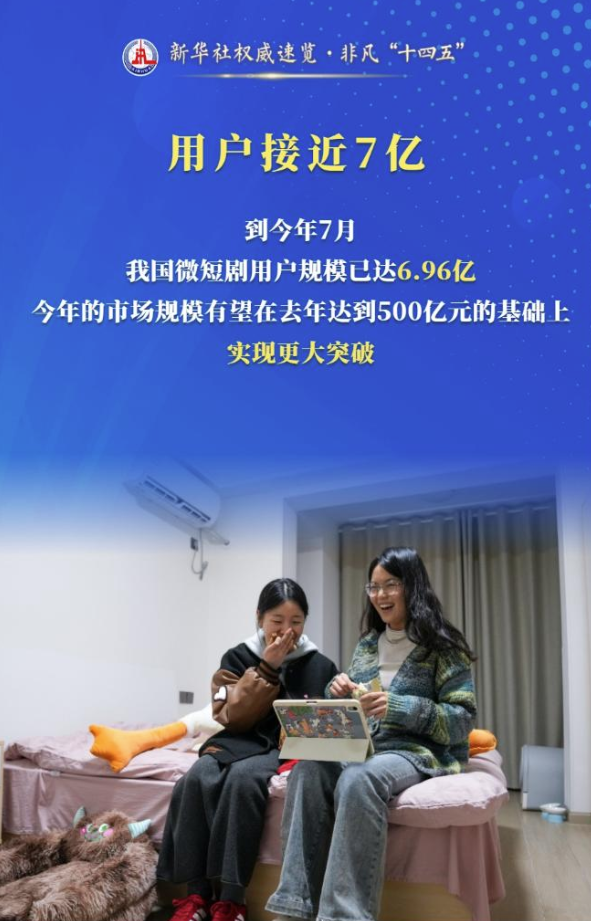
微短剧出海

Search documents
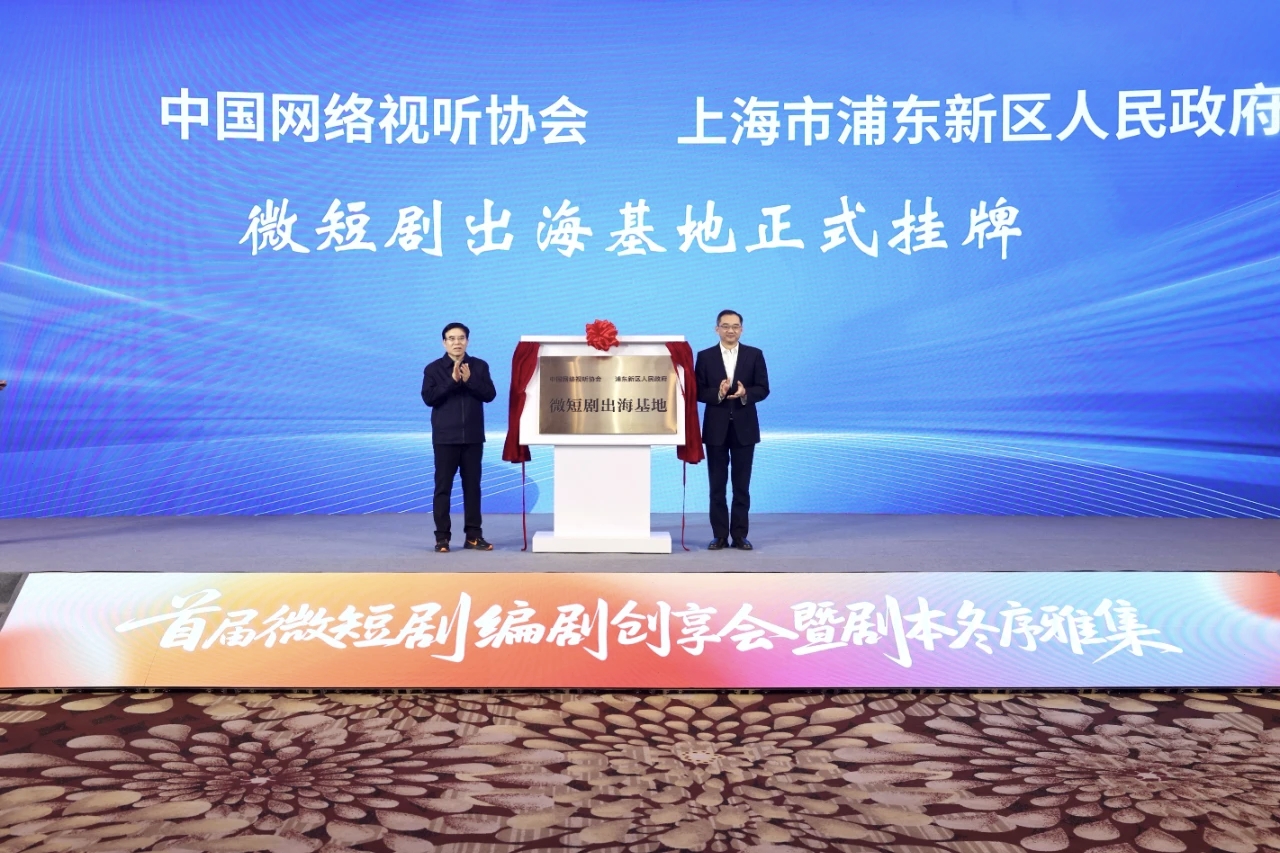
全国首家“微短剧出海基地” 在上海浦东揭牌
Guo Ji Jin Rong Bao· 2025-12-06 15:07
Group 1 - The establishment of a new base in Shanghai aims to leverage unique outbound policies and facilitate cross-border personnel movement, creating a hub for the micro-short drama industry [4] - The base will integrate leading companies, major platforms, and emerging technology firms, focusing on various functions such as creation, translation, production, distribution, IP and content rights brokerage, and supporting services [4] - Four companies, including Fengye Interactive and Dianzong Technology, have announced their entry into the base, establishing headquarters for their outbound business, which injects new momentum into the global layout of micro-short dramas [4] Group 2 - The China Network Audio-Visual Association released the "2025 Micro-Short Drama Industry Ecological Insight Report," indicating that the industry has created over 1.33 million jobs, with more than 70% of traditional film and television professionals entering the field [4] - The report highlights a significant talent gap for screenwriters, the accelerated growth of actors, and a 17-fold increase in IP adaptations, with a brand reinvestment rate exceeding 60% [4] - The Shanghai Free Trade Zone's Jinqiao Management Bureau introduced supportive policies for micro-short dramas, focusing on enterprise aggregation, content production, talent development, and outbound services [5]

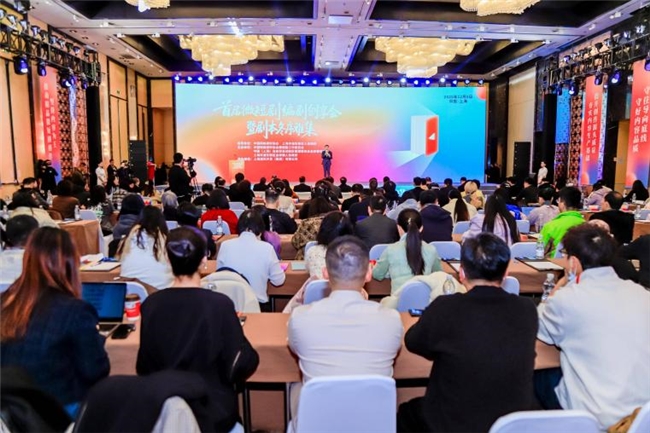
首届微短剧编剧创享会暨剧本冬序雅集活动在上海举行
Sou Hu Wang· 2025-12-06 11:04
Group 1 - The first Micro Short Drama Screenwriter Creative Conference and Winter Script Gathering was held in Shanghai, focusing on promoting new public art under the internet conditions and deepening the understanding of the spirit of the 20th Central Committee of the Communist Party of China [2] - A strategic cooperation agreement was signed between the China Network Audio-Visual Association and the Pudong New Area, along with the unveiling of the Micro Short Drama Overseas Base, aimed at enhancing international cultural output and industry integration [2][3] - The event featured representatives from nine platforms and production organizations promoting script demands and collaboration directions, facilitating direct market connections for screenwriters and creative teams [5] Group 2 - The Micro Short Drama Overseas Base is the first in China to focus on the entire industry chain of micro short dramas, leveraging unique overseas policies in Shanghai to create a global innovation hub and cultural output demonstration base [3] - The base officially welcomed four leading companies, including Maple Interactive and Point Crowd Technology, to establish their overseas business headquarters [3] - The event achieved breakthroughs in resource matching and industry ecology, establishing an efficient mechanism for script creativity and capital, while reinforcing Shanghai's brand influence as a highland for micro short drama script creation [5]
浦东新区政府与中国网络视听协会进行战略合作签约
Zheng Quan Shi Bao Wang· 2025-12-05 05:08
Core Viewpoint - The Pudong New District government has signed a strategic cooperation agreement with the China Network Audio-Visual Association, marking the establishment of the first national base focused on the entire industry chain of micro-short dramas going overseas [1] Group 1 - The signing ceremony took place on December 5 in the Jinqiao Development Zone of Pudong New District [1] - The newly established base aims to support the export of micro-short dramas, indicating a strategic move to enhance the international presence of this content format [1]
映宇宙夏晓晖:微短剧千亿规模指日可待,免费市场将占主流
2 1 Shi Ji Jing Ji Bao Dao· 2025-11-27 10:33
Core Insights - The micro-short drama industry in China is rapidly growing, with user numbers expected to reach 662 million by the end of 2024, accounting for nearly 60% of internet users, establishing a "three-legged" competitive landscape alongside long videos and theatrical films [2] - The market size for micro-short dramas is projected to reach 504 billion yuan in 2024, surpassing box office revenues, with estimates for 2025 ranging from 634.3 billion to 680 billion yuan, and potentially reaching 1 trillion yuan by 2027 [3] - The integration of AI in the micro-short drama industry is anticipated to enhance content creation and production efficiency, with AI agents expected to play a significant role in driving growth in emerging fields [4] Industry Strategies - Companies are focusing on four core strategies to enhance competitiveness: upgrading the entire industry chain for content quality, promoting "short drama+" industry integration, leveraging internet platform advantages through a combination of live streaming and short dramas, and expanding overseas to build brand influence [2] - The free market for micro-short dramas is expected to dominate, with projections indicating that by 2025, free content will account for approximately 66.3% of the market, while paid content will need to adopt a strategy of scarcity and differentiation to survive [3] Regulatory Environment - The micro-short drama market faces challenges such as low-quality content and chaotic pricing, prompting regulatory bodies to develop management guidelines to address these issues and support high-quality development [3] - Local governments are actively implementing policies to bolster the micro-short drama industry's growth, indicating a supportive regulatory environment [3] International Expansion - The overseas revenue for micro-short dramas reached $1.525 billion from January to August 2025, marking a year-on-year growth of 194.9%, highlighting the potential for further market expansion in regions like North America and Southeast Asia [4][5] - Future international strategies will be more refined, focusing on specific regional demands and opportunities for growth [5]

“游戏+短剧”双出海 重要平台落户深圳前海
2 1 Shi Ji Jing Ji Bao Dao· 2025-11-13 13:02
Group 1 - The establishment of the Guangdong (Shenzhen) Game Overseas Service Center and the Shenzhen Micro-Short Drama Overseas Service Platform marks a new model for cultural development in Qianhai, focusing on "game + short drama" exports [1][2] - The Game Overseas Service Center aims to provide comprehensive services such as market research, legal consultation, and operational support to help game companies navigate international markets [1][2] - The Micro-Short Drama Overseas Service Platform will address industry challenges related to foreign actors and overseas distribution, promoting high-quality micro-short dramas on the international stage [1][2] Group 2 - The Game Overseas Service Center has signed cooperation agreements with Amazon Cloud Technology and a local law firm to support game companies in resource integration, market expansion, and legal compliance [2] - Shenzhen is home to leading companies in the micro-short drama sector, with notable performers in the overseas market, positioning the city as a "capital of micro-short drama exports" [2] - DataEye's report ranks Shenzhen 4th in comprehensive strength and 2nd in export strength for micro-short dramas, highlighting its competitive position in the industry [2] Group 3 - The Qianhai Management Bureau has introduced financial support measures for cultural industries, offering up to 3 million yuan for game exports and 1 million yuan for micro-short drama exports based on performance metrics [3] - The cultural and entertainment sector in Qianhai has seen a 26% year-on-year revenue growth in the first ten months of the year, indicating significant progress in cultural industry development [3] - New cultural landmarks and collaborations with Hong Kong institutions have been established, contributing to the vibrant cultural landscape in Qianhai [3]
第三届杭州·微短剧大会11月11日启幕
Mei Ri Shang Bao· 2025-11-12 02:26
Core Insights - The third Hangzhou Micro Short Drama Conference highlighted the rapid growth and transformation of the micro short drama industry, emphasizing the shift towards high-quality content and technological integration [1][2] Group 1: Industry Growth and Trends - The average daily viewing time for micro short dramas has reached two hours, surpassing that of long videos, indicating a significant shift in consumer behavior [1] - The overseas revenue for micro short dramas from January to August 2025 reached $1.525 billion, marking a year-on-year growth of 194.9%, with total downloads hitting approximately 730 million, a 370.4% increase [2] - The majority of the top 20 overseas micro short drama applications have Chinese backgrounds, contributing about 91% of the market revenue, showcasing the global appeal of "new Chinese narrative" [2] Group 2: Technological Integration and Content Creation - The integration of AI technology is fostering new avenues in the industry, such as animated micro short dramas and AI-generated live-action dramas, which are rapidly gaining traction [1][3] - The Zhejiang Provincial Department of Culture, Radio, Television, and Tourism has released a recommended list of micro short dramas that combine "poetry and painting of Zhejiang" with digital technology, illustrating innovative practices in content creation [3] - Initiatives like the "Youth Screenwriter Incentive Support Program" and the "Ancient and Modern Grand Canal" film and television creation plan are being launched to enhance the production of high-quality content [2][3]
微短剧市场规模破500亿元,首超电影票房!老人付费最多,占比超四成
Mei Ri Jing Ji Xin Wen· 2025-11-11 15:45
Core Insights - The "China Internet Development Report 2025" indicates that the user base for micro-short dramas in China has reached 662 million, with a market size exceeding 50 billion yuan, surpassing box office revenues for films, marking it as a new emerging sector in content consumption [1] - The micro-short drama industry is undergoing a transformation, moving away from the previous "high-reversal and thrill" narrative style towards more diverse and high-quality content that addresses deeper themes such as women's growth, workplace issues, and family healing [3][6] - The industry is experiencing a shift from a focus on quick entertainment to a demand for quality storytelling and visual presentation, with a consensus emerging to move away from content homogenization and the over-reliance on "thrill points" [3][6] Market Dynamics - The audience structure for micro-short dramas shows that the "silver-haired" demographic has become a significant paying user group, accounting for over 40%, while female users dominate the consumption market with higher engagement levels compared to male users [3] - The industry is seeing an influx of long-form content creators and professional production teams, pushing the market towards quality production and diverse themes, as noted by industry experts [3][6] Technological Integration - The micro-short drama market is exploring new growth curves through improved production quality and the integration of emerging technologies such as AI and VR, with traditional film companies entering the space to enhance production standards [7][9] - The application of AI in the production process is estimated to improve planning efficiency by over 50% and reduce post-production costs by 30% [9] Cross-Industry Collaboration - The micro-short drama sector is increasingly collaborating with various fields such as intangible cultural heritage, tourism, and education, promoting industry integration and development [9] - Notable projects include "Follow the Micro-Short Drama to Travel," which combines culinary exploration with storytelling, and "A Dream on the Pillow of Stars," which incorporates traditional cultural elements into the narrative [9] Global Expansion - By 2024, the global micro-short drama market is projected to exceed 15 billion USD, with China accounting for over 80% of this market [10] - The internationalization of micro-short dramas has entered a new phase, with a focus on localized content for overseas markets, leading to a significant increase in downloads and user engagement [10][13] - Leading companies in the overseas micro-short drama market include Point Crowd Technology, Maple Leaf Interactive, and Jiuzhou Culture, with platforms like Reelshort covering over 100 countries and achieving over 250 million downloads [10][11][13] Industry Evolution - The micro-short drama industry is at a critical juncture, transitioning from quantity to quality, necessitating regulatory clarity and a focus on key development areas to foster a shift from "quick hits" to "sustained quality" [10] - Establishing a scientific evaluation system and optimizing recommendation algorithms are essential for guiding the industry towards a focus on quality content over mere traffic [10]

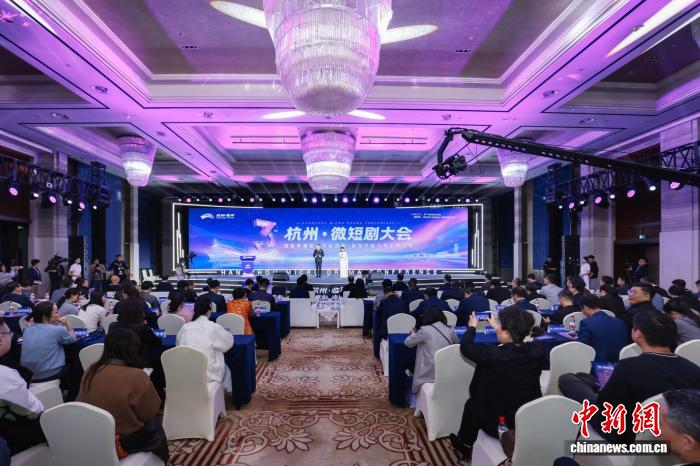
第三届杭州·微短剧大会启幕 助力“千帆出海”
Zhong Guo Xin Wen Wang· 2025-11-11 13:51
Core Insights - The third Hangzhou Micro Short Drama Conference has commenced, focusing on empowering various industries and promoting global outreach through micro short dramas [1] Group 1: Industry Growth and Trends - Since the 14th Five-Year Plan, micro short dramas have rapidly emerged as a new growth driver in the online audio-visual sector, evolving from a new business format to an important form of popular art [2] - The Zhejiang Provincial Department of Culture, Radio, Television, and Tourism has released a recommended list of "Micro Short Drama + AIGC" to showcase the innovative integration of digital technology with cultural content [2] Group 2: Technological Integration and Future Directions - There is a call for continuous deepening of key technology research and scene integration to promote the intelligent transformation of the entire micro short drama production and internationalization process [2] - The emphasis is on utilizing smart analysis and algorithms to accurately understand overseas market demands and establish international operational platforms [2] Group 3: Talent Development and Recognition - The conference announced the winners of the second "Great Games Coming" National Online Micro Short Drama Script Creation Competition and recognized outstanding content creation companies and contributors [2] - The launch of the third season of the "Youth Online Scriptwriting Incentive Support Program" aims to strengthen the talent foundation in the industry [2] Group 4: Collaborative Initiatives - The Linping District has partnered with leading platforms and companies to initiate the "Ancient and Modern Grand Canal" film and television creation plan, aiming to build a comprehensive empowerment system from writing to broadcasting [3] Group 5: Policy Support - Linping District plans to introduce new cultural policies to provide comprehensive support for quality projects, with individual project subsidies reaching up to 10 million yuan [5]
破500亿元,微短剧首度“干掉”电影票房
Mei Ri Jing Ji Xin Wen· 2025-11-11 11:14
Core Insights - The "China Internet Development Report 2025" indicates that the user base for micro-short dramas in China has reached 662 million, with a market size exceeding 50 billion yuan, surpassing box office revenues for films, marking it as a new emerging sector in content consumption [1] - The micro-short drama market is undergoing a transformation, moving away from the previous "high-reversal + thrill" narrative model towards more refined and diverse themes, such as women's growth, workplace issues, family healing, and campus problems [1][2] - The industry consensus is shifting towards a focus on quality content to enhance user engagement and market expectations, as audiences are no longer satisfied with mere novelty and stimulation [2] Market Dynamics - The micro-short drama market is transitioning from a "fast entertainment" model to a more stable growth trajectory, necessitating a departure from reliance on "thrill points" and addressing content homogenization issues [2][9] - The audience structure shows that the "silver-haired" demographic has become a significant force in paid subscriptions, accounting for over 40%, while female users dominate the consumption market with higher interaction and payment activity compared to male users [1][2] Production and Technology - The industry is enhancing production quality and exploring new technologies such as AI and VR to find new growth curves, with traditional film companies entering the micro-short drama space [7][9] - The application of AI in production processes is estimated to improve planning efficiency by over 50% and reduce post-production costs by 30% [9] Cultural Integration and Global Expansion - The global micro-short drama market is projected to exceed $15 billion by 2024, with China accounting for over 80% of this market [10] - Micro-short dramas are evolving from mere entertainment products to cultural carriers, with significant growth in overseas markets, particularly in North America and Europe [10][12] - Companies like Fengye Interactive and Jiuzhou Culture are leading the charge in overseas distribution, with platforms like Reelshort covering over 100 countries and achieving over 250 million downloads globally [10][11][12] Industry Challenges and Future Directions - The micro-short drama industry is at a critical juncture, transitioning from "quantity" to "quality," necessitating regulatory clarity and a focus on key development areas [12] - Establishing a scientific evaluation system and optimizing recommendation algorithms are essential for guiding the industry towards a quality-centric approach, moving from a traffic-driven model to one focused on content excellence [12]

微短剧产业进阶
Xin Hua Wang· 2025-11-10 02:55
Core Insights - The micro-short drama market is projected to exceed 50 billion yuan in 2024, with significant growth expected this year compared to last year [1][2]. Group 1: Industry Transformation - The industry is shifting from a "traffic-oriented" model to a "value-oriented" approach, emphasizing quality over quantity [3]. - The past year has seen a significant "quality reshuffle," with platforms raising content review standards, pushing creators to focus on script logic and character development [4][5]. - The production costs for high-quality micro-short dramas have increased dramatically, from approximately 50,000 yuan in 2022 to 1.5 million yuan for a premium short drama [4]. Group 2: Cross-Industry Integration - The "micro-short drama+" model is creating multiplier effects across various industries, integrating content with brand marketing and tourism [8][10]. - Successful case studies include collaborations with brands like Dicos and Pizza Hut, which have effectively merged product promotion with storytelling [8]. - The industry is also exploring "long-short linkage," where long dramas and micro-short dramas co-create content to extend IP lifecycles and maximize user value [8][10]. Group 3: Technological Empowerment - AI is becoming a crucial tool for enhancing quality and efficiency in micro-short drama production, with estimates suggesting a 50% increase in planning efficiency and a 30% reduction in production costs [11]. - The application of AI in content creation and user engagement is rapidly expanding, with significant growth in the market for AI-generated content [11]. Group 4: Cultural Resonance - The market is evolving from "emotional consumption" to "emotional resonance," focusing on deeper connections with audiences [12][13]. - Works that depict nuanced emotional experiences are gaining popularity, reflecting a shift in user demand towards more meaningful content [12]. - The industry is increasingly producing content that embodies social concerns and cultural heritage, appealing to younger audiences [12]. Group 5: Global Expansion - The micro-short drama industry is entering a "global localization" phase, with companies establishing local teams overseas and expanding distribution channels [14]. - The volume of overseas productions and adaptations has surged, with significant numbers of both local and translated dramas being released globally [14]. - Micro-short dramas are becoming an effective cultural vehicle for reaching international markets, leveraging their engaging and easily digestible format [14].