托幼一体化

Search documents
视频丨推进“托幼一体化” 多地探索特色托育模式
Xin Lang Cai Jing· 2026-01-15 13:17
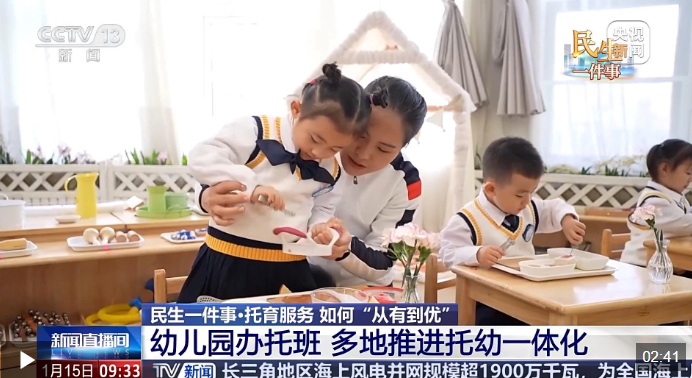
Core Viewpoint - The article highlights the urgent need for childcare services in families with young children and discusses various initiatives across China to promote integrated childcare services in kindergartens, addressing the challenges of childcare for families [1][8]. Group 1: Policy and Initiatives - Multiple policies have been introduced at both central and local levels to encourage kindergartens to establish classes for children aged 2-3 years, promoting "integrated childcare" [1][8]. - In Zhengzhou, nearly 40,000 childcare spots have been created in kindergartens, significantly increasing the availability of affordable childcare services [5]. - The Zhengdong New District has invested approximately 4.5 million yuan to improve childcare facilities and enhance teacher training, aiming for over 80% of public kindergartens to offer childcare classes [6]. Group 2: Innovative Models - Various regions are exploring unique childcare models, such as "medical-education integration" and "community-embedded" services, to enhance accessibility and quality of childcare [8][12]. - In Taizhou, 13 demonstration childcare institutions have been established, utilizing medical resources to provide comprehensive health management and education for children [12][14]. - Shanghai has developed "Baby Houses" that offer convenient temporary childcare services, with over 350 locations planned by the end of 2025, providing at least 30 spots daily at each location [16][17]. Group 3: Talent Development - The development of a multi-level training system for childcare professionals is crucial for ensuring quality services, with over 600 vocational colleges offering related programs [19][23]. - Students in childcare programs are receiving hands-on training using AI simulation and VR technology to learn essential caregiving skills [21][23]. - By 2025, new undergraduate programs in infant development and health management will be introduced, further enhancing the talent pool in the childcare sector [23].

推进“托幼一体化” 多地探索特色托育模式
Yang Shi Xin Wen Ke Hu Duan· 2026-01-15 12:50
Core Insights - The article discusses the urgent need for childcare services in families with young children and highlights various government policies aimed at promoting integrated childcare services in kindergartens [1][5]. Group 1: Development of Childcare Services - Zhengzhou has established nearly 40,000 childcare spots in kindergartens, significantly increasing the availability of affordable childcare [2]. - The Zhengdong New District has trained over 850 kindergarten teachers to ensure that all childcare teachers possess both teaching and childcare qualifications [2]. - Approximately 4.5 million yuan has been invested in improving childcare facilities and enhancing teacher training, with a goal of having over 80% of public kindergartens offering childcare services [3]. Group 2: National Trends in Childcare - Various regions across the country are promoting the establishment of childcare services in kindergartens, with Shandong and Beijing implementing financial incentives and operational subsidies to enhance affordability [5]. - By 2025, over 890,000 new affordable childcare spots are expected to be created nationwide, with kindergartens becoming a key channel for providing these services [5]. Group 3: Innovative Childcare Models - The draft of the Childcare Service Law aims to incorporate affordable childcare services into basic public services, promoting diverse and accessible childcare models [5]. - The "medical-education integration" model in Taizhou combines healthcare and early education, while Shanghai's community-based "Baby House" offers convenient temporary childcare solutions [7][9]. Group 4: Talent Development in Childcare - A multi-tiered talent development system for childcare services is being established, with a focus on training professionals in various aspects of childcare [14][16]. - Over 600 vocational colleges are currently offering specialized programs in childcare, with plans to introduce new undergraduate programs in early childhood development and health management by 2025 [16].
3992个托位破解职工群众“带娃难”
Xin Lang Cai Jing· 2026-01-13 18:48
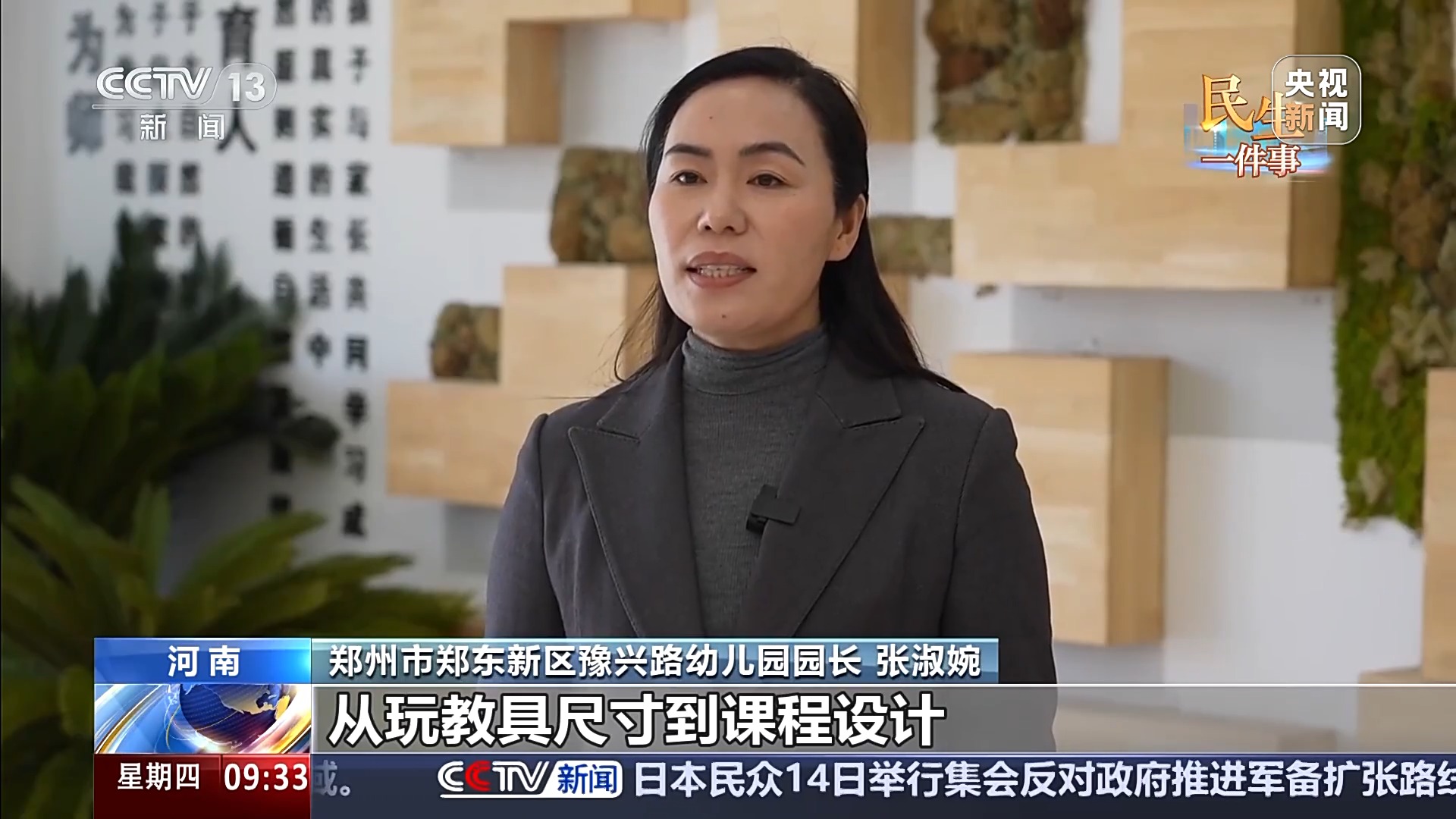
Group 1 - The core viewpoint of the articles highlights the successful establishment and operation of public childcare services in Shihezi City, which has significantly improved the accessibility and quality of early childhood education for families [1][2][3] - Shihezi City has invested over 100 million yuan in the past four years to enhance the supply of inclusive childcare services, providing subsidies and operational support to non-profit childcare institutions, effectively reducing the cost of childcare for families with children under three [1] - As of now, Shihezi City has 53 childcare institutions with a total of 3,992 spots, achieving the target of 4.5 spots per 1,000 people set by China's 14th Five-Year Plan [1] Group 2 - To expand inclusive resource supply, Shihezi City collaborates with multiple departments to encourage 37 kindergartens to integrate preschool education with childcare services, with 16 kindergartens and 15 private kindergartens gradually expanding their childcare services [2] - The Bo Yuan Sunshine Kindergarten has been approved to provide integrated childcare services, offering full-day, half-day, and hourly care, with a monthly fee of 1,280 yuan, making it a preferred choice for many families [2] - The city has also utilized community cultural activity centers and day care centers to establish community-inclusive childcare institutions, creating a "15-minute childcare service circle" [2] Group 3 - The "medical-education integration" model is promoted to enhance the care, health, learning, and physical activity levels of young children, with the Shihezi Maternal and Child Health Hospital managing the comprehensive childcare service center [3] - A three-tiered parenting guidance network has been established, integrating medical institutions, childcare institutions, and families, gradually forming a development pattern for childcare services [3]
深耕幼教三十余载 情系“一老一小”显担当
Xin Lang Cai Jing· 2026-01-06 20:32
Core Viewpoint - The article highlights the dedication and achievements of Chen Jing, a prominent figure in early childhood education, emphasizing her contributions to educational quality and community welfare [1] Group 1: Professional Achievements - Chen Jing has 35 years of experience in early childhood education, demonstrating a strong commitment to nurturing talent for the country and the party [1] - She has been recognized as a provincial special-grade teacher and a city-level "March 8th Red Banner Holder," showcasing her professional influence [1] - Her research outcomes have won the first prize at the national level for teaching achievements, indicating significant professional impact [1] Group 2: Community Engagement - As a member of the district political consultative conference, Chen Jing focuses on key areas such as elderly care and early childhood education, providing targeted suggestions [1] - She has submitted proposals aimed at enhancing community-based elderly care services and supporting the integration of childcare and education, which have been adopted by relevant departments [1] - Her efforts contribute to promoting educational equity and improving the elderly and childcare service system, reflecting a strong sense of responsibility and care for the community [1]
从拓展托育资源到加强队伍建设 四川以托幼一体化破解“带娃难”
Si Chuan Ri Bao· 2025-12-24 00:18
Core Insights - The implementation of the "Integration of Childcare and Early Education" marks a transition from conceptual advocacy to systematic restructuring in Sichuan [1][2] - The policy aims to address the challenges faced by parents regarding the availability and willingness to utilize childcare services [1][2] Policy Framework - The "Implementation Plan" outlines a clear path for the development of integrated childcare and early education, focusing on management systems, institution settings, teacher teams, and curriculum design [1][2] - The plan emphasizes the importance of collaborative governance across departments to enhance public policy effectiveness [2] Financial Support - A subsidy of 200 yuan per person per month will be provided to kindergartens offering inclusive childcare services, along with one-time construction subsidies for qualifying public kindergartens expanding their services [4][5] - This financial support aims to alleviate operational pressures on institutions and reduce the childcare burden on families [4] Service Quality and Standards - The plan includes comprehensive measures to ensure the quality of childcare services, such as standardizing facilities, personnel, and health management [4][6] - Emphasis is placed on the professional development of the childcare workforce, ensuring adequate staffing and ongoing training [4][6] Implementation Challenges - Key challenges include the need for collaborative management systems and addressing service supply disparities [6] - Recommendations include simplifying approval processes and developing diverse childcare options to meet varying family needs [6] Recommendations for Improvement - Experts suggest establishing a one-stop processing mechanism to reduce institutional transaction costs and avoid a one-size-fits-all approach to services [6] - There is a call for the integration of early childhood education programs in higher education to develop a skilled workforce capable of providing quality childcare [6]
四川以托幼一体化破解“带娃难”
Xin Lang Cai Jing· 2025-12-23 22:12
Core Viewpoint - The implementation of the "Implementation Plan" marks a transition from the advocacy of integrated childcare and education to a new stage of systematic reconstruction, addressing the challenges faced by parents regarding childcare availability and willingness [1][2][3] Policy Implementation - The "Implementation Plan" provides a clear path for the development of integrated childcare and education in Sichuan, aiming to resolve the issues of parents' reluctance and lack of options for childcare [1][2] - The plan emphasizes the expansion of inclusive childcare services by leveraging existing kindergarten systems to meet societal demands for safe and professional childcare [2][4] Financial Support - The plan includes a subsidy of 200 yuan per person per month for kindergartens providing inclusive childcare services, along with one-time construction subsidies for qualifying public kindergartens to expand or establish childcare classes [5][6] Quality Assurance - The plan focuses on enhancing service quality by establishing clear standards for facilities, personnel, and health management, ensuring that childcare services meet safety and quality expectations [5][6] - It emphasizes the importance of professional training and continuing education for childcare staff to support service quality [5][6] Systematic Challenges - The integrated childcare and education initiative faces challenges such as the need for collaborative management systems and differentiated service supply [6] - Recommendations include simplifying approval processes, establishing a one-stop service mechanism, and developing diverse childcare options to meet varying family needs [6]
从拓展托育资源到加强队伍建设,四川以“托幼一体化”破局“带娃难”丨川观解读
Xin Lang Cai Jing· 2025-12-19 13:18
Core Viewpoint - The implementation plan for integrated childcare and early education in Sichuan aims to address the urgent needs of parents regarding childcare accessibility and affordability, marking a significant step towards a comprehensive service system for early childhood development and education [1][2]. Group 1: Policy Overview - The "integrated childcare and early education" concept connects services for children aged 0-3 with educational resources for those aged 3-6, focusing on management systems, institution setup, teacher training, and curriculum design [2]. - The issuance of the implementation plan signifies a transition from conceptual advocacy to systematic restructuring, aligning with national population development strategies and promoting public policy collaboration [2][3]. Group 2: Practical Implications - The plan aims to transform childcare services from being accessible to a minority to being available to the majority, ensuring that working-class families can afford and access these services [2][3]. - The plan emphasizes the importance of safety and quality in childcare, leveraging existing kindergarten systems to provide professional and regulated services quickly [2][3]. Group 3: Financial Support and Accessibility - The implementation plan includes financial support measures, such as a subsidy of 200 yuan per child per month for kindergartens providing inclusive childcare services, and one-time construction subsidies for public kindergartens expanding their services [4][5]. - The plan aims to reduce the operational burden on kindergartens and significantly lower childcare costs for ordinary families [4][5]. Group 4: Quality Assurance - The plan outlines comprehensive standards for registration, facility requirements, and health management to ensure high-quality childcare services [5]. - It emphasizes the importance of building a qualified workforce through professional training and continuous education to support service quality [5][6]. Group 5: Challenges and Recommendations - Key challenges include the need for coordinated management systems, differentiated service offerings, and refined talent development in the childcare sector [6]. - Recommendations include simplifying approval processes, developing diverse childcare formats, and integrating early childhood education into higher education curricula to cultivate qualified professionals [6][7].
幼师专业大幅缩招,去年幼儿园教师减少超24万
Di Yi Cai Jing· 2025-12-19 10:21
Group 1 - The number of kindergarten teachers in China has decreased by 241,800 in 2024, marking a continuous decline for two years, from 3,244,200 in 2022 to 2,831,900 in 2024, a reduction of 412,300 teachers [1] - The number of kindergartens in China has also seen a decline, with a total of 289,200 kindergartens in 2022, decreasing by 5,610, a drop of 1.9%, and further declining to 274,400 in 2023, a decrease of 14,808, or 5.12% [1] - The trend of decreasing kindergarten teachers and kindergartens is expected to slow down, as the decline in birth rates is showing signs of easing, with an increase of 520,000 births in 2024 compared to 2023 [2] Group 2 - Several teacher training colleges are accelerating their transformation in response to the declining demand for kindergarten teachers, with institutions like Hengyang Preschool Normal College establishing new departments to align with industry needs [2] - The Hengyang Preschool Normal College has initiated a transformation plan that includes establishing a metrology and automation department, aiming to train high-quality technical talents for the advanced manufacturing industry [3] - Ningbo Preschool Normal College has reduced its enrollment for five-year and three-year preschool education programs, aiming to phase out the former within three years and cut the latter by half, while expanding into related fields such as infant care and early education [3][4]
四川11个部门联合推进托幼一体化发展 鼓励现有幼儿园增设托班
Si Chuan Ri Bao· 2025-12-19 03:27
Core Viewpoint - The implementation plan aims to promote integrated early childhood education and care services in Sichuan, focusing on expanding accessible childcare resources and improving service quality based on population trends and community needs [1][2]. Group 1: Key Tasks of the Implementation Plan - The plan outlines five main tasks: expanding accessible childcare resources, standardizing childcare services, securing financial support, enhancing fee management, and strengthening workforce development [1]. - Existing kindergartens are encouraged to establish childcare classes, particularly those with available capacity or suitable for expansion [1][2]. Group 2: Infrastructure and Facility Requirements - New public kindergartens are urged to consider childcare class construction simultaneously, and existing kindergartens in urban areas can be repurposed to offer childcare services [2]. - Childcare classes must meet specific requirements, including being located on the ground floor and equipped with age-appropriate furniture and materials that comply with safety and environmental standards [3]. Group 3: Financial Support and Fee Management - Public kindergartens that meet the criteria for establishing childcare classes will receive one-time construction subsidies, and recognized facilities providing affordable childcare will receive monthly subsidies of 200 yuan per child [3]. - Clear public disclosure of fee structures and prohibitions against arbitrary fee increases or additional charges are mandated to ensure transparency [3]. Group 4: Workforce Development - Each childcare class is required to have dedicated teachers and caregivers, with salary policies ensuring equitable pay for public and private kindergarten staff [3].
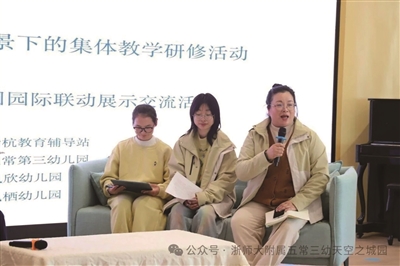
共研托幼一体化 赋能幼儿成长新路径
Mei Ri Shang Bao· 2025-12-09 22:20
Group 1 - The core idea of the news is the collaborative teaching and research activity focused on integrated early childhood education, aiming to enhance the quality of care and education for young children [2][3] - The event involved multiple kindergartens and emphasized the importance of teacher-child interaction strategies for different age groups, specifically toddlers and preschoolers [2] - Various engaging teaching demonstrations were presented, including language activities and music sessions designed to foster children's cognitive, social, and physical development [2] Group 2 - A specialized report highlighted the need for a warm environment and natural connections in toddler education, providing professional support through daily activities and home-school collaboration [3] - During the discussion segment, teachers shared their design intentions and reflections on implementation, while also exchanging ideas on the transition between different educational stages [3] - The workshop created a platform for sharing and professional growth among teachers, with a commitment to furthering integrated early childhood education practices for the healthy and joyful development of children [3]