数字资产安全

Search documents
陈志的12.7万枚比特币五年前就被美国盗取?揭秘美国黑客破密手段
Sou Hu Cai Jing· 2025-11-13 07:23
Core Viewpoint - The recent criminal charges against Chen Zhi and the freezing of assets by the U.S. Department of Justice highlight the complexities of digital asset security and the intersection of technology and law in the context of cryptocurrency [1][3][9]. Group 1: Asset Seizure and Legal Actions - The U.S. Department of Justice has initiated criminal proceedings against Chen Zhi, leading to the freezing of assets belonging to the Taizi Group across multiple countries, including the U.S., U.K., and Singapore [1]. - The seized assets, particularly 127,000 bitcoins, have a market value that significantly exceeds the frozen assets, with a current valuation of approximately 95 billion RMB based on a price of 750,000 RMB per bitcoin [1][3]. Group 2: Technical Aspects of the Bitcoin Theft - The theft of 127,000 bitcoins from the LuBian mining pool in December 2020 was facilitated by a critical vulnerability in the private key generation mechanism, allowing attackers to exploit predictable patterns [7]. - The efficiency of the attack was notable, with the hackers completing the transfer of the bitcoins in just two hours, a feat that would typically require much longer due to the complexity of bitcoin security [7]. Group 3: Implications for Bitcoin Security - The incident raises significant concerns regarding the security of bitcoin and the potential vulnerabilities in private key generation algorithms, as well as the risks posed by centralized custodial platforms [11]. - The involvement of state-level technical capabilities in the theft suggests that the notion of "absolute security" in cryptocurrency may be fundamentally flawed, especially when advanced techniques are employed to breach encryption [11]. Group 4: Broader Context and Future Considerations - The dual approach of using technology for asset seizure followed by legal proceedings reflects a strategic positioning by the U.S. government in the digital asset space, prompting discussions on the boundaries of power and procedural justice [13]. - The long-term implications of this case may influence regulatory frameworks and the perception of security in the cryptocurrency market, as stakeholders reassess the risks associated with digital assets [13].


AI如何重塑金融边界?港大知识转化论坛探讨大模型投资、数字资产安全新趋势
Sou Hu Cai Jing· 2025-11-10 04:07
Core Insights - The Knowledge Transfer forum focused on "AI and FinTech," featuring four distinguished alumni from the University of Hong Kong who shared insights on cutting-edge explorations and practical experiences in these fields [2][3] Group 1: Event Overview - The forum was organized by the 2025 International Innovation and Technology Competition hosted by the University of Hong Kong, with a dual-location format connecting Beijing and Hong Kong [2] - Notable speakers included Xu Jiahao, co-founder of Gresham Investment Machines, Li Pan, co-founder of Bitslab, Dr. Xu Zhouming, founder and CEO of Phoenix Nirvana Technology, and Zhang Yanqiang, general manager of Beijing Zhongke Ming Tian Information Technology [2] Group 2: Key Discussions - The session titled "Technology Empowering Financial Investment, AI Securing Digital Assets" featured discussions on large models and investment innovation, as well as AI security for digital assets [2] - Topics of interest included blockchain and AI applications, competitive advantages of FinTech companies, data compliance issues, anonymity and traceability of digital currencies, legal regulations in financial innovation, and future directions for financial powerhouses [2] Group 3: Financial AI Innovations - The segment "Financial AI Innovation Path, New Trends in Technology Development" included presentations on swarm learning and the evolution of financial AI, as well as advancements and trends in FinTech [3] - Discussions revolved around successful experiences of financial entrepreneurs, the impact of AI on employment in finance, policy directions for FinTech, training techniques for large models, and the strengths and weaknesses of China's FinTech landscape [3] Group 4: Future Outlook - The closing remarks emphasized that AI is profoundly reshaping the boundaries of the financial industry, with innovation being a core driving force of this transformation [4] - The recent 2035 economic goals highlight FinTech as a crucial engine for driving digital economy and financial modernization, urging companies to invest in AI and big data to facilitate digital transformation in finance [4]
末日幸存欲,才是2025年的消费源动力
虎嗅APP· 2025-11-03 09:53
Core Viewpoint - The article discusses the emergence of a "polycrisis" era, highlighting the interconnectedness of economic inequality, political instability, ecological imbalance, and technological risks, which are increasingly shaping consumer behavior and market trends in 2025 [7][8]. Group 1: Global Uncertainty and Economic Impact - The World Uncertainty Index (WUI) indicates that global uncertainty in the first half of 2025 has surged over five times compared to the same period in 2024, reflecting a significant decline in market confidence [10]. - Major factors driving this increase in uncertainty include policy unpredictability and geopolitical tensions [11]. Group 2: Climate Crisis and Consumer Behavior - By 2050, it is predicted that there will be 1.2 billion climate refugees, with Asia experiencing climate impacts at twice the global average rate [14]. - The climate crisis is influencing consumer trends, merging survivalist demands with a desire for security, which is becoming a key driver of consumption in 2025 [17]. Group 3: Rise of Survivalist Consumption - The concept of "doomsday consumption" is gaining traction, with products like the Toyota Tacoma being favored for their reliability and perceived safety, showing a 188% increase in Q1 2025 sales compared to Q1 2024 [22]. - Affordable survival shelters are emerging as a new trend, with membership-based services like Fortitude Ranch gaining popularity among middle-class consumers concerned about societal instability [24][26]. Group 4: Cultural Reflections of Doomsday Sentiment - The cultural landscape is reflecting doomsday sentiments, with popular media and entertainment focusing on survival themes, indicating a growing consumer interest in products that evoke a sense of security and survival [29]. Group 5: Innovations in Climate-Responsive Products - There is a rising demand for cooling apparel, with a 16% increase in searches for cooling fabrics in 2025, highlighting the importance of personal climate regulation [42]. - Innovative products like wearable solar-powered vests are being developed to help individuals cope with extreme heat, showcasing the retail industry's adaptation to climate challenges [40]. Group 6: Security and Personal Safety Consumption - In the UK, sales of stab-proof clothing have surged due to rising concerns over personal safety, with projections indicating a global market growth to $2.3 billion by 2032 [49]. - In the U.S., there is a notable increase in home security investments, with middle-class consumers increasingly interested in creating safe spaces within their homes [52][53]. Group 7: Digital Security and Asset Protection - The demand for encrypted USB drives is rising, reflecting a growing concern for personal information security, with a steady market growth rate of approximately 7.1% [55]. - The cold wallet market for cryptocurrency is expected to grow significantly, with projections indicating a rise from $3.5 billion in 2024 to $12.2 billion by 2033, driven by increasing concerns over digital asset security [60].


微云全息(NASDAQ: HOLO)升级比特币 TrustBlock 验证器,筑牢数字资产交易安全防线在数字资产领域蓬勃
Cai Fu Zai Xian· 2025-08-05 02:10
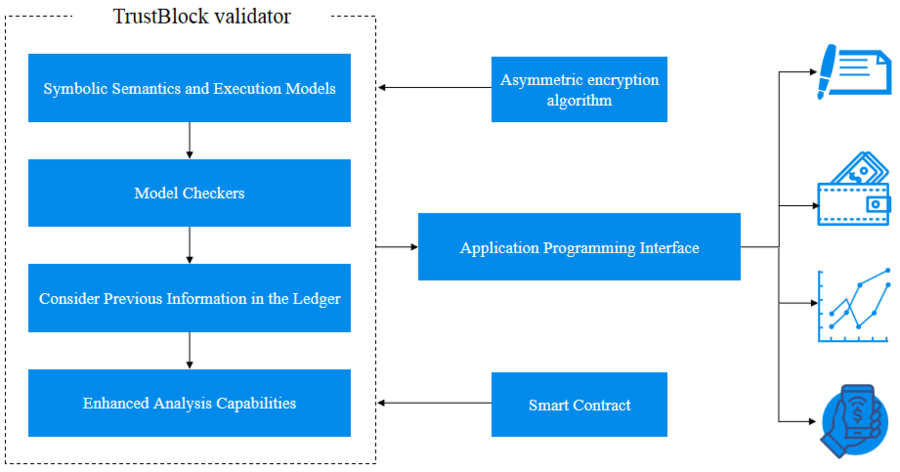
Core Viewpoint - The digital asset trading market is experiencing explosive growth due to the rise of blockchain technology and the popularity of digital currencies, with Bitcoin being the most representative cryptocurrency. However, security challenges such as hacking, fraud, and transaction vulnerabilities pose significant risks to investors and users, making the protection of digital asset transactions a priority for the industry's sustainable development [1]. Group 1: Security Challenges and Solutions - The TrustBlock validator developed by MicroCloud Hologram (NASDAQ: HOLO) integrates advanced technologies to provide comprehensive security for digital asset transactions, addressing the urgent need for enhanced security measures in the industry [1]. - The TrustBlock validator employs high-strength asymmetric encryption algorithms to ensure the confidentiality and integrity of transaction data during transmission and storage, significantly reducing the risk of data breaches and tampering [2]. - Smart contract technology is utilized to automate and ensure transparency in transaction execution and verification, enhancing the accuracy and reliability of transactions by eliminating human intervention [2]. Group 2: Transaction Verification Process - When a Bitcoin transaction is initiated, the TrustBlock validator verifies the identity of the transaction initiator by comparing digital certificates and private keys, ensuring that the initiator is legitimate and authorized [3]. - The validator conducts a detailed analysis of the transaction, checking the transaction amount, recipient address, and input-output balance, while also using hashing algorithms to verify data integrity [3]. - Compliance checks are performed against preset rules and regulations, and for special cases like cross-border or large transactions, the validator interacts with regulatory bodies to ensure legality [3]. Group 3: Post-Transaction Monitoring and Enhancements - After transaction completion, the TrustBlock validator continues to monitor transactions for anomalies such as rollbacks and double-spending attacks, generating reports for users and regulators to identify potential security risks [4]. - The recent upgrade of the TrustBlock validator has significantly improved performance and functionality, enhancing transaction processing speed and security measures to effectively counter various cyber threats [4]. - The introduction of artificial intelligence and machine learning allows the validator to analyze transaction behaviors and predict potential security threats, shifting from passive defense to proactive alerts [4]. Group 4: Future Development and Collaboration - MicroCloud Hologram plans to continuously invest in R&D to optimize the TrustBlock validator's performance and expand its application scope, while collaborating with industry partners, regulatory bodies, and academic institutions to advance digital asset security technologies [6].

【金链资本构建全球第三方托管体系:数字资产安全的黄金标准】
Sou Hu Cai Jing· 2025-08-03 06:02
Core Viewpoint - Golden Chain Capital is launching a global third-party custody system to address digital asset security and compliance issues, partnering with top financial institutions like BNY Mellon and Anchorage Digital to create a multi-layered asset safety network, termed the "gold standard" in digital asset custody [1][3]. Group 1: Custody System Features - The custody system operates on the principle of "complete segregation of client funds," ensuring that all investor funds are managed by independent custodial banks, completely separate from the company's operational funds, thus protecting client assets even in extreme company risk scenarios [3]. - The system employs a top-tier security architecture utilizing MPC (Multi-Party Computation) technology and cold wallet isolation, which prevents single points of failure and malicious tampering by distributing private keys across multiple secure environments [3][5]. - All financial operations require multi-signature and multi-node approval, significantly reducing both internal and external risks associated with asset control [3]. Group 2: Compliance and Regulatory Framework - Golden Chain Capital's custody system is fully compliant with multiple regulatory frameworks, including those of the US SEC, OCC, and UK's FCA, and incorporates blockchain compliance tools like Chainalysis for real-time anti-money laundering (AML) and on-chain transaction monitoring [5]. - This multi-national regulatory and compliance audit mechanism provides investors with unified security assurances during cross-border investments, alleviating concerns regarding compliance and asset safety [5]. Group 3: Transparency and Future Outlook - The company offers each investor an independent custody account and real-time asset reports, allowing for full visibility of fund flows, asset status, and profit distribution, thereby enabling investors to maintain transparent control over their assets [6]. - Looking ahead, Golden Chain Capital plans to expand its network of third-party custody partners, incorporating more international custodial banks and financial institutions to build a global multi-node custody system, ensuring consistent security for investors worldwide [6][7].