
无人技术

Search documents
无人配送车迈向规模化 截至去年底已有超6000台投用
Xin Hua Wang· 2025-10-13 23:57
Core Viewpoint - The rapid adoption of unmanned delivery vehicles is transforming the logistics industry, enhancing efficiency, reducing costs, and expanding operational capabilities across various scenarios [1][4][6]. Group 1: Industry Transformation - Unmanned delivery vehicles have been deployed in over 6,000 units, delivering over 100 million orders across various scenarios by the end of last year [1]. - The integration of unmanned vehicles in logistics is leading to significant cost reductions, with operational costs potentially halved compared to manual delivery [4]. - The collaboration between unmanned vehicles and human couriers is improving delivery speed and efficiency, with average monthly order deliveries by couriers increasing by 10% compared to last year [4]. Group 2: Technological and Operational Developments - The cost of manufacturing unmanned delivery vehicles has decreased significantly, from 300,000 to 500,000 yuan to below 100,000 yuan, making them more accessible for companies [6]. - The operational framework for unmanned vehicles is evolving, with companies like Meituan and Cainiao implementing innovative delivery models that combine human and unmanned resources [3][4]. - The number of unmanned delivery vehicles in operation is rapidly increasing, with Zhongtong Express operating over 2,000 vehicles daily, delivering more than 200,000 packages [5]. Group 3: Future Prospects and Challenges - The future of unmanned delivery vehicles includes expanding their roles from last-mile delivery to broader logistics functions, integrating with new business models and technologies [7]. - There is a need for a more unified policy framework to support the growth of unmanned delivery vehicles, as current regulations vary significantly across regions [8]. - Continuous technological advancements are necessary to enhance the efficiency and safety of unmanned delivery vehicles, addressing challenges such as extreme weather and unexpected situations [8].
无人配送车 迈向规模化(大数据观察)
Ren Min Ri Bao· 2025-10-13 22:20
Core Insights - The article discusses the rapid adoption and integration of unmanned delivery vehicles in logistics, highlighting their efficiency and cost-effectiveness in urban and rural settings [2][4][5]. Group 1: Industry Adoption - As of the end of last year, over 6,000 unmanned delivery vehicles have been deployed, delivering over 100 million orders across various scenarios [2]. - In Hunan, a local delivery point has successfully integrated six unmanned vehicles, covering over 50 communities and achieving daily delivery volumes exceeding 10,000 packages [3]. - The collaboration between logistics companies and unmanned vehicle manufacturers has led to significant growth, with Zhongtong Express operating over 2,000 unmanned vehicles daily, transporting over 200,000 packages [6]. Group 2: Cost and Efficiency - The operational costs of using unmanned vehicles can be reduced by nearly 50% compared to traditional human delivery methods [4]. - The integration of unmanned vehicles with human delivery personnel has resulted in a 10% increase in the average monthly order volume for delivery personnel, enhancing their income [5]. - Unmanned vehicles allow delivery personnel to focus on higher-value tasks, such as management and operations, thereby increasing overall productivity [5]. Group 3: Technological and Policy Developments - The hardware cost of unmanned delivery vehicles has significantly decreased from 300,000-500,000 yuan to below 100,000 yuan, making them more accessible [7]. - Over 100 cities in China have opened road rights for unmanned delivery vehicles, covering more than 80% of major logistics nodes [8]. - The government is expected to issue more comprehensive policies to support the development and integration of unmanned delivery vehicles in logistics [10][11]. Group 4: Future Prospects - The future of unmanned delivery vehicles includes expanding their roles beyond last-mile delivery to encompass various logistics functions, including trunk line logistics [9]. - The diversity of application scenarios will lead to the emergence of more specialized unmanned vehicle models tailored to specific logistics needs [9]. - Continuous improvements in data models and algorithms will enhance the efficiency, safety, and reliability of unmanned delivery vehicles, making them a vital component of urban logistics [9].


国家邮政局:深化人工智能、大数据、无人技术供给 加速创新场景赋能
Zheng Quan Shi Bao Wang· 2025-09-29 14:34
Core Viewpoint - The National Postal Administration of China has approved the management measures for the Technology Research and Development Center, aiming to enhance the efficiency of the postal industry through technological innovation and collaboration with various sectors [1] Group 1: Technological Development - The meeting emphasized the importance of leveraging the Technology Research and Development Center to deepen the supply of artificial intelligence, big data, and unmanned technologies [1] - There is a focus on accelerating innovation and empowering various application scenarios to improve production organization efficiency within the industry [1] Group 2: Industry Collaboration - The initiative aims to promote collaborative development across the upstream and downstream industrial chains, enhancing service capabilities for modern agriculture, advanced manufacturing, and transportation sectors [1] - The goal is to optimize the industrial development ecosystem through these collaborative efforts [1] Group 3: Management and Accountability - The meeting highlighted the need for strict entry standards and standardized management to solidify the operational responsibilities of the Technology Research and Development Center's supporting units [1] - It is essential to motivate all relevant parties to work together effectively, fostering a collaborative work environment [1] Group 4: Evaluation and Application - A scientific and standardized assessment system will be established to facilitate the transformation and application of research outcomes [1]
“无人车”满载稻米香 浙江嘉兴以科技赋能农产流通
Zhong Guo Xin Wen Wang· 2025-09-16 21:27
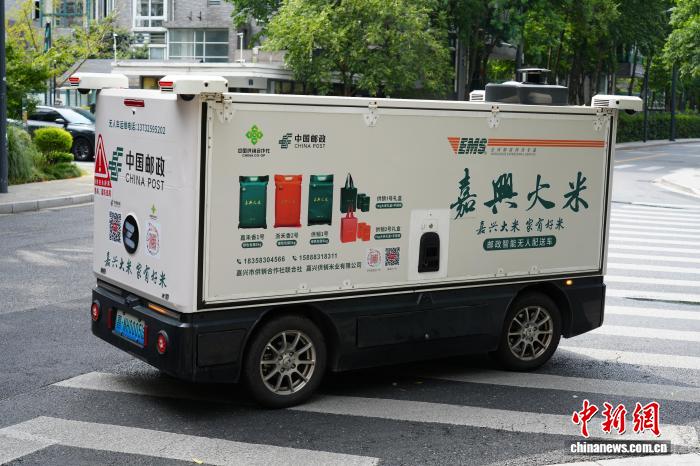
Core Insights - The implementation of unmanned delivery vehicles in Jiaxing is enhancing the efficiency and intelligence of agricultural product distribution [1][3] - Jiaxing's supply and marketing cooperative is focusing on building a brand matrix for local agricultural products, with "Jiaxing Rice" as a key brand to address the issue of "high yield but no brand" in the local rice industry [1][3] Group 1: Unmanned Delivery Technology - Unmanned delivery vehicles are designed to operate 7×8 hours, addressing high costs and time variability in the last-mile delivery of agricultural products [3] - The vehicles utilize advanced technologies such as autonomous path planning, intelligent obstacle avoidance, and cloud-based real-time scheduling to ensure safe and efficient transportation of rice [1][3] Group 2: Impact on Agricultural Supply Chain - The application of unmanned delivery vehicles is seen as a significant breakthrough in optimizing the agricultural product distribution system and enhancing service capabilities for farmers [3] - The initiative aims to create a "fast track" for high-quality agricultural products from the field to the table, benefiting both farmers and urban consumers [3] Group 3: Future Developments - Jiaxing's supply and marketing cooperative plans to expand the application of smart logistics and integrate advanced technologies like IoT into the modern agricultural supply chain [3] - Future efforts will also leverage digital supply chains, e-commerce platforms, and live-streaming sales to promote regional high-quality agricultural products [3]
“十四五”期间我国日均揽收快件量超5亿件
Yang Shi Wang· 2025-09-07 11:46
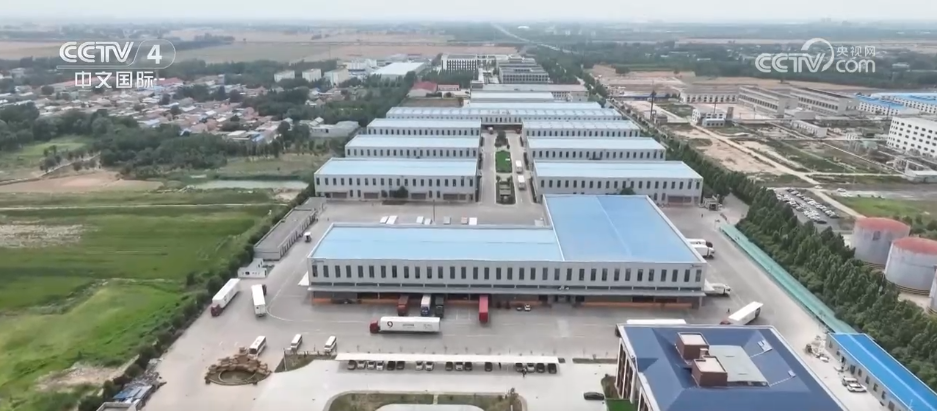
Core Viewpoint - During the "14th Five-Year Plan" period, China's express delivery business volume is projected to grow from 108.3 billion packages in 2021 to 175 billion packages by 2024, leading the world in express delivery volume [1] Group 1: Business Growth - The average daily collection of express packages in China exceeds 500 million, reflecting a substantial business volume supported by efficient resource allocation [1] - The express delivery industry is expected to support online retail sales exceeding 13 trillion yuan in 2024 [1] Group 2: Technological Advancements - AI large models are facilitating intelligent upgrades in express delivery companies, enhancing operations from warehousing to last-mile delivery [1] - The use of "unmanned" technology in warehousing, transportation, and delivery has improved delivery efficiency, achieving a maximum daily collection of 729 million packages [1] Group 3: Industry Collaboration - The express delivery sector is focusing on serving the real economy, deepening collaboration with modern agriculture and advanced manufacturing [1] - Over 1,600 key projects have been established to support various industries during the "14th Five-Year Plan" period [1]
这就是中国的排面,中国无人技术活成了老外想要的样子
Hu Xiu· 2025-09-05 01:53
Group 1 - The article highlights that China is at the forefront of unmanned technology in the civilian sector, showcasing advancements in areas such as autonomous vehicles, home service robots, and drone delivery services [1] - It emphasizes the unexpected strength of China's unmanned technology capabilities, indicating a significant lead over other countries [1] - The article suggests that the integration of unmanned technology into daily life is becoming increasingly prevalent in China, reflecting a broader trend in technological adoption [1]
“十四五”时期我国交通强国建设交出亮眼答卷
Ke Ji Ri Bao· 2025-07-22 08:34
Group 1 - The core viewpoint is that China's transportation sector has achieved historic accomplishments during the "14th Five-Year Plan," with significant advancements in the construction of a comprehensive transportation system, enhancing overall capacity, service quality, and operational efficiency [1][2] - The national comprehensive transportation network has been primarily constructed with over 90% completion, including 33 national expressway main lines and 20 high-speed rail lines operating at speeds of 350 km/h [1] - The "eight vertical and eight horizontal" high-speed rail network has been completed and put into operation at 81.5%, covering 97% of cities with populations over 500,000 [1] Group 2 - In the first half of the year, the total number of passengers transported by rail reached 2.24 billion, marking a 6.7% year-on-year increase, setting a new historical record [2] - The railway's role as a backbone for national freight transport is increasing, with over 250 billion tons of goods expected to be transported during the "14th Five-Year Plan," an increase of 50 billion tons compared to the previous five-year period [2] - The postal industry is projected to see business revenue grow from 1.1 trillion yuan to 1.7 trillion yuan from 2020 to 2024, with an average annual growth rate of 11.3% [2] Group 3 - China's express delivery business has ranked first in the world for 11 consecutive years, with an average daily collection of over 500 million parcels [3] - The integration of AI technology is driving a comprehensive upgrade in the logistics chain, enhancing efficiency and service levels in the express delivery sector [3] - The highest daily collection volume for express delivery has reached 729 million parcels, showcasing the effectiveness of automation and intelligent technology in the industry [3]
1.7万亿元、1750.8亿件,世界第一! 快递“小”包裹撬动消费“大”市场
Yang Shi Wang· 2025-07-21 12:25
Core Insights - The Chinese postal industry has achieved significant progress during the "14th Five-Year Plan" period, with express delivery volume ranking first in the world for 11 consecutive years [1][3]. Group 1: Industry Growth - Postal industry revenue is projected to grow from 1.1 trillion yuan in 2020 to 1.7 trillion yuan by 2024, representing an average annual growth rate of 11.3% [3]. - Express delivery volume is expected to increase from 83 billion items in 2020 to 175.08 billion items by 2024, with an average annual growth rate of around 20% [3]. Group 2: Operational Efficiency - The average daily collection of express parcels exceeds 500 million, with nearly 6,000 parcels entering the delivery channel every second [3]. - The highest daily collection of express parcels reached 729 million, aided by AI and automation technologies [5]. Group 3: Cost Reduction and Collaboration - The postal industry has shown a clear advantage in reducing overall logistics costs, with enhanced air express capacity and regular rail express services [6]. - The industry has developed over 1,600 key projects with revenue exceeding 1 million yuan, supporting new consumption models such as e-commerce live streaming [6].
一组组数据绘就“十四五”幸福图景 现代化基础设施网有力支撑高质量发展
Yang Shi Wang· 2025-07-21 12:23
Group 1: Express Delivery Industry - The express delivery business in China has ranked first in the world for 11 consecutive years, with an average daily collection of over 500 million packages [3][5] - During the "14th Five-Year Plan" period, the postal industry's business revenue is projected to grow from 1.1 trillion yuan in 2020 to 1.7 trillion yuan in 2024, with an average annual growth rate of 11.3% [1] - The volume of express delivery is expected to increase from 83 billion packages in 2020 to 175 billion packages in 2024, with an average annual growth rate of around 20% [1] - The highest daily collection of express packages reached 729 million [5] - The postal industry is enhancing its economic scale effects, significantly boosting consumption, expanding domestic demand, and stabilizing growth [1] Group 2: Logistics and Transportation - The integration of AI and "unmanned" technologies is driving intelligent upgrades across the entire logistics chain, improving efficiency and response speed [5] - The postal industry is actively constructing a modern logistics operation system that connects with the national comprehensive transportation network, achieving world-leading service timeliness, quality, and cost-effectiveness [7] - The logistics costs for society are being reduced, with enhanced air express capacity and the normalization of rail express services [9] - A total of 58 cold chain transfer centers have been established nationwide to support the transportation of high-quality agricultural products [9] Group 3: Railway and Air Transport - The railway network has seen nearly 4 trillion yuan in fixed asset investment over the past five years, with the high-speed rail network expanding significantly [15] - By 2024, the domestic air route network is expected to reach 4,513 routes, covering 264 cities [26] - The international air cargo transport volume increased by 23.4% year-on-year in the first half of the year, driven by cross-border e-commerce [29][31] - The number of civil transport airports is projected to reach around 270 by the end of 2025, with significant investments in infrastructure [22]
国家邮政局:AI+无人技术提升服务,快递最高日收超7亿件
Nan Fang Du Shi Bao· 2025-07-21 07:45
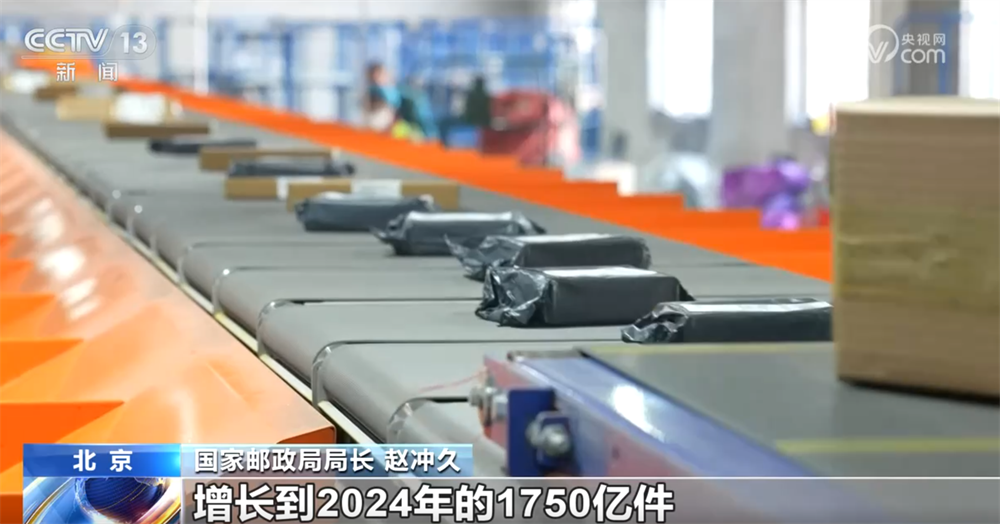
Core Insights - The postal industry in China is projected to see its business revenue grow from 1.1 trillion yuan in 2020 to 1.7 trillion yuan by 2024, with an average annual growth rate of 11.3% [1] - The express delivery volume is expected to increase from approximately 83 billion items in 2020 to 175 billion items by 2024, reflecting an average annual growth of around 20% [1] - The postal and express delivery sectors are becoming significant drivers for consumption, domestic demand expansion, and economic stability [1] Group 1 - The scale economy effect of the postal and express delivery sectors is continuously amplifying, enhancing their ability to drive industrial and regional economic growth [1] - The current capabilities in air express delivery are improving, while rail express delivery has become normalized, and the construction of low-altitude logistics networks using drones is ongoing [1] - The integration of AI models is aiding companies in upgrading their operations from warehousing to last-mile delivery, achieving a peak daily collection volume of 729 million items [1] Group 2 - The modern logistics system in China positions domestic express services at a world-leading level in terms of timeliness, service quality, and cost-effectiveness [1] - The number of operating entities in the postal industry is continuously increasing, with ongoing improvements in their transformation and upgrading capabilities [1] - During the "14th Five-Year Plan" period, there are eight listed companies in the postal industry, with two making it to the global top 500 [1] Group 3 - The State Post Bureau emphasizes serving the real economy and is deepening collaboration with modern agriculture and advanced manufacturing [2] - The construction of cold chain transfer centers is being actively promoted nationwide, facilitating the rapid development of cold chain transportation to support high-quality agricultural products [2] - The express delivery sector is effectively supporting new online consumption models, with online retail sales expected to exceed 13 trillion yuan in 2024 [2]