服务业扩大开放综合试点

Search documents
前5个月全国设立外商投资企业同比增长10.4%
Zheng Quan Ri Bao· 2025-06-20 17:11
Group 1 - The number of newly established foreign-invested enterprises in China increased by 10.4% year-on-year, reaching 24,018 from January to May 2025, indicating strong confidence from foreign investors in long-term investments in China [1] - The actual foreign investment amount decreased by 13.2% year-on-year to 358.19 billion RMB during the same period, highlighting a divergence between the number of new enterprises and the actual investment amount [1] - The manufacturing sector attracted 91.52 billion RMB in actual foreign investment, while the service sector received 259.64 billion RMB, with high-tech industries drawing 109.04 billion RMB [1] Group 2 - The service industry has become the primary area for foreign investment inflows, with the Chinese government expanding pilot programs to promote service sector openness in nine additional cities [2] - Investment from ASEAN countries grew by 20.5%, while Japan and the UK saw increases of 70.2% and 60.9%, respectively, reflecting the positive impact of regional economic integration [2] - The implementation of RCEP has contributed to stable growth in foreign investment from ASEAN and Japan, emphasizing the benefits of regional economic cooperation [2] Group 3 - Future efforts should focus on optimizing the business environment, expanding open sectors, and enhancing service guarantees for foreign investors [3] - Reducing the negative list for foreign investment access will allow foreign enterprises to fully benefit from China's growing market [3] - Strengthening government services and legal protections will provide a more stable and predictable development environment for foreign investments [3]
南京:加快培育以链主企业为引领、具有全国竞争力和影响力的重点产业集群
news flash· 2025-05-29 05:28
Core Viewpoint - Nanjing government is accelerating the cultivation of key industrial clusters led by chain master enterprises, aiming to enhance national competitiveness and influence [1] Group 1: Key Tasks and Initiatives - The meeting emphasized focusing on key tasks, adhering to timelines, and strengthening organizational promotion to effectively cultivate chain master enterprises [1] - Support for enterprises to expand investments and enhance collaborative innovation among companies is a priority [1] Group 2: Service Industry and Open Economy - The meeting discussed advancing the comprehensive pilot work for expanding the service industry, seizing new opportunities for pilot projects [1] - There is a call for proactive rule research and continuous practical exploration to enhance the level of institutional openness and create new advantages for a higher-level open economy [1]
陈之常调研服务业扩大开放综合试点、跨境贸易便利化工作
Nan Jing Ri Bao· 2025-05-14 02:08
Group 1 - The mayor emphasizes the importance of foreign trade as a key driver for economic growth and encourages various departments to seize opportunities in foreign trade development [2] - The city is focusing on enhancing cross-border e-commerce by providing integrated logistics services through the Nanjing Airport cross-border e-commerce and international express processing center [1] - There is a strong push for optimizing the business environment and providing comprehensive services to meet the needs of cross-border e-commerce, aiming for high-quality development in this sector [2] Group 2 - The mayor highlights the need for continuous implementation of policies that benefit enterprises, ensuring both existing and new policies are effectively executed [2] - The city aims to support innovation in trade channels and encourage companies to explore overseas markets, creating new growth points in foreign trade [2] - The emphasis is placed on strengthening professional support in legal services to assist enterprises in their international ventures [1]
“集中精力”做自己 155项试点任务提速加力高水平开放
Yang Shi Wang· 2025-04-21 22:00
Core Viewpoint - The Chinese government is accelerating the expansion of service industry openness amid rising unilateralism and protectionism globally, with a focus on enhancing its own economic stability and providing certainty to the world [8]. Group 1: Service Industry Expansion - The State Council announced a comprehensive pilot program with 155 tasks aimed at expanding service industry openness [1]. - New pilot cities include Dalian, Ningbo, and Xiamen, expanding the initiative beyond the existing 11 pilot provinces and cities [10]. Group 2: Telecommunications and Healthcare - In telecommunications, the plan includes removing foreign ownership limits on app stores and internet access services [3]. - The healthcare sector will support foreign and Hong Kong, Macau, and Taiwan doctors in opening clinics and simplify approval processes for foreign medical professionals [5]. Group 3: Financial Sector Initiatives - The financial sector will explore international factoring and support multinational companies in conducting cross-border operations in RMB [5]. - The People's Bank of China is enhancing financial support for regional coordinated development, including a digital RMB pilot in Chongqing [6]. Group 4: Trade and Transportation - In trade and tourism, foreign investment in travel agencies for outbound tourism will be permitted [8]. - The transportation sector will explore container sharing and "one box to the end" initiatives [8]. Group 5: Regulatory and Policy Improvements - The pilot tasks will address issues like visa-free transit, permanent residency, and professional qualification recognition to facilitate foreign talent [8]. - The focus will also be on improving cross-border data flow, standardization, intellectual property, and commercial encryption [8].

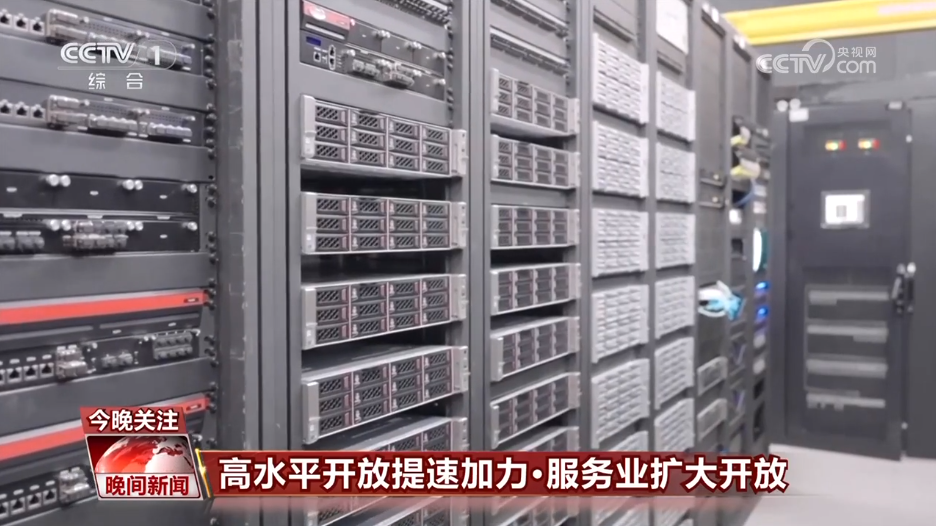
服务业扩大开放综合试点增至20个
Sou Hu Cai Jing· 2025-04-21 17:41
Core Viewpoint - The Chinese government is committed to accelerating the opening of its service industry, particularly in response to external challenges such as the U.S. implementing "reciprocal tariffs" which disrupts global trade and supply chains [2][3]. Group 1: Service Industry Opening - The "Work Plan" emphasizes the acceleration of opening up the service industry, showcasing China's determination to expand foreign access despite external pressures [2][3]. - Since the initiation of the service industry opening pilot program in 2015, there have been multiple upgrades and expansions, resulting in a framework of "1+4+6" with 20 pilot cities now included [3][4]. - The new plan aims to streamline pilot tasks across all 11 pilot provinces and cities, enhancing efficiency and expanding the scope of foreign investment [3][4]. Group 2: Telecommunications Sector - The plan prioritizes the opening of telecommunications services, including the removal of foreign ownership limits on certain service businesses [4][5]. - The Ministry of Industry and Information Technology has initiated steps to further open up the value-added telecommunications sector, with pilot approvals already granted to several global companies [5]. Group 3: Financial Sector - The People's Bank of China is developing financial standards for seven industries, including shipping and chemicals, to support the transition to greener practices [6][7]. - The central bank has already released six green finance standards and is working on additional standards to prevent "greenwashing" and ensure genuine transitions [6][7]. Group 4: Healthcare Sector - Since the launch of the service industry opening pilot, over 150 joint-venture and wholly foreign-owned medical institutions have been established in China [7][8]. - The government has allowed foreign medical professionals from Hong Kong, Macau, and Taiwan to practice temporarily in mainland China, facilitating the growth of foreign investment in healthcare [8].
谈“对等关税”,中国国际贸易谈判副代表说了三个“坚定”
Xin Jing Bao· 2025-04-21 10:47
与此同时,在现有11个试点省市基础上,新增大连、宁波、厦门、青岛、深圳、合肥、福州、西安、苏 州9个城市纳入试点。至此,我国服务业扩大开放综合试点增至20个,覆盖了东、中、西、东北地区, 形成了我国当前服务业对外开放的区域代表性格局。 新京报讯(记者姜慧梓)4月21日,国新办举行新闻发布会,介绍《加快推进服务业扩大开放综合试点 工作方案》(以下简称《工作方案》)有关情况。会上提及美国实施"对等关税"一事,商务部副部长兼 国际贸易谈判副代表凌激说了三个"坚定"。 凌激表示,当前,全球经济复苏动力不足,特别是美国宣布实施所谓对等关税,严重损害了多边贸易体 制,严重冲击了国际贸易秩序和全球产供链的安全稳定。为更好应对当前面临的外部冲击和挑战,《工 作方案》突出了对接CPTPP、DEPA等高标准国际经贸规则的内容。 随后,他提到三个"坚定"。凌激表示,《工作方案》提出提速、加力,显示出中国在当前形势下坚定不 移扩大对外开放的决心,进一步发挥服务业扩大开放综合优势,体现出中国坚定支持经济全球化,坚定 维护多边贸易体制,推动与各国共促开放、共享发展的意愿和决心。 我国服务业扩大开放综合试点工作自2015年启动,经历了一次 ...
商务部:支持发展“来数加工”等新业态和新模式
news flash· 2025-04-21 08:04
Core Viewpoint - The Ministry of Commerce supports the development of new business formats and models such as "data processing" and has outlined 155 pilot tasks to promote the opening up of key service sectors [1] Group 1: Policy Initiatives - The State Council has approved the "Comprehensive Pilot Work Plan for Accelerating the Opening Up of the Service Industry" [1] - The plan includes multiple dimensions such as opening up key service areas and promoting industrial innovation [1] Group 2: Key Areas of Focus - In the telecommunications sector, pilot tasks include removing foreign investment shareholding restrictions on services like app stores and internet access [1] - The government encourages the development of the data labeling industry and aims to improve the data trading market system [1]
发布会预告!就在今日下午3时
Zheng Quan Shi Bao· 2025-04-21 00:16
Core Points - The State Council of China will hold a press conference on April 21, 2025, to discuss the "Comprehensive Pilot Work Plan for Accelerating the Expansion of Service Industry Opening-Up" [1] - The plan aims to align with international high-standard economic and trade rules, promote innovative reforms, and expand autonomous opening-up to unleash market potential and enhance the quality of service industry development [1] - Nine cities, including Dalian, Ningbo, Xiamen, Qingdao, Shenzhen, Hefei, Fuzhou, Xi'an, and Suzhou, will be included in the pilot program to strengthen the implementation of the work plan [1][2] Summary by Sections - **Press Conference Announcement** - The press conference will feature officials from the Ministry of Commerce, the Ministry of Industry and Information Technology, the National Health Commission, and the People's Bank of China [1] - **Work Plan Objectives** - The work plan emphasizes proactive engagement with international standards, innovative reforms, and the release of market potential to contribute to a higher-level open economy [1] - **Pilot Cities and Implementation** - The pilot program will focus on nine selected cities, which are expected to enhance management systems, optimize collaboration, and strengthen talent development to ensure effective implementation [1][2]
服务业扩大开放提速 创新举措酝酿推出
Zhong Guo Zheng Quan Bao· 2025-04-20 22:48
Core Viewpoint - The Ministry of Commerce has issued a plan to accelerate the expansion of the service industry, including nine new cities as pilot areas, which is a significant step towards high-level opening-up of the economy [1][2]. Group 1: Pilot Expansion - The new pilot cities include Dalian, Ningbo, Xiamen, Qingdao, Shenzhen, Hefei, Fuzhou, Xi'an, and Suzhou, bringing the total number of pilot areas to 20 [2]. - The pilot program has been gradually expanded since its inception in 2015, with previous additions including Beijing, Tianjin, Shanghai, and others, forming a comprehensive open layout across various regions [2][3]. - The pilot program has led to over 190 innovative achievements that have been replicated nationwide, demonstrating significant success in promoting service industry openness [2]. Group 2: Foreign Investment - The service sector is a crucial area for attracting foreign investment, with actual foreign investment in the service industry reaching 193.3 billion RMB in the first quarter of this year, accounting for over 70% of total foreign investment [4]. - In 2024, the eleven pilot provinces and cities attracted 41.26 billion USD in foreign investment, representing 50.2% of the national total for the service sector [4]. - The pilot areas are becoming new high grounds for foreign investment in the service industry, with increasing openness and reduced restrictions on foreign access [4][5]. Group 3: Areas of Focus - The new pilot tasks include 155 initiatives across 14 areas, such as telecommunications, healthcare, finance, and cultural tourism, aimed at enhancing international cooperation and innovation [7]. - The telecommunications sector will see increased foreign investment opportunities, with plans to open up value-added telecom services [7]. - The financial services sector is expected to benefit from international capital and advanced management practices, which will also support the internationalization of the RMB [8].
国务院批复:原则同意!
证券时报· 2025-04-11 11:07
Core Viewpoint - The article discusses the approval of a comprehensive pilot program to expand the opening of the service industry in China, which includes nine additional cities as trial areas [1][3]. Summary by Sections Government Approval - The State Council has issued a response to the proposal for accelerating the opening of the service industry, agreeing in principle to the comprehensive pilot work plan [2][3]. Implementation Guidelines - The implementation of the work plan should be guided by Xi Jinping's thoughts on socialism with Chinese characteristics for a new era, focusing on deepening reforms and promoting modernization of the economic system [3]. Pilot Cities - Nine cities have been added to the pilot program: Dalian, Ningbo, Xiamen, Qingdao, Shenzhen, Hefei, Fuzhou, Xi'an, and Suzhou [1][3]. Organizational Structure - Each pilot region is required to enhance leadership in implementing the work plan, improve management systems, and strengthen talent development and professional management teams [3][4]. Support from Government Departments - Relevant government departments are tasked with supporting the pilot program, ensuring that the reform measures are effectively implemented [4].