
航空航天器及设备制造业

Search documents
外资来华上演“新剧情”
Jing Ji Ri Bao· 2026-02-09 00:10
Core Insights - The recent report on China's economic performance for 2025 highlights a significant increase in newly established foreign-invested enterprises by 19.1%, while the actual utilized foreign investment amount has decreased by 9.5% [1] Group 1: Foreign Investment Trends - The decline in foreign investment scale is attributed to increased uncertainty and instability in global economic exchanges, leading to greater fluctuations in cross-border investments [1] - The rise in the number of newly established foreign enterprises indicates a shift in foreign investment strategies, with companies potentially in the early stages of projects and funding not yet fully realized [1] - A report by KPMG indicates that most multinational companies are optimistic about revenue growth in China over the next 3 to 5 years, with 94% of surveyed companies planning to continue investing in the Chinese market [1] Group 2: Sector-Specific Insights - The service sector attracted the largest share of actual foreign investment, amounting to 545.12 billion yuan, reflecting China's vast market potential and consumer upgrade opportunities [2] - The manufacturing sector received 185.51 billion yuan in actual foreign investment, benefiting from China's comprehensive industrial categories and supply chain networks [2] - High-tech industries such as e-commerce services, medical equipment manufacturing, and aerospace manufacturing saw significant increases in foreign investment, with growth rates of 75%, 42.1%, and 22.9% respectively [2] Group 3: Policy and Strategic Initiatives - The "14th Five-Year Plan" suggests creating new advantages for attracting high-quality foreign investment, including reducing the negative list for foreign investment access and promoting reinvestment [2] - Various regions are implementing measures to encourage foreign enterprises to reinvest domestically, with cities like Shanghai and Beijing launching initiatives to attract quality foreign projects [3] - The narrative of foreign enterprises in China is evolving, focusing more on high-tech industries and strategic partnerships rather than merely establishing production facilities [3]
商务部:多国领导人访华开辟了双边经贸合作的广阔空间,中方敦促美方尊重WTO裁决
第一财经· 2026-02-05 12:30
Core Viewpoint - The article discusses the recent increase in foreign investment in China, driven by high-level visits from various countries' leaders, which enhances mutual understanding and trust in bilateral economic relations [3]. Group 1: Foreign Investment Growth - In 2025, South Korea's manufacturing investment in China grew by 14.1%, Canada's high-tech industry investment increased by 11.7%, Finland's manufacturing investment rose by 21.7%, and the UK's overall investment in China grew by 15.9% [3]. - A total of 70,392 new foreign-invested enterprises were established in China in 2025, marking a 19.1% year-on-year increase, while the actual utilized foreign capital amounted to 747.69 billion RMB, a decrease of 9.5% [4]. Group 2: Sector-Specific Investment Insights - The actual foreign investment in the manufacturing sector reached 185.51 billion RMB, while the service sector attracted 545.12 billion RMB. High-tech industries received 241.77 billion RMB, with significant growth in e-commerce services (75%), medical instruments (42.1%), and aerospace manufacturing (22.9%) [4]. - A survey by KPMG indicated that 94% of multinational companies plan to continue investing in the Chinese market, and over half of the surveyed companies expect to achieve profitability or significant profits in 2025 [4]. Group 3: Opportunities in Specific Markets - The UK-China Trade Association highlighted the potential for British companies in China's service sector, particularly in finance, healthcare, leisure, culture, and education, aligning with China's 14th Five-Year Plan to expand consumption and open up services [5]. - German companies view China as a long-term investment base and a key market for high-tech and high-quality products, with strong potential for cooperation in biopharmaceuticals, smart manufacturing, and sustainable development [6]. Group 4: Policy and Future Outlook - The Chinese government aims to maintain high-quality development and expand high-level openness during the 14th Five-Year Plan, which is expected to provide a favorable environment for foreign enterprises [6]. - The Ministry of Commerce plans to deepen foreign investment, reform mechanisms, and optimize the business environment to attract foreign capital, ensuring that foreign companies can thrive in China [6].

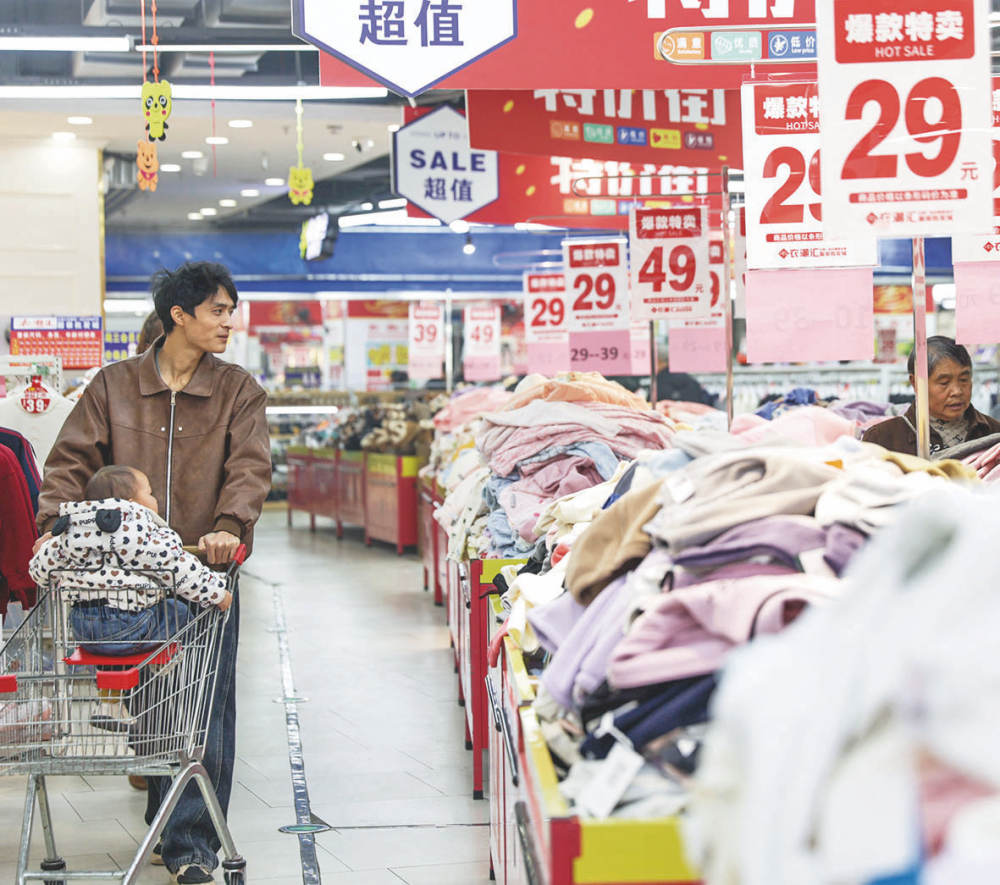
郑州经济总量突破1.5万亿元
Zheng Zhou Ri Bao· 2026-02-04 00:59
Core Viewpoint - Zhengzhou's economy is projected to exceed 1.5 trillion yuan in 2025, marking a significant milestone in its economic development, with a steady upward trend since 2022 [1] Economic Growth - The city's industrial added value is expected to grow by 9% year-on-year in 2025, with industrial investment achieving a robust growth rate of 17.9% [2] - From January to November 2025, the revenue of the city's above-scale service industry is anticipated to increase by 10.1%, accelerating by 4.3 percentage points year-on-year [2] - Retail sales of new energy vehicles are projected to rise by 17.1%, while upgraded products such as cameras, wearable smart devices, and smartphones are expected to see retail sales growth of 140%, 120%, and 100% respectively [2] New Economic Dynamics - The added value of high-tech manufacturing and strategic emerging industries is expected to grow by 14.9% and 11.8% year-on-year respectively in 2025 [2] - Investment in the pharmaceutical manufacturing and aerospace equipment sectors is projected to increase by 20.1% and 14.5% year-on-year [2] - Emerging consumption models such as instant retail, live streaming sales, and social e-commerce are experiencing rapid growth [2] - The film and television production industry is expected to see a revenue increase of 119.8%, while the arts and performance sector is projected to grow by 30.4% [2] Development Momentum - Zhengzhou has been selected as one of the ten pilot cities for national factor market-oriented reform, being the only northern provincial capital included [3] - The establishment of the Central Plains Science and Technology City Innovation Alliance and Harbin Institute of Technology Zhengzhou High Research Institute indicates a continuous enhancement of innovation momentum [3] - Zhengzhou Airport's cargo and mail throughput has surpassed 1 million tons, making it a member of the global "million-ton club" for air cargo [3] Urban Competitiveness - In 2025, the city is expected to add 137,800 new business entities, bringing the total to 2,238,600, with a provincial economic dominance of 22.9% [3] - The "Zheng Gathering Talent Plan" has attracted over 1 million university students to stay in Zhengzhou, with the total talent pool exceeding 3.2 million [3] - The city's permanent population has surpassed 13 million, ranking it tenth among cities nationwide, with a continuous net inflow of population [3] - Zhengzhou hosts 68 national-level research and development platforms and 17 national key laboratories [3]
32039.46亿元!广州最新公布
Sou Hu Cai Jing· 2026-01-31 05:04
Economic Overview - In 2025, Guangzhou's GDP reached 32,039.46 billion yuan, with a year-on-year growth of 4.0% at constant prices [1][4][13] - The primary industry added value was 317.02 billion yuan, growing by 3.3%; the secondary industry added value was 7,710.27 billion yuan, growing by 1.6%; and the tertiary industry added value was 24,012.17 billion yuan, growing by 4.8% [1][13] Industrial Performance - The industrial output of large-scale industries in Guangzhou increased by 1.2% year-on-year [1][18] - The automotive manufacturing sector, undergoing a transition, saw a narrowing decline of 1.6%, with new energy vehicle production increasing by 21.6% [1][4] - Stable growth was observed in electronic products and petrochemical manufacturing, with increases of 1.4% and 4.1%, respectively [1] Service Sector Growth - From January to November, the revenue of large-scale profit-making service industries grew by 10.1% year-on-year [1][22] - Significant growth was noted in the internet, software, and information technology services, with a revenue increase of 9.3% [1] - The human resources, advertising, consulting, and cultural sectors experienced revenue growth rates of 11.9%, 22.5%, and 25.7%, respectively [1][22] Domestic Demand and Trade - Guangzhou's total retail sales of consumer goods reached 11,032.38 billion yuan, with a year-on-year growth of 5.5%, maintaining a leading growth rate among major cities in China [2][25] - The city's import and export scale exceeded 1.2 trillion yuan, marking a historical high with a year-on-year growth of 10.4% [2][27] - Exports surpassed 800 billion yuan, growing by 17.8%, the highest growth rate in the province [2][27] Investment Trends - Fixed asset investment in Guangzhou decreased by 6.7% year-on-year, with real estate development down by 2.8% and infrastructure down by 5.9% [2][29] - Notable growth was seen in water transportation (15.9%), air transportation (16.1%), and aerospace manufacturing (60.6%) [2][29] Economic Challenges and Future Outlook - The city faces challenges from a complex external environment and internal structural adjustments, with industrial production in a low recovery phase [2] - Future strategies include leveraging demand to expand markets, strengthening project support, and enhancing technological innovation to drive new momentum for economic recovery [2]

2025年广州地区生产总值3.2万亿元 同比增长4.0%
Zhong Guo Xin Wen Wang· 2026-01-30 11:12
Economic Overview - In 2025, Guangzhou's GDP reached 3.2 trillion yuan, with a year-on-year growth of 4.0% [1] - The primary industry added value was 317.02 billion yuan, growing by 3.3%; the secondary industry added value was 7.71 trillion yuan, growing by 1.6%; and the tertiary industry added value was 24.01 trillion yuan, growing by 4.8% [1] Industrial Performance - The industrial added value of large-scale industries in Guangzhou grew by 1.2% year-on-year [1] - The automotive manufacturing sector, undergoing transformation, saw a narrowing decline, with new energy vehicle production increasing by 21.6% [1] - The manufacturing of display devices and integrated circuits grew by 16.1% and 43.0% respectively, with significant increases in production for various components [1] Investment Trends - Fixed asset investment in Guangzhou showed structural optimization, with significant growth in transportation projects, particularly in water and air transport, which grew by 15.9% and 16.1% respectively [2] - Investment in high-tech manufacturing, specifically in aerospace and equipment manufacturing, surged by 60.6% [2] - In high-tech services, investments in information services and R&D design services grew by 22.0% and 29.5% respectively [2] Consumer and Income Data - The total retail sales of consumer goods reached 1.1 trillion yuan, with a year-on-year increase of 5.5% [2] - The per capita disposable income of residents in Guangzhou was 80,591 yuan, growing by 3.6% year-on-year [2] - Over 70% of public budget expenditure was allocated to social welfare, education, and housing security, with respective growth rates of 15.4%, 2.8%, and 2.6% [2] Economic Challenges and Future Outlook - The economic environment in Guangzhou is characterized by ongoing challenges, with industrial production in a low recovery phase and a need for stronger internal demand [3] - Future strategies include market expansion driven by demand, project support, technological innovation, and revitalizing industrial momentum to sustain economic recovery [3]
外资正以别样姿态拥抱中国
Zhong Guo Jing Ji Wang· 2026-01-28 06:27
Group 1 - The core viewpoint of the article highlights a mixed performance in foreign investment in China for 2025, with a significant increase in the number of new foreign-invested enterprises but a decline in the actual amount of foreign capital used [1] - In 2025, the number of newly established foreign-invested enterprises reached 70,392, representing a year-on-year increase of 19.1%, while the actual utilized foreign capital amounted to 747.69 billion yuan, a decrease of 9.5% year-on-year [1] - The decline in foreign capital utilization is attributed to increased global economic uncertainties and a shift in cross-border investment towards service-oriented and asset-light models, leading to intensified competition among countries for foreign investment [1] Group 2 - The service sector accounted for a significant portion of actual utilized foreign capital, totaling 545.12 billion yuan, reflecting China's vast market potential and consumer upgrade opportunities [2] - The manufacturing sector attracted 185.51 billion yuan in foreign investment, benefiting from China's comprehensive industrial categories and supply chain networks [2] - High-tech industries showed remarkable performance, with actual utilized foreign capital reaching 241.77 billion yuan, and specific sectors like e-commerce services, medical equipment manufacturing, and aerospace manufacturing experiencing year-on-year growth rates of 75%, 42.1%, and 22.9% respectively [2] Group 3 - The "14th Five-Year Plan" suggests creating new advantages for attracting high-quality foreign investment, including reducing the negative list for foreign investment access and promoting reinvestment by foreign enterprises [3] - Various regions are implementing measures to encourage foreign investment, such as Shanghai's twenty measures for reinvestment and Beijing's utilization of international trade platforms to attract quality foreign projects [3] - The narrative of foreign enterprises in China is evolving, focusing more on high-tech industries and a more strategic investment mindset, indicating a long-term commitment to the Chinese market [3]
好评中国·“经”彩开局|外资正以别样姿态拥抱中国
Zhong Guo Jing Ji Wang· 2026-01-28 05:10
Group 1 - In 2025, the number of newly established foreign-invested enterprises in China increased by 19.1% to 70,392, while the actual utilized foreign capital decreased by 9.5% to 747.69 billion yuan [1] - The decline in foreign capital utilization is attributed to increased uncertainty and instability in global economic exchanges, as well as a shift towards service-oriented and light-asset investments in cross-border investments [1] - Despite the decrease in capital, the increase in the number of foreign enterprises indicates a strategic shift rather than an exit, with many companies potentially in the early stages of project development [1] Group 2 - The service sector attracted the largest share of foreign capital, amounting to 545.12 billion yuan, highlighting China's vast market potential driven by its large population and growing middle class [2] - The manufacturing sector received 185.51 billion yuan in foreign investment, benefiting from China's comprehensive industrial categories and supply chain networks [2] - High-tech industries saw significant foreign investment, with actual utilization reaching 241.77 billion yuan, and notable growth in e-commerce services, medical equipment manufacturing, and aerospace manufacturing [2] Group 3 - The "14th Five-Year Plan" suggests creating new advantages for attracting foreign investment, including reducing the negative list for foreign investment access and promoting reinvestment [3] - Various regions are implementing measures to encourage foreign enterprises to invest and reinvest in China, with initiatives in cities like Shanghai and Beijing to attract high-quality foreign projects [3] - The narrative of foreign enterprises in China is evolving, focusing more on high-tech industries and innovative collaborations rather than merely establishing manufacturing facilities [3]
社科院金融所:2025年四季度中国经济稳中有进显活力
2 1 Shi Ji Jing Ji Bao Dao· 2026-01-27 05:02
Core Insights - The report from the Chinese Academy of Social Sciences (CASS) provides a comprehensive analysis of China's macroeconomic and financial situation for the fourth quarter of 2025 and offers targeted suggestions for economic development in 2026 [1][3]. Economic Performance - In 2025, China's GDP reached a total of 140 trillion yuan, achieving a growth target of 5.0%, marking a successful conclusion to the 14th Five-Year Plan [3]. - The global economy faced challenges, with the U.S. showing strong recovery driven by consumption and AI investments, while the EU struggled with slow growth and Japan experienced unexpected quarterly contraction [3]. Policy Recommendations - CASS suggests that fiscal and financial collaboration should be the core strategy for expanding domestic demand, with measures to boost consumption through optimized loan interest subsidies and digital consumption vouchers [4][9]. - Investment strategies should include special guarantees and risk-sharing mechanisms to stimulate private sector activity, alongside high-quality urban renewal initiatives [4][9]. Sectoral Insights - Traditional investment growth is slowing, while emerging sectors like service consumption and high-tech industry investments are gaining momentum, with high-tech investments in information services and aerospace growing by 28.4% and 16.9% respectively [5][7]. - The consumer market is showing a "weak goods, strong services" pattern, with retail sales of consumer goods growing at only 0.9% year-on-year, while service retail sales increased by 5.5% [7]. Economic Outlook - The International Monetary Fund (IMF) forecasts global economic growth at 3.3% for 2026, with potential easing in U.S.-China trade relations providing a favorable environment for China's economic policies [8]. - CASS indicates a shift in China's economic policy from "extraordinary counter-cyclical adjustments" to a balanced approach that emphasizes both counter-cyclical and cross-cyclical adjustments [8]. Implementation Strategies - A series of targeted policies are set to support economic stability in 2026, focusing on fiscal and financial collaboration to enhance domestic demand [9][10]. - Recommendations include increasing government bond issuance to expand fiscal spending, supporting low-income groups, and improving the social security system to strengthen the economic foundation [10].
“十五五”为外资提供“机遇清单”
Sou Hu Cai Jing· 2026-01-26 22:37
Group 1 - The recent Spring Tea Party held by the China Foreign Investment Enterprises Association gathered diplomats, international business representatives, and multinational company leaders to discuss new cooperation opportunities in China's high-quality development process, signaling a strong commitment to high-level opening-up and broader development space for global investors [1] - The meeting serves as a window for government-business dialogue and an important opportunity to observe the direction of China's foreign investment policies and market opportunities, with the Ministry of Commerce emphasizing the certainty of China's economic high-quality development and foreign investment policies [1] - The "14th Five-Year Plan" outlines a blueprint for China's development over the next five years, providing a tangible "opportunity list" for foreign enterprises, closely linked to China's push for high-quality development and modernization of its industrial system [1] Group 2 - By 2025, structural changes in China's foreign investment are becoming prominent, with high-quality foreign investment emerging as a new driving force for economic development, particularly in high-tech industries such as e-commerce services, medical equipment manufacturing, and aerospace manufacturing [2] - Multinational companies are increasingly recognizing that success in the Chinese market is crucial for their global competitiveness, leading to a shift from technology transfer and contract manufacturing to joint R&D and collaborative industrial ecosystems [2] - The comprehensive advantages of attracting foreign investment in China are undergoing profound changes, with a complete industrial system, optimized innovation environment, rich application scenarios, and a vast market size forming the core competitive strengths [3] Group 3 - A report by KPMG indicates that most multinational companies are optimistic about revenue growth prospects in China over the next 3 to 5 years, with 94% of surveyed companies planning to continue investing in the Chinese market [3] - Many foreign enterprises view China not only as a significant market but also as a core engine of global innovation and growth, reflecting a qualitative shift in China's positioning within multinational companies' global strategies [3] - Foreign enterprises are increasingly focusing on long-term strategies to seize opportunities in emerging fields such as digital economy, green low-carbon initiatives, artificial intelligence, and biomedicine, which are also central to the "opportunity list" [3] Group 4 - China aims to steadily expand institutional opening-up, transitioning from a commodity and factor flow-based opening to an institutional opening, providing more development opportunities for foreign enterprises [4] - Understanding the certainty of China's economic development and actively integrating into its economic transformation process is crucial for global investors to seize future opportunities [4] - Investing in China is viewed as investing in the future, and aligning with China is seen as aligning with opportunities [4]
专家认为 今年外资使用将呈现向新向优趋势
Zhong Guo Zheng Quan Bao· 2026-01-25 21:52
Group 1: Foreign Investment Trends - In 2025, the number of newly established foreign-invested enterprises in China is expected to reach 70,392, representing a year-on-year growth of 19.1% [1] - The actual utilized foreign investment amount is projected to be 747.69 billion RMB, with the service sector accounting for 545.12 billion RMB [1][2] - The structure of foreign investment is continuously optimizing, with high-tech industries attracting significant foreign capital, amounting to 241.77 billion RMB in 2025 [2] Group 2: Sector-Specific Insights - The manufacturing sector is expected to receive 185.51 billion RMB in foreign investment, while the service sector will see a larger share [2] - Notable growth in foreign investment is observed in e-commerce services (75%), medical instruments and equipment manufacturing (42.1%), and aerospace manufacturing (22.9%) [2] - The trend indicates a shift of foreign investment focus towards high-tech industries and modern service sectors, as well as a geographical expansion from coastal to central and western regions of China [3] Group 3: Foreign Investor Confidence - Foreign investors from Switzerland, UAE, and the UK have shown significant increases in actual investments in China, with growth rates of 66.8%, 27.3%, and 15.9% respectively [4] - A recent survey indicates that 67% of multinational companies maintain confidence in revenue growth prospects in China over the next 3 to 5 years, with 94% planning to continue investing in the Chinese market [4] Group 4: Policy and Support Measures - The Chinese government is committed to enhancing the foreign investment service guarantee system, integrating foreign investment work with domestic demand expansion and technological innovation [5][6] - The Ministry of Commerce plans to eliminate restrictions on foreign investment in the manufacturing sector and expand market access in service industries, including cloud computing and biotechnology [6] - The "14th Five-Year Plan" is expected to provide a blueprint for China's development, offering foreign investors a list of opportunities [6]