
汽车电子化

Search documents
航天科技转让旗下年入30亿元汽车电子公司 华为、小米供应商光弘科技接盘
Mei Ri Jing Ji Xin Wen· 2025-05-14 09:17
Core Viewpoint - Aerospace Science and Technology is divesting its 100% stake in AC Company and a 0.003% stake in TIS Factory for a total of approximately 659 million RMB to focus on its core business areas [2][3] Group 1: Company Overview - Aerospace Science and Technology's main business segments include aerospace applications, automotive electronics, and the Internet of Things, with automotive electronics accounting for 83.07% of total revenue in 2024 [3] - AC Company was a significant player in the automotive electronics sector, generating 3.179 billion RMB in revenue for Aerospace Science and Technology in 2024, which represented 46% of the company's total revenue [3] - The company has faced financial challenges since 2020, with negative net profits for two consecutive years, including a net loss of 54.348 million RMB for AC Company in 2024, a decline of over 200% year-on-year [3][5] Group 2: Strategic Focus - The divestiture is part of the company's strategic plan to concentrate on its core business and improve capital structure and resource utilization [5] - The company aims to enhance its core competitiveness and align with the interests of shareholders through this transaction [5] - Future business priorities include systematic expansion in aerospace applications, comprehensive collaboration in automotive electronics, and deepening the Internet of Things business [5] Group 3: Acquisition by Guanghong Technology - Guanghong Technology, a well-known domestic electronic manufacturing service provider, is acquiring the assets, aiming to expand its automotive electronics business [2][6] - The acquisition will enhance Guanghong Technology's global presence, particularly in Europe, America, and Africa, where AC Company has established a strong customer base [6] - Despite the growth potential in the automotive electronics market, challenges such as soft demand in Europe and potential price wars in the automotive industry may impact the competitive landscape [6]



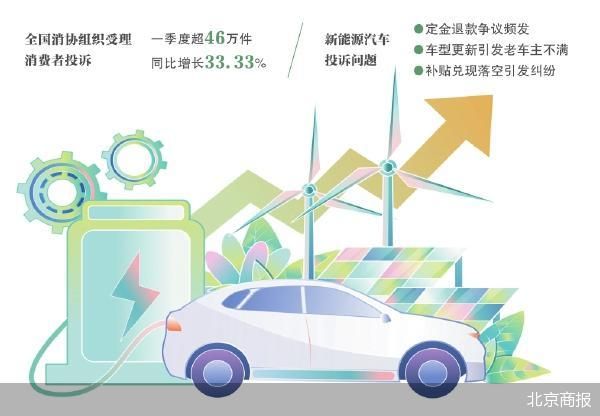
中消协点名新能源车三大纠纷投诉
Bei Jing Shang Bao· 2025-05-08 16:36
Group 1 - In the first quarter of 2025, consumer complaints in China exceeded 460,000, marking a year-on-year increase of 33.33% [1] - The top five categories of complaints were home electronics, clothing and footwear, daily goods, food, and transportation tools [1] - Complaints regarding daily miscellaneous items, shoes, clothing, and automobiles and parts all saw significant year-on-year growth [1] Group 2 - The analysis highlighted three new complaint issues in the electric vehicle (EV) sector: frequent disputes over deposit refunds, dissatisfaction among old car owners due to new model releases, and unfulfilled subsidy promises [3] - Many EV manufacturers use a pre-sale model, leading to disputes when consumers seek refunds due to delivery delays or discrepancies between promised and actual configurations [3] - Consumers expressed dissatisfaction when manufacturers released new models shortly after their purchase, creating a psychological gap for existing customers [4] Group 3 - The China Consumer Association emphasized the need for EV companies to abandon short-sighted practices that prioritize marketing over compliance and customer service [5] - Companies should clearly outline vehicle configurations, delivery times, and refund conditions in sales agreements, as well as disclose subsidy policies and application processes [5] - The association called for better balance between corporate operations and consumer experience to protect consumer rights and promote sustainable development in the EV industry [5] Group 4 - Xiaomi's SU7 Ultra faced controversy over power limitations and design issues, leading to customer dissatisfaction [6] - Following complaints about the vehicle's power being restricted from 1548 horsepower to approximately 900 horsepower, Xiaomi issued an apology and paused the problematic software update [6][7] - The company acknowledged the need for better communication with customers regarding significant updates and changes to vehicle performance [7] Group 5 - Xiaomi offered a limited-time service to switch back to aluminum hoods for unfulfilled orders and provided incentives for customers who opted for the carbon fiber hood [8] - The original carbon fiber hood is designed to meet high safety and quality standards, contrasting with aftermarket parts that may not meet the same criteria [8]

汽车芯片巨头一季度成绩单:订单现复苏信号,短期仍面临压力
2 1 Shi Ji Jing Ji Bao Dao· 2025-04-29 13:01
Core Insights - The power semiconductor manufacturers are expected to fall out of the top ten global semiconductor companies in 2024 due to the ongoing weakness in the automotive and industrial end markets [1] - Nvidia has surpassed Samsung and Intel to become the largest semiconductor company by revenue for the first time, according to Gartner [1] - The automotive semiconductor demand recovery has been postponed from Q1 2026 to Q2 2026 due to macroeconomic challenges and tariff uncertainties [1] Automotive Sector Performance - NXP Semiconductors reported automotive revenue of $1.674 billion in Q1 2025, down 6% quarter-over-quarter and 7% year-over-year, indicating a drag on overall performance [2] - STMicroelectronics experienced a significant decline in automotive revenue, with a 39% year-over-year and 34% quarter-over-quarter drop [3] - Texas Instruments noted a slight growth in automotive market revenue, with low single-digit percentage growth quarter-over-quarter [3][5] - The automotive chip market has been in a prolonged downturn, but some companies are beginning to see signs of improvement [3][5] Industrial and Communication Market Recovery - Texas Instruments reported a high single-digit percentage growth in the industrial sector after seven consecutive quarters of decline, with communication equipment growing approximately 10% [6] - The industrial market is showing signs of recovery, with evidence of inventory shortages among customers [7] - STMicroelectronics indicated that the industrial market's revenue performance is expected to improve, particularly in smart industrial sectors [7][8] Inventory and Market Dynamics - Despite improvements, overall inventory levels remain under pressure, particularly in the MCU segment for STMicroelectronics [8] - The automotive chip inventory has decreased significantly following adjustments in 2023-2024, but demand remains uncertain for 2025 [8]


