治安管理处罚法修订

Search documents
十四届全国人大常委会第十六次会议在京闭幕 表决通过新修订的治安管理处罚法、新修订的反不正当竞争法 习近平签署主席令予以公布
news flash· 2025-06-27 07:02
Group 1 - The 16th meeting of the 14th National People's Congress Standing Committee concluded in Beijing, passing revised laws on public security management and anti-unfair competition [1] - President Xi Jinping signed orders to promulgate the newly revised laws, marking significant legislative updates [1] - The meeting also approved the decision to ratify the Convention on the Establishment of International Mediation Centers [1] Group 2 - The meeting included the approval of the 2024 central budget, indicating the government's financial planning for the upcoming year [1] - Personnel changes were made, including the appointment of Zheng Yanhong as the Deputy Director of the Education, Science, Culture, and Health Committee of the National People's Congress [1] - A special lecture was held post-meeting, focusing on the importance of education and the construction of a strong educational nation [2]
新修订的治安管理处罚法哪些方面与你我生活场景“深度绑定”?216秒快速了解!
Yang Shi Wang· 2025-06-27 06:03
Core Points - The revised Public Security Administration Punishment Law will take effect on January 1, 2024, after being passed by the 16th meeting of the 14th National People's Congress Standing Committee [1] - The new law breaks the rigid practice of "no detention for minors" and reconstructs the standards for recognizing mutual fighting [1][3] - It establishes direct administrative penalties for pet-related injuries, reflecting the law's relevance to contemporary life scenarios [1] Summary by Sections - **Minors and Legal Accountability** - The new law allows for detention of minors aged 14 to 16 who commit illegal acts twice within a year or those over 14 committing serious offenses for the first time, addressing the exploitation of age-related leniency [3] - There will be strict penalties for organizing or coercing minors into paid companionship activities, with potential fines and detention depending on the severity of the case [5] - **School Bullying** - The law explicitly states that bullying through violence, insults, or threats will result in administrative penalties, and schools failing to report or address severe bullying incidents will face corrective orders and potential disciplinary actions [7] - **Self-Defense and Legal Protections** - The revised law clarifies that citizens have the right to take defensive measures against unlawful infringements, emphasizing that such actions should remain within reasonable limits to avoid excessive harm [9] - It encourages citizens to intervene in cases of unlawful attacks, ensuring that acts of bravery are legally protected [9] - **Pet Ownership Regulations** - New regulations impose penalties for owners of dangerous dogs that are not leashed or muzzled, with initial warnings followed by detention or fines for non-compliance, addressing the low costs of previous civil liability [11]

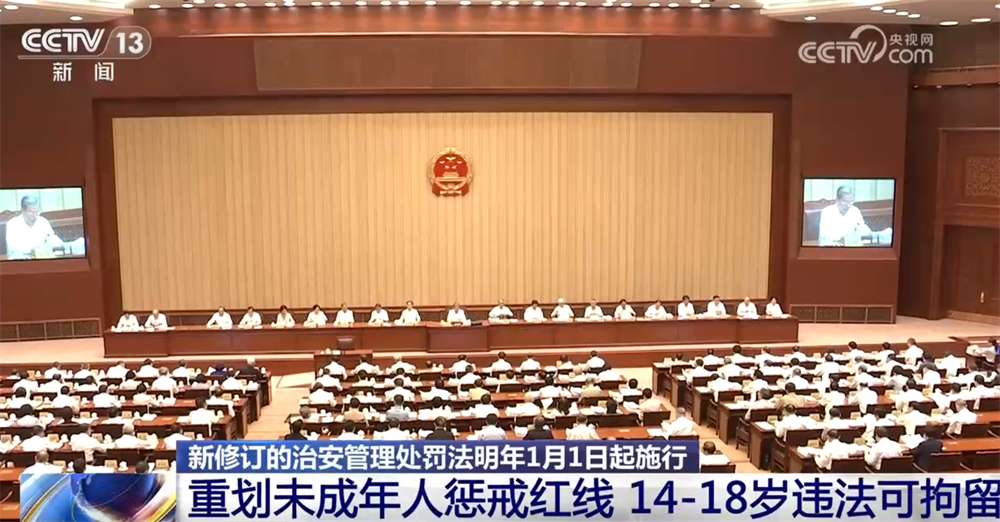
反不正当竞争法完成修订!10月15日起施行
证券时报· 2025-06-27 04:45
Group 1 - The newly revised Anti-Unfair Competition Law was passed by the 14th National People's Congress Standing Committee on June 27 and will take effect on October 15, 2025 [1][4] - The revised law includes five chapters: General Principles, Unfair Competition Behaviors, Investigation of Suspected Unfair Competition Behaviors, Legal Responsibilities, and Supplementary Provisions [1] - The law aims to improve the regulatory framework for anti-unfair competition, strengthen enforcement and judicial measures, and maintain market competition order, thereby establishing a unified, open, competitive, and orderly market system [1] Group 2 - The newly revised Public Security Administration Punishment Law was also passed on June 27 and will take effect on January 1, 2026 [6] - This law consists of six chapters and 144 articles, covering General Principles, Types and Application of Punishments, Violations of Public Security Management and Punishments, Punishment Procedures, Law Enforcement Supervision, and Supplementary Provisions [6] - The revision incorporates new behaviors affecting social security into the management scope and optimizes the procedures for handling public security cases, providing better legal protection for public safety and the legitimate rights and interests of citizens and organizations [6]
新修订的治安管理处罚法自明年元旦起施行
news flash· 2025-06-27 01:08
Core Viewpoint - The newly revised Public Security Administration Punishment Law was passed by the 16th meeting of the 14th National People's Congress Standing Committee and will take effect on January 1, 2026, providing a more comprehensive legal framework for maintaining social order and public safety [1] Summary by Sections General Principles - The revised law consists of 6 chapters and 144 articles, covering general principles, types and applicability of punishments, behaviors violating public security management, punishment procedures, law enforcement supervision, and supplementary provisions [1] Types of Punishments and Applicability - The revision includes new behaviors that impact social security into the management scope, enhancing the legal basis for law enforcement agencies to maintain social order [1] Procedures for Handling Security Cases - The updated law further optimizes and improves the procedural regulations for handling public security cases, ensuring better protection of the legal rights of citizens, legal persons, and other organizations [1]
行政拘留如何适用于违法少年
经济观察报· 2025-06-25 11:10
Core Viewpoint - The revision of the Public Security Administration Punishment Law reflects a shift in stance regarding the detention of minors, emphasizing that while minors deserve care and protection, such care has its limits, necessitating appropriate punishment for wrongdoing as a form of special education and protection [1][6]. Summary by Sections Legal Changes - The latest revision of the Public Security Administration Punishment Law introduces conditional execution of detention for minors aged 14-18 who commit serious violations, replacing the previous rule of non-execution based solely on age [2][3]. - Under the new regulations, minors aged 14-16 and 16-18 who commit serious offenses or repeatedly violate the law within a year may face actual detention, addressing the inadequacies of the previous law that allowed for evasion of punishment [2][3]. Social Context - The revision is a proactive response to the changing landscape of juvenile delinquency, acknowledging that the previous leniency may have inadvertently encouraged repeated offenses among minors who exploited the law's provisions [3][4]. - The law's previous approach, which emphasized rehabilitation, is now complemented by a more nuanced case-by-case handling of offenses, balancing the need for punishment with the potential for reform [4][5]. Implementation Considerations - To prevent arbitrary application of detention provisions, measures such as legal interpretations, guidelines, and the involvement of guardians during legal proceedings are recommended to ensure fair treatment of minors [5]. - The law emphasizes the importance of procedural rights for minors, including the right to a hearing before detention is imposed, reflecting a commitment to safeguarding their legal rights [5]. Alignment with International Standards - The changes in the Public Security Administration Punishment Law align with the United Nations' standards for juvenile justice, promoting the idea that minors should be supported in leading meaningful lives while being held accountable for their actions [6].

行政拘留如何适用于违法少年
Jing Ji Guan Cha Bao· 2025-06-25 05:42
Core Viewpoint - The recent revision of the Public Security Administration Punishment Law addresses the issue of juvenile delinquency by allowing conditional execution of detention for minors, reflecting a shift from previous leniency towards a more case-specific approach [1][2][3]. Summary by Sections Legislative Changes - The revised law modifies the previous provision that exempted minors under 16 from administrative detention, now allowing detention for serious offenses or repeated violations among minors aged 14-18 [1][2]. Social Context - The changes respond to the evolving social landscape and the challenges posed by the digital age, where previous leniencies may have been exploited by minors to evade consequences for repeated offenses [2][3]. Implementation Considerations - The law emphasizes the need for careful implementation, ensuring that administrative detention is applied judiciously, particularly given its serious implications for minors' freedoms [3][4]. Safeguards and Procedures - To prevent arbitrary application of detention, the law suggests establishing clear guidelines, ensuring the presence of guardians during proceedings, and allowing minors to have hearings regarding the legality and necessity of detention [4][5]. Educational and Protective Goals - The law's adjustments align with international standards advocating for the protection and rehabilitation of minors, balancing the need for accountability with the goal of fostering positive development [5].
十四届全国人大常委会第十六次会议审议多部法律草案和报告
Ren Min Ri Bao· 2025-06-24 21:58
Group 1: Law Amendments - The draft amendment to the Public Security Administration Punishment Law aims to standardize mediation in public security cases, emphasizing principles of legality, fairness, voluntariness, and timeliness [1] - The draft amendment to the Anti-Unfair Competition Law introduces a fair competition review system and addresses issues related to data rights infringement and malicious trading practices [3][4] - The draft amendment to the Villagers' Committee Organization Law seeks to enhance grassroots governance and promote rural revitalization by refining the roles and responsibilities of village committees [5][6][7] Group 2: Social Assistance Legislation - The Social Assistance Law draft expands the scope of social assistance to include families on the edge of minimum living standards and those facing rigid expenditure difficulties [8][9] - The draft proposes a collaborative mechanism for social assistance involving various government departments and emphasizes the importance of social participation in assistance efforts [9][10] Group 3: Urban Residents' Committee Law - The draft amendment to the Urban Residents' Committee Organization Law aims to improve the election system and increase collaborative decision-making processes within urban communities [11][12][13][14] Group 4: Audit Report Insights - The 2024 audit report highlights the central government's budget execution, with total revenue of 10,884.41 billion yuan and total expenditure of 14,224.41 billion yuan, maintaining a deficit of 3,340 billion yuan [15][16] - The audit focuses on major projects and risks, including local government debt and financial risks, while also addressing the management of state-owned assets [17]
十四届全国人大常委会第十六次会议在京举行 审议治安管理处罚法修订草案、反不正当竞争法修订草案等 赵乐际主持
news flash· 2025-06-24 08:17
Group 1 - The 16th meeting of the 14th National People's Congress Standing Committee was held in Beijing, chaired by Zhao Leji [1] - The meeting reviewed the report on the results of the third reading of the draft amendment to the Public Security Administration Punishment Law presented by Huang Ming, Vice Chairman of the National People's Congress Constitution and Law Committee [1] - The draft further standardizes and strengthens mediation work for public security cases, ensuring better alignment with other relevant laws and administrative regulations [1] Group 2 - The draft improves law enforcement practices by refining relevant punishment procedures and enhancing approval processes for confiscation [1] - It also strictly regulates the conditions and circumstances under which "one-person law enforcement" can be applied [1] - Provisions regarding the sealing of public security violation records have been established [1]
保护未成年人!殴打、侮辱等学生欺凌将受治安处罚
2 1 Shi Ji Jing Ji Bao Dao· 2025-06-23 04:48
Core Viewpoint - The National People's Congress Standing Committee is reviewing amendments to the Public Security Administration Punishment Law, focusing on the inclusion of provisions related to the protection of minors and the regulation of law enforcement practices [1][2]. Group 1: Legislative Changes - The third draft of the amendment includes provisions to regulate and strengthen mediation in public security cases, ensuring that facts are established and principles of legality, fairness, voluntariness, and timeliness are followed [4]. - The amendment aims to eliminate fines from the law and clarify that administrative detention should be handled by public security organs according to the law [4]. - It incorporates the organization and coercion of minors to engage in inappropriate activities, such as paid companionship in unsuitable venues, into the scope of public security management punishments [4][9]. Group 2: Law Enforcement and Procedural Improvements - The amendment seeks to enhance law enforcement by specifying the identification of police officers and improving procedures for evidence collection, including mandatory recording of on-site seizures [4]. - It establishes clearer guidelines for handling cases involving minors, including provisions for hearings and the presence of guardians or representatives during questioning [8]. Group 3: Focus on Minors - The amendment addresses the rising trend of juvenile delinquency by adjusting penalties for minors aged 14-18 who commit serious offenses, allowing for administrative detention under specific circumstances [7]. - It emphasizes the need for coordination with the Law on the Prevention of Juvenile Delinquency, mandating educational and corrective measures for minors who cannot be punished due to age [8]. - The law also includes measures to combat bullying in schools, holding schools accountable for failing to report or address severe bullying incidents [8].