
华为鸿蒙智行

Search documents
新能车ETF(515700)红盘向上,1月新能源车销量亮眼
Xin Lang Cai Jing· 2026-02-04 06:50
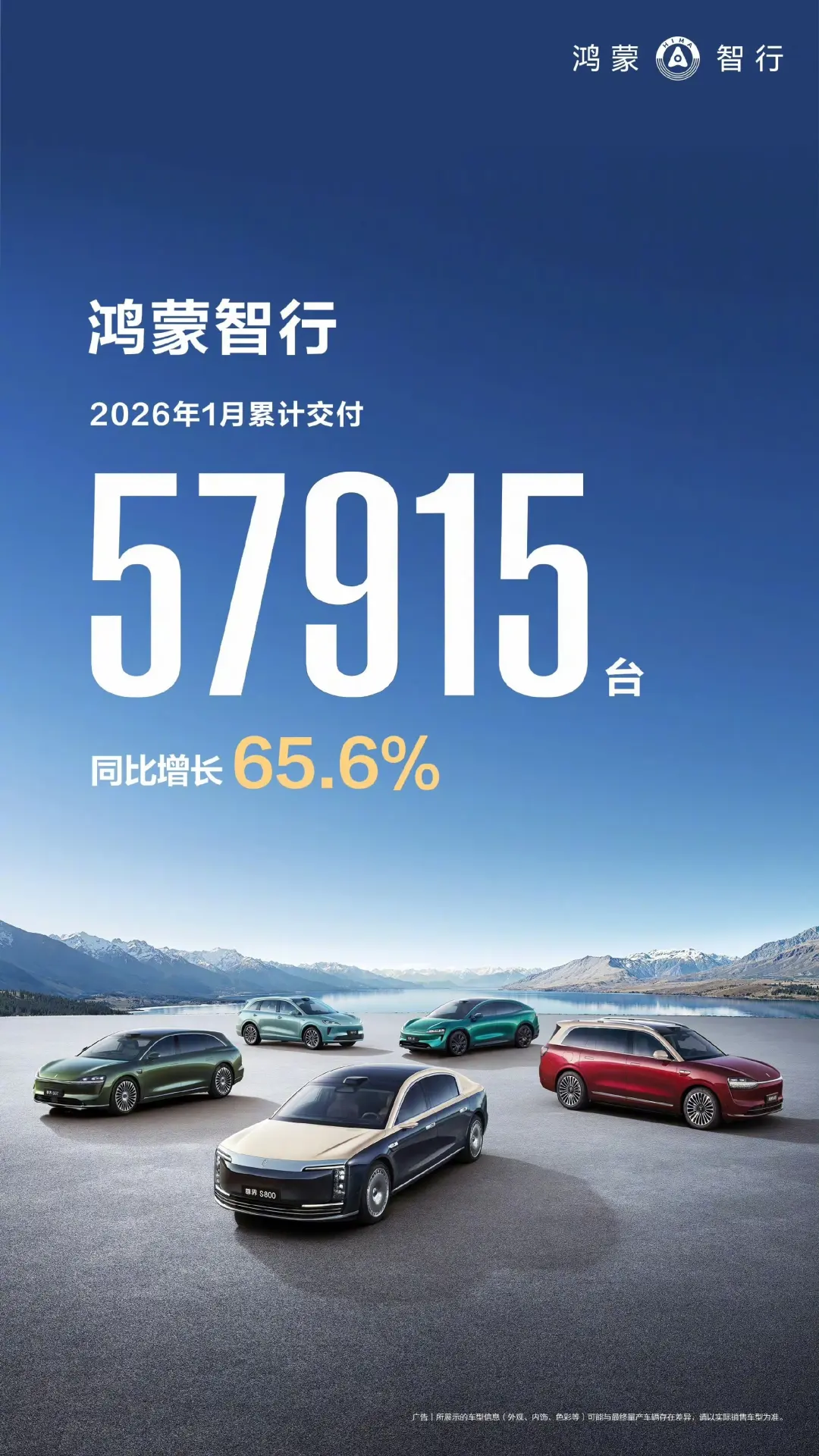
Group 1 - The core viewpoint of the news highlights the positive performance of the new energy vehicle (NEV) sector, with significant sales growth reported for various manufacturers in January, including a 65.6% year-on-year increase in deliveries for Huawei's HarmonyOS vehicles [1] - The China Securities New Energy Vehicle Industry Index (930997) rose by 0.51% as of February 4, 2026, with notable increases in stock prices for companies such as Yinlun Technology (up 10.01%) and CATL (up 4.91%) [1] - Open Source Securities emphasizes the importance of high-end development in the NEV market, particularly in light of the expected impact of reduced purchase tax exemptions and new vehicle replacement subsidies on mainstream NEV sales [1] Group 2 - The New Energy Vehicle ETF (515700) closely tracks the China Securities New Energy Vehicle Industry Index, which includes 50 listed companies involved in various aspects of the NEV industry, reflecting the overall performance of leading companies in this sector [2] - As of January 30, 2026, the top ten weighted stocks in the index accounted for 54.51% of the total, with major players including BYD and CATL [2] - The ETF has several connection options for investors, including different classes of shares for the New Energy Vehicle ETF [2]


新能源汽车首月“成绩单”,来了
Shang Hai Zheng Quan Bao· 2026-02-01 15:20
Group 1: Industry Overview - In January 2026, major Chinese electric vehicle manufacturers reported mixed results in new car sales, with some companies showing year-on-year growth but a noticeable decline compared to December 2025 deliveries [1] - BYD's January sales exceeded 210,000 units, representing a year-on-year decrease of 30.11% [4] - The China Passenger Car Association (CPCA) maintains an optimistic outlook for 2026, predicting a retail growth rate of approximately 10% for new energy vehicles [1] Group 2: New Energy Vehicle Manufacturers - Leap Motor delivered 32,059 vehicles in January 2026, a year-on-year increase of 27.37% but a month-on-month decline of 46.94% [2] - NIO reported January deliveries of 27,182 vehicles, marking a year-on-year increase of 96.08% but a month-on-month decrease of 43.53% [2] - Li Auto's January deliveries reached 27,668 units, reflecting a year-on-year growth of 7.55% but a month-on-month drop of 37.47% [3] - Xpeng Motors delivered 20,011 vehicles in January, showing a year-on-year decline of 34.07% and a month-on-month decrease of 46.65% [3] Group 3: Huawei and Xiaomi Developments - Huawei's HarmonyOS Smart Mobility achieved significant growth with January deliveries of 57,915 vehicles, a year-on-year increase of 65.6% [4] - Xiaomi announced January deliveries exceeding 39,000 vehicles, with a target of 550,000 units for the entire year of 2026 [8] Group 4: Market Statistics - As of the end of 2025, the total number of new energy vehicles in China reached 43.97 million, accounting for 12.01% of the total vehicle population [10] - The number of newly registered new energy vehicles in 2025 was 12.93 million, representing 49.38% of all new vehicle registrations, with a year-on-year increase of 14.93% [10]




谱写建设首都城市西大门辉煌新篇章
Bei Jing Ri Bao Ke Hu Duan· 2026-01-13 22:50
Core Viewpoint - The report highlights the achievements and future plans of Shijingshan District in Beijing, emphasizing urban renewal, economic growth, and social welfare improvements as part of the 14th Five-Year Plan and the upcoming 15th Five-Year Plan [1][9][19] Economic Development - The district's GDP is projected to reach 137 billion yuan, with fixed asset investment exceeding 50 billion yuan for the first time [3] - A total of 42 annual tasks were completed, and 12 key municipal projects were initiated [3] - Consumption initiatives led to the opening of 25 new stores and the issuance of 38 million yuan in consumption vouchers, stimulating over 2.7 billion yuan in consumer spending [3] Urban Renewal - The district completed 48 tasks in the latest urban renewal initiative, including the approval of historical and cultural preservation plans [4] - Significant infrastructure projects include the completion of the Apple Garden transportation hub and the opening of 89 old community areas for renovation [4] Industrial Development - The establishment of new research centers and technology hubs is expected to enhance the modern industrial system, with projected revenue growth of 18% in the digital economy sector [5] - The district aims to strengthen its position in artificial intelligence, financial services, and virtual reality industries, with expected revenues of 420 billion yuan from AI and 280 billion yuan from the sci-fi gaming sector [5] Cultural and Environmental Initiatives - Over 10,000 cultural events were held, benefiting more than 3 million people, and the cultural industry is expected to grow by 20% [6] - Environmental quality improved significantly, with 319 days of good air quality recorded [6] Social Welfare - The district has implemented 46 social welfare projects, creating over 32,000 jobs and increasing housing availability with 1,336 new affordable housing units [7] - Educational facilities were expanded, adding 2,070 new school places and enhancing elderly care services [7] Future Planning - The 15th Five-Year Plan aims to enhance urban functions, economic strength, and social governance, with a focus on sustainable development and improved living standards [10][12] - Key projects include the construction of a new exhibition town and the promotion of digital and green consumption [15][16]

小米汽车销量创新高,华为鸿蒙月销逼近9万,12月国产新能源百花齐放
Xin Lang Cai Jing· 2026-01-09 11:54
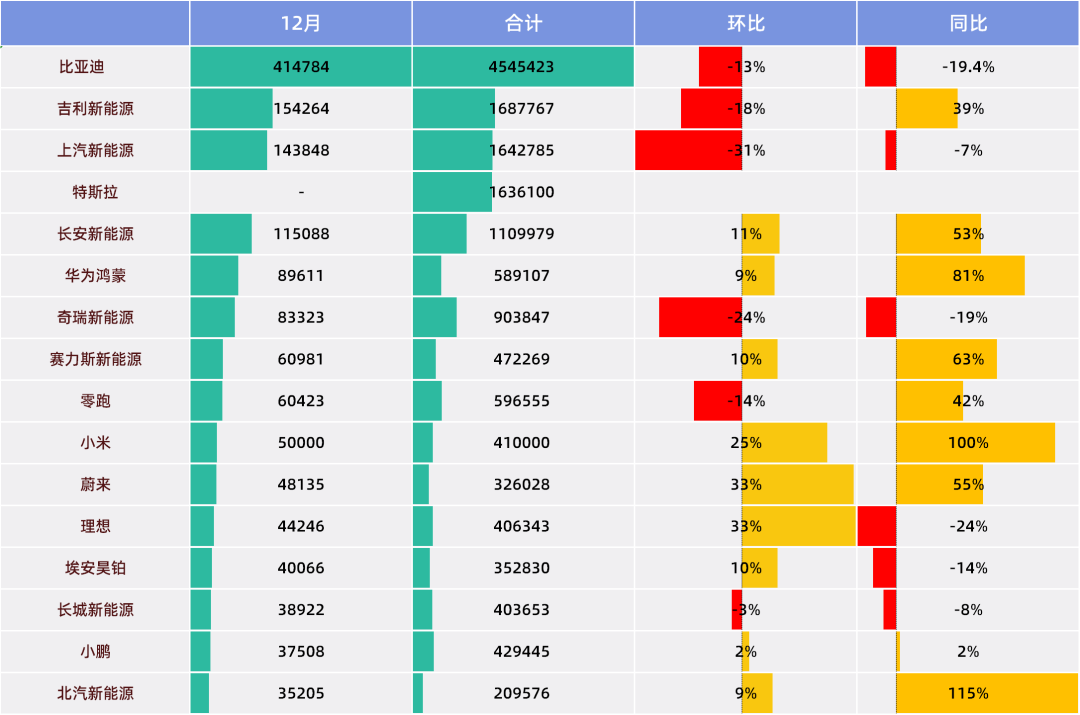
Core Insights - BYD's sales surged from 426,000 units in 2020 to 4.545 million units in 2025, achieving a compound annual growth rate of 60% [1] - Despite rapid growth, BYD faced intense competition from other automakers and did not meet its performance targets in 2025 [1] - The Chinese automotive market is undergoing significant changes, with many companies preparing for global expansion [1] Sales Performance - In December, BYD sold 414,784 units, a decrease of 13% month-over-month and 19.4% year-over-year [3] - Among 15 Chinese automakers, only five achieved both month-over-month and year-over-year sales growth [4] - The average sales volume dropped to 94,427 units in December, primarily due to declines in the first and second-tier companies [4] Market Dynamics - The Chinese government continues to support the automotive market with subsidies exceeding 1.1 billion yuan [2] - The competition is intensifying, with several brands achieving historical sales highs, particularly in the third tier [6] - The central economic work conference emphasized the importance of domestic demand, indicating ongoing support for the automotive sector [7] Company-Specific Developments - Only five out of 14 automakers met their sales targets for 2025, with companies like Li Auto and Aion falling short [8] - BYD's electric vehicle sales reached 2.2567 million units, surpassing Tesla's 1.636 million units for the first time [11] - The export volume of Chinese automobiles is expected to exceed 7 million units in 2025, with BYD emerging as a key player [14] Technological Advancements - The introduction of L3 autonomous driving technology is gaining momentum, with several companies, including BYD and Huawei, conducting road tests [17][18] - The competition for L3 autonomous driving capabilities is expected to intensify in 2026 [18] Brand Strategies - Huawei's HarmonyOS ecosystem has expanded, contributing to record sales for its vehicles [19] - Xiaomi's sales reached over 500,000 units in 2025, but the company faced a public relations crisis that may impact future products [21][23] - NIO and Xpeng have shifted to lower price segments to maintain competitiveness, with NIO achieving a record monthly sales of 48,135 units in December [24][27] Future Outlook - The automotive industry is expected to continue evolving rapidly, with companies focusing on both domestic and international markets [49] - The competitive landscape is shifting, with traditional automakers adapting to new market realities and consumer preferences [49]





又一个炒作新能源汽车负面信息的团伙被打掉!
中国能源报· 2025-12-18 09:43
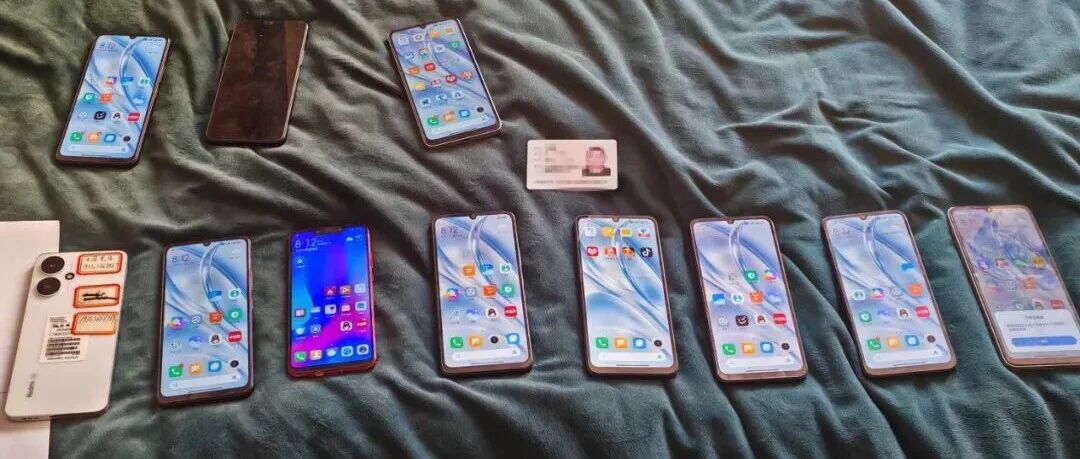
Core Viewpoint - Recently, Yantai police dismantled a gang that was involved in the manipulation of negative information regarding the new energy vehicle (NEV) sector, resulting in the arrest of 12 individuals and the seizure of over 1 million yuan in funds, along with the shutdown of more than 8,000 accounts [1]. Group 1 - Since July, companies such as Xiaomi, Huawei, and Li Auto reported a surge of negative articles targeting their brands on a specific platform, indicating a highly organized effort to discredit these companies [3]. - The negative content included malicious defamation, distorted interpretations, and fabricated consumer experiences, which severely harmed brand reputation and disrupted normal business operations [3]. - Yantai police identified over 3,000 negative articles that originated from accounts with short registration times and unusual activity levels, suggesting a premeditated operation by "internet water armies" to generate traffic and profit [5]. Group 2 - The gang utilized technical tools to scrape keywords related to "Xiaomi," "Huawei," and "Li Auto," employing artificial intelligence to mass-produce low-quality, similar "internet garbage" solely for the purpose of earning revenue from platform traffic [5]. - In September, the Ministry of Industry and Information Technology, along with five other departments, launched a three-month nationwide campaign to address online chaos in the automotive industry, focusing on illegal profit-making, exaggerated and false advertising, and malicious attacks [5].

小米、华为、理想先后报案,警方抓获12人!
新华网财经· 2025-12-18 07:15
Core Viewpoint - The article discusses the organized efforts to spread negative information about emerging industries, particularly in the electric vehicle sector, and highlights a police operation that dismantled a group responsible for this misinformation campaign [1][3]. Group 1: Background and Context - Since July, companies like Xiaomi, Huawei, and Li Auto reported a surge in negative articles targeting their brands on a specific platform, indicating a coordinated attack on their reputations [1]. - The negative content exhibited characteristics of organized operations, including malicious defamation, impersonation of consumers, and the amplification of isolated issues through manipulated media [1]. Group 2: Investigation and Findings - Following reports from affected companies, the Yantai police conducted an investigation, identifying over 3,000 negative articles linked to accounts with short registration times and unusual activity patterns, suggesting a systematic operation [3]. - The criminal group utilized technology to scrape keywords related to major brands and employed artificial intelligence to generate low-quality, repetitive content aimed at driving traffic for profit [3]. Group 3: Law Enforcement Action - The police established a special task force to analyze over 80,000 pieces of online information and trace more than 100,000 financial transactions to understand the group's structure and operations [5]. - The operation culminated in the arrest of 12 suspects, the seizure of over 1 million yuan in illicit funds, and the shutdown of more than 8,000 illegal accounts, effectively dismantling the network of "internet water army" involved in the misinformation campaign [5].
12人团伙用AI炒作发布小米华为理想诋毁文章!查扣逾百万
Nan Fang Du Shi Bao· 2025-12-18 01:39
Core Viewpoint - A criminal gang involved in the organized dissemination of negative information about electric vehicle brands, including Xiaomi, Huawei, and Li Auto, has been dismantled by the Yantai police after a four-month investigation, resulting in the arrest of 12 individuals and the shutdown of over 8,000 accounts [1][2][3]. Group 1 - Multiple companies, including Xiaomi, Huawei's HarmonyOS, and Li Auto, reported a surge of negative articles targeting their brands on a specific platform [1][2]. - The negative content exhibited organized characteristics, including malicious defamation, identity impersonation, and the amplification of isolated issues through manipulated videos, severely harming brand reputation and disrupting normal business operations [2]. - The Yantai police identified over 3,000 negative articles linked to a group of suspicious accounts with short registration times and unusual activity, indicating a premeditated operation by a "network water army" to generate profit through traffic manipulation [2][3]. Group 2 - The special investigation team analyzed over 80,000 pieces of online information and traced 100,000 financial transactions to clarify the gang's organizational structure and operational processes [3]. - Following the collection of evidence, the police conducted simultaneous operations in Yantai and Liaocheng, successfully apprehending 12 suspects, seizing over 1 million yuan in illicit funds, and shutting down more than 8,000 illegal accounts [3]. - Yantai police announced plans to continue special operations aimed at cleaning up the internet and combating misinformation [4].
小米、华为、理想报警,12人被抓获
Xin Jing Bao· 2025-12-18 00:23
Core Viewpoint - Yantai Public Security has dismantled a gang involved in the manipulation of negative information regarding electric vehicle brands, arresting 12 individuals and seizing over 1 million yuan in funds, while shutting down more than 8,000 accounts [1][2] Group 1 - The gang targeted companies such as Xiaomi, Huawei, and Li Auto, creating a large volume of negative articles that were highly organized and maliciously distorted the companies' reputations [1] - The negative content included impersonation of consumers and the use of AI technology to generate low-quality, repetitive "internet garbage" aimed at driving traffic for profit [1][2] Group 2 - The investigation involved analyzing over 80,000 pieces of online information and tracing more than 100,000 financial transactions to clarify the gang's structure and operational process [2] - The operation resulted in a comprehensive crackdown on this new type of "internet water army" crime, achieving a full-chain and penetrating strike against the organization [2]
小米、华为、理想报案,警方抓获12人
财联社· 2025-12-17 14:50
Group 1 - The article discusses the dismantling of a gang involved in the malicious promotion of negative information about electric vehicle brands, resulting in the arrest of 12 individuals and the seizure of over 1 million yuan in funds [1][3]. - Since July, companies like Xiaomi, Huawei, and Li Auto reported a surge in organized negative articles targeting their brands, indicating a coordinated effort to defame these companies [1][3]. - The negative content was characterized by organized tactics, including distortion of facts, impersonation of consumers, and the creation of misleading videos, which severely harmed brand reputation and disrupted normal business operations [1][3]. Group 2 - The investigation revealed that over 3,000 negative articles originated from accounts with short registration times and unusual activity, suggesting a systematic operation by a "cyber army" to generate traffic for profit [3]. - The gang utilized technical tools to scrape keywords related to major brands and employed artificial intelligence to produce low-quality, repetitive content, solely for the purpose of monetizing platform traffic [3]. - The police conducted a thorough analysis of over 80,000 pieces of online information and traced over 100,000 financial transactions to clarify the gang's structure and operational processes, leading to a comprehensive crackdown [3]. Group 3 - Li Auto's legal department reported a rise in organized attacks against the company and its customers, including violations of personal information and the spread of false information, which have negatively impacted the company's reputation and operational order [5]. - The legal department emphasized that these organized attacks are typical of illegal activities by cyber armies, which not only harm individual rights but also disrupt the company's brand integrity [5].
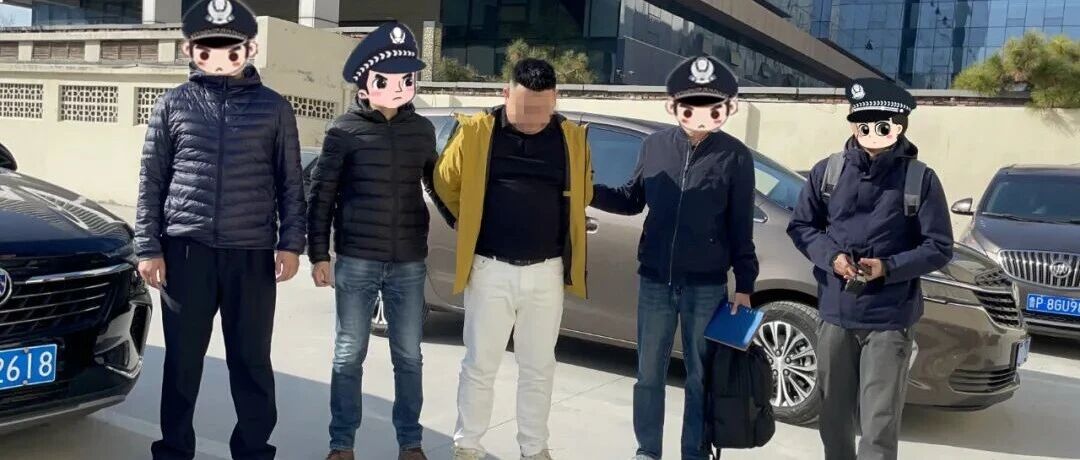
小米华为理想等黑水军12人被抓
Bei Jing Wan Bao· 2025-12-17 12:15
Core Viewpoint - A criminal gang involved in manipulating negative information about electric vehicle brands, including Xiaomi, Huawei, and Li Auto, has been dismantled by Yantai police, resulting in the arrest of 12 individuals and the shutdown of over 8,000 accounts [1] Group 1: Criminal Activities - The gang was responsible for orchestrating a campaign of negative articles targeting various automotive brands, characterized by organized efforts to distort facts and maliciously defame companies [1] - Tactics included impersonating consumers, fabricating scenarios, and creating misleading content that exaggerated isolated issues, severely damaging brand reputations and disrupting normal business operations [1] Group 2: Investigation and Arrest - Following reports from companies, Yantai police conducted a four-month investigation, identifying over 3,000 negative articles linked to a small number of suspicious accounts with unusual activity patterns [1] - The investigation revealed that the gang utilized technology to scrape keywords related to brands and employed artificial intelligence to mass-produce low-quality, repetitive content aimed at generating traffic and profits [1] Group 3: Outcomes - The operation led to the arrest of 12 suspects, the seizure of over 1 million yuan in illicit funds, and the closure of more than 8,000 illegal online accounts, marking a significant crackdown on this new form of "internet water army" criminal activity [1]