稀土出口限制

Search documents
欧盟设置30天期限,要中国必须交出稀土,中方用一道命令给出回应
Sou Hu Cai Jing· 2025-06-27 09:10
Core Viewpoint - The EU's pressure on China regarding rare earth supplies is seen as a political maneuver rather than a genuine concern for European businesses, aiming to force China into concessions on export restrictions [1][7][9] Group 1: EU's Pressure Tactics - The EU issued a "last ultimatum" to China, demanding a resolution to rare earth supply issues within 30 days, indicating a push for China to compromise [1][3] - EU Commission President Ursula von der Leyen highlighted the dominance of China in the global rare earth supply chain during the G7 summit, suggesting a need for a united front against Eastern challenges [3][7] - The EU's timing in raising the rare earth issue coincides with high-level visits, suggesting a strategy of diplomatic pressure rather than genuine concern for supply chain stability [7][9] Group 2: China's Strategic Response - In response to EU pressure, China issued a directive requiring all rare earth-related research institutions and key enterprises to report expert lists and restrict their travel, effectively sealing off technology leaks [5][15] - This directive is viewed as a strategic countermeasure to prevent the outflow of critical rare earth technologies, emphasizing the importance of maintaining control over the entire supply chain [11][15] - China's approach signals a tightening of export controls, particularly in light of upcoming regulations that may limit exports to specific military applications, which could impact European industries [7][9] Group 3: India's Role and Challenges - India has launched a "National Critical Minerals Plan" to develop its own rare earth supply chain, aiming to compete with China in the global market [5][11] - Despite having significant rare earth reserves, India's ability to establish a competitive supply chain is hindered by a lack of infrastructure and technology, making it unlikely to challenge China's dominance in the near term [11][13] - The complexities of the rare earth industry, including environmental concerns and high technical barriers, further complicate India's ambitions to become a major player [13][15]


传特朗普政府拟在中美谈判中寻求降低关税和稀土让步
智通财经网· 2025-05-09 11:42
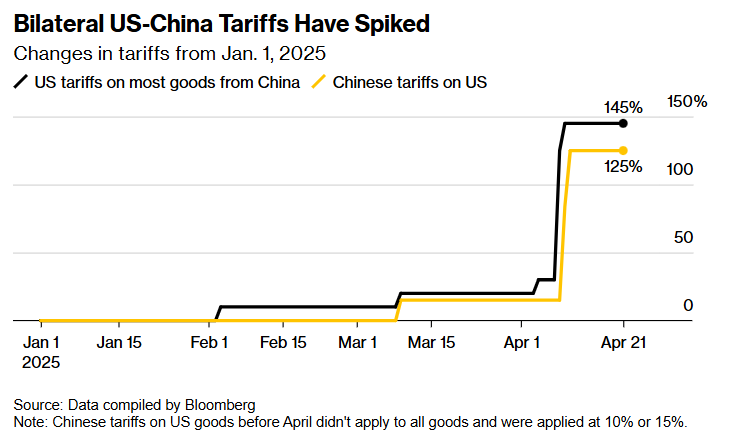
Core Viewpoint - The Trump administration is reportedly considering significant tariff reductions on China to ease ongoing trade tensions and alleviate global economic pressures [1][2]. Group 1: Tariff Reductions - The initial goal set by the Trump administration is to reduce tariffs on China to below 60% [1]. - Current tariffs on China are as high as 145%, and any reduction would still leave the overall tariff rate significantly above historical levels [3][5]. - If tariffs are reduced, it is anticipated that the U.S. average tariff rate could decrease by over 20 percentage points to around 23% [5]. Group 2: Rare Earth Elements - A key demand from the U.S. is for China to lift restrictions on rare earth exports, particularly those used in manufacturing magnets [1]. - China currently produces about 90% of the world's rare earth elements, which are critical for various industries including defense and electric vehicles [1]. Group 3: Trade Negotiations - The upcoming U.S.-China talks are expected to focus on mutual concerns rather than immediately resolving the extensive trade issues [2]. - Analysts suggest that the negotiations may be exploratory, with both sides having significant grievances [5]. - Progress on the fentanyl issue has also been noted, with potential separate discussions planned to address the export of precursor chemicals from China [1].