
稀土出口限制

Search documents
特朗普对全球下令,180天内废掉中方王牌,谁不帮忙就加税
Sou Hu Cai Jing· 2026-01-18 08:06
Group 1 - The core issue revolves around the U.S. response to China's rare earth export restrictions, with Trump threatening global partners to bypass these limitations within 180 days or face tariffs [1][5] - The U.S. has historically used political and economic pressure to compel other nations, but its diminished global standing makes such tactics less effective today [3] - American military giants are on the brink of production halts due to a lack of refined rare earth materials, highlighting the urgency for a stable supply chain [5][7] Group 2 - Trump's announcement to global rare earth suppliers reveals a misjudgment of the current international landscape, as the U.S. lacks the leverage to enforce compliance [5][7] - The proactive stance of U.S. companies is compromised, as they are now dependent on foreign suppliers for rare earths, which undermines their operational capabilities [7] - Continuous threats from the Trump administration are damaging the U.S.'s international credibility and image, indicating a need for a more respectful and equal approach in negotiations [7]

彭博:尽管特朗普达成协议,美国稀土买家仍面临中国出口限制。
彭博· 2025-12-26 02:12
Investment Rating - The report indicates a cautious investment outlook for the rare earth industry, particularly concerning U.S.-China trade relations and supply chain stability [11]. Core Insights - Despite an agreement to lift restrictions on rare earth elements, China continues to limit the supply of essential materials needed for U.S. production of permanent magnets and other products [11] - The U.S. industrial sector remains unable to independently source the raw materials required for these products, while China has increased the supply of finished products like permanent magnets [11] - China's restrictions on raw materials hinder the U.S. efforts to establish its own rare earth processing industry, which is crucial for producing magnets used in various applications, including consumer goods and military systems [11] Summary by Sections - **Trade Relations**: The U.S. and China have reached a trade truce, but ongoing tensions persist, particularly regarding the supply of rare earth materials [3][4] - **Supply Chain Issues**: U.S. companies face significant challenges in obtaining raw materials from China, which affects their production capabilities [7][8] - **Market Dynamics**: There is a notable discrepancy between the increase in China's exports of finished products and the stagnation of U.S. exports, indicating a potential imbalance in the supply chain [6][8]
MP Materials Stock Could Snap a 4-Day Winning Streak. What's Driving Shares.
Barrons· 2025-10-15 13:07
Core Viewpoint - A sector rally was intensified following Trump's announcement regarding the U.S. response to China's new export restrictions on rare-earth minerals [1] Group 1 - The U.S. plans to retaliate against China's export restrictions, which has led to increased optimism in the sector [1] - The announcement from Trump has triggered a rally in the sector, indicating potential investment opportunities [1]

洪灏:恒指在25000点附近是不错的买入机会,预计阿里、腾讯将再创新高
Ge Long Hui A P P· 2025-10-14 12:38
Core Viewpoint - Short-term market volatility provides a buying opportunity for investors, particularly in the context of a strong performance in the Chinese stock market, led by technology stocks [1] Group 1: Market Insights - The Hang Seng Index around 25,000 points is considered a good buying opportunity [1] - The recent restrictions on rare earth exports by China are viewed as a countermeasure to U.S. technology restrictions [1] - There is a 90% optimistic probability in polls regarding the resolution of trade conflicts before the APEC summit [1] Group 2: Investment Strategy - A rotation of funds from growth stocks to value stocks, such as banks, insurance, and brokerage firms, is deemed worthwhile [1] - Financial stocks have lagged in performance but have significant index weight, which may drive further market gains [1] Group 3: Company-Specific Insights - The company holds shares in SMIC, despite its high price-to-earnings ratio of 160 times, due to the market's willingness to pay for its potential for earnings growth [1] - Companies like Alibaba and Tencent are viewed positively, with expectations for their stock prices to reach new highs, and a return to HKD 180 for Alibaba is considered likely [1]


连收3大噩耗!特朗普后院失火:为证明自己,他甩出了一纸报告
Sou Hu Cai Jing· 2025-10-12 02:55
Group 1 - The article discusses the escalating tensions between the US and China, highlighting the "choke point war" where the US imposes chip regulations and tariffs while China retaliates with restrictions on rare earth exports and soybean imports [1] - Trump's initial anger over China's actions led to a significant market reaction, with major US stocks losing $5 trillion in value overnight, prompting him to reconsider his approach and seek further negotiations [1][3] - The article notes that the rapid market sell-off caught analysts off guard, indicating a renewed concern over trade war risks [3] Group 2 - The article mentions a warning from Ray Dalio, founder of Bridgewater Associates, about the US debt crisis, stating that the national debt has surpassed $37.86 trillion and is growing rapidly, creating a situation reminiscent of pre-World War II [3] - The article highlights internal dissent within Trump's camp regarding the US's agreement with Qatar to establish a military training facility, which has sparked criticism from right-wing allies [5] - Trump's recent health report, released just six months after the last one, is seen as an attempt to counter speculation about his health and maintain a strong public image during critical negotiations [6]
中国已解除对印度稀土出口限制?外交部回应
Zhong Guo Xin Wen Wang· 2025-08-19 09:18
Core Viewpoint - The Chinese government is open to enhancing dialogue and cooperation with relevant countries and regions to maintain the stability of global supply chains, amidst reports from Indian media regarding the lifting of restrictions on rare earth exports to India [1] Group 1 - The Chinese Foreign Ministry spokesperson, Mao Ning, addressed questions regarding the alleged lifting of rare earth export restrictions to India [1] - Mao Ning stated that he was not aware of the specific media reports mentioned by the foreign media [1] - The Chinese government expresses a willingness to strengthen cooperation with other countries to ensure the stability of global production and supply chains [1]
中国7月份出口意外增长,欧洲市场支撑经济
Sou Hu Cai Jing· 2025-08-07 22:37
Core Insights - China's exports unexpectedly increased last month, with shipments to the EU and other markets rising, compensating for the decline in exports to the US [2][3] - In July, exports grew by 7.2% year-on-year, significantly better than the 5.6% expected by economists [2] - Exports to the US fell by 21.7% due to the lingering effects of tariffs [2] Export Performance - Exports to the EU rose by 9.2%, while exports to the ASEAN countries increased by 16.6% [3] - The deep integration of supply chains between Southeast Asia and China has been noted, with accusations of "transshipment" to evade trade barriers [3] Import Trends - Imports in July grew by 4.1% year-on-year, contrary to the expected decline of 1% [3] - This growth in imports is seen as a key indicator of domestic demand [3] Economic Context - Beijing has set an official economic growth target of around 5% for the year [4] - China faces challenges in maintaining a strong economic recovery post-pandemic, including a debt crisis in the real estate sector, low consumer spending, and high youth unemployment [5] Trade Negotiations - The US and China are working to reduce trade tensions, with ongoing negotiations following a temporary truce established in May [5] - The current agreement maintains US tariffs on Chinese goods at 30% and Chinese tariffs on US products at 10% [5] Future Outlook - Analysts indicate that uncertainties will pose significant challenges for China's trade in the second half of the year [6] - Short-term pressures on exports are expected to persist, with recent import growth potentially reflecting inventory accumulation rather than a broader recovery in domestic demand [7]

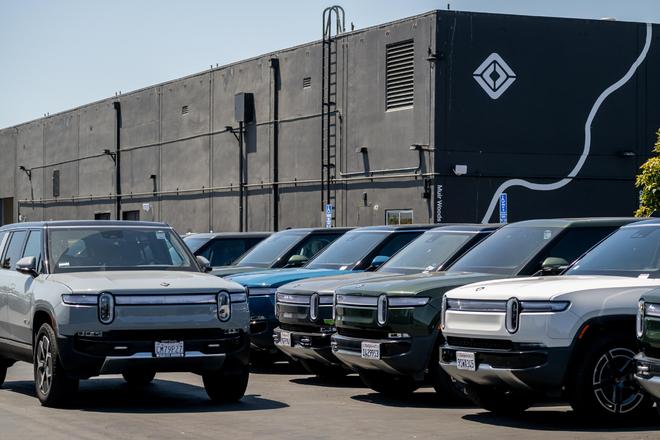
特朗普一通操作,美国造车新势力坐不住了
Guan Cha Zhe Wang· 2025-08-06 09:08
Core Insights - The electric vehicle startups Rivian and Lucid reported disappointing first-half results and provided a pessimistic outlook for the year due to changes in U.S. policies and trade tensions [1] Rivian Summary - Rivian's revenue for the first half of 2025 was $2.543 billion, with a net loss of $1.656 billion [1] - The company attributes its increased losses to a reduction in credit value, estimating a loss of about $300 million, with no further income from such sales in the second half [3] - Rivian's CEO noted that policy changes have led to increased costs, resulting in a significant drop in production [3] - The cost per vehicle reached $118,375, an 8% increase from the previous year [3] - Rivian expects adjusted core losses to be between $2 billion and $2.25 billion, up from a previous forecast of $1.7 billion to $1.9 billion [4] - The company anticipates record delivery volumes in the third quarter due to increased demand [4] Lucid Summary - Lucid's revenue for the first half of 2025 was $495 million, with a net loss of $905 million [1] - The interim CEO of Lucid expects weak demand for electric vehicles in the fourth quarter and has plans to attract consumers, though details were not disclosed [4] - Lucid's production has also been affected by China's restrictions on rare earth exports, impacting costs and profit margins [6]


中美就关税暂停再延长90天达成一致
日经中文网· 2025-07-30 02:49
Group 1 - The U.S. and China have agreed to extend the suspension of tariffs for an additional 90 days, pending final approval from President Trump [1][2] - The current suspension period is set to end on August 12, after which the U.S. plans to reintroduce tariffs on China [2] - The discussions included topics such as U.S. sanctions on Russia and China's restrictions on rare earth exports [3] Group 2 - U.S. Treasury Secretary Mnuchin described the negotiations as constructive, indicating a positive outlook for future talks [1] - Chinese Vice Premier He Lifeng emphasized the importance of a stable and sustainable U.S.-China economic relationship for global economic stability [2][3] - The U.S. has expressed concerns over China's reluctance to participate in sanctions against Russia, hinting at potential economic repercussions [3]

瑞达期货锰硅硅铁产业日报-20250703
Rui Da Qi Huo· 2025-07-03 09:09
1. Report Industry Investment Rating No relevant content provided. 2. Core Viewpoints of the Report - On July 3, the silicon ferroalloy 2509 contract closed at 5390, up 0.41%. The market sentiment improved significantly after the Sixth Meeting of the Central Financial and Economic Commission. The production was operating at a low level, and the cost of Ningxia semi - coke decreased. The production profit of ferroalloys was negative, and the overall expectation of steel demand was still weak. Technically, the 4 - hour cycle K - line was between the 20 and 60 moving averages, and it should be treated as a volatile operation [2]. - On July 3, the manganese silicon 2509 contract closed at 5712, up 0.32%. After the Sixth Meeting of the Central Financial and Economic Commission, the market sentiment improved significantly. Fundamentally, the manufacturers' operating rate had rebounded for 6 consecutive weeks at a low level, and the inventory was still relatively high. The downstream hot metal production was operating at a high level. The steel mills' procurement was cautious, and the tender price continued to decline. Technically, the 4 - hour cycle K - line was between the 20 and 60 moving averages, and it should be treated as a volatile operation [2]. 3. Summary by Relevant Catalogs 3.1 Futures Market - SM main contract closing price was 5,712 yuan/ton, down 14 yuan; SF main contract closing price was 5,390 yuan/ton, down 46 yuan [2]. - SM futures contract open interest was 589,140 lots, up 9,004 lots; SF futures contract open interest was 405,479 lots, down 5,516 lots [2]. - The net position of the top 20 in manganese silicon was - 30,962 lots, up 2,120 lots; the net position of the top 20 in silicon ferroalloy was - 46,142 lots, up 3,302 lots [2]. - The price difference between SM contracts from January to September was 40 yuan/ton, up 4 yuan; the price difference between SF contracts from January to September was - 8 yuan/ton, up 6 yuan [2]. - SM warehouse receipts were 89,598 pieces, up 1,753 pieces; SF warehouse receipts were 9,678 pieces, up 169 pieces [2]. 3.2 Spot Market - The price of Inner Mongolia manganese silicon FeMn68Si18 was 5,480 yuan/ton, unchanged; the price of Inner Mongolia silicon ferroalloy FeSi75 - B was 5,300 yuan/ton, up 50 yuan [2]. - The price of Guizhou manganese silicon FeMn68Si18 was 5,550 yuan/ton, up 50 yuan; the price of Qinghai silicon ferroalloy FeSi75 - B was 5,200 yuan/ton, up 50 yuan [2]. - The price of Yunnan manganese silicon FeMn68Si18 was 5,500 yuan/ton, unchanged; the price of Ningxia silicon ferroalloy FeSi75 - B was 5,280 yuan/ton, up 50 yuan [2]. - The average value of the manganese silicon index was 5,490 yuan/ton, up 25 yuan; the basis of the SF main contract was - 110 yuan/ton, up 96 yuan [2]. - The basis of the SM main contract was - 232 yuan/ton, up 14 yuan [2]. 3.3 Upstream Situation - The price of South African ore: Mn38 lump at Tianjin Port was 35 yuan/ton - degree, unchanged; the price of silica (98% in the northwest) was 210 yuan/ton, unchanged [2]. - The price of secondary metallurgical coke in Wuhai, Inner Mongolia was 850 yuan/ton, unchanged; the price of semi - coke (medium material in Shenmu) was 640 yuan/ton, unchanged [2]. - Manganese ore port inventory was 422.40 million tons, up 0.90 million tons [2]. 3.4 Industry Situation - The operating rate of manganese silicon enterprises was 39.21%, up 2.82 percentage points; the operating rate of silicon ferroalloy enterprises was 31.70%, down 0.99 percentage points [2]. - Manganese silicon supply was 179,235 tons, up 2,625 tons; silicon ferroalloy supply was 97,500 tons, down 400 tons [2]. - Manganese silicon manufacturers' inventory was 221,800 tons, up 15,900 tons; silicon ferroalloy manufacturers' inventory was 69,400 tons, up 1,400 tons [2]. - The inventory days of manganese silicon in national steel mills was 15.15 days, down 0.29 days; the inventory days of silicon ferroalloy in national steel mills was 15.20 days, down 0.24 days [2]. 3.5 Downstream Situation - The demand for manganese silicon in the five major steel types was 125,881 tons, up 2,164 tons; the demand for silicon ferroalloy in the five major steel types was 20,354.20 tons, up 389.80 tons [2]. - The blast furnace operating rate of 247 steel mills was 83.84%, unchanged; the blast furnace capacity utilization rate of 247 steel mills was 90.85%, up 0.04 percentage points [2]. - Crude steel production was 86.545 million tons, up 0.526 million tons [2]. 3.6 Industry News - Trump said on the 1st that he was considering raising tariffs on Japan to 30% or 35%, and the Japanese government had not responded directly [2]. - On July 2, the Iranian president approved the suspension of cooperation with the International Atomic Energy Agency after the Iranian nuclear facilities were attacked by the US military [2]. - The World Meteorological Organization said that the hot weather in early summer brought life - threatening high temperatures to most parts of the Northern Hemisphere, and humans would face more frequent and severe high - temperature situations [2]. - The EU's foreign policy chief urged China to end restrictions on rare - earth exports and warned that Chinese enterprises' support for Russia in the Ukraine war posed a serious threat to European security [2].