
绿色循环农业

Search documents
高质量发展看中国|“金瓜子”变成“金钥匙”!戈壁滩书写现代农业“金色答卷”
Yang Guang Wang· 2025-08-28 01:43
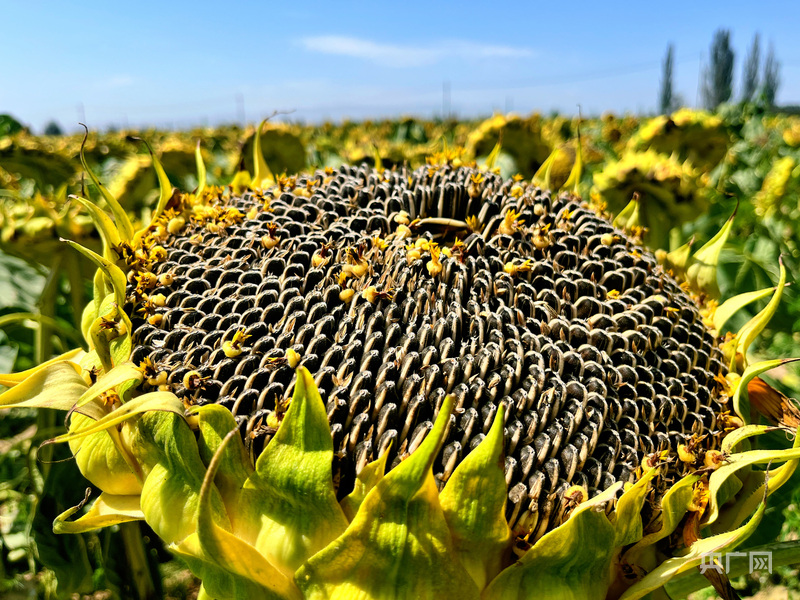
Core Viewpoint - The sunflower harvest in Alxa Left Banner, Inner Mongolia, showcases a successful agricultural model that emphasizes mechanization, ecological sustainability, and economic benefits for local farmers [2][6][7]. Agricultural Development - The region has 13,000 acres of sunflowers, benefiting from favorable climatic conditions such as ample sunlight and significant temperature differences between day and night [3]. - The local government has promoted high-standard farmland construction and integrated water and fertilizer technology, leading to large-scale, standardized, and green sunflower cultivation [3]. Mechanization and Efficiency - The entire process of sunflower harvesting has been mechanized, significantly increasing efficiency compared to traditional manual methods, with improvements of over ten times [5]. - Mechanization reduces labor intensity and production costs while ensuring optimal harvest timing, which enhances seed quality and fullness [5]. Economic Impact - The sunflower industry has created seasonal employment for over 30,000 local residents, with an average income increase of more than 5,000 yuan per person during the harvest season [6]. - The local government emphasizes ecological priority and green development, adjusting agricultural structures to promote water-efficient crops like sunflowers and medicinal herbs as key drivers for agricultural efficiency and farmer income [6]. Sustainable Practices - The by-products from sunflower processing, such as husks, are utilized as high-quality animal feed and for soil improvement, promoting a circular agricultural model that conserves fertilizer costs [5]. - The sunflower cultivation represents a practical example of how water conservation can drive agricultural green development, contributing to rural revitalization and high-quality growth [7].

打造“五个一”秸秆利用新格局
He Nan Ri Bao· 2025-06-18 23:31
Core Viewpoint - Henan Province is focusing on the comprehensive utilization of straw resources, aiming to enhance agricultural sustainability and reduce carbon emissions through innovative practices and collaborative efforts among various sectors [1][2][3] Group 1: Straw Resource Utilization - Henan Province generates approximately 100 million tons of straw annually, ranking second in the country [1] - In 2024, the province's straw collection potential is estimated at 78.96 million tons, with wheat, corn, peanuts, and rice straw accounting for 96.48% of the total [1] - The total straw utilization in the province is projected to be 74.51 million tons, maintaining a comprehensive utilization rate above 93%, with fertilizer and feed utilization accounting for 74.4% and 21.3% respectively [1] Group 2: Development Strategies - The province is implementing a "one area, one belt, one network, one alliance, one road" strategy to enhance straw utilization [2][3] - "One area" refers to the establishment of high-standard farmland demonstration zones that integrate various agricultural practices and technologies [2] - "One belt" focuses on developing a straw-to-feed industry belt in key livestock regions, enhancing the straw feed storage system and supporting technology upgrades [2] - "One network" aims to create a standardized straw collection and storage network across the province, ensuring comprehensive coverage [2] - "One alliance" involves forming a straw utilization industry alliance to facilitate collaboration and information sharing among government, enterprises, and other stakeholders [2] - "One road" emphasizes the development of high-value straw utilization pathways, including edible fungi substrates and eco-friendly materials [3]
总投资12亿元!华中最大双孢菇全产业链基地在湖北仙桃破土动工
Zhong Guo Fa Zhan Wang· 2025-06-16 14:27
Core Viewpoint - The establishment of a 1.2 billion yuan agricultural project in Hubei aims to create the largest mushroom production and processing base in Central China, promoting modern agricultural development through technological innovation and a green circular economy [1][2]. Group 1: Project Overview - The project, led by Hubei Yuxing Agricultural Technology Co., will produce 70,000 tons of mushrooms and process 40,000 tons of fruits and vegetables annually, with an expected annual output value exceeding 1 billion yuan [1]. - The construction includes 8 standardized planting buildings and 2 fermentation workshops, covering a total area of 150,000 square meters, with an initial investment of 685 million yuan for the first phase and an additional 600 million yuan planned for the second phase [1]. Group 2: Economic and Social Impact - The project will utilize 100,000 tons each of agricultural waste such as wheat straw and chicken manure, contributing to a green circular agricultural ecosystem [1]. - It is expected to create nearly 1,000 job opportunities, particularly addressing employment challenges for older, low-skilled workers [2]. - The initiative will foster collaboration among upstream and downstream enterprises, enhancing industrial cluster effects and injecting new momentum into urban-rural integration [2].
从头到尾全有用,阳信牛产业“超级牛”
Qi Lu Wan Bao· 2025-05-29 03:26
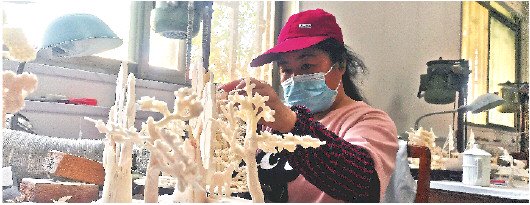
Group 1: Beef Industry Overview - The beef industry in Yangxin County, Binzhou City, utilizes every part of the cow, creating a comprehensive value chain from cattle farming to various end products [2][3] - The digitalization of cattle farming, particularly through 5G technology, allows a small team of five to manage over 5,000 cattle efficiently [4][3] - The beef produced is not only sold domestically but also exported, with companies like Yiliyuan supplying to multiple hot pot brands [2] Group 2: Beef Processing and Value Addition - Huayang Group, a leading meat processing company, processes around 1 million cow hides annually, generating approximately 600 million yuan in revenue [4][5] - The company employs advanced eco-friendly techniques in leather processing, significantly enhancing the value of each cowhide, which can increase by over ten times [5][6] - The integration of technology in the processing of cow hides ensures high-quality standards suitable for luxury goods and automotive interiors [5][6] Group 3: Bone and By-product Utilization - Cow bones, previously considered waste, are now transformed into valuable art pieces through skilled craftsmanship, with some pieces valued at thousands to tens of thousands of yuan [8][9] - The company specializing in bone carving has developed unique techniques to create intricate designs, making it a rare industry in northern China [9] - Cow dung is processed into organic fertilizer, contributing to sustainable agricultural practices and reducing reliance on chemical fertilizers [10][11]
广西发展特色产业助农增收
Jing Ji Ri Bao· 2025-05-10 01:59
Group 1 - The World Bank's project in Guangxi has provided significant financial support to local agricultural cooperatives, enhancing their productivity and profitability [1][2] - The Lianqiang Agricultural Cooperative has expanded its mango planting area to over 2,000 acres, achieving an annual online sales volume of over 300,000 pounds of mangoes [1] - The average yield of different mango varieties has increased from 1,000 pounds per acre to between 2,000 and 4,000 pounds per acre, with prices rising from a few cents to between 2 and 6 yuan per pound [1] Group 2 - The Xianwang Cooperative in Liushuo Village has benefited from a 3 million yuan investment, leading to an increase in breeding stock and modern farming equipment [2] - The cooperative has 151 member households and has distributed over 100,000 yuan in dividends over the past four years, indicating strong financial performance [2] - Among the cooperatives funded by the World Bank project, 57 have achieved profitability, exceeding the initial target of 40 [2] Group 3 - The Dongyang Agricultural Cooperative has developed a green circular agriculture model, integrating grass planting, processing, beef cattle breeding, and organic fertilizer production [3] - The Guangxi Fresh Friend Agricultural Development Company has established partnerships with 26 cooperatives to create mango planting bases, benefiting 5,899 farming households [3] - The project has facilitated the acquisition of substandard mangoes for juice production, transforming them into a profitable product [3]