水果种植与加工

Search documents
2025 年苹果期货期权白皮书
Ge Lin Qi Huo· 2026-03-06 08:45
Group 1: Report Industry Investment Rating - Not provided in the content Group 2: Core Viewpoints of the Report - The rise in apple futures prices in 2025 was a result of the re - pricing of systematic risks on the supply side, which was the result of the superposition and resonance of the "inventory - quality - system" triple mechanism. The pricing core of apple futures will be long - term anchored to the high - quality fruit rate, storage quality, and availability of delivery products, rather than the total output. In 2026, apple futures will show a high - level oscillation in the first half of the year and may experience differentiated adjustments in the second half due to supply - demand and storage factors, continuing the structural feature of "tight supply of high - quality apples and slow sales of ordinary apples" [2]. Group 3: Summary by Directory 1. Apple Futures Price Trends - **Since listing to 2025**: Apple futures prices have fluctuated sharply, showing cyclical characteristics related to production and quality. From 2017 to 2018, prices were affected by seasonality and supply expectations; from 2018 to 2021, they entered a bear market due to factors like high inventory and increased production; from 2021 to 2024, prices fluctuated widely; in 2025, prices oscillated upward [9][13][14]. - **2025**: The price showed a unilateral upward trend, with the main contract breaking through 9,000 yuan/ton. Supply - side issues such as production and quality decline, demand - side factors like festival - driven short - term demand, and policy and market sentiment all contributed to the price increase [21]. 2. Apple Supply Situation - **Production**: In 2025, extreme weather in major apple - producing areas affected production. The estimated national apple production for the 2025/26 season was 4,800 million tons, a slight 3% increase year - on - year, but the high - quality fruit rate decline was the key factor [34]. - **High - quality fruit rate**: The high - quality fruit rate in 2025 decreased significantly, with regional differences. The supply of high - quality apples was tight, intensifying the supply - demand contradiction [41]. - **Inventory**: As of February 27, 2026, the national apple cold - storage inventory was 5.5292 million tons, lower than the same period last year. The effective inventory was further reduced, and the market showed a pattern of "low inventory supporting high prices and quality differentiation intensifying market polarization" [42][46]. 3. Apple Consumption Situation - The consumption of apples in the 2025/26 season was stable but weak, facing challenges in growth due to factors such as slow population and income growth. The arrival of apples in major markets did not show a significant increase. The "consumption downgrade" and intense competition in the fruit market restricted apple consumption, but the price increase of substitute fruits might stimulate apple consumption [47][49][53]. 4. Seasonal Factors of Apples - Apples are a storable fruit. Their consumption combines timely and storage - based consumption. The peak consumption periods are in autumn when new apples are on the market and in the first half of the year when inventory apples are sold. Festival effects also impact apple consumption. The probability of price increases is higher in February and April, and the probability of price decreases is higher in March, May, November, and December [57][61]. 5. Outlook for 2026 - **First half**: Apple futures are likely to maintain high - level oscillation and are prone to rising. In the first quarter, festival demand and low inventory support prices, but there may be short - term callbacks. In the second quarter, the market faces the off - season, but high - quality apples' prices remain resilient [62][64]. - **Second half**: In the third quarter, storage risks may suppress prices, and the market will be in a weak - oscillation pattern. In the fourth quarter, the market will be dominated by new - season production expectations, and festival - driven demand may boost prices [65][67]. 6. Apple Options Market Analysis - For upstream enterprises worried about price drops, it is recommended to sell out - of - the - money call options to collect premiums. For downstream enterprises worried about price increases, it is recommended to buy at - the - money call options during price corrections to lock in procurement costs [68].
徐闻菠萝亮相法国国际农博会 百年粤味农品开启国际新征程
Xin Lang Cai Jing· 2026-02-27 23:36
Core Viewpoint - The 62nd International Agricultural Show in France showcased high-quality agricultural products and advanced agricultural technologies, with a focus on the participation of the Xu Wen pineapple series, highlighting its potential for international market expansion [2][3]. Group 1: Event Overview - The event took place from February 21 to March 1 at the Paris Expo Porte de Versailles, gathering global agricultural products and technologies [2]. - The National Agricultural Exhibition Group from China's Ministry of Agriculture and Rural Affairs participated for the first time, featuring products from Xu Wen, known as the "Hometown of Pineapples in China" [2]. Group 2: Xu Wen Pineapple Industry - Xu Wen has approximately 350,000 acres of pineapple cultivation area, with a stable annual production of around 700,000 tons, demonstrating a solid industrial foundation and supply capability [2]. - The Xu Wen pineapple industry has undergone three phases of development since its introduction in 1926, evolving from a scale-based production area to a systematic production area with a complete industrial chain [3]. Group 3: International Market Strategy - The participation in the French International Agricultural Show aligns with Xu Wen's development philosophy, as France values terroir, variety, history, and branding, providing an opportunity to connect with higher international market standards [3]. - Xu Wen has leveraged the RCEP Pineapple Trading Center to promote its products in the Asia-Europe international market and enhance brand influence through events like the Xu Wen Marathon [3].


Orange Facts E202601| 全球甜橙简报:橙汁消费增量 引领全球橙类行情回暖
Xin Lang Cai Jing· 2026-02-24 13:12
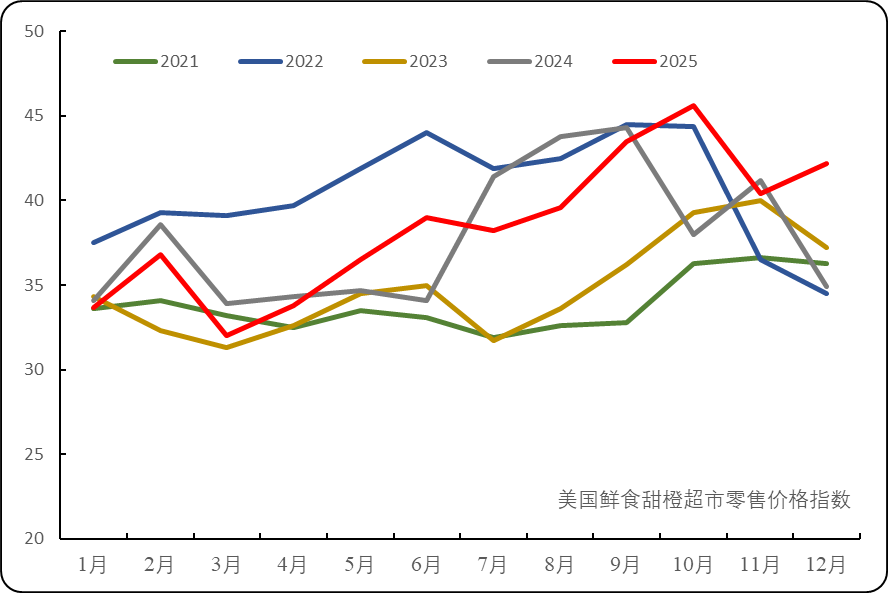
Group 1 - The global orange juice production and sales have shown significant growth in January, driven by festive demand, leading to a slight recovery in fresh orange market prices [1] - The differences in import and export trade among major markets are key factors affecting fresh orange market price fluctuations [1] - The U.S. fresh orange market is experiencing a strong price trend due to increased export expectations, while the EU market is facing downward pressure from low-priced Egyptian oranges [1][2] Group 2 - The USDA-FAS reports that U.S. orange juice consumption is expected to rise to 440,000 tons in the 2025/2026 season, a 6.80% increase from the previous year, while fresh orange exports are projected to reach 330,000 tons, up 0.92% [2] - The average retail price of fresh sweet oranges in the U.S. increased by 4.46% month-on-month and 20.92% year-on-year as of December [2] - Global orange juice production is forecasted at 1.351 million tons for the 2025/2026 season, a modest increase of 1.10 million tons, while consumption is expected to rise by 44,000 tons to 1.168 million tons [3] Group 3 - The EU's import of sweet oranges surged by 420.15% month-on-month in January, primarily due to increased imports from Egypt, although year-on-year figures remain low [5][7] - The wholesale average price of fresh sweet oranges in the EU was €94.00 per 100 kg in January, reflecting a 1.05% decrease month-on-month but a 1.84% increase year-on-year [7] - The EU's internal supply of sweet oranges remains dominant, with imports primarily aimed at addressing regional shortages [10] Group 4 - In China, the fresh orange market saw a temporary price increase leading up to the Spring Festival, with the wholesale price of citrus fruits rising by 3.74% month-on-month [11] - The out-of-factory price index for frozen concentrated orange juice in China increased by 6.33% during the month, indicating a strengthening market [11] - The search index for orange juice products has shown a positive trend, suggesting a potential increase in consumer demand [12][14]
四川这座小城的一颗颗“黄金果”,如何成为香飘世界大产业?
Xin Lang Cai Jing· 2026-02-22 01:29
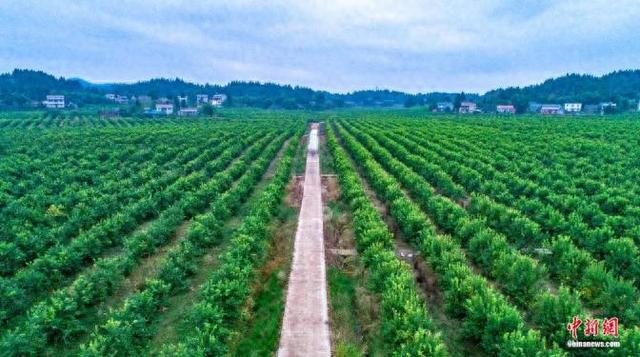
Core Viewpoint - An Yue County in Sichuan Province has become a significant hub for lemon production, contributing to local economic growth and rural revitalization through its extensive lemon industry. Group 1: Lemon Production and Industry - An Yue is one of the world's top five lemon production areas and the only lemon commodity production base county in China, with a cultivation area of 480,000 acres and an annual output of 600,000 tons, accounting for 70% of the national total [3][6]. - The county has over 110,000 farming households and more than 330,000 people involved in lemon cultivation, with over 40 established lemon base towns and 900 cooperatives [8]. - An Yue lemons have been recognized as a national geographical indication product and have won various awards, including the China Famous Fruit and gold medals at international fruit expos [6][8]. Group 2: Quality and Market Position - An Yue lemons are known for their superior quality, with key indicators such as essential oils, citric acid, and vitamin C levels exceeding those from other regions globally [11]. - The lemons are not only sold domestically but also exported to over 30 countries, including Russia and Singapore, with the wholesale price doubling compared to the previous year due to tight international supply [15][12]. Group 3: Processing and Value Addition - The region has developed a complete deep processing industry chain, transforming fresh lemons into high-value products, including lemon juice and by-products like pectin and dietary fiber [18][24]. - There are currently 33 deep processing enterprises in An Yue, producing over 200 lemon-related products across various categories, with an annual processing capacity exceeding 350,000 tons [24]. Group 4: Economic Impact and Rural Revitalization - The comprehensive output value of the An Yue lemon industry is projected to reach 16.31 billion yuan in 2024, significantly increasing the average net income of farmers [34]. - The integration of agriculture and tourism has led to the development of unique tourism experiences centered around lemon picking and culinary offerings, contributing to local economic growth [29][32].
【代表委员履职故事】刘艳英:走稳增收致富的乡村振兴路
Yang Shi Wang· 2026-02-09 11:49
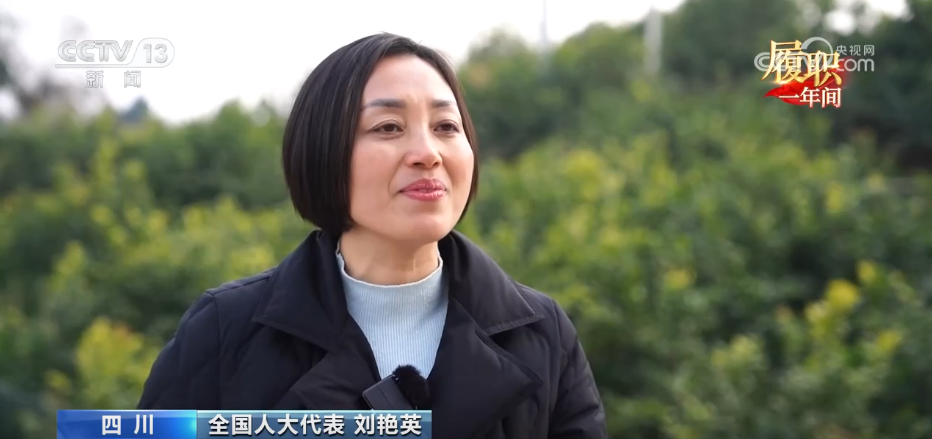
Core Viewpoint - The article highlights the efforts of Liu Yanying, a national representative and village party secretary, in promoting the comprehensive revitalization of rural areas, particularly focusing on the lemon industry in Sichuan's Anyue County, which produces over 60,000 tons of lemons annually, accounting for more than 70% of the national output [1] Group 1: Industry Insights - Anyue County is known as the "Lemon Capital," with a significant portion of its population engaged in lemon cultivation [1] - Despite high lemon production, there is a need to enhance the industry chain and increase product value, as 70% of the lemons are sold as fresh fruit [1] - There are over 560 processing enterprises in the county, but only about 30 are involved in deep processing, indicating a lack of diversity in processing categories [1] Group 2: Government Support and Initiatives - Liu Yanying has consistently proposed suggestions related to rural revitalization, including the establishment of a national lemon industry cluster, which has received positive feedback from the Ministry of Agriculture and Rural Affairs [1] - In the previous year, Sichuan Province allocated over 500 million yuan to support 180 agricultural product processing projects, aimed at upgrading equipment and innovating processes [1] - During the upcoming national two sessions, Liu plans to propose further support for the full-chain upgrade of rural specialty industries to help farmers benefit more from the value-added gains [1]
履职一年间 | 打好“特”字牌 让乡村“土特产”变身振兴“金名片”
Yang Shi Wang· 2026-02-09 02:47
Core Viewpoint - The article highlights the efforts of Liu Yanying, a representative from Sichuan Province, in promoting the development of the lemon industry in her village, emphasizing the need for improved processing capabilities and government support for rural industries [1][10]. Group 1: Industry Development - The lemon planting area in Anyue County is 480,000 acres, accounting for over 70% of the national production, making it known as the "Hometown of Chinese Lemons" [4]. - Liu Yanying has previously proposed the establishment of a national-level lemon industry cluster, which received a positive response from the Ministry of Agriculture and Rural Affairs [4]. - The average annual lemon production in Anyue County is 600,000 tons, but 70% of it is sold directly without processing, indicating a gap in the value chain [6]. Group 2: Processing Challenges - There are only 33 deep processing enterprises among the 561 processing companies in Anyue County, highlighting a lack of advanced processing capabilities [6]. - Liu Yanying identified that the potential for resource value addition in Anyue lemons is not fully realized due to incomplete product processing chains [8]. - A newly established lemon beverage company in Anyue faces high costs and limited processing methods, indicating a need for better integration with other industries, such as pectin production [8]. Group 3: Policy Recommendations - Liu Yanying plans to propose increased support for rural industrial revitalization at the upcoming National People's Congress, including enhanced subsidies and targeted policy measures [10]. - There is a call for technological advancements and talent attraction mechanisms to improve processing depth and enable farmers to share more in the value-added benefits of their products [10]. - The development of rural specialty industries is expected to lead to improved environments and economic opportunities, encouraging more people to return to and invest in rural areas [10][12].
重庆梁平柚的升值密码
Jing Ji Ri Bao· 2026-02-05 22:15
Core Insights - Liangping Pomelo, recognized as one of China's three major pomelos, has transformed from a traditional agricultural product into a significant industry through enhanced variety cultivation, quality improvement, and brand development [1][3] Group 1: Industry Development - The planting area of Liangping Pomelo is projected to reach 158,000 acres with an output of 300,000 tons and a comprehensive output value of 3 billion yuan by 2025 [1] - The development strategy has shifted from merely selling fresh fruit to deep processing, resulting in over 200 products including pomelo tea, pomelo juice, pomelo wine, craft beer, and fruit preserves, with product value increasing significantly [1] - The deep processing segment is expected to add 16,000 tons of raw material purchases, generating nearly 100 million yuan in sales, marking a transition from "selling by weight" to "selling by value" [1] Group 2: Innovation and Standards - Liangping District is focusing on internal improvements by breeding over 1 million high-quality Liangping pomelo seedlings and promoting standardized production and organic certification across more than 100,000 acres [2] - Investment of nearly 10 million yuan has been made to establish 13 automated production lines for pomelo processing, significantly enhancing product quality and image [2] - Collaboration with research institutions has led to the development of deep processing products and the application of 26 related patents, fostering continuous product iteration [2] Group 3: Brand Building - The brand development of Liangping Pomelo has evolved into a systematic and layered brand matrix, creating 23 distinctive sub-brands to cater to various consumer markets [2] - The Long River Three Gorges (Liangping) International Pomelo Expo has been held for several years, integrating product stories and local culture to enhance brand recognition and market premium [2] - The brand strategy aims to elevate Liangping Pomelo from a mere product identifier to a cultural symbol, enhancing market value and industry cohesion [2]
茂名柏桥村集体经济收入3年增长180% 带动周边13个行政村发展
Nan Fang Ri Bao Wang Luo Ban· 2026-02-04 08:26
Core Viewpoint - The development of the lychee industry in Maoming, Guangdong, is being driven by a collaborative approach among local farmers, innovative financial services, and the establishment of a comprehensive agricultural ecosystem aimed at achieving shared prosperity for the community [1][2][3]. Group 1: Agricultural Development - The lychee planting area in Maoming covers approximately 1.4 million acres, with efforts to connect small farmers to larger markets through cooperative models [3]. - The "Lychee Hometown" enhancement initiative aims to transform the lychee from a local specialty into a significant industry, with over 300 "smart stations" established for real-time distribution [2]. - The introduction of "frozen dormancy" technology allows lychees to be preserved for up to 18 months, supporting stable raw material supply for deep processing [2]. Group 2: Economic Impact - The collective economic income of Baqiao Village is projected to reach 5 million yuan by 2025, representing a 180% increase from 2022, benefiting surrounding villages [1]. - The Baqiao service area, themed around lychee, has received approximately 4.4 million visitors in six months, generating over 46 million yuan in revenue and boosting local tourism income by 126 million yuan [2]. - The establishment of the first "Lychee Longan Industry Financial Service Center" has introduced innovative financial models, including "whole village credit" and "industry chain finance," addressing funding challenges for farmers [2]. Group 3: Community and Cultural Development - The establishment of the "Lychee Industry Chain Party Committee" has strengthened community ties, directly serving over 5,000 lychee farmers [3]. - The introduction of community initiatives, such as tree planting to celebrate personal milestones, reflects a cultural shift towards sustainable practices and community engagement [7]. - The construction of elder dining halls has benefited over 6,000 elderly residents, promoting respect for the elderly and enhancing community spirit [7]. Group 4: Regional Integration - The integration of different towns within the region, such as Gengzi and Fenjie, has led to the creation of the "Ring Fushanling Industrial Belt," promoting collaborative development across multiple administrative areas [4]. - Differentiated development strategies in various towns, such as the promotion of "sweet economy" and "romantic economy," have helped avoid homogeneous competition and fostered unique local identities [5]. - The Maoming municipal government plans to extend the successful development model of the Baqiao area to other regions, enhancing rural revitalization efforts [5].
(走进中国乡村)冬日暖棚藏“百亿春天” 长丰草莓远销海外
Zhong Guo Xin Wen Wang· 2026-02-02 04:33
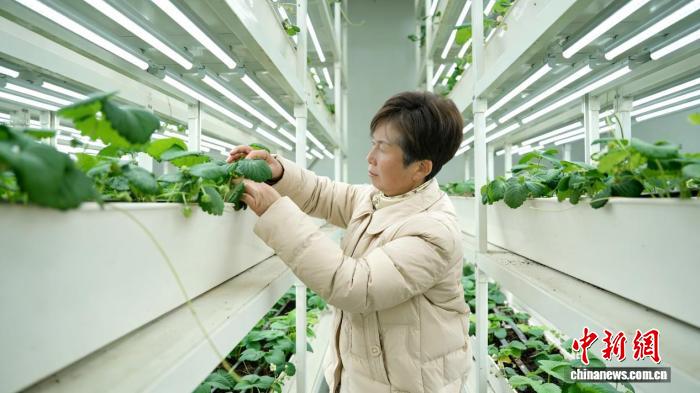
Core Viewpoint - The strawberry industry in Changfeng County, Anhui Province, has transformed into a significant economic driver, with advanced agricultural technology and community collaboration leading to increased production and export opportunities. Group 1: Industry Development - Changfeng County has become the largest strawberry production area in the region, with nearly 600 farming households and 3,000 acres of strawberry fields [1] - The county's strawberry production is projected to exceed 110 billion yuan in total industry chain value, employing over 180,000 people [8] - By 2025, online sales of strawberries are expected to surpass 2 million orders, with the number of exporting companies increasing to ten, exporting to over ten countries and regions including Japan, South Korea, Southeast Asia, and the Middle East [5] Group 2: Technological Advancements - The introduction of technology has been pivotal, with local agricultural experts providing hands-on training and the adoption of data-driven farming practices [2] - The establishment of the "Smart Strawberry" big data platform and collaboration with research institutions has enabled the annual output of 1.5 billion high-quality seedlings to various regions in China [2] Group 3: Community and Economic Impact - The "Strawberry Town" project has led to the construction of modern steel frame greenhouses and improved facilities, with collective economic income projected to reach 3.84 million yuan by 2025 [2] - The diversification of strawberry varieties has not only mitigated market risks but also enhanced industry efficiency and innovation [5] - Cultural integration through strawberry-themed festivals and tourism has attracted over 4 million visitors annually, generating nearly 500 million yuan in tourism revenue [8]
从“挖煤”到“种果” 云南华坪芒果如何种出10亿元大产业?
Zhong Guo Xin Wen Wang· 2026-01-27 08:04
Core Insights - The mango industry in Huaping County has transformed from a struggling sector to a thriving industry with an annual output value exceeding 1 billion yuan, showcasing a successful green transition from coal mining to agriculture [1][3]. Group 1: Industry Development - Huaping County, once reliant on coal mining, has shifted to mango cultivation, leveraging its favorable climate conditions for mango growth, such as an average annual temperature of 19.8 degrees Celsius and significant sunlight [3]. - The establishment of the Lijiang Huaping Golden Mango Ecological Development Company in 2009 marked the beginning of this transformation, focusing on diverse mango varieties and modern agricultural practices [3]. - The company has collaborated with the Chinese Academy of Tropical Agricultural Sciences to create the largest mango variety garden in the country, cultivating 312 domestic and international varieties [3]. Group 2: Sustainable Practices - The mango cultivation process has adopted green organic standards, with a 5,000-acre demonstration base certified for organic and green food production [3]. - The processing sector has innovated by developing products such as mango puree and frozen fruit chunks, effectively utilizing previously discarded fruits [3]. Group 3: Market Expansion - The company has partnered with major e-commerce platforms like Alibaba and Baiguoyuan, utilizing live-streaming sales to reach consumers nationwide and exporting products to countries like Russia and Singapore [3]. - By 2025, the mango planting area in Huaping County is projected to reach 459,000 acres, with an expected production of 460,000 tons [3]. Group 4: Strategic Insights - The transition from coal to mango cultivation serves as a model for other resource-dependent regions, emphasizing the importance of local resource advantages and scientific planning to avoid homogenization [4]. - The focus on building a technological foundation, extending the industrial chain, and strengthening regional branding is crucial for upgrading from merely selling products to enhancing the overall lifestyle [4][5].