
荒漠化防治

Search documents
第十届库布其国际沙漠论坛闭幕 与会各方达成共识
Xin Hua She· 2025-09-17 12:56
Core Points - The 10th Kubuqi International Desert Forum concluded in Ordos, Inner Mongolia, with participants reaching a consensus on desertification prevention and ecological restoration [1] - The consensus emphasizes the need for scientific classification of protected areas, restoration zones, and rational utilization zones, advocating for global action on grassland protection and restoration [1] - The forum featured presentations from domestic and international experts on desertification control technologies and innovative practices, addressing scientific and technical challenges in combating desertification [1] Summary by Categories - **Consensus and Initiatives** - The forum resulted in the "Consensus of the 10th Kubuqi International Desert Forum," which calls for the establishment of an International Grassland Alliance and the designation of an International Grassland Day [1] - It advocates for the integration of grassland protection and restoration into global ecological governance agendas [1] - **Technological and Scientific Discussions** - Experts showcased various technologies and innovative applications for managing different types of desertified land [1] - Discussions included the need for industry integration and policy coordination to effectively address desertification challenges [1] - **Collaborative Efforts** - The China-Central Asia Desertification Prevention Cooperation Center, in collaboration with research institutions, released the "China-Central Asia Desertification Prevention Partnership Initiative" during the forum [1]
第十届库布其国际沙漠论坛达成共识
Zhong Guo Xin Wen Wang· 2025-09-17 11:25
Core Viewpoint - The 10th Kubuqi International Desert Forum emphasized that combating desertification is not only about ecological restoration but also about human dignity, advocating for a harmonious coexistence between humans and sand [1][2] Group 1: Key Initiatives and Proposals - The consensus reached at the forum calls for a scientific division of protected areas, restoration zones, and areas for rational use, promoting targeted treatment of desertified land [1] - The forum advocates for strengthening basic scientific research and technological advancements to shift desertification control from experience-based to intelligent governance [1] - A call for global action was made to include grassland protection and restoration in the core agenda of global ecological governance, proposing the establishment of an International Grassland Alliance and an International Grassland Day [1] Group 2: Focus Areas of the Forum - The forum focused on scientific approaches to desertification control, technology-enabled comprehensive governance, protection and sustainable management of grassland ecosystems, and land-friendly business development [2] - Initiatives such as the "China-Central Asia Desertification Prevention Partnership Initiative" and the "Global Desertification Monitoring and Digital Governance Initiative" were launched during the closing ceremony [2] - The forum showcased China's comprehensive desertification prevention efforts and the progress of the "Three-North" project through various presentations and discussions [2]
2.57亿公顷、2亿亩、1200亿元……多角度“数”看“黄皮肤”持续披新绿
Yang Shi Wang· 2025-09-17 03:43
Core Insights - China's desertification and land degradation are continuously decreasing, with the "Three-North" project achieving over 20 million acres of comprehensive desertification management, leading the world in achieving zero growth in land degradation by 2030 [1][7]. Group 1: Desertification and Land Management - China's desertified land covers 25.7 million hectares, accounting for 27% of the national territory, primarily located in the northwest, northeast, and north China [4]. - The area of sandy land has been consistently decreasing, with an average reduction of 670,000 hectares per year, a significant change from an average annual expansion of 340,000 hectares at the end of the last century [4]. - The total soil erosion from China's eight major deserts and four major sandy areas has decreased by approximately 40% since 2000, with average vegetation coverage reaching 20.22%, an increase of 2.6% over the past decade [4]. Group 2: Economic Impact and Industry Development - The development of high-quality forage, economic forestry, medicinal herbs, and desert tourism in sandy areas has led to an annual production of 48 million tons of dry and fresh fruit, accounting for about one-quarter of the national total, with a total annual output value of 120 billion yuan [10]. - The "Three-North" project has transformed key management areas from "sand encroaching on people" to "green reclaiming sand," marking a historic shift in land management practices [7]. Group 3: International Cooperation - China actively fulfills its commitments under the United Nations Convention to Combat Desertification, establishing cooperation centers with Arab, Mongolian, and Central Asian countries, and setting up desertification demonstration bases in Mongolia, Central Asia, and Africa [13].

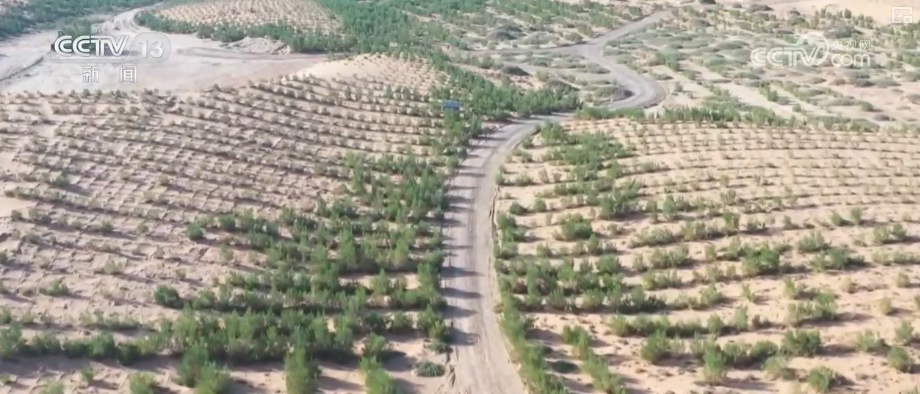
国际代表“点赞”中国治沙成就
Zhong Guo Xin Wen Wang· 2025-09-16 13:14
Core Insights - The article highlights China's significant achievements in desertification control, particularly in the Kubuqi Desert, where vegetation coverage has increased from less than 3% to over 50%, and the frequency of sandstorms has decreased by approximately 90% [1][2]. Group 1: International Recognition - International representatives praised China's desertification control efforts during the 10th Kubuqi International Desert Forum, emphasizing the need for global action against land degradation [1]. - The United Nations Deputy Secretary-General acknowledged the alarming rate of land degradation globally and highlighted China's proactive measures in transforming deserts into productive land [1][3]. Group 2: Historical Context and Achievements - China has shifted from a "desert advancing, people retreating" model to a "green advancing, desert retreating" model, achieving an annual reduction of 10 million mu (approximately 6.67 million acres) of desertified land [2]. - The "Two Mountains" concept, proposed 20 years ago, has guided China's rapid progress in ecological restoration and sustainable development [2][3]. Group 3: Global Impact and Collaboration - China's experience in desertification control, particularly the "Kubuqi model," has been recognized as a global public good, providing valuable lessons for countries facing similar challenges, such as Brazil and Mexico [3][4]. - The collaboration between China and other nations in sharing knowledge and technology for desertification prevention has been emphasized, showcasing China's commitment to global ecological protection [3][4].
第十届库布其国际沙漠论坛开幕
Zhong Guo Xin Wen Wang· 2025-09-16 06:23
Core Viewpoint - The 10th Kubuqi International Desert Forum emphasizes "scientific desertification control and green development," highlighting China's significant achievements in combating desertification and promoting sustainable land management [1][2][3] Group 1: Achievements in Desertification Control - Since the 14th Five-Year Plan (2021-2025), the "Three-North" project has completed comprehensive desertification control over 200 million acres, with continuous reduction in desertified and sandy land areas nationwide [1] - China's desertified land area has seen a net decrease for four consecutive monitoring periods, shifting from an average annual expansion of 5.15 million acres at the end of the last century to a current average annual reduction of 1 million acres [1] - The total soil erosion in China's eight major deserts and four sandy areas has decreased by approximately 40% since 2000, with an average vegetation coverage reaching 20.22% [1] - The frequency of dust storms has decreased by 30% in the past decade compared to the previous decade [1] Group 2: Scientific Approaches and International Cooperation - The Chinese government focuses on scientific desertification control, enhancing the stability of desert ecosystems through targeted protection and restoration measures [2] - Innovative governance methods are being developed, including "photovoltaic + desertification control" and expanding the scope of "work-for-relief" programs, ensuring that local communities benefit from these initiatives [2] - China is committed to international cooperation in desertification control, actively fulfilling obligations under the United Nations Convention to Combat Desertification and increasing support for developing countries in desertification prevention technologies and projects [2] Group 3: Forum Activities and Global Recognition - The forum features keynote speeches, thematic discussions, and dialogues with academicians, showcasing innovative models in desertification control such as the Kubuqi Desert's edge forest construction and "photovoltaic + desertification control" [3] - Since its inception in 2007, the Kubuqi International Desert Forum has focused on desertification management and green economic development, facilitating multiple bilateral and multilateral cooperation initiatives and promoting various desertification control technologies [3]
中国荒漠化治理获国际赞誉
Xin Hua She· 2025-09-14 12:31
Core Points - The article highlights China's achievements in combating desertification and its role in global ecological governance through international cooperation [1][2] - The visit by foreign diplomats and UN representatives to various ecological sites in Inner Mongolia showcases China's innovative practices in ecological restoration and rural revitalization [1] Group 1: Achievements in Desertification Control - China has established multiple international cooperation centers focused on desertification prevention, including the China-Mongolia Desertification Prevention Cooperation Center and the China-Central Asia Desertification Prevention Cooperation Center [1] - The United Nations has recognized China's efforts by awarding the "Outstanding Contribution Award for Desertification Prevention" three times [1] Group 2: International Collaboration and Future Initiatives - China aims to share its experiences in sustainable forest management, comprehensive desertification control, biodiversity protection, and the establishment of protected areas [2] - The upcoming 10th Kubuqi International Desert Forum will focus on "Scientific Desertification Control and Green Development," promoting global ecological governance cooperation [2]
多国使节高度评价中国荒漠化防治成效
Zhong Guo Xin Wen Wang· 2025-09-14 11:17
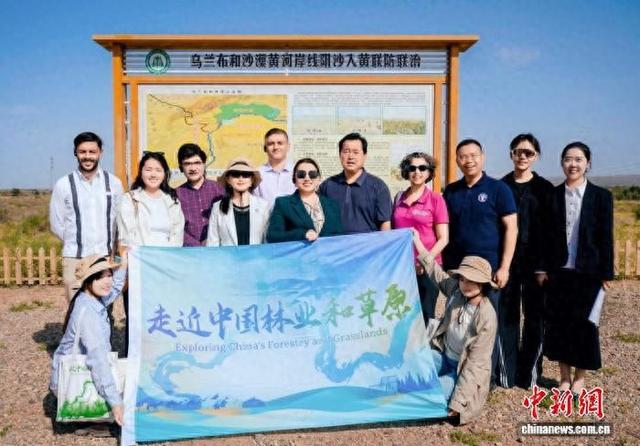
Core Viewpoint - The event "Getting Close to China's Forestry and Grassland" organized by the National Forestry and Grassland Administration highlights China's commitment to international cooperation in combating desertification and showcases its ecological construction efforts [1][3][4]. Group 1: Event Overview - The event took place from September 13 to 15, featuring representatives from Kazakhstan, Iran, Iraq, Mongolia, Mexico, Brazil, and international organizations visiting China's desertification prevention sites [1][3]. - Participants explored various ecological construction sites, including the Shajiang National Tree Germplasm Resource Bank and the ecological demonstration area in Ordos [1][3]. Group 2: International Cooperation - China has established several international cooperation centers focused on desertification prevention, contributing to global efforts with Chinese solutions and wisdom [3]. - The United Nations has awarded China the "Outstanding Contribution Award for Combating Desertification" three times, recognizing its significant role in global desertification prevention [3]. Group 3: Sustainable Development - Delegates emphasized that sustainable development is a common goal for all countries, acknowledging China's substantial efforts in ecological construction and rural revitalization [3]. - The "Three-North" project is highlighted as a model for both China and the world, showcasing successful practices in multiple fields [3]. Group 4: Ongoing Initiatives - Since 2017, the National Forestry and Grassland Administration has organized similar events to invite international representatives to understand China's integrated ecological protection and governance practices [4]. - The upcoming 10th Kubuqi International Desert Forum will focus on "Scientific Desertification Control and Green Development," further emphasizing China's commitment to ecological issues [6].
哈萨克斯坦携手中国企业共治荒漠化
Xin Hua Wang· 2025-09-06 01:52
Group 1 - The core viewpoint of the article highlights the collaboration between the Atyrau region of Kazakhstan and local enterprises in Ningxia, China, focusing on desertification prevention efforts [1][2] - The China-Central Asia Desertification Prevention Cooperation Center was established in July 2023, marking the beginning of cooperative efforts in desertification control with Central Asian countries [1][2] - Atyrau region, which has approximately 65% of its land affected by desertification and significant salinization issues, is seeking to implement large-scale projects in collaboration with Ningxia [2] Group 2 - The Atyrau government expressed a strong desire for cooperation after a delegation visited Ningxia to study desertification prevention work [2] - Three local companies in Ningxia signed memorandums of cooperation with the Atyrau government, focusing on desertification prevention, urban drainage system renovation, and wastewater treatment plant upgrades [2] - The Atyrau region faces severe challenges, with about 40% of its agricultural land affected by varying degrees of salinization, highlighting the urgency of the collaboration [2]
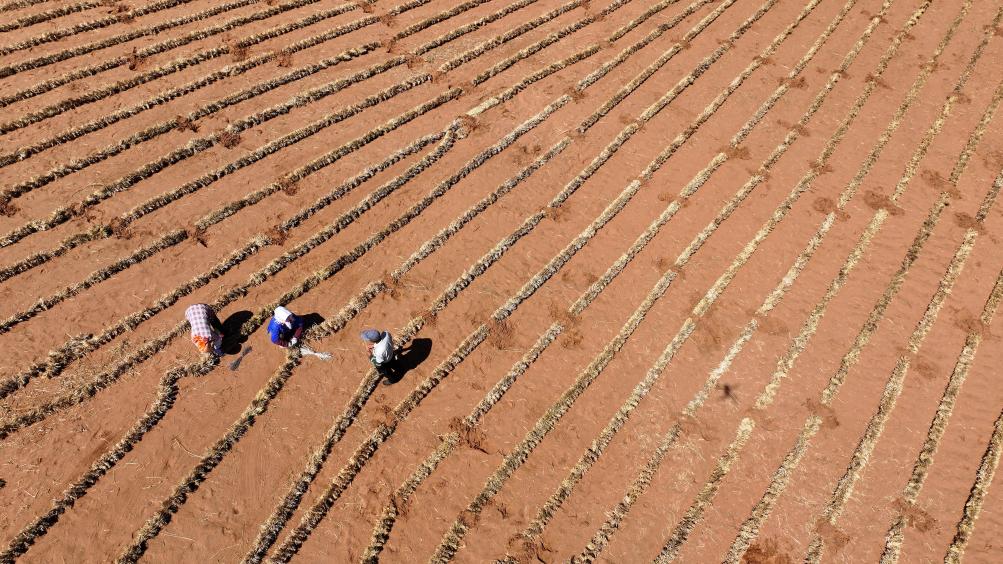
宁夏多个生态治理项目实现“出海”
Zhong Guo Xin Wen Wang· 2025-09-05 09:52
Core Insights - The signing of a cooperation memorandum between Kazakhstan's Atyrau region and several companies from Ningxia marks a significant step in ecological governance collaboration between China and Central Asian countries [1][2] - The China-Central Asia Desertification Prevention Cooperation Center, established in July, aims to promote practical cooperation in desertification prevention and has developed six demonstration bases for various ecological projects [1][2] Group 1: Cooperation and Agreements - The cooperation memorandum includes projects on desertification prevention, urban drainage system renovation, and wastewater treatment plant upgrades [1] - Ningxia enterprises will leverage their technological advantages in research innovation, plant cultivation, and desertification prevention to expand into international markets [1] Group 2: Regional Impact and Achievements - Other Central Asian countries, such as Kyrgyzstan and Uzbekistan, have shown interest in Ningxia's desertification prevention technologies and are seeking collaboration [2] - Ningxia has significantly reduced the area of desertified and sandy land from 61.7% and 23.2% in 1999 to 50.7% and 19.3% currently, showcasing a historic shift from "desert encroachment" to "greening" [2] - The "sand control cube" method developed in Ningxia has been adopted by various countries, and 24 international cooperation projects are currently active in the region [2]
中蒙生态项目合作圆桌会促成5项跨境生态合作
Zhong Guo Xin Wen Wang· 2025-08-26 21:02
Group 1 - The fifth China-Mongolia Expo and the roundtable on ecological project investment cooperation successfully facilitated the signing of 5 ecological cooperation projects with a total contract value of nearly 60 million yuan [1] - The roundtable focused on investment cooperation in the ecological field, with over 80 representatives from government departments, professional institutions, and enterprises from both countries participating [1] - Key areas of the signed projects include seedling acclimatization base construction, ecological tourism complex planning, seedling supply, and ecological greening projects, with most key technologies provided by the Chinese side [1] Group 2 - The meeting addressed regional solutions for issues such as ecological sensitive area restoration, desertification, land degradation, climate change, and increasing sandstorms [2] - The roundtable is seen as a significant opportunity for cooperation in combating desertification between China and Mongolia, with a focus on substantial investment, technological innovation partnerships, and environmental protection strategies [2] - Inner Mongolia has accumulated rich practical experience in ecological restoration since 2007 and is actively participating in Mongolia's "Billion Trees Plan" [2]