
资源帝国主义

Search documents
新华社发声:图穷匕见,不过如此
中国基金报· 2026-01-04 07:19
Core Viewpoint - The article criticizes the recent military actions by the United States against Venezuela, labeling them as blatant acts of hegemony and resource imperialism, revealing the true motives behind U.S. interventions in sovereign nations [2][3]. Group 1: U.S. Military Actions - On January 3, the U.S. military conducted a large-scale attack on Venezuela, capturing President Maduro and forcibly taking him to the U.S. [2] - President Trump announced that the U.S. would "manage" Venezuela and that American oil companies would invest billions of dollars to "repair" the oil infrastructure [2]. Group 2: International Reactions - The international community is increasingly outraged by the U.S. actions, with UN Secretary-General Guterres stating that it sets a "dangerous precedent" [3]. - Brazilian President Lula condemned the actions as prioritizing power over multilateralism, while Cuban President Díaz-Canel described it as state terrorism against nations in the Americas [3]. Group 3: Criticism from Within the U.S. - U.S. Senator Ruben Gallego criticized the country for becoming a "bully" on the world stage, and Senator Mike Lee questioned the constitutional basis for the actions [3]. - Former National Security Advisor Benjamin Rhodes described the intervention as a ridiculous attempt at regime change in Latin America [3]. Group 4: Broader Implications - The article warns that such actions threaten global peace and security, with even U.S. allies like the EU calling for respect for international law and the principles of the UN Charter [4]. - Chilean President Boric expressed the widespread concern that if "jungle law" replaces international norms, no sovereign nation is safe [4].

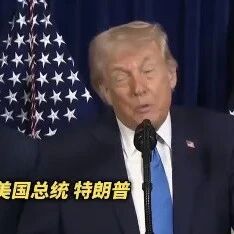
新华社发声:美国图穷匕见了
Xin Lang Cai Jing· 2026-01-04 06:37
图穷匕见,不过如此。如果说美军在众目睽睽之下明火执仗地对一个主权国家使用武力并掳走其国家元 首是赤裸裸的霸权行径,那么美国总统随后的表态,更是彻底撕下了之前所谓"打击毒品恐怖主义"的虚 伪面具,将资源帝国主义真实面目暴露无遗。正如英国《卫报》所说,美国对委内瑞拉的行动类似伊拉 克战争,延续了其攫取他国资源的一贯套路。(长安街知事 视频来源:环球网) #美对委行动类似伊拉克战争#【新华社发声:#美国图穷匕见了#】#美国暴露资源帝国主义真实面目# 美军3日凌晨对委内瑞拉发动大规模军事打击,抓走委内瑞拉总统马杜罗,并将其强行带往美国。美国 总统特朗普当天公开宣称,美国将"管理"委内瑞拉,并宣布美国大型石油企业将进入委内瑞拉,投资数 以十亿计美元,"维修"石油基础设施并创造收益。 ...
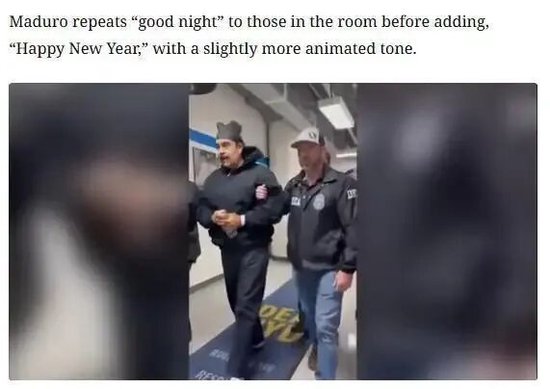
疑似左腿受伤!马杜罗被抓后首次发声,其身边内鬼详情曝光,新华社:图穷匕见,不过如此
Xin Lang Cai Jing· 2026-01-04 05:45
Group 1 - The article reports on the capture of Venezuelan President Maduro by U.S. military forces during a large-scale operation in Caracas, with Trump stating that the U.S. will "manage" Venezuela until a "safe" transition occurs [13][14][26] - Maduro was taken to a detention center in Brooklyn, New York, after being processed at the DEA office, and is expected to appear in court next week [3][18] - The U.S. military action is characterized as a blatant act of hegemony, with comparisons made to the Iraq War, highlighting the U.S.'s historical pattern of resource acquisition through military intervention [14][27] Group 2 - Protests erupted in over 100 U.S. cities against the military action in Venezuela, organized by anti-war groups, emphasizing the negative impact of such actions on Venezuelan citizens and U.S. taxpayers [8][22] - Demonstrators expressed their opposition to U.S. intervention, holding banners with messages like "Defend Venezuela" and "Trump must go" [9][22] - The protests reflect a growing discontent among the American public regarding military interventions and their consequences [22][23] Group 3 - Reports indicate that the CIA had been monitoring Maduro's movements since August 2025, utilizing both internal informants and drone surveillance to gather intelligence leading up to the military operation [5][21] - The operation was described as a result of deep cooperation between the CIA and U.S. military, involving months of planning [21][27] - Trump's authorization of more aggressive CIA actions in the fall of 2025 was a pivotal moment in the lead-up to the operation [21]
新华社评美国抓走马杜罗:赤裸裸的霸权行径
Xin Lang Cai Jing· 2026-01-04 05:31
Group 1 - The core viewpoint of the articles highlights the blatant display of U.S. hegemony through military action against Venezuela, including the abduction of President Maduro and the subsequent announcement of U.S. oil companies' investments in Venezuela's oil infrastructure [1][2] - The U.S. actions are compared to historical imperialistic practices, revealing a pattern of military intervention followed by resource exploitation, which disregards international law and reflects a return to colonial-era behaviors [1][2] - International reactions to the U.S. actions include condemnation from various global leaders and organizations, emphasizing the threat to international law and the potential for similar actions against other nations [2][3] Group 2 - The narrative suggests that the U.S. promotes a so-called "rules-based international order," which is actually a facade for pursuing American interests through coercive means [3]
新华社评美军掳走马杜罗:赤裸裸的霸权行径
Xin Lang Cai Jing· 2026-01-04 05:30
Group 1 - The core viewpoint of the articles highlights the U.S. military's actions against Venezuela as a blatant display of imperialism, with President Trump announcing plans for U.S. oil companies to invest billions in Venezuela's oil infrastructure, revealing a shift from "justice" to "oil business" [2] - The U.S. military's operation is compared to the Iraq War, indicating a pattern of resource exploitation through military intervention, undermining international law and reverting to colonial-era practices [2] - International reactions are escalating, with the UN Secretary-General and various leaders condemning the U.S. actions as a dangerous precedent that undermines multilateralism and international law [3] Group 2 - The U.S. invasion is perceived as a clear indication that the so-called "rules-based international order" is merely a guise for U.S. interests and resource exploitation [4]
新华时评|赤裸裸的霸权行径
Xin Hua She· 2026-01-04 04:56
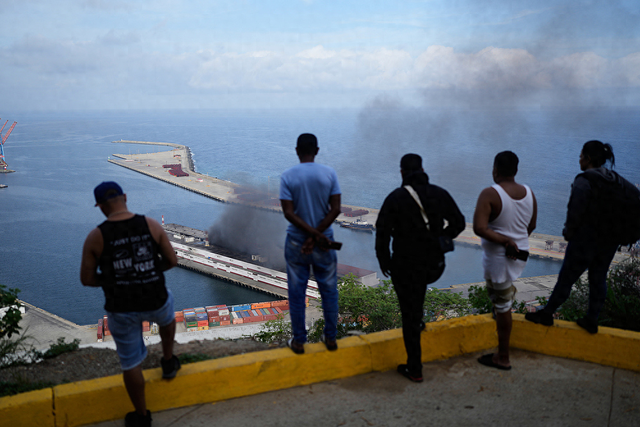
Core Viewpoint - The article highlights the aggressive military actions taken by the U.S. against Venezuela, including the capture of President Maduro, which is framed as a blatant act of imperialism and a violation of international law [1][2]. Group 1: U.S. Military Actions - The U.S. military launched a large-scale attack on Venezuela, capturing President Maduro and forcibly taking him to the U.S. [1] - President Trump announced that the U.S. would "manage" Venezuela and that American oil companies would invest billions of dollars to repair oil infrastructure [1]. Group 2: International Reactions - The international community is increasingly outraged by the U.S. actions, with UN Secretary-General Guterres stating that it sets a dangerous precedent [2]. - Brazilian President Lula criticized the U.S. for prioritizing power over multilateralism, while Cuban President Díaz-Canel labeled it as state terrorism against nations in the Americas [2]. - Russian officials condemned the U.S. actions as a blatant violation of international law [2]. Group 3: Domestic Criticism in the U.S. - U.S. lawmakers, including Senator Rubén Gallego and Senator Mike Lee, have criticized the U.S. for becoming a "bully" on the world stage and questioned the constitutional basis for such actions [2]. - Former U.S. National Security official Benjamin Rhodes described the actions as absurd and indicative of a regime change effort in Latin America [2]. Group 4: Broader Implications - The article suggests that the U.S. actions represent a return to 19th-century colonial practices, posing a threat to global peace and security [2]. - The EU has called for respect for international law and the principles of the UN Charter, reflecting widespread concern that such actions could set a precedent for future interventions in other countries [2].
新华时评丨赤裸裸的霸权行径
Xin Hua She· 2026-01-04 04:40
Core Viewpoint - The article highlights the U.S. military's large-scale attack on Venezuela, capturing President Maduro and asserting control over the country, which is framed as an act of imperialism and resource exploitation [1][2]. Group 1: U.S. Actions and Implications - The U.S. military's actions against Venezuela are described as a blatant display of hegemony, with President Trump announcing plans for U.S. oil companies to invest billions in Venezuela's oil infrastructure [1]. - The operation is compared to the Iraq War, indicating a pattern of U.S. intervention aimed at seizing foreign resources under the guise of justice and anti-terrorism [1]. - The article argues that the U.S. approach reflects a modern form of piracy, disregarding international law and reverting to colonial-era practices of resource plunder [1]. Group 2: International Reactions - The international community is increasingly outraged by the U.S. actions, with the UN Secretary-General calling it a dangerous precedent and various leaders condemning it as state terrorism and a violation of international law [2]. - Criticism also arises from within the U.S., with lawmakers questioning the constitutional basis for such actions and labeling the country as a global bully [2]. - The article emphasizes a growing concern that such actions threaten global peace and security, with warnings that if "jungle law" replaces international norms, no sovereign nation is safe [2].
英媒:美国觊觎委内瑞拉石油属于“资源帝国主义”
Xin Lang Cai Jing· 2025-12-28 10:11
Core Viewpoint - The article discusses the U.S. approach towards Venezuela's oil resources, likening it to a form of "resource imperialism" under the Trump administration, which seeks to control foreign resources under the guise of security and political rhetoric [1][2]. Group 1: U.S. Actions and Policies - The U.S. has intercepted Venezuelan oil tankers and intensified actions against President Maduro, with Trump suggesting that seized Venezuelan oil could be considered U.S. assets [1]. - Trump's rhetoric reflects a long-standing belief that the U.S. has the right to control or seize foreign resources, as evidenced by his past statements regarding Iraq's oil [2]. - The Trump administration's global energy policy is characterized by military threats and the cessation of aid to secure resources beyond renewable energy [1]. Group 2: Resource Nationalism and Imperialism - Trump's approach is described as "resource nationalism," where he prioritizes the acquisition of resources from other nations, including oil and rare earth minerals, often through coercive means [2]. - The administration has engaged in agreements, such as with Ukraine, to secure priority access to minerals and uranium in exchange for military support [2]. - Experts note that while previous U.S. administrations pursued similar goals, they often used more diplomatic language, whereas Trump has been more direct about the exploitative nature of these policies [2]. Group 3: Environmental and Global Implications - Trump's focus on fossil fuels as a cornerstone of national power disregards international norms and climate science, leading to potential long-term consequences for future generations facing climate change [3]. - The administration's push for increased fossil fuel usage among allies, such as urging the UK to expand North Sea drilling, reflects a broader strategy that prioritizes short-term gains over sustainable practices [2][3].
国际观察丨美国对委打“经济绞杀战”凸显“资源帝国主义”本质
Xin Hua She· 2025-12-27 23:29
Group 1 - The U.S. government has ordered a comprehensive blockade on all oil tankers entering and exiting Venezuela, intercepting and detaining three tankers, which Venezuela condemns as acts of piracy [1] - Experts suggest that the U.S. is attempting to cut off Venezuela's main source of government revenue through economic strangulation, aiming for regime change in Venezuela, highlighting the nature of U.S. resource imperialism [1][2] - The blockade is part of a broader strategy by the U.S. to exert military pressure on Venezuela, which has not achieved its goals, leading to a shift towards economic measures rather than military action [1][2] Group 2 - Venezuela is the country with the largest proven oil reserves globally, and oil trade is its primary source of foreign exchange income [1] - The U.S. has historically used export blockades and economic sanctions as tools to control or seize resources from other nations, as seen in its actions against Iran and other Middle Eastern countries [2] - The Trump administration's strategy towards Venezuela mirrors past U.S. interventions in Iraq, Libya, and Syria, aiming to secure oil and mineral resources [2] Group 3 - Despite the economic blockade, Venezuela's oil industry has not completely halted, with oil tankers still seen operating in key production areas [3] - Venezuela's government is striving to maintain oil exports and stabilize domestic conditions, with plans to reach a production target of 1.2 million barrels per day by the end of 2025 [3] - The effectiveness and duration of the U.S. blockade remain uncertain, influenced by domestic political dynamics in the U.S. and upcoming midterm elections [3]
国际观察丨美国对委打“经济绞杀战” 凸显“资源帝国主义”本质
Xin Hua Wang· 2025-12-27 08:10
新华社加拉加斯12月26日电题:美国对委打"经济绞杀战"凸显"资源帝国主义"本质 美国政府近日下令对所有进出委内瑞拉的受美国制裁油轮实施"全面彻底封锁",并已在委附近海域拦截 扣留三艘油轮。这被委方谴责为"严重海盗行径"。 专家认为,美国在军事施压委内瑞拉未达目标的情况下,采取封锁委方石油运输的"经济绞杀"措施,试 图切断委内瑞拉政府收入主要来源,寻求推动委内瑞拉政权更迭。这再次曝露了美国"资源帝国主义"的 贪婪本质。 美国为何此时加码封锁 连月来,美国以打击"毒品恐怖主义"为由在委周边加勒比地区不断加大军事部署,同时多次发出"动 武"威胁。委内瑞拉多次指责美方试图以军事威胁在委策动政权更迭。委马杜罗政府和民众一直以来强 硬应对美方施压威胁。 西班牙《起义报》网站的文章认为,特朗普政府意在"征服"委内瑞拉,就像之前美国对伊拉克、利比亚 和叙利亚等国所做的那样,从而确保美方获得石油和矿产资源。"让美国再次伟大"无非意味着战争、制 裁和对主权国家的掠夺,控制像委内瑞拉这样有着丰富战略资源的国家,对于维持美国全球霸权至关重 要。 在军事施压未达目标后,美国政府改换招数。有白宫官员近日对媒体表示,白宫已下令美军对委石 ...