
霸权行径

Search documents
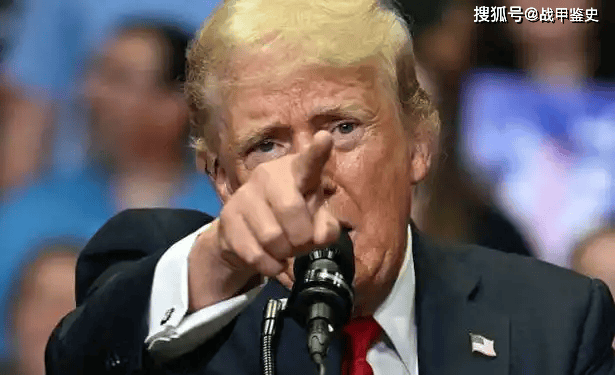
欧洲8国集体反对美国加征关税 ,坚决捍卫主权。
Sou Hu Cai Jing· 2026-01-18 06:12
Core Viewpoint - The U.S. tariff threat is fundamentally an economic tool to coerce territorial sovereignty issues, deviating from international law principles and the approach to allies [2] Group 1: U.S. Tariff Actions - The Trump administration announced a 10% tariff on goods from 8 countries starting February 1, increasing to 25% on June 1, until a "complete and thorough purchase of Greenland" agreement is reached [2] - The use of tariffs as a weapon represents a shift in U.S. foreign policy, turning ally relationships into coercive tools [2] Group 2: European Response - Eight European countries quickly formed a united front to defend national sovereignty and dignity against U.S. coercion [4] - Swedish Prime Minister Kristersson stated that Sweden "will not be extorted," emphasizing that the decision regarding Greenland belongs to Denmark and its people [4] - Danish Deputy Prime Minister Poulsen condemned the U.S. threat as "completely unacceptable," reaffirming the importance of international law and territorial sovereignty for global peace [4] Group 3: Major European Powers' Stance - French President Macron criticized the U.S. tariff threat as "unacceptable," promising a coordinated European response to defend European sovereignty [6] - The German government initiated consultations with European partners to take appropriate countermeasures [6] - British Prime Minister Starmer described the U.S. actions as "completely wrong," asserting that the future of Greenland should be decided by Denmark and its people [6] Group 4: EU's Support and Trade Relations - The EU's strong backing adds confidence to the eight countries, indicating a potential restructuring of transatlantic trade relations [8] - EU Commission President von der Leyen and European Council President Costa issued a joint statement highlighting that U.S. tariffs would damage transatlantic relations and reiterating solidarity with Denmark and the people of Greenland [8] - The European Parliament has suspended the approval process for a previously agreed EU-U.S. trade agreement, with calls for the activation of EU anti-coercion tools in response to U.S. bullying [8] Group 5: Historical Context and Implications - Historical experiences show that tariff bullying can backfire, as seen during the Great Depression with the Smoot-Hawley Tariff Act, which led to a global trade collapse [10] - The collective resistance from the eight European countries is not only to defend their sovereignty and economic interests but also a strong opposition to unilateralism and hegemonic behavior [10] - In today's deeply integrated global economy, adherence to international law and respect for national sovereignty through equal dialogue is essential to avoid escalating trade conflicts and maintain the stability of the global trade system [10]

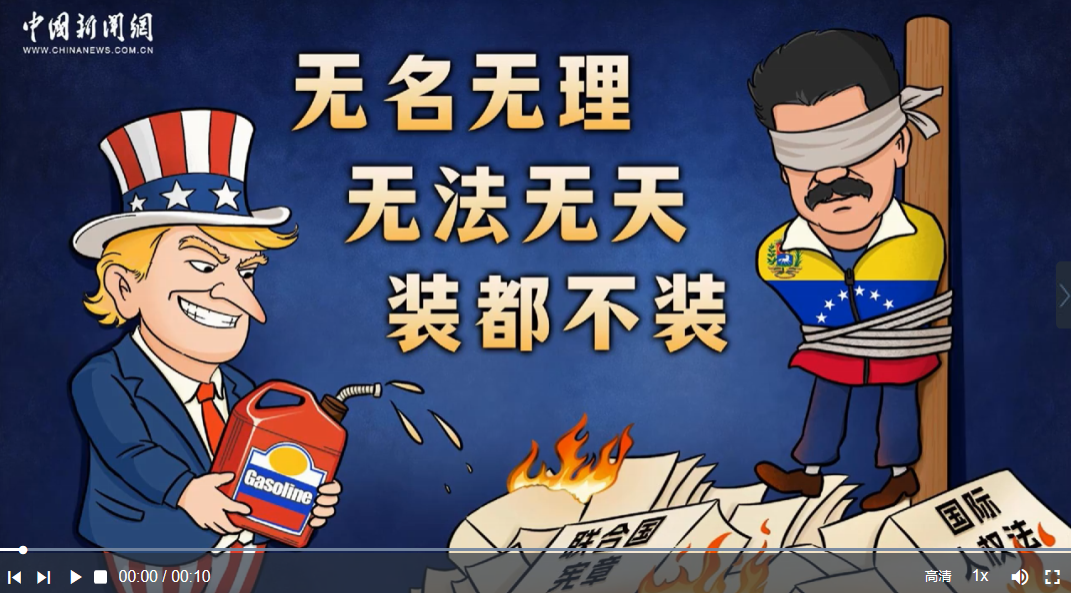
谁在焚烧战后国际秩序的基石?丨新漫评
Zhong Guo Xin Wen Wang· 2026-01-09 12:26
Core Viewpoint - The article criticizes the United States for using military force to control Venezuelan President Maduro and his family, suggesting that such actions represent a form of arrogant and barbaric power politics that violates international law and human rights [2] Group 1 - The U.S. has deployed troops to forcibly control Venezuelan President Maduro and his family, indicating a significant escalation in U.S. intervention in Venezuela [2] - The article condemns the U.S. actions as a blatant violation of the United Nations Charter and international human rights law, highlighting the dangers of power politics [2] - The narrative suggests that such hegemonic behavior will ultimately face historical condemnation and rejection [2]
委内瑞拉代总统:营救马杜罗夫妇!美国:“无限期”控制委石油销售
Hua Xia Shi Bao· 2026-01-08 06:07
Group 1 - The core viewpoint of the news is the escalating political crisis in Venezuela, highlighted by the actions of the U.S. government and the response from Venezuelan authorities and citizens [1][2][4][6]. - Venezuelan interim president Rodriguez emphasized three main objectives: rescuing President Maduro and his wife, ensuring national peace, and maintaining political governance amid challenges [1]. - A public demonstration in Caracas saw thousands of citizens rallying to defend national sovereignty and calling for the release of President Maduro and his wife [1]. Group 2 - The Venezuelan Interior Minister reported that a U.S. military operation to forcibly remove President Maduro and his wife resulted in at least 100 deaths, describing the action as barbaric and inhumane [2]. - U.S. Energy Secretary Chris Wright announced that the U.S. will indefinitely control the sale of Venezuelan oil, with revenues deposited into U.S. accounts, aiming to push Venezuelan crude back into the market [4]. - The U.S. government plans to facilitate the entry of major American oil companies into Venezuela, with the potential for a significant increase in oil production in the coming years, although substantial investment is required to reach historical production levels [4].
美国打击委内瑞拉对世界的七大危害
Bei Jing Ri Bao Ke Hu Duan· 2026-01-08 05:44
Core Viewpoint - The article discusses the U.S. military's forceful actions against Venezuela, including the seizure and transfer of President Maduro and his wife, which are viewed as violations of international law and sovereignty [1][3]. Group 1: Violations of International Law - The U.S. actions are seen as a blatant violation of the United Nations Charter, which prohibits the use of force against sovereign nations [3]. - The United Nations Secretary-General's spokesperson stated that the developments in Venezuela set a "dangerous precedent" and emphasized the need to respect international law [3]. Group 2: Acts of Aggression - The U.S. military intervention aligns with the definition of aggression as outlined in the United Nations General Assembly Resolution 3314, which includes armed invasion and attacks on another country's territory [5]. - Legal experts have characterized the U.S. military actions as constituting a crime of aggression [5]. Group 3: Sovereignty Issues - The principle of sovereignty is fundamental in international relations, and the U.S. actions are viewed as a gross violation of Venezuela's sovereignty and internal affairs [6]. - Legal scholars have condemned the U.S. actions as extremely illegal, asserting that no country has the right to invade and manage another nation's government [6]. Group 4: Violation of Diplomatic Immunity - The U.S. military's actions against President Maduro, under the pretext of drug enforcement, are seen as an infringement on the immunity typically granted to heads of state under international law [7]. - The actions have been described as a form of kidnapping, undermining the legal protections afforded to foreign leaders [7]. Group 5: Resource Exploitation - The U.S. has expressed intentions to allow American oil companies to operate in Venezuela, which raises concerns about the potential for resource exploitation [9]. - Analysts have described the U.S. actions as a form of "resource imperialism," driven by interests in Venezuela's oil reserves [9]. Group 6: Impact on Domestic Stability - The U.S. military intervention is expected to lead to political instability in Venezuela, adversely affecting the welfare of its citizens [10]. - Historical precedents indicate that such external military interventions often result in humanitarian crises and deteriorating public order [10]. Group 7: Regional Security Threats - The U.S. actions have raised alarms about regional security, with leaders from various Latin American countries expressing concerns about the implications for their own nations [12]. - The rhetoric from U.S. officials suggests that other countries in the region could be next, heightening fears of further destabilization [12].
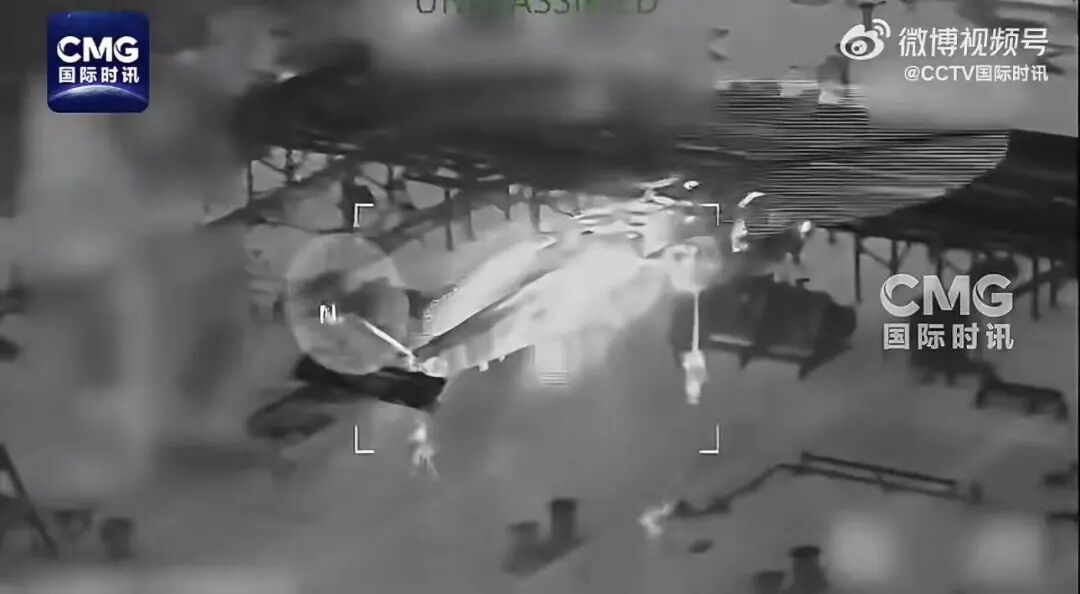
美国“将无限期控制委石油销售”!俄确认美军登船,与油轮失联
Mei Ri Jing Ji Xin Wen· 2026-01-07 22:50
Group 1: U.S. Actions and Responses - The U.S. has seized a Russian oil tanker, "Marinera," claiming it violated sanctions against Venezuela, which has raised tensions with Russia [5][7][10] - U.S. Energy Secretary stated that the U.S. plans to maintain significant control over Venezuela's oil industry, including indefinite oversight of its foreign sales [3] - The U.S. military's actions against Venezuela are viewed as a violation of international law and have drawn widespread condemnation from various governments [11][12] Group 2: Market Reactions - U.S. refining and tanker stocks saw significant gains following the news of the U.S. actions, with Valero Energy up 3.54%, Phillips 66 up 1.84%, and Teekay Tankers up 8.33% [3][4] - The stock performance indicates investor optimism regarding potential U.S. control over Venezuelan oil supplies [3][4] Group 3: Legal and International Implications - Russia's Ministry of Transport emphasized that the seizure of the tanker violates international maritime law, asserting that no country has the right to use force against vessels registered under another nation's flag [8][10] - The situation has raised concerns about the precedent set by the U.S. actions, which could undermine international norms regarding sovereignty and maritime law [12][15]
美国打击委内瑞拉,对世界造成七大危害
Xin Lang Cai Jing· 2026-01-07 15:07
Core Viewpoint - The article highlights the U.S. military's forceful action against Venezuela, which included the seizure and transfer of President Maduro and his wife, raising significant concerns about violations of international law and sovereignty [1] Group 1: U.S. Actions - The U.S. conducted a military raid on Venezuela, forcibly controlling and transferring President Maduro and his wife [1] - The U.S. announced intentions to "manage" Venezuela and compel Maduro to appear in U.S. court [1] Group 2: International Reaction - The actions of the U.S. have been met with global shock and widespread condemnation from multiple governments [1] - There is a strong public outcry against the U.S. actions, which are viewed as a serious threat to international order and stability [1]
五国警告美国!
Xin Lang Cai Jing· 2026-01-06 13:19
Group 1 - The diplomatic and political confrontation in the Western Hemisphere has intensified following the U.S. military action against Venezuela and the control of President Maduro [1] - President Trump has issued threats against several countries including Colombia, Mexico, Cuba, and Denmark, which has drawn strong reactions and warnings from international leaders [1][2] - Colombian President Petro has responded to Trump's threats by stating he will defend his presidency and has ordered military commanders loyal to foreign interests to resign [3] Group 2 - The U.S. military action in Venezuela resulted in the deaths of 32 Cuban citizens who were sent to Venezuela at the request of its government [4] - Cuban President Díaz-Canel condemned the U.S. actions as a crime and expressed willingness to sacrifice for the defense of Cuba and Venezuela [5] - Trump has also targeted Mexico, suggesting that military action against the country could be considered if it does not improve its efforts against drug trafficking [6] Group 3 - Mexican President Claudia Sheinbaum firmly opposed the idea of U.S. military presence in Mexico, emphasizing the need for mutual respect in cooperation against drug trafficking [7][8] - Sheinbaum stated that cooperation is acceptable, but subordination and interference are not, asserting that the Americas belong to the people of each country [8] - Trump's comments about Greenland and potential military actions have provoked a strong response from Denmark, with Prime Minister Frederiksen warning that such actions would end NATO as a military alliance [9][10]
朝鲜表态
券商中国· 2026-01-04 10:56
Group 1 - The article highlights North Korea's strong condemnation of the United States' actions towards Venezuela, labeling them as a blatant violation of sovereignty and international law [1]
朝鲜表态
Xin Jing Bao· 2026-01-04 10:40
Core Viewpoint - North Korea's Foreign Ministry spokesperson condemned the United States for its hegemonic actions against Venezuela, labeling them as a blatant violation of sovereignty and international law [1] Group 1 - The spokesperson's remarks were made in response to a question from the Korean Central News Agency [1] - The statement reflects North Korea's stance on U.S. foreign policy and its implications for international relations [1]
新华社评美国抓走马杜罗:赤裸裸的霸权行径
Xin Lang Cai Jing· 2026-01-04 05:31
Group 1 - The core viewpoint of the articles highlights the blatant display of U.S. hegemony through military action against Venezuela, including the abduction of President Maduro and the subsequent announcement of U.S. oil companies' investments in Venezuela's oil infrastructure [1][2] - The U.S. actions are compared to historical imperialistic practices, revealing a pattern of military intervention followed by resource exploitation, which disregards international law and reflects a return to colonial-era behaviors [1][2] - International reactions to the U.S. actions include condemnation from various global leaders and organizations, emphasizing the threat to international law and the potential for similar actions against other nations [2][3] Group 2 - The narrative suggests that the U.S. promotes a so-called "rules-based international order," which is actually a facade for pursuing American interests through coercive means [3]