车载芯片

Search documents
豪威集团:视觉芯片的“车载之王”
Bei Jing Shang Bao· 2025-08-31 15:55
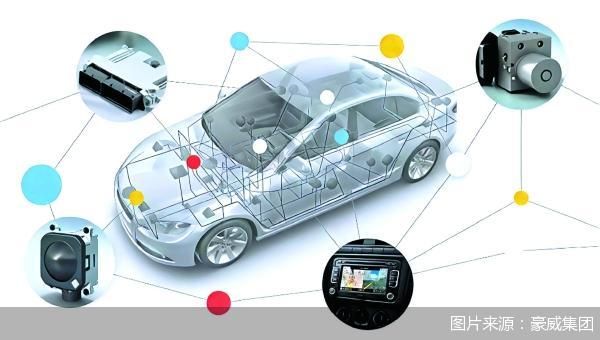
Core Viewpoint - The article discusses the transformation of Weir Shares into Haowei Group, highlighting its strategic shift from consumer electronics to the automotive sector, particularly in the field of vehicle-mounted visual chips, amidst the backdrop of domestic substitution trends in the semiconductor industry [1][4][11]. Group 1: Company Transformation - Haowei Group, formerly known as Weir Shares, has transitioned from being a cyclical player in consumer electronics to a leader in the vehicle-mounted visual chip market, capitalizing on the growth of smart vehicles [4][6]. - The company has achieved significant revenue growth from the automotive sector, with income from this market reaching 5.905 billion yuan, a year-on-year increase of 29.85%, accounting for over 30% of its total revenue from image sensor solutions [5][7]. - The shift to automotive applications is seen as a key driver for Haowei's valuation transition from a cyclical stock to a growth stock, as it moves into a high-barrier, long-cycle market [4][7]. Group 2: Strategic Support - The company's success is attributed to three main factors: substantial investment in R&D to strengthen its technological capabilities, strategic acquisitions to fill technology gaps and capture market share, and diversification into multiple business lines to mitigate risks associated with consumer electronics cycles [2][4]. - Haowei's acquisition of Beijing Haowei in 2019 was a pivotal move that allowed it to quickly enhance its technological capabilities and market presence [2][9]. Group 3: Financial Performance - Haowei Group's financial results reflect its business transformation, with a reported revenue growth of 13.49% to 15.97% year-on-year in the first half of the year, and a net profit increase of 39.43% to 49.67% [7][11]. - The company has maintained a market share of nearly 30% in the domestic vehicle-mounted CIS sector, benefiting from its advanced technology and competitive advantages [6][11]. Group 4: Challenges and Concerns - Despite its growth, Haowei faces challenges, including high levels of share pledges by its controlling shareholder, which may threaten control stability and raise concerns about financial health [11][12]. - The company's R&D expenditure has shown volatility and a declining rate, which could impact its competitive edge in the rapidly evolving automotive chip market [13][14]. - There is a notable disparity between the increase in executive compensation and R&D investment, raising questions about the allocation of resources and potential impacts on market trust [15].


英特尔黯然“败走”车圈
Hua Er Jie Jian Wen· 2025-06-27 09:47
Core Viewpoint - Intel has decided to shut down its automotive business and lay off most of its employees in this division as part of a strategic refocus to cut costs, indicating a retreat from the automotive industry [2][3]. Group 1: Business Decisions - Intel's CEO, Pat Gelsinger, announced a significant restructuring plan, which includes a large-scale layoff to address declining sales and poor revenue outlook [2][3]. - The company aims to ensure a smooth transition for its clients while gradually shrinking its automotive business under the Client Computing Group [2][3]. Group 2: Financial Performance - Intel's financial report showed a 2% year-over-year decline in total revenue, with a gross margin drop of 7.3 percentage points, resulting in a net loss of $18.756 billion, compared to a profit of $20.899 billion in 2020 [2][3]. - The automotive division's revenue has not been significant enough to be reported separately, highlighting its lack of contribution to overall revenue [3]. Group 3: Market Competition - Intel's automotive business has faced intense competition from rivals like NVIDIA and Qualcomm, leading to a decline in market share for its autonomous driving subsidiary, Mobileye, which only holds 2.9% of the market [3][4]. - In the cockpit chip market, Intel captured only 2.96% of the market share last year, falling behind competitors such as Qualcomm and NXP [4]. Group 4: Strategic Shifts - The automotive market is becoming increasingly competitive, and Intel's lack of significant partnerships with major automotive manufacturers has left it marginalized [5][7]. - Despite the retreat from the automotive sector, Intel continues to invest in various automotive technology companies and retains control over Mobileye [10]. Group 5: Historical Context - Intel's initial foray into the automotive sector was driven by a decline in PC shipments and an increasing demand for chips in vehicles, leading to significant acquisitions like Mobileye in 2017 [8][9]. - The expectation was that automotive chips would become a major revenue contributor, with predictions that the automotive chip market would grow significantly by 2030 [8][9].