
通胀冲击

Search documents
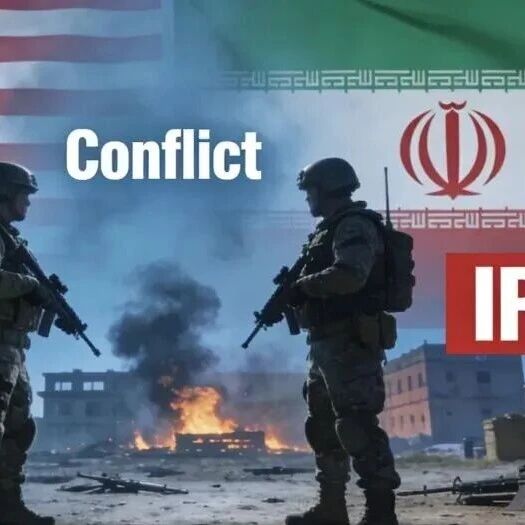
麦格理警告美伊战争引发油价飙升将带来"通胀冲击"!
美股IPO· 2026-03-08 00:48
Core Viewpoint - The ongoing conflict between the U.S. and Iran is causing a significant surge in oil prices and creating widespread risk aversion in global financial markets, leading to a volatile environment for investors [1] Group 1: Market Reactions - Brent crude oil prices jumped over 7% in early trading, while gold prices increased by 2.0%, as investors shifted from riskier financial assets to "hard assets" [1] - Major European stock indices experienced an average decline of over 2.0%, and U.S. stock index futures fell by more than 1% during early trading as traders assessed the duration of hostilities [3] Group 2: Economic Implications - The report highlights a significant divergence in economic outlooks between oil-importing and oil-exporting countries, with oil price surges historically leading to sharp and sustained job losses in countries heavily reliant on Gulf supplies, such as Japan, China, and Europe [4] - India is marked as particularly vulnerable, relying on the region for 85% of its oil imports, while the U.S. may face a severe but short-lived GDP decline [4] - Countries with substantial reserves and export capabilities, like Brazil, Canada, and Norway, are expected to maintain strong output despite inflationary pressures [4] Group 3: Inflation and Monetary Policy - The current situation is compared to the 1990-1991 Gulf War, with high oil prices potentially interacting with existing financial vulnerabilities, such as excessive private credit leverage and weak household sentiment, which could trigger a genuine economic recession [4] - This "war-driven" inflation may compel the Federal Reserve to adopt a more hawkish stance than previously anticipated, despite the political sensitivity surrounding policy interest rates [4] Group 4: Geopolitical Risks and Currency Outlook - The future trajectory of the U.S. dollar (USD) over the next five years is closely tied to the success or failure of the military actions, with historical data indicating that clear U.S. leadership correlates with strong dollar performance [5] - The report suggests that even if Iran achieves a "regime change," it could be viewed as a challenge to the rules-based global order, leading reserve managers to continue reducing their dollar exposure [5] - A loss of global trust in the dollar may accelerate the adoption of alternative exchange mediums, particularly the Chinese yuan (CNY), as the dollar faces ongoing risks to its status as a reserve currency [5]

高盛闭门会-周期性顺风-估值逆风与不断演变的地缘政治背景
Goldman Sachs· 2026-03-06 02:02
Investment Rating - The report indicates a cautious investment outlook for the energy sector, with a focus on identifying mispriced assets in the context of geopolitical tensions and energy price fluctuations [1][2]. Core Insights - The energy market is currently viewed as a critical observation window, with recent price surges in oil and natural gas being interpreted as short-term disturbances rather than long-term trends [2][3]. - The report highlights that the U.S. is likely to benefit from rising energy prices, while major importers in Asia and Europe may face adverse effects [3][4]. - The AI sector is entering a phase of differentiation, with increased capital expenditure and concerns over disintermediation risks leading to a more negative market reaction despite positive news [6][7]. - China is positioned to buffer short-term shocks due to its substantial oil reserves, but the long-term impact of energy price fluctuations remains a concern [8][11]. Summary by Sections Energy Market Analysis - Current pricing reflects a potential short-term disruption of 5 to 6 weeks due to geopolitical tensions, with significant adjustments already made in oil price volatility [4][5]. - The distribution of risks suggests that while the market has accounted for some supply disruption, there remains potential for more severe scenarios [4][5]. AI Sector Insights - The AI theme is seen as attractive for productivity enhancement, but the market has already priced in many expectations, leading to increased vulnerability in certain segments [6][7]. - Positive developments in capital expenditure and application expansion have not translated into favorable market reactions, indicating a need for careful selection of winners and losers within the sector [6][7]. Currency and Trade Dynamics - The Chinese yuan has shown a steady appreciation, supported by a significant trade surplus and a 21%-22% undervaluation, which is expected to continue unless geopolitical tensions escalate [11][12]. - The report suggests a selective approach to trading strategies, favoring cyclical assets while employing hedging tools to mitigate risks [12][13]. Investment Opportunities - Brazil is identified as a core opportunity due to its favorable position in commodity trade and potential for interest rate cuts, making it a target for investment through both equity and currency channels [1][13]. - The report emphasizes the importance of identifying mispriced assets that benefit from commodity trade conditions, particularly in emerging markets [13].
美联储主席鲍威尔:现在与2018年不同,当时通胀较低;今天,我们必须小心出现显著通胀冲击。
news flash· 2025-06-24 15:12
Core Viewpoint - The current economic situation is markedly different from 2018, particularly regarding inflation levels, necessitating caution against significant inflation shocks [1] Group 1 - Federal Reserve Chairman Jerome Powell emphasizes the need for vigilance in the face of potential inflationary pressures, contrasting today's higher inflation with the lower rates observed in 2018 [1]
未知机构:中金海外美联储的两难是容忍一次通胀冲击提前应对未来增长压力-20250508
未知机构· 2025-05-08 02:20
Summary of Key Points Industry Overview - The document discusses the Federal Reserve's current monetary policy stance and the challenges faced by Chairman Jerome Powell regarding inflation and growth pressures [1]. Core Insights and Arguments - The Federal Reserve is in a "dilemma" between tolerating a temporary inflation shock to address future growth pressures or focusing on immediate inflation concerns at the cost of growth [1]. - The recent meeting of the Federal Reserve leaned slightly hawkish, indicating a rejection of "preemptive action" [1]. - Current economic data is relatively strong, which may influence the Fed's decision-making process [1]. - Powell's term ends in May next year, suggesting that a wait-and-see approach might be the optimal short-term strategy [1]. - Powell ambiguously stated that if tariffs remain at current levels, interest rate cuts may not occur within the year [1]. Other Important but Potentially Overlooked Content - There is uncertainty regarding tariffs, which could impact future monetary policy decisions [1]. - Despite the Fed's stance, the market appears to remain hopeful for potential rate cuts [1].