
通胀冲击

Search documents
战火与谈判笼罩下的大宗商品轮动与机会
对冲研投· 2026-03-28 06:03
Group 1 - The article discusses the unexpected decline of gold as an asset during the recent conflict, contrasting with the historical notion that gold benefits from war [2][4] - It highlights a market shift from inflation concerns to growth concerns, indicating that investors are now more worried about economic recession rather than inflation itself [5][6] - The article notes a collective hawkish shift among central banks, particularly the Federal Reserve, which has led to a collapse of rate cut expectations, increasing the opportunity cost of holding non-yielding assets like gold [6][7] Group 2 - The article examines the potential for agricultural products to take over from declining chemical products, emphasizing rising planting costs and the impact of weather patterns on crop yields [15][16] - It discusses the dynamics of different agricultural products, noting that while chemical products are influenced by oil prices, agricultural products have their own growth cycles that may provide more sustained price increases [18][19] - Specific agricultural products are analyzed, such as cotton, which is supported by rising costs and government subsidies, and sugar, which is influenced by oil prices and Brazilian production decisions [21][24] Group 3 - The article outlines the volatility in the methanol market driven by geopolitical tensions in the Middle East, particularly the impact of supply disruptions from Iran [73][76] - It presents data showing a significant reduction in methanol imports and rapid depletion of port inventories, indicating a tightening supply situation [78][79] - The domestic supply of methanol is constrained, with high operating rates limiting the ability to compensate for reduced imports, raising concerns about future availability [80][82] Group 4 - The article highlights the complexities of the apple market, noting low inventory levels but also a lack of quality fruit available for delivery, leading to price discrepancies [58][60] - It discusses the impact of consumer behavior and competing fruits on apple demand, suggesting that while there may be short-term spikes in demand, long-term pressures could emerge [62][66] - The article emphasizes the uncertainty surrounding weather conditions in April, which could significantly affect future apple production and pricing [67][70]


黄金与有色的交易逻辑是否失效?
对冲研投· 2026-03-25 11:30
Group 1 - The market's pricing logic is shifting from "inflation shock" to "growth shock," with gold prices dropping from $5,400/ton to below $4,300/ton amid escalating Middle East conflicts [1][4] - Precious metals have outperformed other sectors, with the performance ranking as follows: precious metals > non-ferrous metals > chemicals/agriculture > black metals [4][5] - The recent price declines across various sectors correspond inversely to their previous gains, indicating that sectors with larger prior increases are experiencing greater pullbacks [7][9] Group 2 - The market is currently trading based on historical patterns where oil price increases lead to inflation, rising interest rates, and falling stock prices, but a shift to "growth shock" is anticipated [9][10] - Global central banks have adopted a hawkish stance, with expectations of "panic rate hikes" despite soft economic data, indicating a reluctance to lower interest rates [13] - The logic behind gold pricing has been altered, as central banks are using gold to exchange for essential goods during crises rather than merely as a safe-haven asset [14][16] Group 3 - The current market sentiment is characterized by high volatility in metals, with emotional trading patterns emerging, particularly in gold, silver, and copper [17] - The demand for non-ferrous metals is under pressure due to high inventory costs and locked-up capital, leading to a lack of resistance against price declines [17][18] - The risk of excessive tightening by central banks could lead to significant market instability, with a stabilization period expected around mid-April [18]

城堡证券警示:从通胀冲击到经济危机,市场开始定价“需求萎缩”
美股IPO· 2026-03-24 00:56
Core Viewpoint - The market is shifting towards a "demand contraction" mode, influenced by the ongoing geopolitical conflicts and their impact on global economic growth [1][3]. Group 1: Market Dynamics - The Middle East conflict is transitioning to a new phase, with investors focusing on the economic growth impact rather than initial inflation shocks [3]. - Economic activity is slowing down, and the trend of "demand contraction" may support long-term inflation-adjusted bonds [3]. - The recent comments from President Trump regarding delaying strikes on Iran's energy infrastructure have led to a rise in stock and bond markets, while oil and the dollar have declined [3]. Group 2: Interest Rates and Inflation - Since the outbreak of the war in late February, bond yields in major markets have surged as investors anticipate central banks may need to raise rates to combat inflation driven by rising energy costs [4]. - The dollar has strengthened significantly due to safe-haven demand [4]. - Once short-term interest rates stabilize, actual long-term rates (adjusted for inflation) are expected to "level off" as investors shift focus to the economic damage caused by the conflict [4]. Group 3: Economic Growth Concerns - The conflict is at a crossroads, with potential escalation or ceasefire, both of which would negatively impact economic growth [5]. - Ongoing supply shocks are expected to severely affect the already fragile global economy, with consumers having depleted excess savings and a weaker labor market compared to the energy shock period in 2022 [5]. - If economic growth shows resilience, central banks may tighten monetary policy to curb inflation, which could ultimately pressure economic activity [5]. Group 4: Emerging Market Vulnerabilities - Developing countries, particularly energy-importing nations, are especially vulnerable to these economic pressures [5]. - Currency depreciation may force central banks to raise interest rates, exacerbating domestic economic slowdowns [5]. - Weakness in emerging market assets could hinder global economic growth while simultaneously strengthening the dollar and intensifying the monetary tightening cycle [5]. Group 5: Supply Chain Risks - The market may be underestimating the scale of supply disruptions, with shortages spreading from oil to liquefied natural gas, helium, and fertilizers, increasing the risk of widespread supply constraints [5][6].

全球资产“无差别抛售”,高盛发出严厉警告!
格隆汇APP· 2026-03-23 09:54AI Processing
本文约稿作者 | 哥吉拉 数据支持 | 勾股 大数 据(www.gogudata.com) 01 美伊冲突持续升级,48小时倒计时 3 月 23 日,全球金融市场上演一场罕见的"集体踩踏"。 周一亚市开盘, 韩国综合指数低开熔断,收跌 6.49% ,日经 225 、越南指数、 A 股三大指数、港股恒指国指 等均跌超 3% 。 所有的股指 K 线都跌破位,几乎是 没有缓冲,没有 像样 反弹 的 单边下跌 。 贵金属, 这个传统意义上的 "终极避风港", 更是出现了 近乎崩塌的下跌。 国内黄金期货主力暴跌 8.62% 回落 至 940 元 / 克,白银期货主力暴跌 11.67% 至 15411 元 / 千克,铂金、钯金则分别暴跌了 11.38% 、 12.42% 。 避险资产与风险资产 也在 同步下跌。美国 10 年期国债收益率升至 4. 42 % ,创近半年新高;美元指数震荡走 强至 99.7 6 ,涨幅 0.2% ,进一步压制了非美 元 资产。 这是一场几乎没有避风港的抛售。 唯一在上涨的,是石油 资产 。 今天国内原油主合约大涨 7.5% 收 834.6 元 / 桶,创历史新高,美油、 布伦特 原油 也都重 ...


A股近5200只个股下跌,抄底还是“逃命”?
和讯· 2026-03-23 08:47
Core Viewpoint - The A-share market is experiencing significant downward pressure due to a combination of internal and external factors, leading to a sharp decline in major indices and raising concerns about the sustainability of the current bull market [2][3][4]. External Factors - The U.S. Federal Reserve's hawkish signals and geopolitical tensions have resulted in foreign capital outflows, putting pressure on growth stock valuations [3][4]. - The ongoing tensions in the Strait of Hormuz and rising inflation expectations are contributing to global market volatility, with potential implications for A-shares [3][4]. Internal Factors - The tightening liquidity at the end of the quarter has led to increased selling pressure from institutional investors, particularly in high-valuation technology growth sectors [4][5]. - The market's initial decline triggered stop-loss selling from quantitative funds, exacerbating the downward momentum and resulting in a significant drop in trading volumes [5]. Market Sentiment - The market is currently characterized by heightened fear, with a large number of stocks declining and a significant number hitting their daily limit down [2][3]. - The capital market's self-reinforcing mechanism is leading to a "panic selling" scenario, where investors who were previously bullish are now forced to reduce their positions due to short-term losses [5]. Diverging Opinions on Market Outlook - Some international investment banks, like Goldman Sachs, express caution, warning that the current asset pricing does not adequately account for the negative impact of high energy costs on global economic growth [6]. - Conversely, some market analysts believe the current downturn is merely a "pause" in a longer bull market, supported by strong underlying fundamentals such as policy support and capital inflows into undervalued Chinese assets [6][7]. Investment Strategies Post-Correction - After the adjustment, key investment directions are identified: resource stocks benefiting from geopolitical premiums, AI infrastructure driven by policy support, and renewable energy aligned with national energy transition goals [7].
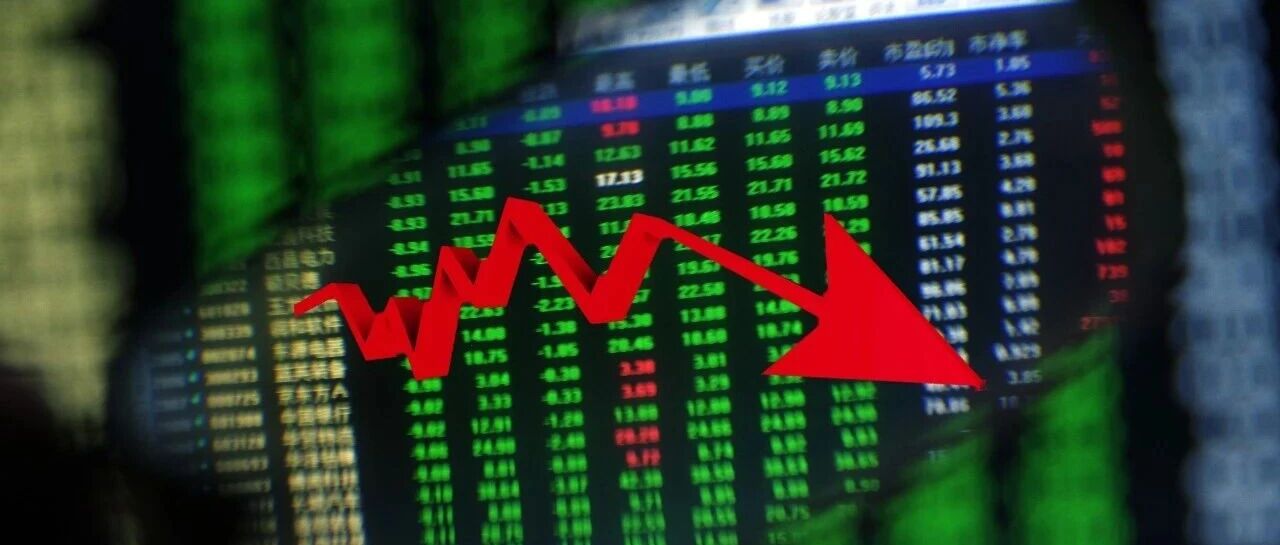
高盛解读“伊朗战争会持续多久”:市场只交易了“通胀”,还未交易“衰退”
华尔街见闻· 2026-03-23 03:46
Core Viewpoint - Goldman Sachs warns that global assets have adequately priced in the "inflation shock" but have completely ignored the devastating impact of high energy costs on global economic growth [2] Group 1: Economic Impact and Predictions - Goldman Sachs has downgraded growth forecasts for major economies like the US and Eurozone for 2026 and raised inflation expectations, delaying the next Fed rate cut from June to September [2] - The current estimated loss of oil flow in the Persian Gulf is 17% of global supply, with actual flow dropping from 20 million barrels per day to 600,000 barrels per day, a decline of 97% [8] - If the disruption lasts for 60 days, global GDP could decline by 0.9% and push global prices up by 1.7% [13] Group 2: Military and Strategic Analysis - The core suspense of the conflict lies in when the "global energy chokehold" of the Strait of Hormuz can be resolved, rather than the tactical victory of US forces [3] - Iran views the conflict as a "survival battle," utilizing low-cost drones and asymmetric warfare to prolong the conflict until it secures long-term guarantees for its regime [5] - The US military's ability to provide escort is limited, with estimates suggesting it can only restore 20% of normal oil flow, indicating that the resolution is not merely a military issue but a matter of motivation and leverage among parties involved [7] Group 3: Oil Price Scenarios - Goldman Sachs has outlined three scenarios for oil prices: 1. If flow is restored within a month, Brent crude could average $71 per barrel by Q4 2026 [9] 2. If disruptions last 60 days, prices could soar to $93 per barrel [10] 3. In an extreme case of prolonged disruption, prices could reach $110 per barrel by Q4 2027 [10] Group 4: Natural Gas Market Crisis - European natural gas prices have surged over 90% to €61/MWh, with potential further increases if Iranian missile damage leads to a 17% reduction in Qatar's LNG capacity over the next 2-3 years [11] - The US government has initiated several policy measures to address the crisis, including the release of 172 million barrels from the Strategic Petroleum Reserve [12] Group 5: Market Reactions and Risks - The current market is only pricing in "inflation" and has not accounted for the risk of "economic downturn," which could lead to significant downward adjustments in global growth and corporate earnings [13][14] - If the optimistic market sentiment is proven wrong, a shift from "inflation trading" to "recession trading" could occur, impacting various asset classes and currencies [16]
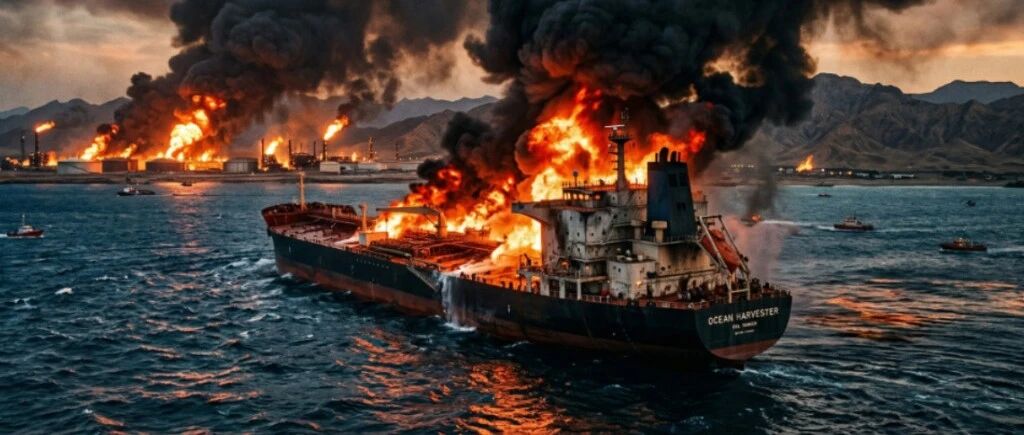
突然!以色列,发动大规模空袭!高盛最新警告:“第二只靴子即将掉落!”
券商中国· 2026-03-22 14:41
Core Viewpoint - The ongoing escalation of tensions in the Middle East is significantly impacting global economic forecasts, with Goldman Sachs warning of the severe consequences of high energy costs on economic growth [2][7]. Group 1: Military Actions - On March 22, the Israeli Defense Forces initiated "large-scale" airstrikes against Hezbollah infrastructure in southern Lebanon, following the death of a senior commander from Hezbollah [3][4]. - Iran's Islamic Revolutionary Guard Corps (IRGC) has launched retaliatory military operations, employing upgraded tactics and systems to target U.S. military bases and Israeli regions [5][6]. Group 2: Economic Impact - Goldman Sachs has revised down growth forecasts for major economies, including the U.S. and Eurozone, for 2026, while raising inflation expectations due to the ongoing crisis [7]. - The report highlights a significant loss in oil flow through the Strait of Hormuz, estimating a reduction of 17% of global supply, with current flow plummeting from 20 million barrels per day to 600,000 barrels per day, a 97% drop [8]. Group 3: Future Projections - If the disruptions continue, global GDP could decline by 0.9% and inflation could rise by 1.7% over a 60-day period, with significant tightening of financial conditions already observed [8][9]. - Goldman Sachs emphasizes that the key variable in this crisis is not military actions but the timeline for navigation through the Strait of Hormuz [9].

中辉有色观点-20260311
Zhong Hui Qi Huo· 2026-03-11 05:04
Group 1: Report Industry Investment Ratings - Gold: Long - term holding [1] - Silver: Participate after volatility reduction [1] - Copper: Long - term holding [1] - Zinc: Rebound [1] - Lead: Rebound under pressure [1] - Tin: Rebound under pressure [1] - Aluminum: Rebound [1] - Nickel: Rebound under pressure [1] - Industrial silicon: Rebound under pressure [1] - Polysilicon: Low - level oscillation [1] - Lithium carbonate: Rebound [1] Group 2: Core Views of the Report - The situation in Iran is changeable, affecting the prices of precious metals and non - ferrous metals. Gold has long - term strategic allocation value, and silver needs to pay attention to risk - reward ratio. Copper, zinc, aluminum, etc. show different trends due to supply and demand and geopolitical factors. Lithium carbonate is expected to rise due to supply - demand imbalance [1][3][4] - The long - term upward logic of gold remains unchanged, with short - term support at around 1120. Silver should pay attention to the support around 21000 [4] - Copper continues to rebound, and it is recommended to buy on dips. Zinc can hold long positions cautiously in the short - term and buy on dips in the medium - to - long - term. Aluminum can go long on dips in the short - term. Nickel and stainless steel can go long on dips. Lithium carbonate should be bought on dips [7][10][14][18][22] Group 3: Summary by Related Catalogs Gold and Silver - **Market performance**: Spot gold rose 1.10%, COMEX gold futures rose 1.96%, and Shanghai gold and silver prices fluctuated upward. The prices of gold and silver in SHFE and COMEX showed different degrees of increase, and the gold - silver ratio decreased [2] - **Basic logic**: The situation in Iran is uncertain. The US Navy's claim of escorting oil tankers is controversial, and the US restricts Israel's military actions against Iran. China's central bank has increased its gold reserves for 16 consecutive months. The gold market has "triple shocks", but the four underlying logics supporting the long - term bull market of precious metals remain unchanged [3][4] Copper - **Market performance**: Shanghai copper continued to rebound. The prices of Shanghai copper, LME copper, and COMEX copper all increased, and the trading volume and inventory showed different changes [5] - **Industrial logic**: The global copper mine supply is continuously tight, the copper concentrate processing fee has reached a record low. The production of electrolytic copper in February decreased slightly, and it is expected to increase in March. The copper inventory has increased significantly, but the effective circulating copper inventory is expected to be tight. The spot discount has converged, and downstream buyers are actively purchasing at low prices [6] - **Strategy recommendation**: It is recommended to buy on dips, and industrial buyers should purchase as needed. Sellers should wait for the price to rebound and sell against the upper pressure level. The medium - to - long - term trend of copper is still optimistic. Short - term Shanghai copper focuses on the range of [101000, 104000] yuan/ton, and LME copper focuses on the range of [13000, 13200] US dollars/ton [7] Zinc - **Market performance**: Shanghai zinc fluctuated within a range. The prices of Shanghai zinc and LME zinc showed small changes, and the trading volume and inventory also changed [8] - **Industrial logic**: The global zinc mine supply may shrink in 2026. Some mines have production reduction or non - production problems. The domestic zinc concentrate processing fee remains flat, and overseas zinc smelters have low operating rates. The supply of zinc ingots is expected to decrease in February, and the demand side is weak, with continuous inventory accumulation [9] - **Strategy recommendation**: In the short - term, hold long positions in zinc cautiously. In the medium - to - long - term, buy on dips. Shanghai zinc focuses on the range of [24200, 24800] yuan/ton, and LME zinc focuses on the range of [3300, 3400] US dollars/ton [10] Aluminum - **Market performance**: The aluminum price rebounded slightly, and alumina was under pressure again [12] - **Industrial logic**: The Fed's interest - rate cut expectation continues in 2026. There are short - term supply disturbances in the Middle East. The domestic electrolytic aluminum inventory has increased, and the aluminum rod inventory has decreased slightly. The downstream processing enterprises' operating rate has increased. The overseas bauxite supply is sufficient, and the domestic alumina inventory has decreased slightly, but the oversupply pattern remains [13] - **Strategy recommendation**: It is recommended to go long on dips in the short - term for Shanghai aluminum, paying attention to the accumulation of aluminum ingot social inventory. The main operating range is [23500 - 25500] [14] Nickel - **Market performance**: The nickel price rebounded under pressure, and stainless steel rebounded and then declined [16] - **Industrial logic**: The Fed's interest - rate cut expectation continues in 2026. Indonesia may reduce the nickel ore production quota in 2026, but the news of additional supplementary quotas weakens the expectation of tight supply. The domestic pure nickel social inventory is still at a high level, and the downstream stainless steel inventory has increased, suppressing the price [17] - **Strategy recommendation**: It is recommended to go long on dips for nickel and stainless steel, paying attention to Indonesia's policies and downstream stainless steel inventory changes. The main operating range of nickel is [130000 - 150000] [18] Lithium Carbonate - **Market performance**: The main contract LC2605 opened slightly higher and fluctuated within a narrow range, closing above 160,000 [20] - **Industrial logic**: The supply - demand pattern remains tight. The total inventory has been decreasing for 7 consecutive weeks, and the upstream smelter inventory is insufficient. The lithium concentrate ban in Zimbabwe has not been fully priced in. Although the inventory reduction amplitude has weakened recently, there is still rigid support below [21] - **Strategy recommendation**: Buy on dips in the range of [156000 - 170000] [22]
伊朗外长:伊朗给美国人“准备了许多惊喜”
第一财经· 2026-03-10 00:53
Core Viewpoint - Iran is prepared to counter the U.S. efforts aimed at undermining its economy and has planned several surprises for the U.S. [3] Group 1: Military Actions and Responses - Iranian Foreign Minister Zarif described the U.S. military operation, codenamed "Epic Fury," as a "monumental error," stating that it has driven international energy and commodity prices to "unbearable levels" [3] - The U.S. and Israel launched a large-scale military operation against Iran on February 28, prompting Iran to retaliate against Israeli and U.S. military bases in the Middle East [3] - A senior commander of the Iranian Revolutionary Guard stated that Iran has not closed the Strait of Hormuz, but any vessels belonging to the U.S. or Israel will be targeted [3]

What's Behind the Sudden Oil Price Spike?
Youtube· 2026-03-09 18:55
Group 1 - The price of crude oil has surged past $100 per barrel for the first time since 2022, marking the largest weekly increase in Brent prices in 6 years [1] - The surge in oil prices is attributed to immediate supply disruptions and fears of further restrictions unless shipping resumes, along with concerns about potential damage to infrastructure that could delay the return to normalcy [1] Group 2 - Higher oil prices pose a risk of inflation shocks, particularly affecting energy-importing nations such as Japan and India, acting as a tax on these importers [2] - In the US, there are concerns about stagflation, where inflation rises while economic growth slows, although some political figures downplay this risk [2]
