
量化指增策略

Search documents
超45%!2025量化指增策略全景解读出炉
Zhong Guo Zheng Quan Bao· 2026-01-20 13:36
Core Insights - The quantitative index enhancement strategies performed exceptionally well in 2025, with an average return of 45.08%, and nearly 90% of products achieving positive excess returns [1][2][3] Performance Overview - The average excess return for quantitative index enhancement products reached 16.75%, with small-cap index enhancement strategies leading the performance [2] - The CSI 1000 index enhancement products had an average return of 49.78% and an excess return of 17.49%, with 95.93% of products achieving positive excess returns [2] - Large-cap indices like CSI 300 had a lower average return of 31.22%, despite having the highest positive excess return ratio at 97.14% [2][3] Market Dynamics - The A-share market saw high turnover rates and average daily trading volumes, benefiting quantitative strategies [2] - The performance divergence reflects a structural change in market styles, with small-cap index enhancement products outperforming large-cap ones [3] Industry Trends - The industry experienced a significant increase in dividend distributions, with a total of 1,658 dividends amounting to over 17.3 billion yuan, a 236.59% increase from 2024 [5][6] - The trend of strategy innovation is evident, with new products like micro-index enhancements and technology-themed enhancements emerging [6][7] Future Outlook - For 2026, the industry anticipates continued structural opportunities in quantitative index enhancement strategies, although challenges such as strategy crowding and style switching are expected [8][9] - The head institutions are likely to dominate the market due to their technological, talent, and brand advantages, while smaller institutions may need to focus on differentiation [9][10]
八大关键词见证 2025私募业规模、质量双升
Zheng Quan Shi Bao· 2025-12-30 18:20
Core Insights - The private equity industry in 2025 experienced a recovery and restructuring phase, with the total management scale surpassing 22 trillion yuan, marking a significant rebound from previous downturns [5][6] - The industry is witnessing a concentration effect, with leading firms gaining more market share amid stricter regulations and a more rational investor base [5][10] Group 1: Industry Growth and Scale - By the end of November 2025, the private equity fund scale reached 22.09 trillion yuan, up from 19.91 trillion yuan at the beginning of the year, indicating a net increase of over 2 trillion yuan within the year [6][7] - The private securities investment funds have been the primary driver of this growth, with their scale increasing from 5.21 trillion yuan at the start of the year to 7.04 trillion yuan by November [6][7] Group 2: Market Dynamics and Investor Behavior - The recovery in private equity scale is attributed to a rebound in the stock market, leading to improved performance of private equity funds, which in turn has shifted investor risk preferences towards more selective and proactive asset allocation [7][10] - The number of private equity firms with over 100 billion yuan in assets has increased significantly, with 113 firms reported by the end of October 2025, indicating a return to the "double hundred" era [8][10] Group 3: Fundraising Trends - The number of newly registered private equity funds showed a notable increase, with 1,689 new funds registered in July 2025, marking the highest monthly registration in nearly four years [10][11] - There is a pronounced disparity in fundraising, with top-tier quantitative firms significantly outperforming mid-tier and lower-tier managers, reflecting a stronger "Matthew effect" in fundraising dynamics [10][11] Group 4: Quantitative Strategies and AI Integration - Quantitative strategies have gained prominence, particularly in small-cap indices, with some products achieving over 50% returns in 2025, driven by favorable market conditions [11][12] - AI technology is increasingly integrated into the quantitative investment process, enhancing data analysis and decision-making capabilities, thus reshaping the competitive landscape of the industry [15][16] Group 5: Regulatory Environment and Industry Consolidation - The regulatory framework for algorithmic trading has been strengthened, promoting transparency and fair competition within the market, which is expected to lead to a healthier long-term development of the capital market [13][14] - The number of private equity managers that have been deregistered reached 1,118 in 2025, indicating a significant industry cleanup and a shift towards compliance and sustainable operations [17][18]

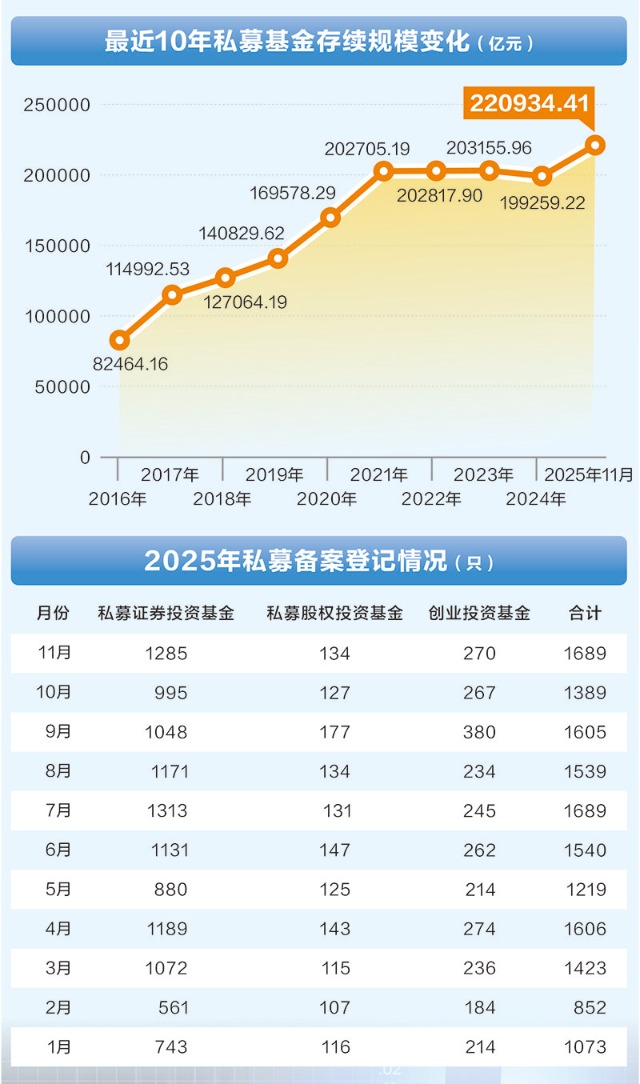
量化掘基系列之四十一:从智选到量化:细分Beta指增策略的矩阵搭建
SINOLINK SECURITIES· 2025-12-25 13:14
- The quantitative index enhancement market has seen rapid growth, expanding from 95.85 billion yuan in 2020 to over 250 billion yuan by 2025[2][14] - The market is characterized by a concentration of top products and an increase in average scale, with leading products continuously breaking new ground[2] - Regulatory policies starting in 2024 have compressed the alpha space for high-frequency T0 strategies, pushing managers to shift from high-frequency trading to mid-to-low-frequency fundamental factor exploration[2] - The average turnover rate of products has generally decreased since 2025, and the quality of index constituent stocks has improved, transforming quantitative index enhancement from a short-term trading tool to a product with long-term asset allocation value[2] - Yongying Fund Management Co., Ltd. is a joint venture fund company established by Ningbo Bank and OCBC Bank, with a management scale exceeding 620 billion yuan as of Q3 2025[3] - Yongying's quantitative index enhancement product system is divided into three categories: regular broad-based index enhancement, special benchmark index enhancement, and quantitative theme index enhancement[3] - The system relies on three core capabilities: full-process application of machine learning, multi-strategy integration, and strict risk control, ensuring stable excess returns and risk control in different market environments[3] - Yongying SSE STAR 100 Index Enhancement A (021278) is an enhanced index product with a stock position maintained above 90% since its inception, showing higher volatility and drawdown compared to similar products but better return performance[4] - Yongying CSI A50 Index Enhancement A (022204) is another enhanced index product with lower volatility and drawdown levels compared to similar products, and better return performance, reflecting good risk-adjusted returns[5]
微盘指数创新高,量化指增的超额修复了吗?
私募排排网· 2025-11-23 03:05
Core Viewpoint - The article highlights the resurgence of small-cap stocks and micro-cap indices, driven by increased liquidity, favorable policies, and a shift in market focus towards high-value assets, particularly in sectors like AI and advanced manufacturing [2][12]. Group 1: Market Performance - In the past month, small-cap and micro-cap indices, such as the CSI 2000 and Wind Micro-Cap Index, have shown strong upward trends, becoming a prominent style direction in the market [2]. - The trading structure of the market is changing, with increased turnover rates and transaction proportions for micro-cap and small-cap stocks, indicating a shift of funds towards high-value assets [2]. Group 2: Quantitative Strategy Performance - Quantitative index-enhanced funds have shown significant recovery, with the CSI 1000 Index Enhanced Strategy Index rising by 6.56% and the CSI 500 Index Enhanced Strategy Index increasing by 6.3% in the past month [6]. - The effectiveness of quantitative stock selection factors has improved, with a notable recovery in excess returns as market conditions favor the return of style and fundamental factors [6][7]. Group 3: Characteristics of Recovery - The recovery in excess returns is broad-based, benefiting from the easing of previous constraints such as style reversals and liquidity segmentation [7]. - The sustainability of excess recovery has strengthened, with increased trading activity and volatility allowing for better differentiation among stocks [7]. - Leading institutions have demonstrated renewed flexibility in excess return capabilities, enhancing their models and risk control structures [7]. Group 4: Investment Insights - Investors are advised to seize opportunities presented by the strengthening small-cap style, particularly in micro-cap indices reaching new highs [12]. - Emphasis should be placed on the capabilities of models rather than short-term rankings, focusing on teams with rapid model iteration and mature risk control [12]. - Caution is recommended against products with high crowding, large scale, or rapid position changes, as the essence of index-enhanced strategies is to pursue low volatility and stable excess returns [12].

牛气十足!理财加大“含权”产品布局 大额存单也不“香”了
2 1 Shi Ji Jing Ji Bao Dao· 2025-08-27 05:04
Group 1 - The A-share market is experiencing significant inflow of funds, with 1.9636 million new accounts opened in July 2025, representing a year-on-year increase of 70.54% and a month-on-month increase of 19.27% [1] - The popularity of "equity-linked" financial products is rising, with at least 20 new such products launched since August, driven by the market's strong performance and the evident profit-making effect [1][3] - The average annualized return for mixed and equity financial products increased by 0.51 percentage points and 7.19 percentage points respectively in July compared to June, reaching 3.64% and 9.9% [3] Group 2 - Banks are actively promoting equity-linked products to capture the current market momentum, with strategies focusing on quantitative approaches to enhance returns [2] - The current low interest rates on bank deposits, around 1%, are prompting investors to shift their funds from traditional savings to higher-yielding equity markets [4] - A significant number of financial products are being terminated early due to market conditions, with 85 products having triggered early termination conditions since August [6] Group 3 - The trend of "money moving" from bank deposits to equity markets is expected to continue, driven by improved investor confidence and favorable macroeconomic policies [6] - The shift in investment preferences indicates a growing appetite for higher-risk, equity-linked products as traditional fixed-income products lose their appeal [5][6] - The market outlook remains optimistic, with expectations of sustained positive returns in the equity market underpinned by regulatory support and improved risk management practices [2][4]
理财权益布局分化:民生加码量化增强,华夏深耕公募REITs
2 1 Shi Ji Jing Ji Bao Dao· 2025-08-25 09:48
Product Performance - The average net value growth rate of equity public funds in the past six months is 11.76%, with all products achieving positive returns [3] - Among the products, Huaxia's five industry index theme products ranked in the top ten, with the "Micro-Plate Growth Style" product achieving the highest growth rate of 28.84%, followed by Xinyin's "Baibao Elephant Stock Selection Weekly Open 1" at 25.48% [3] - The lowest performing products include ICBC's "Quantitative Wealth Management - Hengsheng Allocation" at 1.39%, Huaxia's "Tiangong Daily Open Wealth Management Product No. 2" at 2.71%, and Bank of China’s "Huifu Equity Dividend Strategy 180-Day Holding Period A" at 3.47% [3] Product Dynamics - Recently, the equity public fund market has seen expansion, with Minsheng Wealth Management's "Jinzhu Quantitative Enhanced Half-Year Holding Period No. 1" starting fundraising on August 19 and Huaxia's "Tiangong Daily Open No. 12" on August 22, both ending on August 25 [4] - Minsheng's product utilizes a quantitative strategy based on the CSI 500 index, aiming to exceed benchmark returns while controlling tracking errors [4] - The outlook for the market remains optimistic, with expectations of sustained positive beta contributions and active market trading under supportive policies [4] REITs Market Overview - Huaxia's new product "Tiangong Daily Open No. 12" tracks the "Zhongcheng-Huaxia Wealth Management Public REITs Selected Index," which selects at least 20 REITs based on various criteria [5] - The index primarily includes REITs in park infrastructure (33.98%), affordable rental housing (14.76%), and energy infrastructure (11.90%) [5] - Since the beginning of 2025, 14 public REITs have been issued, totaling over 25 billion, with 23 additional funds awaiting listing [5] Market Trends - The public REITs market has shown volatility this year, with a notable decline since August, where the CSI REITs total return index has increased by 9.9% year-to-date but has dropped by 3.95% since August [6] - Despite the short-term market pullback, public REITs are considered to have certain allocation value due to their high dividends and moderate risk [6] - Currently, only seven public REITs theme products have been issued by wealth management companies, indicating a relatively low number and scale in this segment [6]
市场风格快速切换 私募量化指增策略操作难度增加
Zhong Guo Zheng Quan Bao· 2025-08-08 07:15
Core Insights - The A-share market experienced significant structural trends in the first half of 2025, driven by macroeconomic fluctuations and a rebound in market sentiment [1] - Quantitative private equity strategies showed strong overall performance, with a notable internal divergence among different funds [2][3] - The average return of large quantitative private equity funds reached 13.72%, with all achieving positive returns [2] - The performance gap among popular private equity products exceeded 20 percentage points, indicating a competitive landscape characterized by "strong head, weak tail" dynamics [2][3] Performance Metrics - The average excess return for the CSI 500 quantitative enhancement strategy was approximately 11%, while the CSI 1000 strategy achieved 14% [2] - The average return for quantitative neutral strategies was around 5% [2] - The top-performing quantitative private equity products in the CSI 500 strategy had a return of 27.97%, with a performance gap of 20.33% among the top and bottom funds [2][3] Market Dynamics - The market structure was described as a "dumbbell" shape, with strong performances in both large-cap bank stocks and small-cap indices, while the mid-range stocks underperformed [4] - The small-cap sector is becoming a fertile ground for excess returns, with strategies focusing on small-cap stocks showing significant potential [5] - The loosening of merger and acquisition policies has led to an increase in major asset restructuring events, boosting market confidence and liquidity [5] Fundraising Trends - The number of newly registered private equity funds significantly increased in the first half of 2025, with quantitative strategies dominating the fundraising landscape [6] - The overall scale of the quantitative strategy industry is expected to grow by approximately 20% to 30% compared to the same period last year [6] - Notable fundraising success was observed among both leading and mid-tier managers, with innovative strategy products contributing to this growth [6] Future Outlook - The mainstream quantitative private equity firms maintain an optimistic outlook for the A-share market in the second half of the year, anticipating a volatile upward trend [7] - Key sectors expected to provide structural return opportunities include innovative pharmaceuticals, consumer electronics, robotics, military, computing, and photovoltaics [7] - The current proportion of quantitative strategies in A-share trading is about 30%, indicating a reasonable range for enhancing market pricing efficiency, but caution is advised regarding the risks of strategy homogeneity [8]
7月份私募证券基金备案量创年内单月新高 百亿元级量化机构领跑
Zheng Quan Ri Bao· 2025-08-05 15:42
Group 1 - In July, the A-share market experienced a significant recovery, leading to a surge in private fund registrations, with 1,298 funds registered, marking an 18% month-on-month increase and setting a new record since 2025 [1] - The increase in private fund registrations is attributed to three main factors: the strong performance of the A-share market boosting investor confidence, the excellent performance of quantitative strategy products attracting substantial capital inflow, and the improved supply from leading institutions enhancing overall competitiveness in the private fund industry [1] - Equity strategy funds dominated the registration landscape, accounting for nearly 70% of total registrations, with 887 equity strategy funds registered, reflecting a 24.58% month-on-month growth [1] Group 2 - The multi-asset strategy is gaining traction, with 162 funds registered in July, representing 12.48% of total registrations and a 5.88% month-on-month increase, indicating a growing demand for diversified investment [2] - The futures and derivatives strategy also showed steady growth, with 125 funds registered, accounting for 9.63% of total registrations, reflecting a slight 1.63% month-on-month increase [2] - The number of registrations for bond and combination fund strategies remained relatively low, suggesting an increase in investor risk appetite amid the market recovery [2] Group 3 - The leading private fund institutions in terms of registration volume are those with assets exceeding 100 billion, with 48 such institutions registering a total of 198 funds in July [2] - Among the 676 private institutions that completed registrations, 12 out of 13 institutions with at least 10 registered funds were 100 billion-level private institutions, highlighting their dominance in the market [2] - Quantitative private fund institutions, such as Inno (Shanghai) Asset Management Co., Ltd., registered 7 funds in July, emphasizing the importance of adaptability and risk control in a complex market environment [3]
2025年基金二季报划重点!泓德基金李子昂:以多模型多策略力争更稳定的超额
Xin Lang Ji Jin· 2025-07-29 03:44
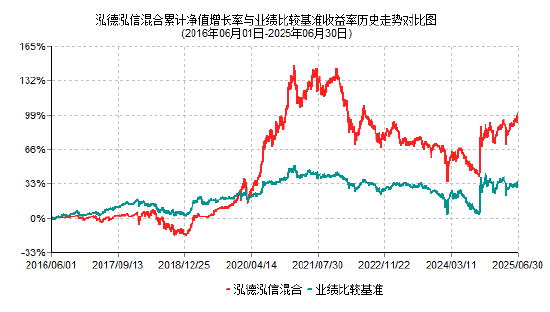
Group 1 - The core viewpoint of the article highlights the strong performance of the Hongde Hongxin Mixed Fund, which achieved a net value growth rate of 6.58% in Q2 2025, significantly outperforming the benchmark return of 1.06% during the same period [1] - Since its establishment on June 1, 2016, the fund has accumulated a net value growth rate of 101.19%, compared to a benchmark return of 35.61% [1] Group 2 - In Q2 of this year, market styles shifted again, with major indices quickly recovering from declines, driven by a strong performance in large-cap value stocks, while sectors like innovative pharmaceuticals, new consumption, and micro-cap stocks saw significant gains [3] - The fund manager, Li Ziang, noted that despite the impact of "reciprocal tariffs" on exports and a cooling real estate market, government subsidies have significantly boosted consumption, and a robust manufacturing system remains the foundation for economic stability [3] - There are ongoing discussions about the crowded nature of small-cap stocks and the potential for a significant style shift in the future, influenced by geopolitical uncertainties and tariff negotiations by the Trump administration [3] - The company has implemented effective constraints on its risk model to reduce style exposure while iterating the model to adapt to market style changes, resulting in a robust performance of its AI quantitative strategy in Q2 [3]
主动量化研究系列:2025H1:从市值到超额收益
ZHESHANG SECURITIES· 2025-07-18 10:56
Quantitative Models and Construction Methods - **Model Name**: Index Enhancement Strategy (80% Component Constraint) **Model Construction Idea**: The model aims to replicate the performance of typical index enhancement products by adjusting the distribution of components across different market capitalization domains[4][33][34] **Model Construction Process**: 1. The model constrains the component weight to 80% while adjusting the allocation in micro-cap stocks. 2. Specific constraints include: - Industry exposure: 0.1% - Weight cap for CSI 2000 components: 0.2% - Weight cap for micro-cap stocks: 0.1% - Monthly rebalancing frequency 3. Performance metrics such as excess return, tracking error, IR, and maximum drawdown are calculated for different micro-cap allocations (0%, 5%, 10%)[34][35] **Model Evaluation**: The model demonstrates that higher micro-cap allocations can enhance excess returns, albeit with slightly increased tracking error and drawdown[35] - **Model Name**: Index Enhancement Strategy (Relaxed Component Constraint) **Model Construction Idea**: This model explores the impact of relaxing the component weight constraint to 40% while varying micro-cap allocations and market capitalization exposures[33][39] **Model Construction Process**: 1. The component weight constraint is relaxed to 40%, and micro-cap allocations are adjusted (0%, 10%, 20%). 2. Additional constraints include: - Industry exposure: 0.1% - Weight cap for CSI 2000 components: 0.2% - Weight cap for micro-cap stocks: 0.1% - Monthly rebalancing frequency 3. Performance metrics such as excess return, tracking error, IR, and maximum drawdown are calculated for different scenarios[39][40] **Model Evaluation**: Relaxing the component constraint significantly improves excess returns, especially with higher micro-cap allocations, though it introduces higher tracking error and drawdown risks[40] Model Backtesting Results - **Index Enhancement Strategy (80% Component Constraint)**: - CSI 300 (0% micro-cap): Excess Return: 7.97%, Tracking Error: 3.34%, IR: 5.38, Max Drawdown: -1.16% - CSI 300 (5% micro-cap): Excess Return: 8.52%, Tracking Error: 3.45%, IR: 5.58, Max Drawdown: -1.19% - CSI 300 (10% micro-cap): Excess Return: 8.70%, Tracking Error: 3.57%, IR: 5.51, Max Drawdown: -1.33% - CSI 500 (0% micro-cap): Excess Return: 7.55%, Tracking Error: 3.87%, IR: 4.38, Max Drawdown: -1.52% - CSI 500 (5% micro-cap): Excess Return: 8.23%, Tracking Error: 3.88%, IR: 4.78, Max Drawdown: -1.38% - CSI 500 (10% micro-cap): Excess Return: 9.20%, Tracking Error: 3.98%, IR: 5.24, Max Drawdown: -1.39% - CSI 1000 (0% micro-cap): Excess Return: 10.12%, Tracking Error: 4.28%, IR: 5.40, Max Drawdown: -1.50% - CSI 1000 (5% micro-cap): Excess Return: 9.76%, Tracking Error: 4.31%, IR: 5.16, Max Drawdown: -1.69% - CSI 1000 (10% micro-cap): Excess Return: 9.76%, Tracking Error: 4.31%, IR: 5.16, Max Drawdown: -1.69%[35] - **Index Enhancement Strategy (Relaxed Component Constraint)**: - CSI 300 (0% micro-cap): Excess Return: 10.87%, Tracking Error: 4.35%, IR: 5.73, Max Drawdown: -1.29% - CSI 300 (10% micro-cap): Excess Return: 13.96%, Tracking Error: 7.01%, IR: 4.64, Max Drawdown: -3.02% - CSI 500 (0% micro-cap): Excess Return: 10.25%, Tracking Error: 6.65%, IR: 3.52, Max Drawdown: -2.19% - CSI 500 (20% micro-cap): Excess Return: 17.08%, Tracking Error: 7.98%, IR: 5.07, Max Drawdown: -2.43% - CSI 1000 (0% micro-cap): Excess Return: 10.84%, Tracking Error: 6.24%, IR: 3.98, Max Drawdown: -1.54% - CSI 1000 (20% micro-cap): Excess Return: 16.81%, Tracking Error: 7.38%, IR: 5.38, Max Drawdown: -2.04%[40] Quantitative Factors and Construction Methods - **Factor Name**: Market Capitalization (Size) **Factor Construction Idea**: Market capitalization is used as a linear factor to segment stocks into deciles, with smaller-cap stocks expected to deliver higher excess returns[19][22] **Factor Construction Process**: 1. Divide the market into 10 deciles based on market capitalization. 2. Calculate the excess return for each decile. 3. Analyze the trend of excess returns across deciles[22] **Factor Evaluation**: The smallest decile (G01) delivers the highest excess return (22.4%), while returns decrease progressively with increasing market capitalization[22] - **Factor Name**: Mid-Cap (Nonlinear Size) **Factor Construction Idea**: Mid-cap is modeled as a cubic function to capture the performance of stocks outside the large-cap and small-cap domains[2][25] **Factor Construction Process**: 1. Define mid-cap stocks using a cubic function of market capitalization. 2. Analyze the overlap between mid-cap and market capitalization groups. 3. Evaluate the excess return of mid-cap groups[25][26] **Factor Evaluation**: Mid-cap stocks exhibit significant overlap with small-cap stocks, and the smallest mid-cap group (G01) delivers high excess returns (21.6%)[22][25] Factor Backtesting Results - **Market Capitalization (Size)**: - G01: 22.4%, G02: 15.0%, G03: 22.6%, G04: 20.4%, G05: 13.6%, G06: 13.2%, G07: 10.9%, G08: 6.9%, G09: 3.9%, G10: -5.6%[22] - **Mid-Cap (Nonlinear Size)**: - G01: 21.6%, G02: 13.7%, G03: -0.5%, G04: 0.0%, G05: 1.5%, G06: 0.8%, G07: 0.5%, G08: -2.1%, G09: -0.2%, G10: -2.7%[22]