量化私募

Search documents
资管一线 | 头部量化私募“押注”AI,谁将定义行业新规则?
Zhong Guo Jin Rong Xin Xi Wang· 2026-02-14 08:32
Core Insights - The article highlights the increasing integration of AI technology within quantitative private equity firms, marking a significant shift in the industry towards a technology-driven competitive landscape [1][6]. Group 1: AI Developments in Quantitative Private Equity - The launch of the Apollo AI multi-agent system by Joy Investment aims to transform AI from a mere "auxiliary tool" to a "practical partner" within enterprises, focusing on task delivery, organizational collaboration, and governance [2][3]. - Joy Investment's Apollo AI system is designed to overcome the fragmentation of traditional AI tools, enabling stable integration of AI across various roles and business processes, thus creating a closed loop from problem identification to product realization [2][4]. Group 2: Industry Trends and Competitive Landscape - The convergence of quantitative investment and AI is seen as a natural fit due to the data-driven nature of quantitative strategies, which require high levels of automation in data processing, strategy backtesting, and risk analysis [3][6]. - Leading quantitative private equity firms, such as Huanfang Quantitative and Jiukun Investment, are also making significant strides in AI, with initiatives like open-source models and dedicated research platforms to enhance their technological capabilities [4][5]. Group 3: Talent and Resource Allocation - Ming Stone Fund emphasizes the importance of talent acquisition and technological implementation, actively recruiting AI scientists to drive innovation and application of AI in finance [5]. - The establishment of powerful computational infrastructure, such as the Supercomputing "Constellation Plan," is being pursued by Ming Stone Fund to support its AI initiatives [5]. Group 4: Future Outlook - The ongoing evolution of AI technology and increased investment from quantitative private equity firms are expected to yield new AI innovations, further embedding AI in the financial sector [7]. - The transformation of quantitative private equity firms into "AI-native technology companies" is anticipated, enhancing their capabilities in quantitative research while also contributing to the broader digital transformation of the financial industry [7].
基本面量化崛起,喜岳投资引领量化私募 “质效升级”
Cai Fu Zai Xian· 2026-02-03 07:48
Industry Overview - The Chinese quantitative investment industry has entered a "differentiation era after reaching a trillion scale," with the management scale of quantitative private equity expected to exceed 1 trillion yuan by 2025, accounting for 5% of the A-share professional institutional capital scale and maintaining a trading volume share of 20% [1] - The industry is undergoing profound structural changes, with an increasing Matthew effect where leading institutions continue to gain a larger share of management scale, accelerating the survival of the fittest and leading to the exit of less competitive firms [1] - There is a consensus that the market is shifting from a "scale competition" to a "quality competition," driven by the increasing proportion of long-term funds such as insurance and pension funds, which reshape the industry ecology with a focus on return stability and strategy explainability [1] Company Focus - Xiyue Investment has focused on fundamental quantitative strategies since its establishment in 2014, emphasizing long-term intrinsic value realization rather than short-term volatility [2] - The firm’s founder, Dr. Zhou Xin, has over ten years of experience in top international quantitative institutions, leading the team to adopt a seemingly "slow" but more solid path in fundamental quantitative investment [2] Competitive Advantage - Xiyue Investment integrates deep academic research with rich market experience, forming a unique competitive edge by connecting academia with investment practice [3] - The core team consists of highly educated professionals, with all five founders holding PhDs or teaching at top universities, ensuring a strong theoretical foundation for strategy development [3] - The firm employs a combination of deductive and inductive research logic, focusing on establishing long-term investment logic through in-depth research before developing strategy frameworks [3] Ecosystem Development - Xiyue Investment has sponsored the China International Conference on Finance (CICF) for ten consecutive years and established the "Xiyue Best Paper Award" to support academic research and maintain interaction with financial academia [4] - The firm has built a comprehensive compliance and risk management system, obtaining necessary licenses and registrations to align its operations with international standards [4] Long-term Strategy - The increasing role of long-term capital in the market has raised demands for strategy stability, transparency, and long-term performance from managers, aligning well with Xiyue Investment's fundamental quantitative strategy [5] - The firm’s client base includes domestic insurance asset management, bank wealth management subsidiaries, and international institutions such as North American pension funds and sovereign wealth funds, which have stringent selection criteria [5] - Xiyue Investment aims to provide stable risk-adjusted returns to meet the asset allocation needs of its partners, continuously refining its research and risk management capabilities [5] Knowledge Sharing and Sustainability - The firm shares its investment philosophy and practices through various channels, including the "Quantitative Zhou Dong" video series, and is a signatory of the United Nations Principles for Responsible Investment (UNPRI), incorporating sustainability considerations into its investment process [6] Conclusion - The continuous development of the quantitative investment industry requires participants to solidify their foundations and clarify their long-term positioning, as demonstrated by Xiyue Investment's focus on fundamental quantitative research and its integration of academic rigor with practical experience [7] - Looking ahead, the firm is poised to explore new opportunities and challenges in the evolving market and AI technology landscape, maintaining its commitment to long-term value and industry responsibility [7]
量化私募超额收益受追捧,逾七千亿元资金涌入量化,2025年全市场规模或超2万亿元
Hua Xia Shi Bao· 2026-01-29 11:52
Core Viewpoint - The domestic quantitative trading market in China is expected to reach a historical high of over 2 trillion yuan by 2025, despite regulatory constraints on frequency [2][3]. Group 1: Market Size and Growth - The domestic quantitative private equity management scale is projected to exceed 1.5 trillion yuan in 2025, with public funds managing over 400 billion yuan in quantitative assets, leading to a total market size surpassing 2 trillion yuan [2]. - Compared to the same period in 2024, the total scale of quantitative management is conservatively estimated to increase by 700 billion yuan, driven by significant returns of at least 50% for existing clients [2][3]. - By the end of Q3 2025, the public quantitative scale is expected to exceed 400 billion yuan, and the private quantitative management scale is around 1.49 trillion yuan, indicating a robust growth trajectory [3]. Group 2: Industry Trends and Strategies - The rapid growth of quantitative private equity is attributed to increased market efficiency, demand for stable returns, and the performance of quantitative strategies in volatile markets [3][4]. - Industry players are implementing measures to control scale, such as limiting fundraising and increasing investment thresholds, to balance strategy effectiveness and growth [4][5]. - The industry is anticipated to transition from "scale expansion" to "scale management" in 2026, focusing on strategy diversification to achieve sustainable excess returns [5]. Group 3: Performance and Returns - In 2025, the average return of nearly a thousand index-enhanced strategy products reached 45.08%, with an average excess return of 16.75%, showcasing strong alpha generation capabilities [6]. - The performance of small-cap index-enhanced products, particularly the CSI 1000 index, was notably strong, with average returns of 49.78% and a high percentage of positive excess return products [6][7]. - The high turnover rate and daily trading volume in the A-share market in 2025 are favorable for the performance of quantitative strategies [6]. Group 4: Investor Behavior and Risk Management - Despite proactive scale control by institutions, there is concern over investors' aggressive capital allocation due to high returns from quantitative strategies [6][8]. - Investment professionals emphasize the importance of guiding clients to understand the relationship between returns and risks, advocating for a long-term investment perspective [8]. - Recommendations include implementing mechanisms to reduce short-term redemption impacts and focusing on risk control to avoid excessive pursuit of short-term performance [8].


AI为热门选项,策略多元化成主流!鸣石、蒙玺、世纪前沿等12家量化私募2026年观点研判
私募排排网· 2026-01-21 04:00
Core Insights - The year 2025 is characterized as a significant year for quantitative private equity, with a favorable market environment for quantitative trading, providing ample Alpha space due to active trading and increased volatility [2] - The release of the DeepSeek-R1 model has sparked a competitive race in the "AI + Quant" sector, leading top quantitative private equity firms to engage in an arms race for AI models and talent [2] Group 1: Industry Trends in 2025 - The quantitative private equity industry is entering a high-quality, ecological competition phase, with improved excess returns and a steady growth in scale, benefiting from a more liquid market [6][8] - Key trends identified include "long-term victory," "scale leap," and "strategy iteration," with firms focusing on enhancing strategy adaptability and diversifying sources of returns to strengthen Alpha acquisition capabilities [8][9] - The industry is shifting from a focus on scale to ecological competition, emphasizing the importance of a comprehensive system that integrates research, production, risk control, and operations [9][10] Group 2: Performance and Strategy Capacity - Many firms have reported significant growth in management scale, with some exceeding 100 billion yuan, while emphasizing that their strategy capacity has not yet reached its limit [17][19] - The management scale of firms like 半鞅 has increased from 10-20 billion to 50-100 billion, indicating a positive feedback loop between scale growth and performance [20] - Firms are focusing on maintaining a balance between scale expansion and performance, with a strong emphasis on risk management and strategy adaptability [21][22] Group 3: AI Integration in Quantitative Investment - The application of AI in quantitative investment is becoming increasingly prevalent, with firms integrating AI across various stages of the investment process, from data cleaning to strategy execution [25][26] - Companies like 鸣石基金 have embedded AI deeply into their research processes, enhancing their ability to process large datasets and optimize strategies [26][27] - The focus is on using AI as a tool to enhance existing frameworks rather than replacing traditional investment logic, with an emphasis on human-machine collaboration [29][30] Group 4: Challenges Ahead for 2026 - The primary challenges facing the quantitative private equity industry in 2026 include strategy homogenization and the sustainability of excess returns, as market efficiency increases and strategies become more similar [34][35] - Firms are advised to diversify their strategies and invest in technology and talent to maintain competitive advantages, while also focusing on risk management and investor relations [35][36] - The industry is expected to transition from rapid growth to a focus on high-quality development, with an emphasis on unique strategies and effective risk control [36][37] Group 5: Future Outlook for 2026 - The industry is anticipated to continue focusing on strategy iteration and AI empowerment, with a growing importance placed on strategy diversity and combination management as core competitive advantages [42][43] - Investors are encouraged to assess their risk tolerance and investment goals before allocating to quantitative products, emphasizing the importance of long-term performance and risk management [43][44] - The trend towards multi-strategy and multi-asset approaches is expected to gain traction, as firms seek to provide more tailored solutions to meet diverse investor needs [44][46]
超45%!2025量化指增策略全景解读出炉
Zhong Guo Zheng Quan Bao· 2026-01-20 13:36
Core Insights - The quantitative index enhancement strategies performed exceptionally well in 2025, with an average return of 45.08%, and nearly 90% of products achieving positive excess returns [1][2][3] Performance Overview - The average excess return for quantitative index enhancement products reached 16.75%, with small-cap index enhancement strategies leading the performance [2] - The CSI 1000 index enhancement products had an average return of 49.78% and an excess return of 17.49%, with 95.93% of products achieving positive excess returns [2] - Large-cap indices like CSI 300 had a lower average return of 31.22%, despite having the highest positive excess return ratio at 97.14% [2][3] Market Dynamics - The A-share market saw high turnover rates and average daily trading volumes, benefiting quantitative strategies [2] - The performance divergence reflects a structural change in market styles, with small-cap index enhancement products outperforming large-cap ones [3] Industry Trends - The industry experienced a significant increase in dividend distributions, with a total of 1,658 dividends amounting to over 17.3 billion yuan, a 236.59% increase from 2024 [5][6] - The trend of strategy innovation is evident, with new products like micro-index enhancements and technology-themed enhancements emerging [6][7] Future Outlook - For 2026, the industry anticipates continued structural opportunities in quantitative index enhancement strategies, although challenges such as strategy crowding and style switching are expected [8][9] - The head institutions are likely to dominate the market due to their technological, talent, and brand advantages, while smaller institutions may need to focus on differentiation [9][10]
梁文锋去年赚了50亿?一文速览跨界大佬的“爽文”人生!
私募排排网· 2026-01-16 10:16
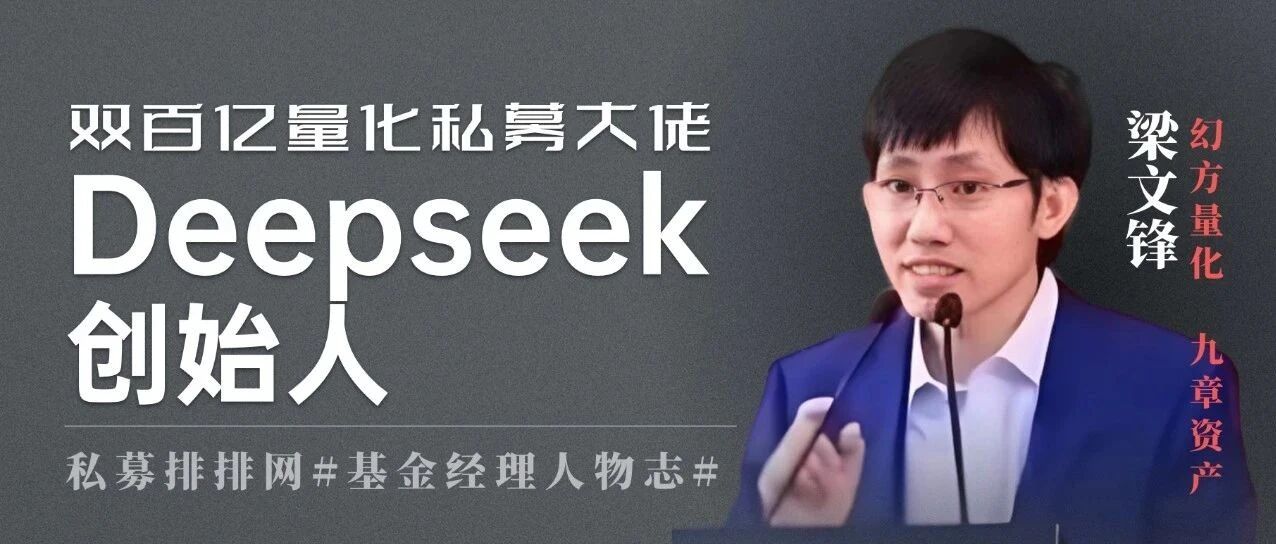
Core Viewpoint - The article highlights the achievements and innovations of Liang Wenfeng, a prominent figure in quantitative investment and AI, particularly through his company DeepSeek and its impact on the financial and tech industries [6][9][41]. Group 1: Liang Wenfeng's Background and Achievements - Liang Wenfeng, born in 1985, entered Zhejiang University at 17 and later pursued a master's degree in information and communication engineering, focusing on machine vision [11][13]. - He ventured into quantitative trading in 2008, establishing himself in a nascent field in China, and achieved significant success with his strategies, leading to the rapid growth of his investment firm [14][22]. - By 2025, Liang's wealth reached 184.6 billion yuan, placing him among the top ten on the "New Fortune 500 Rich List" [33]. Group 2: DeepSeek and AI Innovations - DeepSeek launched its reasoning model DeepSeek-R1 in January 2025, which gained significant attention for its performance and cost-effectiveness, surpassing major competitors [9][33]. - The company is recognized for its innovative AI models, including DeepSeek-V2, which initiated a price war in the AI model market due to its competitive pricing [27][30]. - DeepSeek's models have been pivotal in demonstrating China's capabilities in AI, challenging the perception that the country primarily follows Western innovations [44]. Group 3: Performance of Quantitative Funds - In 2025, Liang's firm, Ningbo Huansheng Quantitative, ranked second among the top ten quantitative private equity firms, with an average return of approximately ***% [6][33]. - The firm has successfully launched multiple products, all achieving historical highs by the end of 2025, showcasing its strong performance in the market [6][22]. Group 4: Strategic Investments in AI Infrastructure - Liang made significant investments in AI computing power, including a 200 million yuan investment in the "Firefly One" AI computing cluster, which was equipped with 1,100 GPU cards [24][25]. - In 2021, an additional 1 billion yuan was invested in "Firefly Two," which housed 10,000 A100 GPU cards, significantly enhancing the firm's computational capabilities [25]. Group 5: Philanthropic Efforts - Liang's firm has made substantial charitable contributions, including a notable donation of 221.38 million yuan to various causes in 2022, reflecting a commitment to social responsibility [30][32].
1.16犀牛财经早报:国内首只千亿级黄金ETF诞生
Xi Niu Cai Jing· 2026-01-16 01:40
Group 1 - The first domestic gold ETF in China has surpassed 100 billion yuan in scale, driven by rising gold prices and continuous investor buying, indicating significant asset allocation value in the current low-interest-rate environment [1] - Domestic power grid investment is expected to exceed 1 trillion yuan per year during the 14th Five-Year Plan, with a projected 40% increase in fixed asset investment by the State Grid Company compared to the previous plan [1] Group 2 - The space photovoltaic concept has gained significant attention in 2026, with multiple companies like JinkoSolar and Trina Solar actively disclosing their development plans, indicating a potential trillion-yuan market [2] - The low-altitude economy is viewed as a long-term endeavor, requiring patience and collaboration across the industry to achieve its full potential [2] Group 3 - China's commercial aerospace industry is growing at over 20% annually, with projections of reaching 7 to 10 trillion yuan by 2030, as various regions compete to establish their presence in this sector [3] - Nickel prices have surged nearly 30% in a month due to supply contraction expectations, with significant implications for the nickel market and its downstream industries [3] Group 4 - The automatic driving industry in China is advancing, with the first L3-level conditional autonomous driving models receiving approval for road testing in designated areas [5] - In 2026, traditional car manufacturers are targeting stable growth rates of 10% to 30%, while new entrants aim for aggressive growth rates of 34% to 67% [5] Group 5 - The electric vehicle sector is witnessing a reshuffle, with companies like Jidu Auto entering restructuring processes, reflecting the competitive landscape of the industry [6] - Star River Power has successfully launched 89 satellites into orbit, marking a significant achievement in the private aerospace sector [6] Group 6 - WuXi Biologics' major shareholder has agreed to sell 150 million shares at a price of 38.52 HKD per share, which will reduce their stake from approximately 12.12% to 8.49% [10] - Kuaishou has issued a total of 6 billion USD in senior notes, with proceeds intended for general corporate purposes [11] Group 7 - Cloud Intelligence plans to place 780,000 new H-shares at a price of 252 HKD per share, indicating ongoing capital-raising efforts [12] - E-Tech's IPO is set to face scrutiny from regulators, highlighting the challenges faced by companies in the automotive electronics sector [13] Group 8 - Luoyang Molybdenum expects a net profit increase of 48% to 54% for 2025, driven by rising product prices and effective cost management [14] - Lio's stock has been suspended for trading due to significant price fluctuations, reflecting the need for regulatory oversight in volatile markets [14] Group 9 - U.S. stock indices rebounded, with significant gains in technology and financial sectors, driven by strong earnings reports from major companies [16] - Commodity prices, including metals and oil, experienced declines after reaching record highs, indicating market volatility [16]
智谱CEO谈DeepSeek冲击;字节正研发新一代豆包AI耳机;携程回应涉嫌垄断被立案调查;传一加手机CEO刘作虎遭通缉...
Sou Hu Cai Jing· 2026-01-15 02:24
Group 1 - The Chinese government has extended the personal income tax refund policy for home purchases until December 31, 2027, which aims to stimulate the real estate market by allowing tax refunds based on the sale and purchase amounts of properties [3][3][3] - The U.S. State Department announced a suspension of visa processing for 75 countries, effective January 21, as part of a reevaluation of screening and review processes [3][3][3] - The U.S. has imposed a 25% tariff on certain imported semiconductors and related products, effective January 15, as part of its trade policy [4][4][4] Group 2 - OpenAI has signed a three-year agreement with Cerebras to procure up to 750 megawatts of computing power, with the total deal exceeding $10 billion, focusing on AI chip technology [7][8][8] - Skild AI has completed a $1.4 billion financing round, raising its valuation to over $14 billion, with participation from major investors including SoftBank and Nvidia [25][25] - Proxima, an AI biotechnology company, has secured $80 million in seed funding, led by DCVC, to advance its research and development efforts [26][26][26] Group 3 - The Chinese smartphone market is projected to see Huawei regain the top position by 2025, with an estimated total shipment of 285 million units, reflecting a slight decline of 0.6% year-on-year [22][22][22] - The private equity firm, Huanfang Quantitative, reported a 56.6% average return in 2025, with assets under management exceeding 70 billion yuan, making it one of the leading quantitative hedge funds in China [6][6][6] - Ctrip is under investigation for alleged monopolistic practices, with the company stating it will cooperate fully with regulatory authorities [13][13][13]

智谱CEO谈DeepSeek冲击;携程回应涉嫌垄断被立案调查
Sou Hu Cai Jing· 2026-01-15 01:17
Group 1 - The Chinese government has extended the personal income tax refund policy for residents purchasing new homes until December 31, 2027, which aims to support the housing market [2] - The policy allows for a full refund of paid personal income tax if the new home purchase amount is greater than or equal to the selling price of the current home [2] - If the new home purchase amount is less than the selling price, the refund will be proportional to the new purchase amount [2] Group 2 - OpenAI has signed a three-year agreement with Cerebras to procure up to 750 megawatts of computing power, with the total deal exceeding $10 billion [6][7] - Cerebras specializes in AI chips designed for inference tasks, integrating vast computing power and memory into a single chip [6] - This partnership may significantly increase Cerebras' valuation, with reports indicating a potential $22 billion valuation for a new funding round [7] Group 3 - Wang Xiaochuan stated that the future growth of medical AI will primarily occur outside of hospitals, emphasizing the technology's role in enhancing patient services rather than replacing doctors [8][9] - This perspective has sparked industry discussions on leveraging AI to improve patient experiences and healthcare quality [9] Group 4 - Ctrip is under investigation by the State Administration for Market Regulation for alleged monopolistic practices [11] - The company has stated it will cooperate with the investigation while continuing to operate its business normally [11] - In response to Ctrip's situation, a competitor, Zhaomi Technology, announced plans to launch a product aimed at countering Ctrip's market dominance [11] Group 5 - ByteDance is developing a new generation of AI headphones, which will be manufactured by GoerTek [5] - The company currently has no plans to launch the next generation of headphones publicly [5] Group 6 - Huawei is projected to reclaim the top position in the Chinese smartphone market by 2025, with a total shipment volume of approximately 285 million units, reflecting a year-on-year decline of 0.6% [22]




突发!美国白宫宣布对特定半导体等加征25%关税;大厂80亿资产遭侵吞?宝能董事长姚振华实名举报;梁文锋旗下幻方量化,去年收益率56.6%
雷峰网· 2026-01-15 00:35
Key Points - The U.S. White House announced a 25% tariff on certain imported semiconductors and related products starting January 15, 2026, following a previous statement by former President Trump regarding tariffs on chips and semiconductors [4][5] - Baoneng Group's chairman, Yao Zhenhua, accused local authorities of undervaluing assets of Qoros Auto, claiming a third-party evaluation valued the assets at approximately 8 billion yuan, while they were set to be auctioned at 1.5 billion yuan [7][8] - Ctrip Group is under investigation for alleged monopolistic practices by the State Administration for Market Regulation, with the company stating it will cooperate with the investigation [10] - RoboSense announced it expects to sell 303,000 units of its robotic lidar products in 2025, marking a 1141.8% year-on-year increase [13] - Liang Wenfeng's company, Huanfang Quantitative, achieved a 56.6% return in 2025, with assets exceeding 70 billion yuan [10][11] - Tesla will discontinue the one-time purchase option for its Full Self-Driving (FSD) software, transitioning to a subscription-only model starting February 14, 2026 [39][40] - The Chinese smartphone market saw Huawei leading in shipments with 46.7 million units, followed closely by Apple with 46.2 million units, while the overall market experienced a slight decline of 0.6% year-on-year [27][28] - Meta plans to double its production capacity for AI smart glasses to 20 million units by 2026, focusing on AI integration [46][47] - TSMC is reportedly planning to invest significantly in the U.S. by building at least five new semiconductor factories, despite facing high production costs compared to its Taiwan facilities [50]