银行战略转型

Search documents
冀光恒:平安银行战略转型成效渐显 经营态势稳中有进
财联社· 2025-08-26 10:55
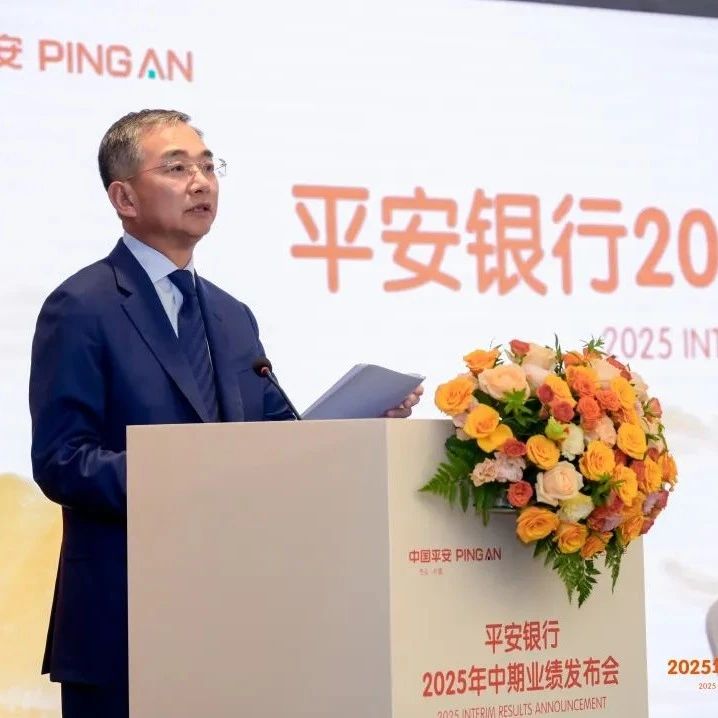
Core Viewpoint - Ping An Bank is committed to enhancing its operational quality and optimizing its business structure while addressing past challenges through strategic reforms, aiming for steady growth in performance and profitability [3][4]. Business Performance - In the first half of 2025, Ping An Bank achieved a revenue of 69.385 billion yuan and a net profit of 24.870 billion yuan, with a narrowing decline compared to the first quarter [4]. - The total assets increased by 1.8% year-on-year, with a focus on balancing "volume, price, and risk" [5]. - The non-performing loan generation rate decreased to 1.64%, down 16 basis points from the previous year, with a recovery of 18.6 billion yuan in non-performing assets, a 14% increase year-on-year [5]. Strategic Progress - The bank's strategic reforms are progressing as expected, with a focus on retail transformation, corporate support, and enhancing loan quality [6]. - Retail loans saw a significant improvement, with new loans for small and micro enterprises increasing by 33.6% year-on-year, and technology enterprise loans growing by 13.2% [6][7]. - Corporate loans increased by 4.7% year-on-year, with a significant reduction in funding costs, achieving an average interest rate of 1.67%, down 34 basis points from the previous year [8]. Operational Efficiency - The bank is focused on cost reduction and efficiency improvement, with a 9% year-on-year decrease in business and management expenses [9]. - The bank is leveraging its technological advantages to enhance digital transformation and AI integration [9]. Future Initiatives - Ping An Bank plans to enhance its service to the real economy, focusing on key areas such as technology innovation and green finance [10]. - The bank aims to deepen its strategic transformation, particularly in retail and corporate sectors, while maintaining a focus on risk management [11]. - The bank is committed to improving its profitability and operational performance, with a focus on high-demand economic regions [11].


林立增持民生银行1.99亿股!总持股逼近5%举牌线
券商中国· 2025-07-04 04:24
Core Viewpoint - Hong Kong Liyue Group has increased its stake in Minsheng Bank, becoming the fourth largest shareholder, with a total holding of 4.945% of the bank's shares, just shy of the 5% threshold for mandatory disclosure [2][4]. Shareholding Changes - Hong Kong Liyue purchased approximately 199 million H-shares of Minsheng Bank at an average price of about 2.624 HKD per share, totaling around 523 million HKD (approximately 477 million RMB), which represents 0.455% of the bank's total share capital [3]. - Following this purchase, Liyue Group's total holdings in Minsheng Bank reached 2.4% of H-shares and 4.945% of total shares, making it the fourth largest shareholder [4]. - New Hope Group has also increased its stake in Minsheng Bank to 5.27%, becoming the second largest shareholder [6]. Strategic Developments - Minsheng Bank has undergone significant changes in its shareholder structure, with some major shareholders exiting and new investors entering [6]. - The bank's management has indicated that several institutional investors and private enterprises have recently become shareholders, reflecting a shift in the bank's ownership landscape [6]. - The bank has been actively managing its non-performing assets, with a total of 3,446 billion RMB in non-performing assets disposed of from 2021 to 2024, achieving cash recoveries of 953 billion RMB [8]. Risk Management and Business Strategy - Minsheng Bank has adjusted its business structure to focus on sustainable and lower-risk operations, moving away from high-risk, high-yield businesses [8]. - The bank's first-quarter performance in 2024 exceeded expectations, attributed to the successful implementation of its strategic transformation [8].


林立增持民生银行1.99亿股总持股距5%举牌线仅一步之遥
Zheng Quan Shi Bao· 2025-07-03 18:49
Core Viewpoint - Minsheng Bank has seen significant changes in its shareholder structure, with Hong Kong Liyue Group increasing its stake, positioning itself as the fourth largest shareholder, just below the 5% threshold for mandatory disclosure [2][4]. Shareholder Changes - On June 30, Hong Kong Liyue Group purchased approximately 199 million H-shares of Minsheng Bank at an average price of about HKD 2.624 per share, totaling around HKD 523 million (approximately RMB 477 million), which represents 0.455% of the bank's total share capital [4]. - Following this acquisition, Liyue Group and its concerted parties now hold a total of 2.4% of Minsheng Bank's H-shares and 4.945% of the total share capital, making it the fourth largest shareholder [4]. - Liyue Group, a subsidiary of Shenzhen Liyue Group, was first listed among Minsheng Bank's major shareholders in September 2023, holding 3.15% of shares, and has since increased its stake to 4.49% by March 2024 [4]. Company Background - Liyue Group, founded in 1995 and controlled by Lin Li, the former richest person in Shenzhen, has diversified interests across various sectors, including new energy, chemicals, biomedicine, and comprehensive finance [5]. - The group also holds significant stakes in financial institutions, including a controlling interest in Huayin Securities and a 20% stake in WeBank, China's first internet bank [5]. Strategic Developments - Minsheng Bank's board has seen new appointments, including Lin Li as a non-executive director, pending regulatory approval [4]. - The bank has undergone a strategic transformation, focusing on reducing high-risk, unsustainable business lines and enhancing its core operations [8]. - As of the end of 2024, Minsheng Bank has disposed of non-performing assets totaling RMB 344.6 billion, with cash recoveries of RMB 95.3 billion, indicating a proactive approach to risk management [8].

增资潮起 中小银行密集“补血”
Jing Ji Guan Cha Wang· 2025-06-15 08:08
Core Viewpoint - Local small and medium-sized banks in China are accelerating capital replenishment actions in response to regulatory pressures and the need for financial stability [2][8] Group 1: Capital Replenishment Actions - Su Nong Bank plans to increase its registered capital from 1.803 billion to 2.019 billion yuan through the conversion of convertible bonds and capital reserves [2] - Luzhou Bank intends to issue up to 1 billion new H shares, with a shareholder meeting scheduled for the end of June [2] - Several banks, including Jilin Bank and Tianjin Rural Commercial Bank, are also in the process of capital replenishment through various means [2] Group 2: Challenges and Pressures - The banking sector is experiencing a prolonged low-interest-rate environment, leading to a narrowing net interest margin and increased pressure on revenue growth [3] - Rising default rates among corporate and individual clients due to real estate market issues and local government debt are further straining asset quality [3] - Regulatory bodies are imposing stricter requirements on risk management and internal controls for small and medium-sized banks, necessitating reforms and restructuring [3] Group 3: Strategic Considerations - Optimizing equity structure and enhancing market competitiveness are key considerations for capital increases, with potential benefits from introducing strategic investors [5] - Capital adequacy is crucial for banks to maintain trust and expand business operations in a competitive market [5] Group 4: Effects of Capital Increase - Capital increases will enhance capital adequacy ratios, allowing banks to meet regulatory requirements and expand credit offerings [6] - Higher capital levels improve risk resilience, providing a buffer against potential losses amid economic downturns [6] - Introducing strategic investors can lead to improved governance and operational efficiency [6] Group 5: Future Trends in Capital Replenishment - The trend of capital replenishment among local banks is expected to continue, driven by regulatory demands and the need for strategic development [8] - The banking sector is likely to seek diverse capital sources, including local state-owned enterprises and foreign investments, to optimize governance and enhance competitiveness [9] - As economic structures evolve, banks will need to invest in new business areas, necessitating further capital increases to support digital transformation and risk management improvements [9]

首次亮相资本市场!4000亿城商行新掌门人回答“未来之问”
券商中国· 2025-04-30 03:24
"银行业'低利率、低息差'情况持续存在,我行也步入了战略转型的关键周期。"厦门银行董事长洪枇杷在日前召 开的2024年度业绩说明会上表示。 "稳""进""立"的考量 "这段时间,我对厦门银行的历史和现状有了更深入的了解,也在不断思考如何走好我们的'未来之路'。"洪枇杷开篇 表示。 他认为,如何挖掘、实现和展示厦门银行的内在价值,是"新课题"。对此,既要保持战略定力,也要确保战略与时 俱进、顺势微调。 在该行正在构建的"2+3"五年发展战略规划中,洪枇杷将主题锁定为"稳""进""立",这既是自身发展需要,更是对中 央经济工作会议精神的贯彻落实。其中: "稳"是根本,是全局。要巩固"稳"的基础,做到站位更稳、效益更稳、风控更稳,让各方对厦门银行更放心、更有 信心。 "下阶段,我们将围绕'稳规模'和'优结构',资负两端发力做好息差管控,推动净息差指标止跌企稳,变动趋势优于 大市。"洪枇杷称。 这是"70后"洪枇杷年初履新后首次亮相资本市场。此前他长期供职于兴业银行,从支行普通员工做起,先后掌舵多 家省内分行,对福建区域情况熟稔于心。 在他看来,形势越是多变,越需要战略引领,以战略的确定性应对外部的不确定性。 据透露 ...
行长“闪辞”后迎人事新动向,港股最“迷你”银行如何打破增速放缓困局
Bei Jing Shang Bao· 2025-04-22 15:09
Core Viewpoint - The recent personnel changes and disappointing financial performance of Yibin Bank highlight the challenges it faces in achieving strategic transformation and overcoming development bottlenecks, particularly in light of its close ties to the liquor industry and rising credit risks [1][6][10]. Personnel Changes - Yibin Bank is undergoing significant personnel changes, with Jiang Lin, a member of the board of directors and deputy secretary of the party committee, being proposed for a key position in a municipal enterprise [3][5]. - The sudden resignation of Yang Xingwang, the bank's long-serving president, due to health reasons, has raised concerns about the bank's leadership stability [4][5]. Financial Performance - Yibin Bank's financial results for 2024 show stagnation, with revenue and net profit growth nearly flat, indicating a significant slowdown compared to previous years [6][7]. - As of the end of 2024, the bank's total assets reached 109.205 billion yuan, a year-on-year increase of 16.9%, but the growth in revenue and net profit was only 0.5% and 0.1%, respectively [7][8]. Business Structure and Risks - The bank's reliance on low-yield businesses, particularly in the ticket discounting sector, has negatively impacted overall revenue, with a significant increase in the average balance of low-yield ticket discounting [8][9]. - The bank's asset quality is under pressure, with rising non-performing loan rates in key sectors such as manufacturing and wholesale/retail, indicating potential credit risks [9][10]. Historical Context and Challenges - Yibin Bank's current challenges are compounded by historical issues related to its previous major shareholder, the "Contemporary System," which has left lingering impacts on the bank's operations and financial health [10][11]. - The bank's dependency on the liquor industry, particularly its major client Wuliangye, raises concerns about its ability to diversify and manage risks effectively [9][12]. Strategic Recommendations - To improve its performance, Yibin Bank should consider diversifying its business model, reducing reliance on a single industry, and enhancing its risk management capabilities [12][13]. - Emphasizing technological advancements and expanding into high-yield sectors could help the bank stabilize and grow its earnings [12].