
价值银行

Search documents
招商银行行长王良:“价值银行”既是理念也是方法 坚守商业银行经营逻辑
Xin Lang Cai Jing· 2026-03-30 04:20
Core Viewpoint - The core viewpoint of the article is the implementation of the "Value Bank" strategy by China Merchants Bank, which aims to create comprehensive value for stakeholders, including shareholders, customers, employees, partners, and society, promoting a win-win situation for all involved [1][2]. Group 1: Value Bank Strategy - The "Value Bank" strategy is defined as a concept and methodology focused on creating value while avoiding blind expansion, emphasizing rationality in business operations and adherence to the logical principles of commercial banking [1][2]. - The strategy aims to enhance value creation principles, ensuring that the bank's operations are sustainable and healthy by following a value creation chain that includes incremental growth, revenue increase, efficiency improvement, and value enhancement [2]. Group 2: Business Operations - The bank's approach to serving customers is based on a value creation chain that helps in assessing customers and business operations, thereby preventing distortions in operational behavior and maintaining the integrity of commercial banking logic [2].

招商银行(600036.SH):2025年归母净利润1501.81亿元,同比增长1.21%
Ge Long Hui· 2026-03-29 23:26
Core Viewpoint - The company aims to develop a "value bank" strategy, focusing on quality, efficiency, and coordinated growth in scale, while maintaining stable asset quality and steady operational performance. Financial Performance - The company reported operating income of 337.53 billion yuan, a slight increase of 0.01% year-on-year [1] - Net interest income reached 215.59 billion yuan, up by 2.04% year-on-year [1] - Non-interest income was 121.94 billion yuan, showing a decline of 3.38% year-on-year [1] - Net profit attributable to shareholders was 150.18 billion yuan, reflecting a growth of 1.21% year-on-year [1] - Return on average total assets (ROAA) was 1.19%, down by 0.09 percentage points year-on-year [1] - Return on average equity (ROAE) was 13.44%, decreasing by 1.05 percentage points year-on-year [1] Asset and Liability Growth - Total assets amounted to 13,070.52 billion yuan, an increase of 7.56% from the previous year [1] - Total loans and advances reached 7,258.06 billion yuan, growing by 5.37% year-on-year [1] - Total liabilities were 11,789.62 billion yuan, up by 7.98% year-on-year [1] - Customer deposits totaled 9,836.13 billion yuan, increasing by 8.13% year-on-year [1] Asset Quality - The balance of non-performing loans was 68.21 billion yuan, an increase of 2.60 billion yuan from the previous year [2] - The non-performing loan ratio stood at 0.94%, a slight decrease of 0.01 percentage points year-on-year [2] - The provision coverage ratio was 391.79%, down by 20.19 percentage points year-on-year [2] - The loan provision ratio was 3.68%, decreasing by 0.24 percentage points year-on-year [2]
中信银行(00998) - 中信银行股份有限公司2025年年度报告
2026-03-20 11:40
香港交易及結算所有限公司及香港聯合交易所有限公司對本公告的內容概不負責,對其準確 性或完整性亦不發表任何聲明,並明確表示,概不就因本公告全部或任何部份內容而產 生或 因依賴該等內容而引致的任何損失承擔任何責任。 中信銀行股份有限公司 China CITIC Bank Corporation Limited (在中華人民共和國註冊成立的股份有限公司) (股份代號:998) 於其他市場發佈的公告 本公告乃根據香港聯合交易所有限公司證券上市規則第 13.10B 條刊登。 茲載列該公告(於上海證券交易所網站刊登)如下,僅供參閱。 承董事會命 中信銀行股份有限公司 方合英 董事長 中國•北京 2026年3月20日 於本公告日期,本行執行董事為方合英先生(董事長)及胡罡先生;非執行董事為魏強先生、王 彥康先生及付亞民先生;及獨立非執行董事為廖子彬先生、周伯文先生、王化成先生及宋芳秀女 士。 中信银行股份有限公司 二〇二五年年度报告 (A股股票代码601998) 2026年3月20日 中信银行股份有限公司 | 2025 年年度报告 公司简介 本行成立于 1987 年,是中国改革开放中最早成立的新兴商业银行之一,是中国 最早 ...
兴业银行:公司将继续锚定价值银行目标,持续提升经营管理质效
Zheng Quan Ri Bao· 2026-02-11 11:12
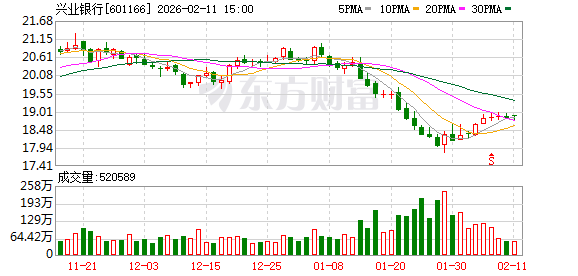
Core Viewpoint - The company aims to continue its focus on becoming a value-oriented bank, enhancing operational management efficiency, and ensuring capital management is concentrated to provide stable and sustainable returns to investors [2] Group 1 - The company will maintain its commitment to the value banking goal [2] - The company emphasizes the importance of improving operational management quality [2] - The company plans to implement concentrated capital management strategies [2]


金融ETF(510230)涨超1.1%,行业转型与稳健预期受关注
Sou Hu Cai Jing· 2026-01-26 09:17
Core Viewpoint - The Chinese banking industry is undergoing a transformation from a "scale-driven, interest-led" model to a "balanced, multi-driven" approach, with a focus on new growth areas such as technological innovation, green low-carbon initiatives, and inclusive elderly care [1] Group 1: Industry Transformation - The banking sector is shifting towards a model that balances various drivers rather than relying solely on scale and interest rates [1] - Credit demand in areas like technology, green initiatives, and inclusive finance is expected to provide new growth points despite downward pressure on net interest margins [1] - The industry is characterized by traditional operating models, with significant room for optimizing income structures, particularly in increasing the proportion of fee and commission income [1] Group 2: Financial Performance - The return on equity (ROE) remains stable and is positioned in the upper-middle range among major global economies, although there has been a recent downward trend indicating the end of the "golden era" of leverage expansion [1] - The focus for future development is on transitioning from traditional "scale banks" to modern "value banks," emphasizing wealth management, investment banking, and light capital businesses to enhance ROE and navigate economic cycles [1]
基于“黄金时代”到“新常态”的基本面深度复盘:从规模扩张到价值创造:中国银行业二十年演进与中外模式比较
HUAXI Securities· 2026-01-24 09:31
Investment Rating - The report maintains a "Recommended" rating for the Chinese banking industry, reflecting confidence in its long-term investment value amid macroeconomic development [4][6]. Core Insights - The Chinese banking industry is transitioning from a "scale-driven, interest-dominated" model to a "balanced, multi-driven" approach, indicating a fundamental shift in growth dynamics [2][3]. - The industry's return on equity (ROE) is currently at 9.50%, which is stable but in a phase of decline, primarily due to increased capital constraints and narrowing net interest margins [1][10]. - There is significant reliance on net interest income (39.92%) compared to international peers, while fee and commission income (7.40%) remains low, highlighting potential areas for revenue structure optimization [1][10]. Summary by Sections Industry Overview - The report provides a comprehensive review of the evolution of the Chinese banking industry over the past two decades, emphasizing the impact of macroeconomic cycles, policy directions, and financial regulations [13][14]. - The banking sector has experienced various phases, including the "Golden Era" (2002-2008) characterized by rapid growth, the "Silver Era" (2008-2017) driven by infrastructure and real estate, and the current "New Normal" focusing on high-quality development [17][19][21]. Performance Analysis - Profitability has been stable, but the ROE is under pressure due to systemic increases in capital adequacy ratios and declining net interest margins [2][10]. - The asset scale growth is slowing, with a notable increase in financial asset investments, while loan growth rates are tapering off [3][10]. International Comparison - The report compares the Chinese banking model with international counterparts, identifying the U.S. model as a high-performing, diversified approach, while the European and Japanese models adapt to low-interest environments with lower profitability [2][10]. Future Outlook - The future trajectory of the Chinese banking industry is expected to focus on transforming from "scale banks" to "value banks," with an emphasis on innovation and service to the real economy [3][5]. - Key growth areas include technology innovation, green finance, and inclusive finance, which are anticipated to provide new credit demand and growth points [3][5]. Investment Recommendations - Investors are advised to focus on two types of institutions: large state-owned banks and leading joint-stock banks with strong customer bases and risk resilience, as well as high-quality regional banks with distinctive features in niche markets [6][10].
兴业银行行长陈信健:价值银行“扎根越深” 估值方能“枝繁叶茂”
Shang Hai Zheng Quan Bao· 2025-12-21 18:17
Core Viewpoint - Industrial Bank has achieved significant growth over 37 years, now ranking 14th globally among banks, with a focus on becoming a value bank and addressing challenges related to low stock valuations [1][5]. Group 1: Performance and Challenges - The bank's president, Chen Xinjian, emphasized the resilience of the bank's operations over the past five years, achieving stable revenue and net profit, while narrowing the decline in net interest margin [1][4]. - Despite a strong performance in the banking sector this year, many banks, particularly joint-stock banks, remain undervalued, with price-to-book ratios lagging behind [1][5]. - Chen noted that the long-term undervaluation of bank stocks is partly due to market biases, which create a significant gap between stock prices and intrinsic values [2][5]. Group 2: Strategic Goals for the Future - Looking ahead to the 14th Five-Year Plan, Industrial Bank aims to establish itself as a leading value bank, leveraging its differentiated advantages to navigate external uncertainties [3][9]. - The bank plans to deepen its focus on industrial finance, enhance comprehensive financial services, expand international business, and strengthen digital transformation efforts [9][10]. Group 3: Value Creation and Market Communication - Industrial Bank has implemented a valuation enhancement plan and aims to improve operational quality to support stock price recovery [6]. - The bank is committed to maintaining strong communication with the market, optimizing reporting practices, and engaging with investors to convey its value proposition [6][7]. - To stabilize its market value, the bank has seen significant shareholding increases from major shareholders, enhancing its ownership structure and reducing volatility [7]. Group 4: Financial Strategies and Innovations - The bank is actively pursuing innovative financial strategies, including the establishment of financial asset investment companies to support technology finance and enhance capital adequacy [5][9]. - Chen highlighted the importance of optimizing capital structure to facilitate better service to the real economy and support sustainable growth [5][7].
兴业银行前三季度业绩稳健 资产负债结构持续优化,净利润保持正增长
Zhong Guo Jing Ji Wang· 2025-11-17 01:11
Core Viewpoint - Industrial Bank has demonstrated resilience and steady growth in its performance amidst a complex environment, achieving a net profit of 63.083 billion yuan in the first three quarters of 2025, reflecting a year-on-year increase of 0.12% [1][2]. Financial Performance - The bank's operating income for the first three quarters reached 161.234 billion yuan, a decrease of 1.82% year-on-year, but the decline has narrowed compared to the first half of the year [2]. - Net interest income was 110.959 billion yuan, with a net interest margin of 1.72%, down 10 basis points from 2024 [2]. - Non-interest income increased by 3.79% year-on-year to 20.081 billion yuan, with wealth management sales growing by 7.7% [2]. Dividend Policy - Industrial Bank announced a mid-term dividend plan, proposing a cash dividend of 0.565 yuan per share, totaling 11.957 billion yuan, which represents 30.02% of the net profit attributable to ordinary shareholders for the first half of 2025 [3]. - This marks the bank's first mid-term dividend, continuing a trend of increasing dividends over the past fifteen years, with total dividends amounting to 216.1 billion yuan since its listing [3]. Asset and Liability Management - The bank's total assets reached 10.67 trillion yuan, a 1.57% increase from the end of the previous year, with customer loans growing by 4.42% to 5.99 trillion yuan [5]. - Customer deposits increased by 5.47% to 5.83 trillion yuan, with a deposit interest rate of 1.71%, down 32 basis points year-on-year [5]. - The bank has focused on optimizing its asset-liability structure, achieving a non-performing loan ratio of 1.08%, stable compared to the previous half [6]. Risk Management - The bank has initiated a reform of its risk management system, enhancing its comprehensive risk management framework and improving the integration of risk and business operations [7]. - The bank's risk resilience has been strengthened, with a provision coverage ratio of 227.81%, indicating a solid buffer against potential losses [6]. Market Confidence and Valuation - There is a clear trend of valuation recovery for bank stocks, supported by the bank's solid fundamentals and increased confidence from investors [8]. - The static dividend yield stands at 5.29%, placing the bank in the top third among listed banks, with a price-to-book ratio of 0.53, indicating it is undervalued [9]. - The bank aims to attract both existing and new investors to enhance its capital structure and accelerate valuation recovery [9].
三十七载浇灌金融活水,“五个领先”绽放沪上繁花 中信银行上海分行跑出高质量发展加速度
Zheng Quan Shi Bao Wang· 2025-11-10 07:45
Core Viewpoint - During the "14th Five-Year Plan" period, CITIC Bank's Shanghai branch has demonstrated its commitment to supporting Shanghai's development as a financial center, achieving significant growth in deposits and loans, contributing to the city's modernization efforts [1][2]. Group 1: High-Quality Development and Party Leadership - The Shanghai branch emphasizes high-quality party building as a driver for high-quality development, focusing on integrating party advantages into business advantages [2][3]. - The branch has maintained strategic determination amidst complex external environments, translating national priorities into actionable plans [2][5]. Group 2: Financial Performance and Contributions - The branch's self-operated deposit scale increased by nearly 170 billion yuan, while various loan scales grew by over 130 billion yuan during the "14th Five-Year Plan" [1]. - In technology finance, the branch issued 7.2 billion yuan in new loans to tech enterprises, with a growth rate of 13% and over 5,100 tech clients served [3]. - The branch has actively engaged in green finance, with new green credit of 4.7 billion yuan, bringing the total balance to over 31 billion yuan [3]. Group 3: Strategic Initiatives and Innovations - The "Five Leading" strategy has been pivotal for the branch, enhancing its core competitiveness in a competitive market [6]. - The branch has implemented a "Retail First Strategy," significantly improving its retail value contribution and asset management scale [7]. - Over 70% of the branch's credit resources are directed towards key sectors of the real economy, with over 20 billion yuan allocated to strategic emerging industries this year [8]. Group 4: Risk Management and Future Planning - The branch is committed to enhancing risk management through a comprehensive risk compliance system, ensuring asset quality and financial safety [15]. - Looking ahead, the branch aims to continue its focus on party leadership and high-quality development, planning for the "15th Five-Year Plan" with a strong emphasis on innovation and reform [13][14].


首次实施中期分红 兴业银行前三季度净利润保持正增长
Zhong Jin Zai Xian· 2025-10-31 13:16
Core Viewpoint - The report highlights that Industrial Bank has achieved stable operational performance in the first three quarters of 2025, focusing on value banking construction and enhancing five key capabilities: strategic execution, customer service, investment trading, comprehensive risk control, and management promotion [1] Financial Performance - As of the end of September, Industrial Bank's total assets reached 10.67 trillion yuan, an increase of 1.57% from the end of the previous year [1] - The bank reported operating income of 161.23 billion yuan, with a decline rate narrowing by 0.47 percentage points compared to the first half of the year [1] - Net profit for the period was 63.08 billion yuan, reflecting a year-on-year growth of 0.12% [1] - The non-performing loan (NPL) ratio stood at 1.08%, unchanged from the end of June, while the attention loan ratio decreased by 0.04 percentage points to 1.67% [1][4] Asset and Liability Structure - The bank has optimized its asset and liability structure, with loans and deposits increasing their proportion in total liabilities and assets by 2.17 percentage points and 1.53 percentage points, respectively, compared to the beginning of the year [2] - Loan balance reached 5.99 trillion yuan, up 4.42% year-on-year, with significant growth in green loans (18.64%), technology loans (17.70%), and medium to long-term loans in manufacturing (13.82%) [2] - Deposit balance was 5.83 trillion yuan, a 5.47% increase from the previous year, with retail deposits reaching 1.76 trillion yuan [2] Customer Service and Risk Management - The number of corporate clients increased by 6.53% to 1.6358 million, while retail clients grew by 3.40% to 114 million [3] - The bank's interest income was 110.96 billion yuan, a decline of 0.56%, but the decrease was less than in the first half of the year [3] - New non-performing assets and the non-performing asset generation rate both decreased, indicating a reduction in risk concentration in high-risk areas such as real estate and local government financing platforms [3][4] Digital Transformation and Innovation - Industrial Bank is advancing its digital transformation by focusing on intelligent transformation, with mobile banking active users reaching 24.73 million, a year-on-year increase of 10.41% [5] - The bank aims to enhance its AI capabilities and has established a "6+X" AI capability system [5] Strategic Development - The bank continues to strengthen its three key areas: green banking, wealth management, and investment banking, with green loan balances exceeding 1.1 trillion yuan [6] - The bank is also preparing to establish a financial asset investment company to enhance its "commercial bank + investment bank" advantage [7] Dividend Policy and Market Position - Industrial Bank announced its first mid-term dividend plan, reflecting a commitment to returning value to shareholders [8] - The bank has maintained a high dividend rate, with a static dividend yield of 5.29%, indicating strong investment value [9]