風險管理

Search documents
科技股波動加劇:小米當前價位的多空分析
Ge Long Hui· 2025-07-29 10:58
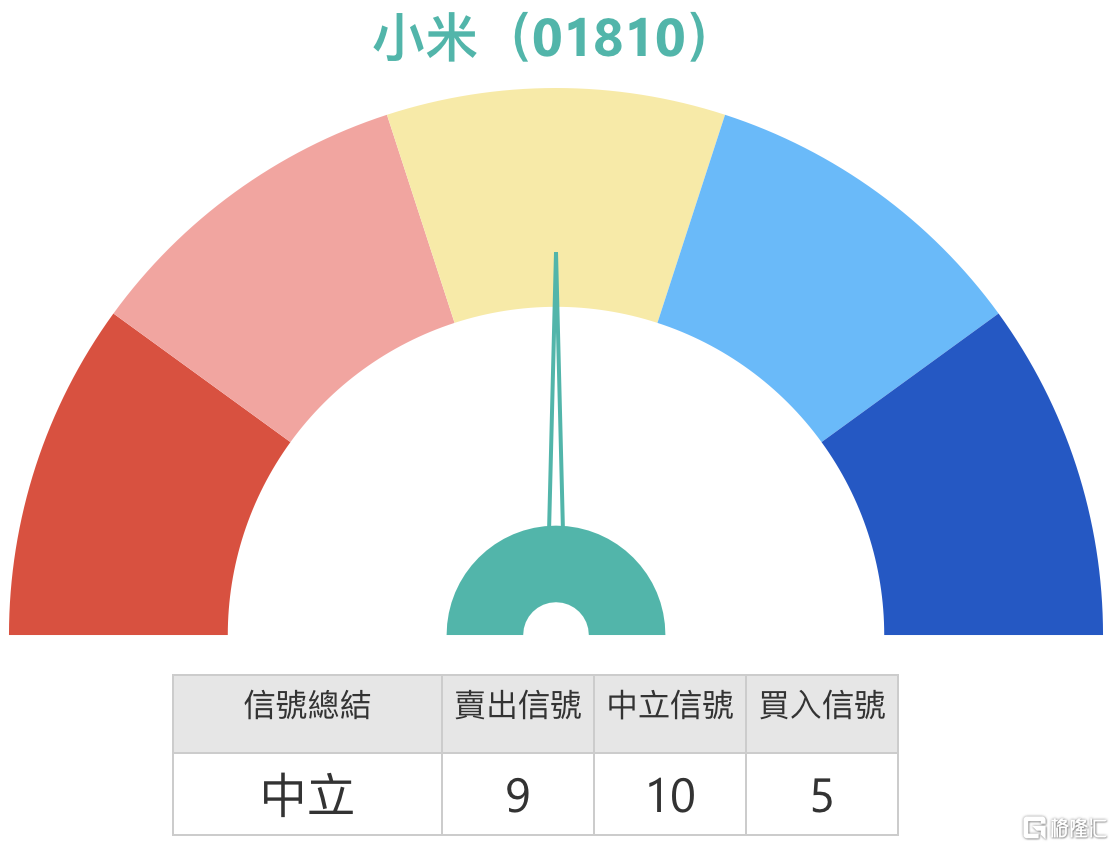
Core Viewpoint - Xiaomi Group's stock price is currently experiencing significant selling pressure, with a recent decline of 1.05% to HKD 56.8, indicating active market trading and a neutral signal without a clear direction [1][4]. Technical Analysis - The stock price is positioned slightly below the 10-day moving average of HKD 57.49, yet remains above the 30-day moving average of HKD 56.96 and the 60-day moving average of HKD 54.55, suggesting short-term adjustment pressure but no significant damage to the medium-term trend [1]. - Key support levels are identified at HKD 55.2 and HKD 53.6, while resistance levels are at HKD 58.4 and HKD 60.3. A rebound above HKD 57.5 could challenge the resistance at HKD 58.4, whereas a drop below HKD 55.2 may lead to a decline towards HKD 53.6 [4]. Market Sentiment - Technical indicators show mixed signals, with multiple moving averages issuing sell signals, but the overall market sentiment is not strongly bearish, as indicated by a sell strength of only 10. The RSI is at 53, indicating a neutral zone [4]. - Recent performance in the derivative market shows a significant increase in bearish instruments when Xiaomi's stock price fell by 2.82% on July 24, with notable gains in related put options [4]. Derivative Instruments - Investors looking for bullish positions may consider UBS call options (14816) with a strike price of HKD 61.05, offering a leverage of 5.9 times and low implied volatility. HSBC call options (14677) have the same strike price but offer slightly higher leverage at 6.1 times [7]. - For bearish investors, options such as Bank of China put options (14387) with a strike price of HKD 46.45 and leverage of 3.09 times, or UBS put options (17706) with a strike price of HKD 53.94 and leverage of 4.8 times, are available [7]. Investment Strategy - In the current market environment, a cautious approach is recommended, waiting for a clear breakout above HKD 57.5 or a drop below HKD 55.2 before making further moves. A range trading strategy could be beneficial, positioning call options near support levels and put options near resistance levels [13].


半導體行業回暖,中芯能否延續漲勢?
Ge Long Hui· 2025-07-23 13:25
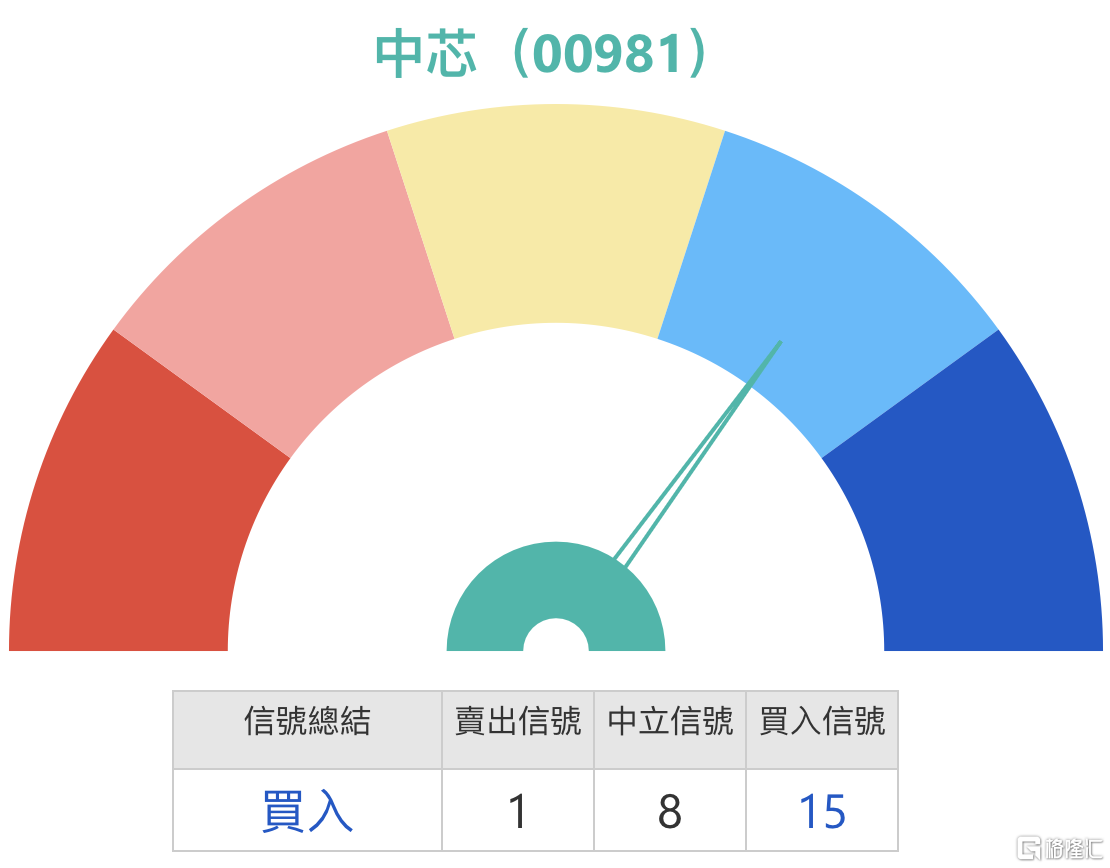
Core Viewpoint - Semiconductor company SMIC (中芯国际) shows positive technical indicators, with a current stock price of HKD 48.8, reflecting a 0.51% increase. The stock is above its 10-day and 30-day moving averages, indicating a favorable medium-term trend, although it is approaching overbought territory [1]. Technical Analysis - The stock price is currently supported at HKD 45.1, with a potential drop to HKD 42.4 if this support is broken. The key resistance level is at HKD 50.3, and a breakthrough could lead to testing HKD 53.3 [1]. - The MACD indicator shows a golden cross, while the Bollinger Bands indicate an upward trend. However, the RSI is at 68, nearing the overbought zone, suggesting a possible need for consolidation before testing the resistance at HKD 50.3 [1]. - Investors are optimistic about breaking the resistance at HKD 49, with some targeting HKD 53. The overall technical signals are summarized as "buy" [1]. Derivative Instruments - Recent performance of derivative products linked to SMIC shows significant leverage effects. For instance, a specific warrant from Societe Generale increased by 32% following a 3.08% rise in SMIC's stock price [4]. - Various warrants are available in the market, with Citigroup's warrant offering 5.5x leverage at an exercise price of HKD 52.55, and UBS's warrant providing 4.2x leverage at HKD 52.05 [7]. - Bear certificates are also available, with one from Societe Generale offering 12.4x leverage and a redemption price of HKD 52 [10]. Market Sentiment - The current market sentiment indicates active trading, with a 9.6% five-day volatility suggesting robust market engagement. The mixed signals from momentum oscillators indicate potential short-term fluctuations [1]. - Investors are considering whether to wait for a pullback to support levels or to follow through on potential breakouts, reflecting varying risk appetites in the semiconductor sector [13].

我的槓桿投資策略 #TQQQ
LEI· 2025-07-08 10:01
Key Strategy - Leveraged Rotation Strategy (LRS) can amplify returns while effectively managing risk by reducing drawdowns and smoothing the investment process [1] - LRS involves using a moving average line as a filter: when the index closing price is above the moving average, investors buy the index with leverage; when it's below, they switch to US Treasury bonds or cash [1] - The strategy uses the moving average of the index, not the leveraged fund itself, as a filter [2] Market Analysis - Leverage can linearly amplify returns and risks, but market behavior isn't always linear; it varies with market volatility [1] - High volatility is detrimental to leverage, while small fluctuations and upward trends favor it [1] - When the S&P 500 index is above its 10-day moving average, the annualized volatility is 156%; below, it's 228% [1] - When the index is above its 200-day moving average, the annualized volatility is 146%; below, it's 269% [1] - Most significant drops occur when the index is below certain key moving averages, with the 20-day moving average being particularly important statistically [1] Performance Metrics - From October 1928 to December 2020, Buy & Hold strategy yielded a 94% annualized return, regular 3x leverage yielded 162%, and 3x LRS using the 200-day moving average yielded 267% [1] - A $10,000 investment in the S&P 500 in October 1928 would have grown to over $39 million by December 2020, while the 3x LRS strategy would have reached $28 trillion [1] - During the Great Depression, the S&P 500 fell by 86%, but the 3x LRS strategy only fell by 49%; in the 2008 financial crisis, the S&P 500 fell by 55%, while the 3x LRS strategy fell by 31% [1]