香蕉共和国

Search documents
美媒:中国真该谢谢特朗普,美国这下搞不好要成香蕉共和国了
Sou Hu Cai Jing· 2025-11-22 04:07
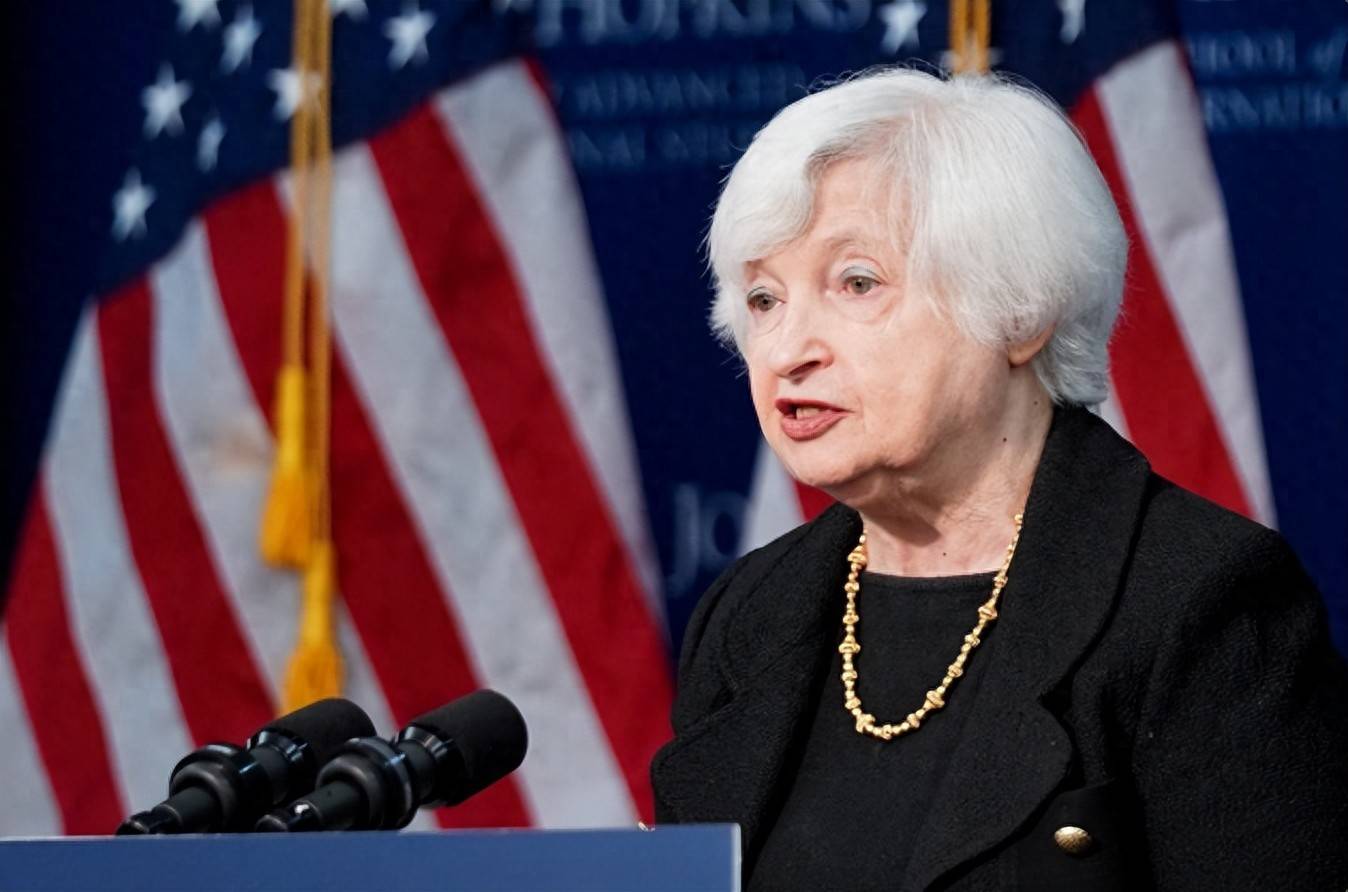
Core Viewpoint - The article discusses the warning from former U.S. Treasury Secretary Janet Yellen, suggesting that the U.S. could become a "banana republic" due to internal political turmoil and economic mismanagement, particularly under Trump's influence [1][16][19] Group 1: Political and Economic Context - Yellen's use of the term "banana republic" highlights the potential threats to U.S. democracy and economic stability, drawing parallels to historically unstable Central American countries [3][16] - Trump's interference with the Federal Reserve's independence is a significant concern, as it undermines the institution's ability to maintain stable monetary policy [5][6] - The current political climate in the U.S. is characterized by a chilling effect, where businesses and individuals fear retaliation for speaking out against the government, reminiscent of authoritarian regimes [6][12] Group 2: Economic Indicators and Consequences - Trump's erratic tariff policies have created uncertainty for businesses, leading to closures and job losses, which reflects the economic instability typical of a banana republic [8][12] - The U.S. faces a looming debt crisis, with national debt exceeding $31 trillion, and political gridlock preventing effective solutions, mirroring the fiscal irresponsibility seen in banana republics [10][19] - Social issues are escalating, with over 40 million Americans living below the poverty line and significant wealth inequality, indicating a deteriorating quality of life for many citizens [12][14] Group 3: Future Implications - The article warns of a potential AI bubble, where reliance on a single technology could lead to economic collapse, similar to past tech bubbles [10][16] - The outflow of tech talent from the U.S. due to political instability and unfavorable policies threatens the country's competitive edge in innovation [14][16] - If internal political strife continues to dictate economic policy, the U.S. risks losing its status as a global leader, potentially becoming a self-fulfilling prophecy of becoming a banana republic [19]

美媒:中国真该谢谢特朗普,美国这下搞不好要成“香蕉共和国”了
Sou Hu Cai Jing· 2025-11-20 07:31
Core Viewpoint - Janet Yellen warns that the U.S. democracy is in "deadly danger," likening its potential future to that of a "banana republic," a term typically used to describe politically unstable countries with economies controlled by external forces or internal oligarchs [1][4]. Group 1: Political and Economic Stability - Yellen emphasizes that the influx of global capital into the U.S. is driven by the certainty provided by a stable political system, which includes the rule of law, policy coherence, and equal treatment under the law [4]. - She observes that this foundational stability is being replaced by impulsive and discontent-driven personal will, particularly criticizing the actions of former President Trump [5]. Group 2: Fear in Business and Academia - Yellen notes that fear has silenced U.S. CEOs, who worry about being targeted if they cross invisible lines, leading to a chilling effect that extends to universities and research institutions [5][7]. - The White House's threats to cut federal funding for "politically incorrect" universities contribute to a hostile environment for foreign-born scientists and students, jeopardizing U.S. leadership in cutting-edge technology [7]. Group 3: Independence of the Federal Reserve - Yellen warns that the independence of the Federal Reserve is at risk, as Trump has criticized the Fed and attempted to influence its decisions, which could lead to a collapse of the firewall between monetary and fiscal policy [8][12]. - She highlights that if the President demands the Fed to finance government deficits, it would mirror the situation in "banana republics," leading to currency collapse and hyperinflation [8][12]. Group 4: Economic Indicators and Risks - Despite the current AI investment boom, Yellen believes it masks underlying economic risks that may not be immediately visible in consumer prices but will manifest in the value of the dollar [9][11]. - Since the announcement of new tariffs in April, the dollar has depreciated by 4% against a basket of major currencies, indicating a lack of confidence among global investors [11]. Group 5: Long-term Implications - Yellen's concerns reflect a broader issue of institutional decay that could take decades to unfold, potentially undermining the U.S.'s ability to attract global capital and talent [12][13]. - The erosion of institutional integrity could represent a strategic advantage for U.S. competitors, as the country risks dismantling its core assets that have historically supported its global dominance [12][13].
被美国加征40%关税!巴西总统卢拉回应:我们不是“香蕉共和国”
Mei Ri Jing Ji Xin Wen· 2025-08-07 16:42
Core Points - The U.S. government has imposed a 40% tariff on Brazilian products starting August 6, resulting in an effective tariff rate of up to 50% on most Brazilian exports to the U.S., including meat, coffee, and fruits [1][4] - Brazilian President Lula has expressed strong opposition to the U.S. tariffs, stating that Brazil is not a "banana republic" and that it will not accept political issues being turned into economic penalties [1][4] - Brazil has officially requested consultations with the U.S. under the World Trade Organization's dispute resolution mechanism regarding the new tariffs [4] Group 1 - The U.S. tariffs on Brazilian products are set at 40%, leading to a total tariff rate of 50% on various goods [1] - Brazil's government is taking a multi-faceted approach to respond to the U.S. tariffs, emphasizing its reduced reliance on the U.S. for trade [1][4] - President Lula has stated that there is currently no opportunity for direct dialogue with U.S. President Trump regarding the tariffs [4] Group 2 - Brazil will not impose retaliatory tariffs on U.S. goods but remains open to dialogue at the cabinet level [4] - The Brazilian government has formally initiated discussions with the World Trade Organization concerning the U.S. tariff measures [4]