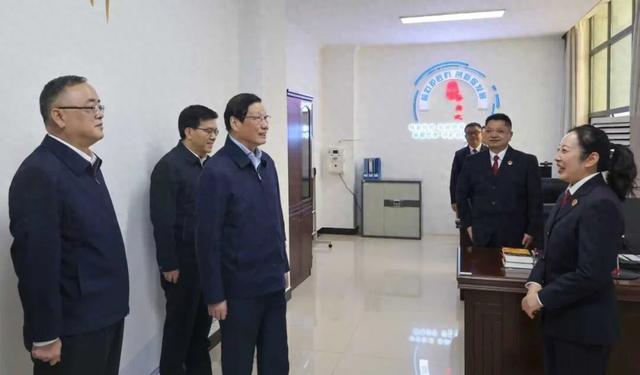
高质效办案

Search documents
坚持高质效办案 充分发挥职务犯罪检察效能
Xin Lang Cai Jing· 2026-01-11 23:23
Group 1 - The core viewpoint emphasizes the importance of advancing anti-corruption efforts through a comprehensive approach that includes not only legal enforcement but also political awareness and social governance [1][2][5] - The 20th Central Committee's Fourth Plenary Session highlights the need for a robust supervisory system to enhance the regulation and oversight of power, which serves as a fundamental guideline for prosecutorial work against occupational crimes [2][3] - The current landscape of occupational crime is characterized by new, covert, and intelligent trends, presenting unprecedented challenges for case identification, evidence collection, and legal application [3][4] Group 2 - High-quality case handling is identified as the core of advancing occupational crime prosecution, necessitating a focus on evidence examination, legal application, and inter-agency cooperation [4][5] - The shift from merely punishing a few to governing the majority in anti-corruption efforts is emphasized, advocating for a proactive approach that extends prosecutorial functions into social governance [5][6] - The professionalization of the prosecutorial workforce is crucial, with a focus on political capability, specialized skills, and strict adherence to discipline to ensure integrity and effectiveness in handling occupational crime cases [6][7]
管理直击痛点,让高质效办案成为“肌肉记忆”
Xin Lang Cai Jing· 2026-01-10 23:42
Core Viewpoint - The article discusses the innovative management practices implemented by the Kunming City Procuratorate in Yunnan Province to enhance the quality and efficiency of case handling, focusing on systematic management and data-driven approaches to improve judicial outcomes [7][11][17]. Group 1: Management Innovations - The Kunming City Procuratorate has introduced mechanisms such as "graded, layered, and categorized evaluations" and "three lists and one table management" to improve case management and ensure high-quality handling of cases [7][11]. - The "three management" approach aims to address pain points in case handling, making high-quality case management a habitual practice for prosecutors [14][17]. - The establishment of a centralized management center for seized property has streamlined the process and reduced risks associated with case handling [10]. Group 2: Quality Control Measures - The Kunming City Procuratorate has implemented a quality inspection system that has led to a 56.28% decrease in cases with inconsistent judgments [11][12]. - A comprehensive quality management framework has been developed, focusing on risk identification and dynamic guidance to enhance case quality throughout the judicial process [9][12]. - The introduction of specialized teams for specific case types, such as illegal mining, has improved evidence standards and cross-department collaboration [13]. Group 3: Case Handling Efficiency - The case management office has utilized a "risk list," "supervision list," and "quality efficiency list" to pre-screen cases, ensuring that potential issues are identified early in the process [9]. - The integration of data analysis in case handling has allowed for more precise identification of case connections, leading to more effective prosecution outcomes [9][12]. - The implementation of a self-service system for lawyers has improved access to case files, enhancing the efficiency of legal proceedings [20][21]. Group 4: Community Impact and Support - The Kunming City Procuratorate has actively engaged in judicial assistance programs, providing support to vulnerable individuals, such as victims of human trafficking [23]. - The article highlights a case where the procuratorate facilitated judicial assistance for a victim, demonstrating the institution's commitment to social justice [23][26]. - The focus on community-oriented justice has led to positive feedback from the public, reinforcing the procuratorate's role in ensuring fairness and accountability in the judicial system [24][28].


一体抓实“三个管理”促进高质效办案
Xin Lang Cai Jing· 2026-01-10 23:42
Core Viewpoint - The Supreme People's Procuratorate emphasizes that high-quality and efficient case handling is achieved through scientific management and a focus on three key management areas: case management, quality management, and business management [2][3]. Group 1: Macro-Level Business Management - The focus is on deepening the guiding principles of prosecution, optimizing resource allocation, and enhancing overall efficiency through a unified approach to the three management areas [2]. - Establishing a regular business data analysis mechanism to monitor key case types and business trends, providing insights for decision-making [3]. - Strengthening collaborative mechanisms among business departments and other legal entities to enhance social governance [3]. Group 2: Meso-Level Case Management - Implementing a comprehensive monitoring mechanism to ensure compliance with legal procedures during case handling, with a focus on major and complex cases [4]. - Establishing a tiered supervision system for case management to clarify the responsibilities and powers of various prosecutorial roles [5]. - Developing a management mechanism for sensitive cases to mitigate political and public opinion risks [5]. Group 3: Micro-Level Quality Management - Enforcing strict quality checks for every case, with regular self-assessments and peer reviews to identify and rectify issues [6]. - Enhancing external supervision to improve self-management among prosecutors, creating a collaborative quality management system [6]. - Providing targeted training and resources to improve prosecutors' legal knowledge and case handling skills [7].

时光案卷·高质效办案的那些事儿|办案要守住法律底线,更要传递司法温度
Xin Lang Cai Jing· 2026-01-10 00:53
Core Viewpoint - The article emphasizes the importance of maintaining legal boundaries while also conveying the warmth of justice, highlighting a case where a local resident's illegal logging was addressed through education and community engagement rather than punitive measures [1][5]. Group 1: Case Overview - The case involves a local resident, Li, who illegally logged 1,297 trees without a permit, resulting in a total timber volume of 34.7143 cubic meters, which met the criteria for criminal prosecution [2][4]. - Li, a poverty-stricken household's sole labor force, showed remorse and took steps for ecological restoration after the incident, leading to a decision for non-prosecution [2][5]. Group 2: Community Engagement - The local prosecutor's office organized a hearing in the village to educate residents about legal boundaries regarding logging, transforming complex legal concepts into understandable terms for the community [4][5]. - The hearing was well-attended, with villagers actively engaging and asking questions about legal requirements for logging, indicating a growing awareness of legal issues in the community [4][5]. Group 3: Impact and Reflection - The prosecutor's office received positive feedback for their approach, which not only resolved the specific case but also enhanced legal awareness among villagers, demonstrating the effectiveness of practical legal education [5]. - The community's increased understanding of legal requirements is reflected in their discussions about logging practices, showing a shift towards compliance and responsibility [5].

时光案卷·高质效办案的那些事儿|激活万宁桥的古都记忆
Xin Lang Cai Jing· 2026-01-09 00:11
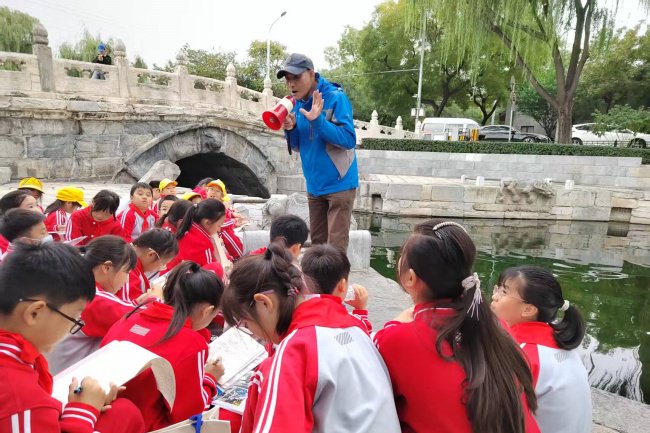
Core Viewpoint - The article emphasizes the importance of protecting cultural heritage and non-material cultural legacies through legal and administrative efforts, showcasing a successful case of preserving the historical significance of the Wanning Bridge in Beijing's Shichahai area [1] Group 1: Cultural Heritage Protection - The initiative aims to connect the historical narrative of Wanning Bridge, a 700-year-old structure, with contemporary educational efforts to ensure the transmission of cultural stories to future generations [1][3] - The project involves collaboration between various administrative departments to address the preservation of both intangible cultural heritage and its physical manifestations [4] Group 2: Systematic Governance - The protection of Wanning Bridge has led to a broader understanding of the need for systemic governance, extending from individual case handling to comprehensive management of cultural heritage [4][5] - The initiative has resulted in the identification of 224 intangible cultural heritage projects in Xicheng District, prompting improvements in management mechanisms and regulatory oversight [5] Group 3: Community Engagement and Education - Educational activities, such as guided tours for students led by cultural heritage inheritors, have been organized to foster curiosity and appreciation for local history among younger generations [3] - The project has successfully created a positive environment around Wanning Bridge, enhancing both its physical condition and the community's engagement with its historical significance [4]
甘肃:检委会为案件评查质量把关
Xin Lang Cai Jing· 2026-01-03 23:22
Group 1 - The Gansu Provincial Procuratorate held an expanded committee meeting to review and assess cases, utilizing a combination of "intelligent review + manual cross-review" and discussions among prosecutors [1] - The meeting emphasized the importance of case quality checks as a means to implement the "three managements" and ensure high-quality handling of each case, which is crucial for upholding judicial responsibility and fairness [2] Group 2 - The review identified issues such as insufficient evidence analysis skills, challenges in handling cases that intertwine criminal and civil matters, and inadequate oversight at various levels, prompting a call for reflection and improvement in basic legal knowledge [2] - The meeting highlighted the need for regular case reviews, layered and graded assessments, and accountability measures to enhance the quality and efficiency of case handling, ensuring that every case withstands legal, historical, and public scrutiny [2]
新闻现场|是赛场,也是课堂
Xin Lang Cai Jing· 2026-01-03 12:02
Core Viewpoint - The Gansu Provincial Procuratorate held a high-quality case handling lecture competition, showcasing the importance of refining practical experiences into effective work methods for enhancing prosecutorial efficiency [1][2]. Group 1: Event Overview - The competition featured 18 selected prosecutors from over 240 candidates, highlighting the rigorous selection process [1]. - Ten outstanding participants were awarded the title of "Excellent Case Handling Lecturers" [1]. Group 2: Professional Development - The event is part of a broader initiative by the Gansu Provincial Procuratorate to implement six major projects aimed at improving professional capabilities and judicial quality [1]. - The competition served as a practical training exercise and a direct assessment of the law enforcement and judicial capabilities of the legal system [2]. Group 3: Participant Insights - Participants expressed that the event provided valuable insights into practical issues and strategies related to evidence review and courtroom responses, enhancing their understanding of high-quality case handling [2]. - The sharing of experiences among peers was seen as a significant opportunity for professional growth and reaffirmation of commitment to excellence in their roles [2].
加强文化建设赋能检察履职
Xin Lang Cai Jing· 2025-12-30 21:14
Core Viewpoint - The article emphasizes the integration of cultural and legal practices in the Fengzhen City People's Procuratorate, highlighting the importance of cultural construction in enhancing legal services and community engagement [1] Group 1: Cultural Integration - The Fengzhen City People's Procuratorate combines procuratorial culture with regional culture, drawing inspiration from the Great Wall to foster a spirit of perseverance [1] - Political leadership is integrated into cultural construction, transforming cultural initiatives from "soft tasks" to "hard indicators" through specialized planning and implementation [1] - Various activities, such as volunteer services and legal education in local dialects, are employed to deepen community engagement and promote legal knowledge [1] Group 2: Fairness and Justice in Case Handling - The procuratorate aims for high-quality case handling, promoting the "Mongolian horse spirit" and enhancing brand development in legal services [1] - Collaborative mechanisms with neighboring provinces have been established to address public interest cases, such as river pollution and heritage protection [1] - Initiatives for the protection of minors include the "Little Prosecutor" legal education program, ensuring comprehensive legal education in local schools [1] Group 3: Team Building and Professional Development - A high-quality, professional procuratorial team is essential for effective legal work, supported by a systematic talent development framework [1] - The "Green Qing Book Club" cultural brand fosters a learning environment through book collections and regular sharing sessions [1] - Continuous learning mechanisms are in place, including weekly sessions led by the chief prosecutor and collaboration with educational institutions for advanced training [1] Group 4: Innovation and Development - The procuratorate promotes the integration of procuratorial culture with local characteristics and responsibilities, focusing on local industries like mooncake production [1] - A specialized new media workspace has been established to create original content and expand the reach of legal education through various media channels [1] - The article concludes with a commitment to advancing procuratorial culture from mere formality to substantive development, contributing to a safer and more lawful Fengzhen [1]
全面提升法律监督质效 推动检察工作高质量发展
Xin Lang Cai Jing· 2025-12-19 23:33
Group 1 - The core viewpoint emphasizes the importance of strengthening prosecutorial supervision to better serve the rule of law and high-quality economic and social development, guided by Xi Jinping's thoughts on socialism with Chinese characteristics for a new era [1] - The focus is on enhancing the quality and effectiveness of legal supervision by the procuratorial organs, ensuring that they play a better role in promoting the rule of law and economic development [1] Group 2 - Mianyang is recognized as China's only science and technology city, hosting numerous national and provincial innovation platforms and tech enterprises, highlighting the need for stronger intellectual property protection to foster innovation [2] - The emphasis is on the judicial protection of intellectual property rights, particularly for original innovations and emerging industries, to safeguard the legitimate rights and interests of various technology innovation entities [2] Group 3 - The basic functions of criminal prosecution, such as arrest review and prosecution review, must be strengthened to improve the capabilities and levels of criminal prosecution [3] - Establishing standardized guidelines for writing criminal case review reports is crucial for enhancing the quality of criminal prosecution [3] Group 4 - The supervision of civil execution activities is critical for protecting the legitimate rights of the public, with a focus on grassroots procuratorial institutions [4] - There is a need to enhance the collaborative supervision mechanism for civil execution activities to effectively address the challenges of execution difficulties [4] Group 5 - High-quality handling of each case is both a goal and a requirement, aiming to ensure that the public feels fairness and justice in every judicial case [5] - A comprehensive mechanism for high-quality case handling is to be established, covering standards, norms, and evaluations throughout the entire process [5] Group 6 - The Sichuan procuratorial organs are encouraged to uphold the party's absolute leadership over prosecutorial work and to strengthen legal supervision across various judicial activities [6] - There is a focus on promoting a law-based business environment and enhancing ecological and environmental protection through public interest litigation [6] Group 7 - The importance of self-supervision and adherence to the central eight regulations is highlighted to ensure a loyal, clean, and responsible prosecutorial team [7] - Engagement with provincial leaders and discussions on strategies for the 2026 prosecutorial work reflect a commitment to continuous improvement in the prosecutorial system [7]
最高检:“每案必检”既要防止流于形式,也要防止层层加码
Xin Lang Cai Jing· 2025-12-19 11:15
转自:北京日报客户端 审查逮捕、审查起诉、刑事诉讼监督等刑事检察基本职能,只能加强、不能削弱。要加强刑事检察基本 职能、基本业务、基本能力建设,不断提高审查逮捕、审查起诉、出庭支持公诉、发现漏罪漏犯、纠正 违法等能力和水平,夯实刑事检察高质量发展基础。 12月17日至19日,最高人民检察院党组书记、检察长应勇率最高检调研组,围绕深入学习贯彻党的二十 届四中全会、中央经济工作会议和中央全面依法治国工作会议精神,强化检察监督,更好服务全面依法 治国和经济社会高质量发展,到四川绵阳、眉山等地调研。 12月17日,最高人民检察院党组书记、检察长应勇率最高检调研组在绵阳高新区检察院调研。 小编第一时间认真学习这篇调研文章,敏锐抓住了两个关键词,一个是【质效】一个是【管理】。 第一个关键词:质效 高质效办好每一个案件、"努力让人民群众在每一个司法案件中感受到公平正义"是新时代新征程检察履 职办案的基本价值追求。调研中,应勇检察长围绕提升刑事检察工作质效、建立高质效办案机制等提出 了要求,小编总结为"三个基本,一个抓手,一个机制": "三个基本" 来源:检察日报正义网 "一个抓手" 高质量撰写刑事案件审查报告,是提升刑事检 ...