
3C认证

Search documents
最严新规即将出台!央视曝光商家顶风卖假冒3C充电宝
2 1 Shi Ji Jing Ji Bao Dao· 2025-12-01 06:41
(来源:央视财经) 工业和信息化部最近发布的《移动电源安全技术规范》征求意见稿,被业界称为"史上最严"的充电宝新 标准。目前,新标准正处于征求意见阶段,预计于2026年一季度发布。 据央视财经,市场上仍有一些商户在高压监管与标准规范之下顶风作案,私下里抓紧甩卖不合规的尾 货。沈阳电子市场的"宏伟科技"店铺,无3C认证的充电宝被当作尾货处理售卖,仅售35元。一位商户 向记者透露,他们都知道充电宝无3C认证不允许出售的规定,所以都低价处理。武汉电子市场售卖的 充电宝产品,有些3C认证已经被撤销、暂停,却未引起商户的重视,依然被当作合规产品正常售出。 电商平台的商户也同样存在制假售假的情况,部分商户所展示的3C认证证书有的状态显示暂停,有的 已于一个月前注销。 (原标题:最严新规即将出台!央视曝光商家顶风卖假冒3C充电宝) ...
新标准出台前 多家厂商3C充电宝造假 已流向全国
Yang Shi Xin Wen Ke Hu Duan· 2025-11-30 14:20
Core Viewpoint - The Ministry of Industry and Information Technology has released a draft for the "Mobile Power Safety Technical Specification," which is considered the strictest standard for power banks to date. The new standard is expected to be published in the first quarter of 2026, but there are still non-compliant products being sold in the market, posing significant public safety risks [1][61]. Group 1: Regulatory Context - As of July this year, there have been 15 incidents of power banks catching fire or smoking on domestic flights, raising concerns about public safety [3]. - The Civil Aviation Administration of China issued new regulations on June 28, prohibiting power banks without clear 3C certification from being taken on flights [3]. - The State Administration for Market Regulation has included lithium-ion batteries, battery packs, and mobile power supplies in the certification scope, stating that products without certification will not be allowed to circulate starting August 2024 [5]. Group 2: Market Violations - Some merchants are selling non-compliant power banks at low prices, knowing they are not allowed to sell such products [11][9]. - In various electronic markets, merchants are found selling power banks with fake 3C certification marks, misleading consumers [23][31]. - Reports indicate that some merchants are aware of the regulations but continue to sell non-compliant products, claiming they are of good quality [13][21]. Group 3: Manufacturing Practices - Some manufacturers are evading regulations by using fake 3C certification marks on their products, which is becoming a common practice in the power bank market [29][36]. - A manufacturer revealed that the actual capacity of power banks is often much lower than advertised, and they can easily modify certification marks to avoid regulatory scrutiny [39][41]. - There are reports of companies using "one certificate for multiple factories" to bypass regulations, indicating a systemic issue in compliance within the industry [45][55]. Group 4: Upcoming Regulatory Changes - The upcoming new regulations are expected to lead to a systematic upgrade in the supervision of the power bank industry, with authorities intensifying efforts to eliminate non-compliant products from the market [61].

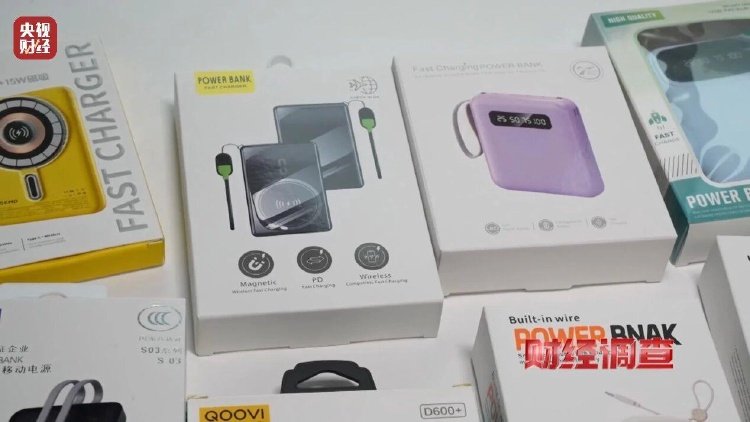
违规生产、非法“套证”,假冒3C充电宝屡禁不止!总台《财经调查》曝光→
Sou Hu Cai Jing· 2025-11-30 12:13
(央视财经《财经调查》)工业和信息化部最近发布的《移动电源安全技术规范》征求意见稿,被业界称为"史上最严"的充电宝新标准。目前,新标准正处 于征求意见阶段,预计于2026年一季度发布。但《财经调查》记者通过调查了解到,在国家层面高压监管与标准规范之下,市场上目前仍有一些从业者在顶 风作案,个别商户私下抓紧甩卖不合规的尾货,个别厂家为了不被市场淘汰,通过隐蔽手段违规"套证"生产不合格充电宝产品,给公共安全埋下重大隐患。 不合格充电宝3C认证失效 被商户低价处理 截至今年7月,境内航班已发生15起充电宝起火或冒烟事件,成为牵动公共安全的一个重要关切。中国民航局于今年6月28日紧急出台新规,未经3C认证、 无清晰3C认证标志的充电宝不得带上飞机。 "3C"是中国强制性产品认证制度的英文缩写,也是国家对强制性产品认证使用的统一标志。为保护国家安全、防止欺诈行为、保护人体健康或者安全、保 护动植物生命或者健康、保护环境,国家规定的相关产品必须经过强制性产品认证,并标注认证标志后,方可出厂、销售、进口或者在其他经营活动中使 用。2023年,国家市场监督管理总局将锂离子电池、电池组及移动电源纳入认证范围,规定自2024年8 ...
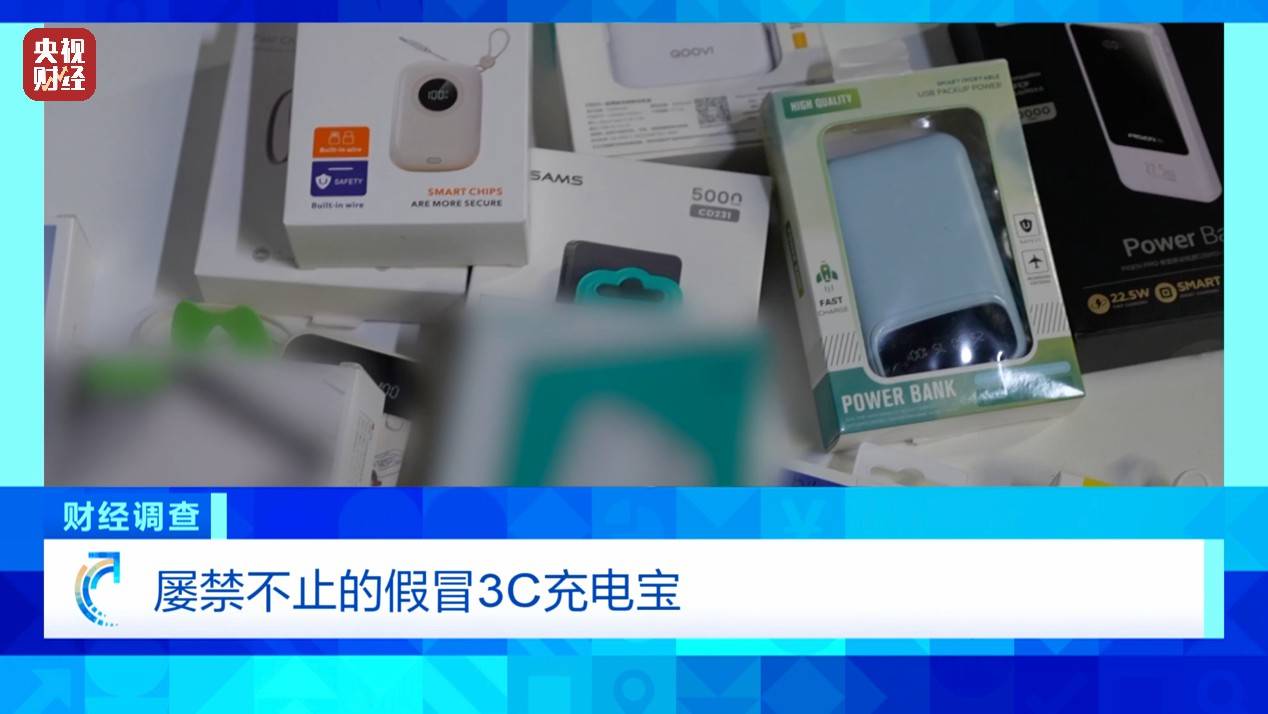
网传“3C认证全面失效” 刚买的充电宝还能用吗?
Yang Shi Xin Wen· 2025-11-28 05:13
Core Viewpoint - The recent news regarding the new safety standards for power banks has raised concerns among consumers about the usability of their existing 3C certified power banks, but it has been clarified that these certified products will not be affected by the new standards [1][2]. Group 1: Impact of New Standards - Existing 3C certified power banks are not impacted by the upcoming new standards, allowing consumers to continue using them without concerns of waste [2]. - The timeline for the new standards, rumored to be released in February 2026, is not confirmed, and there will typically be a transition period of 6 to 12 months after the release [1][2]. Group 2: Certification and Regulations - The 3C certification is a mandatory market access system in China aimed at protecting consumer safety and the environment, and all power banks sold must have this certification [3]. - New regulations prohibit passengers from carrying power banks without 3C certification, unclear 3C markings, or recalled models on domestic flights [3]. Group 3: Carrying Regulations for Power Banks - Power banks must be carried in hand luggage or as personal items; they are strictly prohibited in checked baggage [5]. - Power banks with a rated energy of up to 100Wh can be carried without airline approval, while those between 100Wh and 160Wh require airline approval, with a limit of two per passenger [5]. Group 4: Safety Precautions - Users are advised to end charging once the power bank is fully charged to avoid overcharging [6]. - It is recommended to avoid using the power bank to charge devices while on a call and to monitor for overheating during use [7][8].
网传“3C认证全面失效”?中国电子技术标准化研究院:已获3C认证的充电宝不受新标准影响
Zheng Quan Shi Bao Wang· 2025-11-27 01:36
Core Points - Recent rumors about the "complete invalidation of 3C certification for power banks" have raised concerns among consumers regarding the usability of newly purchased 3C certified power banks [1] - The China Electronics Standardization Institute clarified that the timeline for the new mandatory standards is not confirmed and that existing 3C certified power banks will not be affected by the new standards [1] - The new safety technical specifications for mobile power sources, considered the strictest in history, have been drafted by the Ministry of Industry and Information Technology, imposing significant requirements on various components [1] Industry Summary - The new mandatory standards for mobile power banks are expected to have a transition period of 6 to 12 months after their release, allowing consumers to continue using their existing 3C certified products without concern [1] - The reports suggesting that the new standards would lead to the inability to carry certified power banks on flights are inaccurate, as 3C certified products will still be allowed for air travel [1] - The new specifications aim to enhance safety across the entire power bank production process, including the device, battery cells, and circuit boards, indicating a shift towards stricter safety regulations in the industry [1]
网传“3C认证全面失效”,刚买的充电宝还能用吗?
第一财经· 2025-11-27 00:49
Core Viewpoint - Recent concerns have arisen regarding the new safety standards for power banks, with misinformation suggesting that existing 3C certified power banks may become obsolete. However, the China Electronics Standardization Institute clarified that existing 3C certified products will not be affected by the new standards, which are still in the consultation phase [1][2][3]. Group 1: 3C Certification and Regulations - 3C certification is a mandatory market access system in China aimed at protecting consumer safety and the environment. All power banks sold in the market must have this certification [2]. - As of June 28, 2023, travelers are prohibited from carrying power banks without 3C certification, those with unclear certification, or recalled models on domestic flights. However, 3C certified power banks can still be taken on board [2][3]. - The new "Mobile Power Safety Technical Specifications," considered the strictest to date, has been drafted by the Ministry of Industry and Information Technology, imposing significant requirements on various components of power banks [2]. Group 2: Carrying Power Banks on Flights - Power banks must be for personal use and can only be carried in hand luggage; they are strictly prohibited in checked baggage [4]. - Power banks with a rated energy of up to 100Wh can be carried without airline approval, while those between 100Wh and 160Wh require airline approval, with a limit of two power banks per passenger [4]. Group 3: Safety Precautions and Usage Guidelines - Travelers should not use power banks to charge electronic devices during flights and must keep power banks turned off if they have an on/off switch [6]. - It is advised to avoid overcharging power banks and to stop charging immediately if overheating occurs. Power banks should not be left in direct sunlight or used if they show signs of damage [6].
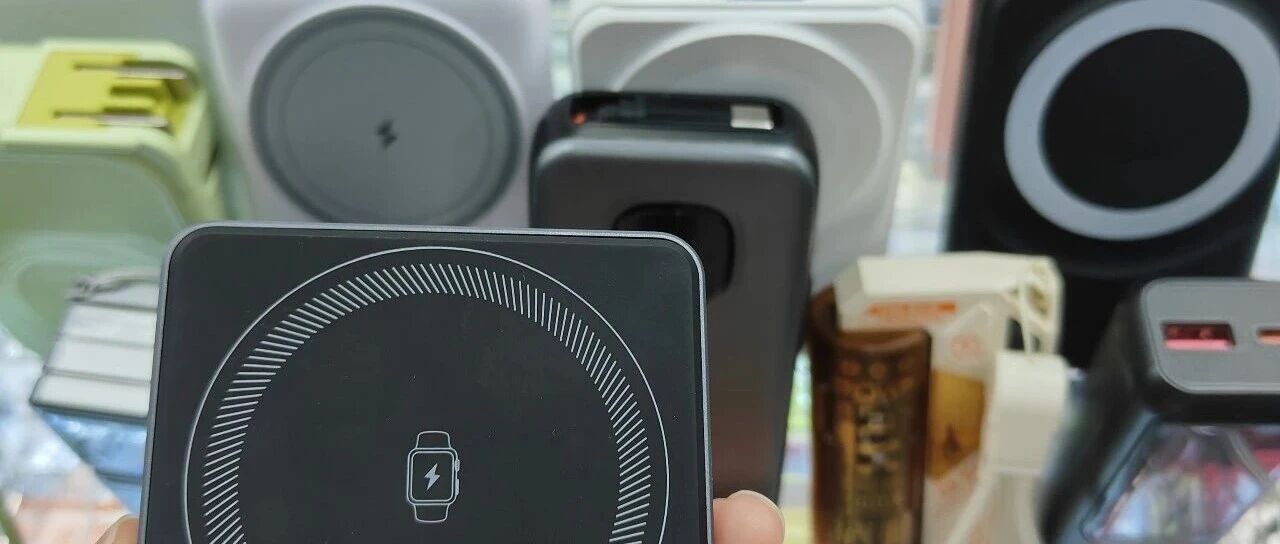
暴雷半年后,充电宝玩家们咋样了?
36氪· 2025-11-24 10:14
Core Viewpoint - The charging bank industry has undergone significant changes due to safety incidents and regulatory shifts, leading to a reshaping of market dynamics and the emergence of new leaders like Ugreen and Xiaomi, while others like Romoss have fallen behind [5][50]. Group 1: Industry Changes - The turning point for the charging bank industry was the June 2025 incident where multiple universities banned Romoss charging banks, followed by the Civil Aviation Administration's new regulations prohibiting non-3C certified products [5][8]. - The market share previously held by Romoss and other low-cost brands has opened up, with over 20% of the market available for redistribution [8][30]. - The industry has shifted from a low-price volume model to a focus on safety, quality, and brand reputation, marking the end of the "low-price" era [13][39]. Group 2: Key Players and Market Dynamics - Ugreen has emerged as a major beneficiary of the market reshuffle, with a 303% year-on-year sales increase on JD.com in July 2025, and a 2.3 percentage point rise in market share [34][36]. - Xiaomi, despite facing some challenges, has maintained its leading position in the global market with a strong user base and effective crisis management, recalling 147,000 units while quickly addressing safety concerns [37][38]. - Anker Innovation and Baseus, while also significant players, have struggled to capitalize on the market changes due to their pricing strategies and operational challenges [41][47]. Group 3: Regulatory Impact - The tightening of regulations, particularly the mandatory 3C certification, has led to a significant drop in the non-compliance rate from 44.4% in 2023 to 4.0% after the enforcement of the certification [28][29]. - The regulatory environment has effectively eliminated many low-quality brands from the market, pushing consumers towards safer and more reliable options [24][26]. Group 4: Future Outlook - The industry is expected to continue evolving, with a focus on compliance, technology as a competitive advantage, and the importance of distribution channels [51][53]. - By 2026, it is predicted that the top five brands will hold over 70% of the market share, leaving little room for low-quality brands [54].

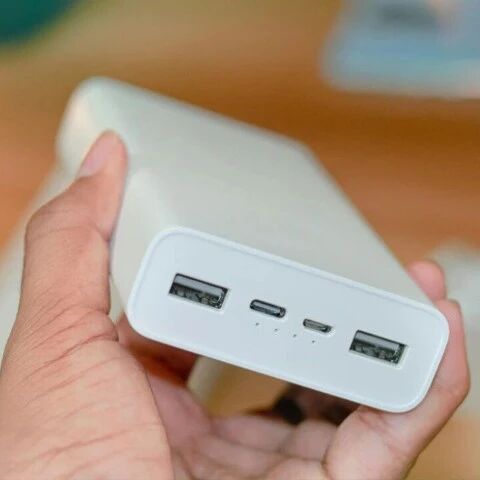
3C认证!能上飞机!高铁上被问了一路的充电宝,就是它!
凤凰网财经· 2025-10-24 13:38
Core Viewpoint - The article discusses the growing concern of "battery anxiety" among consumers, particularly regarding the safety and compliance of portable chargers in light of new regulations [1][3]. Regulation Impact - New regulations require clear and durable 3C certification labels and easily visible capacity information on power banks [5][9]. - Many non-compliant power banks have been confiscated at security checkpoints, highlighting the prevalence of substandard products in the market [7][9]. Product Recommendation - The article promotes the "Huanxiang Fast Charging Power Bank Series" as a reliable choice that meets the new regulations [10][28]. - The recommended models, S16 (10,000mAh) and S17 (20,000mAh), are designed to be compact and stylish, addressing common consumer pain points such as weight and safety [13][17]. Safety Features - The power banks utilize high-performance polymer lithium-ion cells that do not overheat or swell, ensuring user safety [16][39]. - They include smart chips with ten layers of protection against over-voltage and over-temperature, enhancing user confidence [42]. Design and Usability - The S16 model features an external dual-head fast charging cable, while the S17 has a retractable cable design, both eliminating the hassle of carrying extra cables [50][60]. - The compact size of the S16 makes it easy to carry, comparable to a tissue pack, while the S17 can charge multiple devices simultaneously [56][62]. Pricing and Value - The article highlights the competitive pricing of the power banks, with discounts making them an attractive option compared to rental charging solutions [25][87]. - The cost-effectiveness is emphasized, suggesting that investing in these power banks can save consumers money in the long run [87].

调查丨无证共享充电宝仍违规流通,成本骤升与点位战成“拦路虎”
2 1 Shi Ji Jing Ji Bao Dao· 2025-09-24 23:33
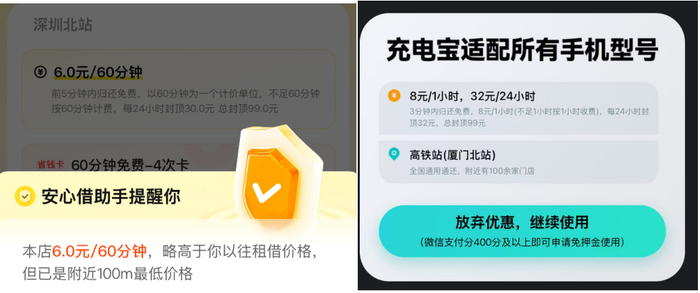
Core Insights - The shared power bank industry is facing increased regulatory scrutiny, with many brands still using unverified or improperly labeled devices despite the new certification requirements [1][2][3] - The cost of certification has risen by approximately 30 yuan per unit, leading to a lack of motivation for companies to update their devices amid fierce competition [3][4] - The shift from direct sales to a "direct-agent co-operation" model has diluted brand control and increased operational costs for agents, impacting product development and compliance efforts [4][5] Regulatory Compliance - The mandatory CCC certification for mobile power banks will take effect from August 1, 2024, prohibiting the sale or use of non-certified products [2][3] - Many existing devices remain in circulation due to past lax regulations and the slow pace of device updates [3][4] Market Dynamics - The competition among brands has intensified, with some agents reporting profit-sharing ratios rising to 70% or even 90% in certain venues [4][6] - The operational costs for agents have increased significantly, leading to a cycle of rising fees and declining service quality [5][6] Pricing Trends - Rental prices for shared power banks have surged, with some locations charging over 10 yuan per hour, moving away from the previous 1 yuan per hour model [6][10] - Despite the price increases, user complaints about high costs and low charging efficiency have risen, indicating a disconnect between price and service quality [8][10] Industry Growth - The shared power bank market is projected to exceed 12.6 billion yuan in 2024, with expectations to reach 40 billion yuan by 2029, alongside a significant increase in user complaints [10]

售卖未获3C认证却粘贴该标志的产品,要退一赔三吗?
Ren Min Wang· 2025-09-24 07:37
Core Points - A merchant was found guilty of fraud for selling a smart hairdryer that did not have the required 3C certification but had a 3C certification mark affixed to it [1][2] - The court ruled in favor of the consumer, ordering the merchant to refund the purchase price and pay three times the amount as punitive damages [2] Group 1: Legal Context - The smart hairdryer in question falls under the category of products that require mandatory certification according to the National Market Supervision Administration's guidelines [2] - The merchant knowingly sold a product without the necessary 3C certification, constituting the act of forging or misusing certification marks, which violates the principle of good faith [2][3] Group 2: Consumer Protection - The case highlights the importance of 3C certification as a standard for assessing product quality and safety, particularly for products that may impact human health and safety [3] - Consumers are advised to verify product certifications and authenticity before making online purchases, including checking packaging details and using official platforms to confirm certification status [3]