ETF市场发展

Search documents
2025年中国境内ETF规模突破6万亿元 为亚洲最大ETF市场
Xin Hua Cai Jing· 2026-02-06 16:21
Group 1 - The core viewpoint of the report indicates that by 2025, China's domestic ETF market has surpassed Japan, becoming the largest ETF market in Asia [1][2] - As of the end of 2025, the total number of ETFs listed globally reached 13,865, with total assets amounting to $19.7 trillion, reflecting a 31% increase from the end of 2024 [1] - The report highlights that the U.S. ETF market accounts for approximately $13.5 trillion, representing 68% of the global market, while Europe and Asia-Pacific account for about $3.2 trillion (16%) and $2.4 trillion (12%) respectively [1] Group 2 - In 2025, China's domestic ETF market exceeded 6 trillion yuan, with the number of listed ETF products reaching 1,381, a 35.7% increase from the end of 2024 [2] - The total scale of ETFs in China reached 6.02 trillion yuan by the end of 2025, marking a 61.4% growth compared to the previous year [2] - The Shanghai Stock Exchange's ETF scale increased to 4.22 trillion yuan, with significant growth in various categories: stock ETFs at 2.72 trillion yuan (30% increase), bond ETFs at 0.6 trillion yuan (291% increase), cross-border ETFs at 0.57 trillion yuan (106% increase), and commodity ETFs at 0.16 trillion yuan (289% increase) [2]
2025境内ETF规模破6万亿登顶亚洲,沪市成交额位居首位
Di Yi Cai Jing· 2026-02-06 12:24
2025年中国大陆ETF规模已超越日本,以约8600亿美元的总规模跃升为亚洲最大的ETF市场。 2025年,境内ETF市场规模先后突破4万亿元、5万亿元、6万亿元,超过日本成为亚洲第一大ETF市 场。其中,沪市ETF成交额、规模分别位居亚洲第一、第二位。 根据2月6日发布的《上海证券交易所ETF行业发展报告(2026)》(下称《报告》),截至2025年底, 境内交易所挂牌上市的ETF数量达到1381只,总规模达6.02万亿元,同比增长61%。其中,沪市共挂牌 ETF797只,最新规模达4.2万亿元,全年成交额达61万亿元。 2025年,资金加速流入境内ETF资金。境内ETF市场资金净流入超1.16万亿元,其中沪市净流入7705亿 元,占比超65%。ETF投资者结构更为多元,沪市ETF参与账户数约1000万,机构投资者持有沪市ETF 规模占比65%。 2026年是"十五五"开局之年,上交所表示,将持续丰富ETF产品高质量供给,不断优化ETF市场配套机 制,引导中长期资金入市,坚持高水平制度型开放导向,提升中国市场影响力竞争力,坚持强监管防风 险导向,筑牢ETF市场高质量发展根基。 中国境内ETF规模跃居亚洲首位 ...
我国境内ETF规模,亚洲第一!上交所最新发布→
证券时报· 2026-02-06 11:54
报告还显示,我国境内ETF市场呈现新发与存量协同推动规模增长的态势。其中,2025年存量产 品规模增长约1.6万亿元,对规模增长贡献约七成;新发产品贡献约0.7万亿元的规模增量,占比 约三成。 在2025年各交易所排名中,上交所ETF成交额位列亚洲第一、全球第三,规模位列亚洲第二、全 球第七。报告显示,2025年,沪市ETF市场规模先后突破3万亿元、4万亿元,最新规模4.2万亿 元,较2024年底规模增长55%(份额增长22%)。 我国境内ETF市场已成为亚洲第一大ETF市场。 2月6日,上交所发布的ETF行业发展报告(2026)显示,2025年,我国境内ETF贡献了亚洲ETF市 场规模的三成增量。截至2025年底,我国境内ETF市场规模约8600亿美元,超过日本的ETF市场 规模,成为亚洲第一大ETF市场。 报告显示,2025年,我国境内ETF市场先后突破4万亿元、5万亿元、6万亿元。截至2025年底,我 国境内交易所挂牌上市的ETF产品数量达1381只,较2024年底增长35.7%;总规模达6.02万亿元, 较2024年底增长61.4%。其中,股票ETF规模3.83万亿元。 2025年,我国境内ETF资金 ...

61万亿元!上交所ETF成交额位列亚洲第一、全球第三
Zhong Guo Jing Ying Bao· 2026-02-06 11:08
Core Insights - In 2025, the total scale of ETFs in mainland China surpassed Japan, reaching approximately $860 billion, making it the largest ETF market in Asia [1] - The Shanghai Stock Exchange (SSE) ranked first in Asia and third globally in ETF trading volume, with a total trading volume of 61 trillion yuan, reflecting a compound annual growth rate of 42% over the past five years [1] - Daily average trading volume for ETFs on the SSE was 299.9 billion yuan, indicating increasing market liquidity [1] Trading Volume Breakdown - The total trading volume for stock ETFs, bond ETFs, cross-border ETFs, and commodity ETFs in 2025 was 15.8 trillion yuan, 24.4 trillion yuan, 13.1 trillion yuan, and 1.9 trillion yuan respectively, representing increases of 42%, 275%, 134%, and 217% compared to 2024 [1] - Three products in the domestic ETF market had daily average trading volumes exceeding 10 billion yuan, all listed on the SSE, with the Hai Futong CSI Short Bond ETF achieving a record daily average of 18.47 billion yuan, a 69% increase from 2024 [1] - Among the top 30 ETFs by daily average trading volume on the SSE, 18 had daily volumes exceeding 5 billion yuan, with 82% of these being domestic products, an increase of 13 products from 2024 [1]
中金2026年展望 | ETF市场:云程发轫
中金点睛· 2026-01-21 23:36
Core Viewpoint - The ETF market is expected to continue its growth in both scale and structure, with a focus on the importance of institutional funds and the potential decline in the influence of thematic ETFs in the future [3]. Domestic Market: Policy and Market Development - The regulatory environment is enhancing the ETF industry ecosystem, with various measures introduced by the CSRC and exchanges to support the establishment and expansion of ETF products [4]. Scale and Growth: Market Expansion - By the end of 2025, the ETF market size exceeded 6 trillion yuan, marking a 61.7% increase from the beginning of the year, with the number of products rising to 1,381, a growth of 33.7% [5]. - All types of ETFs experienced varying degrees of growth, with stock, bond, commodity, and money market ETFs increasing by 44%, 376%, 231%, and 11% respectively [5]. Product Structure and Trends - As of the end of 2025, stock ETFs dominated the market, comprising 93% of the total number of ETFs, while their scale accounted for 79% of the total ETF market size [7]. - Thematic and cross-border products saw significant growth, with cross-border products increasing by 120% [11]. Fund Flows and Investor Behavior - Stock ETFs experienced a net inflow of approximately 450 billion yuan in 2025, a decrease of 57% compared to 2024, indicating a "buy high, sell low" behavior among investors [12]. - Bond ETFs saw explosive growth, with a total scale increase of 376% to 828.2 billion yuan, driven by policy support and new product launches [13]. Competitive Landscape - The competitive landscape for ETFs is becoming more intense, with a decline in concentration among fund companies and products, as evidenced by the market share of the top five companies dropping from 67% to 56% [15]. Product Issuance: Record Highs - In 2025, a record 356 passive ETFs were issued, with a total issuance scale of 251.2 billion yuan, marking a 106% increase from 2024 [15]. Outlook for 2026: Growth Potential - The absolute scale of the ETF market is expected to continue rising, with a projected growth rate of 0% to 5% from new issuances, while net inflows are anticipated to contribute 10% to 30% to the growth [30]. - The market is expected to see a slight increase in the share of passive products due to ongoing reforms and the demand for tool-based passive products [31]. Active vs. Passive Investment - Active equity products are predicted to slightly outperform index products in 2026, with a forecasted excess return of 2.5% [47]. - The market is expected to remain stable or show slight upward trends, supporting the performance of active products [47]. Thematic ETFs: Future Prospects - Thematic ETFs have regained prominence in 2025, primarily driven by significant capital inflows, contrasting with previous years where growth was mainly from new product issuances [48].

ETF市场开年狂飙
Di Yi Cai Jing Zi Xun· 2026-01-14 16:09
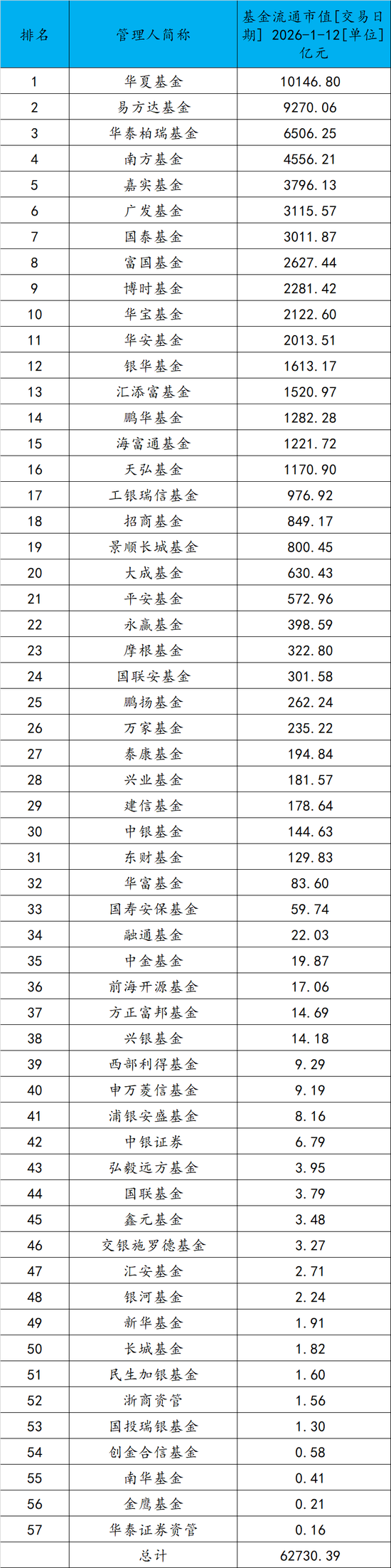
Group 1 - The A-share market has seen a significant increase in trading activity, with daily transaction volumes reaching historical highs, surpassing 30 trillion yuan for four consecutive days [2][3] - The total scale of ETFs in the market has reached 6.24 trillion yuan as of January 13, marking an increase of 221.7 billion yuan since the end of last year, indicating a rapid expansion [3][4] - Stock ETFs have been the primary driver of this growth, with over 220 billion yuan added to their scale since the beginning of the year, supported by net inflows exceeding 25 billion yuan [3][4] Group 2 - The emergence of the first trillion-yuan ETF manager, Huaxia Fund, marks a milestone in the industry, holding over 10.08 trillion yuan in ETF assets, accounting for 16.16% of the total market [6][7] - E Fund follows closely with over 9.17 trillion yuan in ETF assets, while the third-largest, Huatai-PB Fund, has 6.43 trillion yuan, highlighting a significant concentration of resources among top firms [6][7] - The top three firms collectively manage over 2.57 trillion yuan, representing more than 40% of the total market scale, indicating a trend of resource concentration towards leading institutions [6][8] Group 3 - The ETF market is evolving beyond mere scale competition, with firms focusing on product naming standardization, dividend distribution, and ecosystem development [9][10] - Dividends have become a crucial method for funds to reward investors, with significant distributions announced, including a record single dividend of 11 billion yuan from Huatai-PB's ETF [10] - The industry is witnessing a wave of name changes for ETFs to enhance product recognition and reduce selection costs for investors, with several leading firms already implementing these changes [10][11] Group 4 - Smaller ETF managers face significant challenges, with 27 out of 58 firms having less than 10 billion yuan in assets, indicating a tough competitive landscape [8][9] - The competition is shifting towards a comprehensive evaluation of fund managers' capabilities, including research, operations, and service quality, rather than just asset size [11][12] - The future of the ETF market is expected to remain robust, driven by increasing penetration of public funds in asset allocation and a growing acceptance of index investing among investors [11]

万亿ETF大厂诞生!
Xin Lang Cai Jing· 2026-01-12 13:43
来源:城商行研究 今天市场太热闹了!有传闻DB某基金单日申购100亿+,后来有辟谣说少个0,不过很明显大家都赚钱 了。 2026年1月12日,公募基金行业迎来标志性时刻。根据最新发稿前的wind数据统计,华夏基金管理有限 公司旗下交易所交易基金的流通市值达到10146.80亿元,成为国内首家万亿ETF管理规模的基金公司。 这一里程碑事件意味着,单家公司的ETF管理规模已突破万亿元大关,中国ETF市场发展迈入全新阶 段。 | 排名 | 管理人简称 | 基金流通市值 交易日 期] 2026-1-12[单位] | | --- | --- | --- | | | | 亿元 | | 1 | 华夏基金 | 10146. 80 | | 2 | 易方达基金 | 9270. 06 | | 3 | 华泰柏瑞基金 | 6506. 25 | | র্ব | 南方基金 | 4556. 21 | | 5 | 嘉实基金 | 3796. 13 | | 6 | 广发基金 | 3115. 57 | | 7 | 国泰基金 | 3011. 87 | | 8 | 富国基金 | 2627. 44 | | 9 | 博时基金 | 2281. 42 | | ...
6万亿ETF再出爆款!华银健康生活两日飙涨19%、百亿梯队扩至128只
Sou Hu Cai Jing· 2026-01-07 04:00
Group 1 - The A-share market continues its strong performance, with the Shanghai Composite Index rising 1.5% to 4083.67 points, marking a 13-day winning streak and reaching a new high in over 10 years [2] - The trading volume in the Shanghai, Shenzhen, and North markets reached 2.83 trillion yuan, with over 4100 stocks rising, particularly in sectors related to commercial aerospace, brain-machine interfaces, semiconductors, and pharmaceuticals [2] - The ETF market has shown remarkable performance this year, with 2324 ETFs rising over 5%, and 96 ETFs in popular sectors like satellite industry, semiconductors, and healthcare exceeding 7% growth, led by the Huayin Health Life Theme ETF with a 19.39% return [2] Group 2 - The ETF market has experienced explosive growth, with the total ETF scale surpassing 2 trillion yuan in August 2023 and projected to reach 3 trillion yuan by September 2024 [2] - By the end of 2025, the net inflow into ETFs exceeded 1.17 trillion yuan, with the total ETF scale reaching 6.02 trillion yuan, surpassing Japan to become the largest ETF market in Asia [2] - The competition among fund managers has intensified, with the top three firms—China Asset Management, E Fund, and Hua Tai-Pu Rui—holding a combined market share of 40.91% [4] Group 3 - The number of ETFs with over 10 billion yuan in assets has nearly doubled, increasing from 66 to 128, with China Asset Management leading with 17 such ETFs [7] - The three leading CSI 300 ETFs have shown significant growth, with China Asset Management's CSI 300 ETF increasing by 646.47 billion yuan in size [8] - By the end of 2025, the total size of seven ETFs exceeding 100 billion yuan reached 1.57 trillion yuan, accounting for over a quarter of the total ETF market [8] Group 4 - The ETF market's growth is supported by favorable policies, including the China Securities Regulatory Commission's initiatives to enhance the index fund product system and streamline ETF registration processes [9] - In 2025, the number of newly issued ETFs reached 351, bringing the total to 1402, with stock ETFs accounting for the largest share, nearing 3.83 trillion yuan [9] - Bond ETFs have emerged as one of the fastest-growing categories, with their size increasing by 4.76 times to 8290.24 billion yuan, raising their market share from 4.66% to 13.77% [10] Group 5 - The technology sector has seen significant ETF growth, with several technology-themed ETFs achieving over 100% annual returns, including the Guotai Chuangye Board AI ETF with over 150% growth [11] - Hong Kong stock-related ETFs have also performed well, with over 500 billion yuan added in size, driven by the recovery of Hong Kong stock valuations [11] - The future of the ETF market appears promising, with increasing demand for stable and transparent returns, and a shift towards ETFs as fundamental investment tools [11]

接连催生3只400亿元单品!这类ETF杀疯了 单月吸金近1000亿元|ETF规模周报
Mei Ri Jing Ji Xin Wen· 2026-01-04 07:14
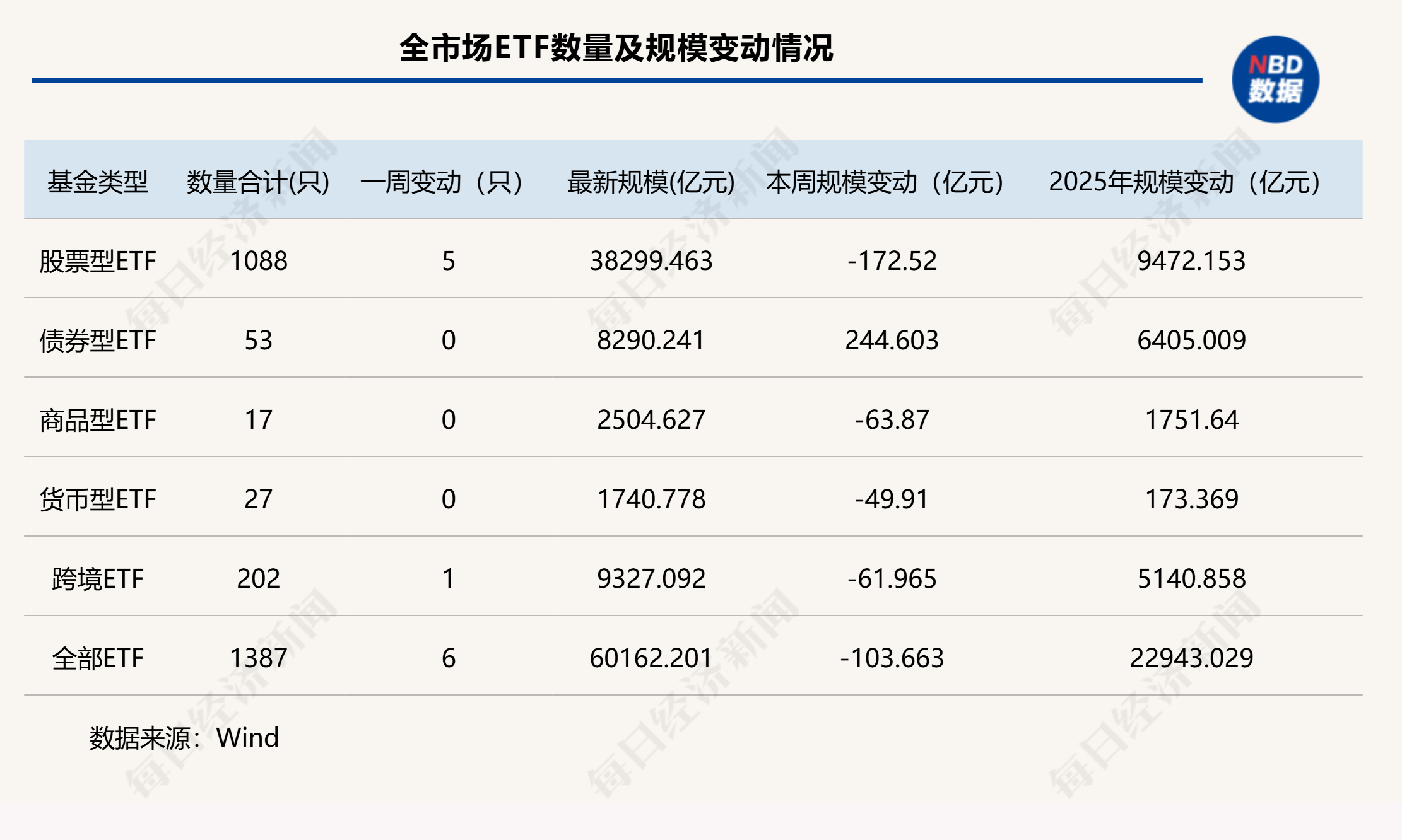
本周A股仅三个交易日,主要指数震荡调整,沪深300指数周跌0.59%,中证A500指数跌0.44%;创业板指周跌1.25%,科创50指数微跌0.12%;港股交易了4 天,凭借1月2日的大涨,恒生指数周涨2.01%,恒生科技指数大涨4.31%。 本周A股、港股在震荡中承前启后,ETF市场再度上演"股债跷跷板"效应:一边是股票型ETF缩水超170亿元,另一边债券型ETF却再度吸金超240亿元,成为 本周的大分类主角。 随着市场震荡调整,本周ETF规模小幅下降,但仍保持在6万亿元上方。Wind数据显示,截至2026年1月4日,本周新增6只ETF,上市ETF总数量达1387只, 总规模微降至6.02万亿元。 从规模来看,本周全市场ETF下降103.96亿元,主要源自股票型ETF超170亿元的缩水,债券型ETF则在上周大增超600亿元的基础上继续保持强势,本周再 增244.6亿元;此外,商品型ETF、跨境ETF和货币型ETF本周规模分别缩水63.87亿元、61.97亿元和49.91亿元。 | 塞等类型 | 数量合计(只) | -周变动 (只) | 最新规模(亿 | | --- | --- | --- | --- | | ...
更猛“激战”要引爆?多家公司摩拳擦掌 ETF市场有望迎来更多新力军杀入
Sou Hu Cai Jing· 2026-01-04 00:15
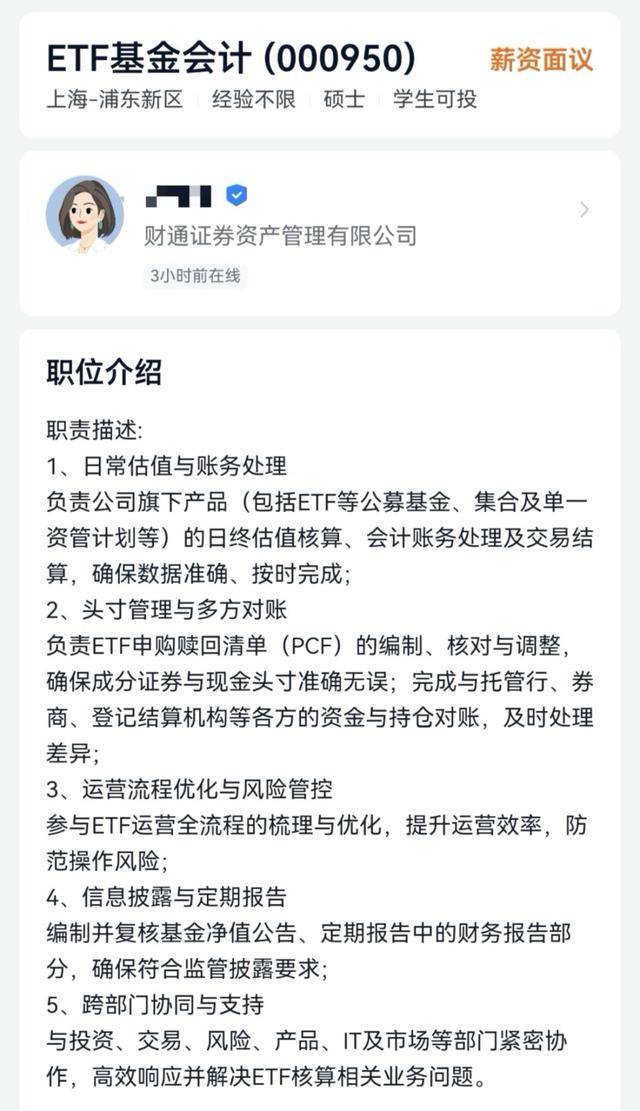
Core Insights - The ETF market in China has seen significant growth, with an increase of over 2 trillion yuan in 2025, making it a crucial growth area for the public fund industry [1][2] - Numerous fund companies, including newly established ones and traditional securities asset management institutions, are actively recruiting talent and preparing to enter the ETF market [1][2] Industry Trends - The ETF market, valued at approximately 6 trillion yuan, is attracting more institutions, leading to increased competition and potential for product innovation [2][10] - The entry of new players is driven by a combination of policy support, market demand, and the advantages of passive investment strategies [13][14] Recruitment and Talent Acquisition - Fund companies are intensifying their recruitment efforts for ETF-related positions, such as fund accountants and system operation roles, to support their ETF initiatives [2][5][10] - Positions require specific expertise in ETF operations, accounting, and system management, indicating a focus on building a skilled workforce for ETF management [4][7] Challenges for New Entrants - New entrants face challenges such as resource allocation, liquidity management, and brand building in a market dominated by established players [15][16] - Strategic focus on long-term goals and differentiation in product offerings is essential for new companies to succeed in the competitive ETF landscape [15][16] Market Dynamics - The ETF market is evolving towards a more balanced structure and deeper services, driven by the influx of new institutions [17] - The demand for low-cost, transparent, and liquid investment products is increasing among both institutional and individual investors, further supporting the growth of ETFs [14][15]