
Margin Pressure

Search documents
Waldencast plc (NASDAQ:WALD) Financial Overview and Market Position
Financial Modeling Prep· 2025-12-10 02:00
Core Insights - Waldencast plc is a leading skincare company focused on advanced treatments for skin aging and damage, with a strong market presence and a product lineup that includes Obagi Medical and Obagi Clinical [1] Financial Performance - Waldencast's financial performance shows margin pressures and negative earnings due to high selling, general, and administrative expenses, alongside significant debt levels [3] - In Q1 2025, Waldencast reported a slight decline in net revenue to $65.4 million, down 4.1% from the previous year, but achieved an adjusted gross margin of 76.4% [3][6] - The company's Q4 2024 results indicated substantial growth, with net revenue reaching $72.1 million, a 29.4% increase, and adjusted EBITDA of $11.2 million, doubling from the same quarter the previous year [4][6] Market Position and Analyst Sentiment - Analysts have adjusted their price targets for Waldencast, decreasing from $4.13 to $3.25, reflecting a recalibration of expectations due to operational challenges or market dynamics [2][6] - D.A. Davidson presents a contrarian view with a higher price target of $15.50, indicating a more optimistic outlook on Waldencast's potential [2] Investor Engagement - Earnings calls are closely monitored by investors and stakeholders, providing insights into the company's financial standing, strategic initiatives, and future prospects [5]



Down 51.9% YTD, Is Lululemon Stock a Buy Ahead of December 11?
Yahoo Finance· 2025-12-08 16:04
Core Viewpoint - Lululemon Athletica is experiencing significant challenges in 2025, with a year-to-date stock decline of 51.9%, driven by slowing U.S. sales and changing consumer preferences in the athletic apparel market [1] Group 1: Sales and Consumer Behavior - Lululemon's products, once trendsetters, are now perceived as predictable, leading to decreased customer visits and purchase frequency [2] - The company is facing a cautious consumer environment, particularly in discretionary spending on performance wear [1] Group 2: Competitive and External Pressures - Increased competition from both premium brands and emerging challengers is intensifying market pressures on Lululemon [3] - Recent tariff changes have negatively impacted profitability, particularly as a significant portion of U.S. online orders is fulfilled from Canada, which has seen the elimination of the $800 de minimis threshold [3] Group 3: Financial Performance and Projections - Lululemon's Q3 revenue is projected to be between $2.47 billion and $2.5 billion, reflecting a year-over-year increase of 3% to 4%, a slowdown from the 7% growth in the first half of fiscal 2025 [6] - Management is implementing pricing adjustments, vendor negotiations, and cost-cutting initiatives to address ongoing cost pressures and slowing demand, although these measures may take time to positively impact financials [5] Group 4: Stock Performance and Market Sentiment - Despite a recent stock gain of approximately 10.7% over the past month, historical trends indicate that Lululemon shares have declined following earnings announcements in the last three quarters [4] - Options traders are anticipating a potential post-earnings stock movement of around 10.1%, which is lower than the average four-quarter movement of 17.1% [4]

Margins Flat, Innovation High: Is PG Trading Growth for Stability?
ZACKS· 2025-11-26 17:11
Core Insights - Procter & Gamble (PG) is focusing on stability over acceleration, with flat core operating margins and modest organic sales gains, indicating a cautious growth profile [1][8] - The company is increasing its innovation efforts, launching significant product upgrades, including a major revamp of the Tide liquid formula and premium products across various brands [2][8] - Heavy spending on innovation and restructuring may limit near-term earnings leverage, but the company aims for sustainable growth rather than short-term margin expansion [3][8] Innovation Strategy - PG is introducing meaningful product upgrades, including the largest Tide formula change in 20 years and premium launches in Olay, SK-II, and Baby Care, to drive integrated superiority [2] - Despite the challenges, PG views innovation as essential for reigniting category growth and restoring market share, particularly in North America [2] Financial Performance - PG's shares have declined approximately 11.4% year-to-date, slightly better than the industry's 12% drop [7] - The company has a forward price-to-earnings ratio of 20.70X, higher than the industry average of 18.45X, indicating a premium valuation [9] - The Zacks Consensus Estimate for PG's fiscal 2025 and 2026 EPS shows year-over-year growth of 2.6% and 5.7%, respectively, with upward revisions in estimates over the past month [10]


Dell stock: why it's worth unloading heading into 2026
Invezz· 2025-11-17 18:25
Core Viewpoint - Dell Technologies Inc is facing significant pressure as a senior Morgan Stanley analyst has double-downgraded the stock to "underweight," indicating potential downside risks ahead [4][7]. Financial Performance - The price objective for Dell has been trimmed to $110, suggesting an approximate 18% downside from its previous close [5]. - Dell's stock has already decreased by over 25% from its year-to-date high of around $167 earlier this month [5][7]. Market Conditions - Rising memory costs, particularly in DRAM and NAND, are expected to shrink Dell's margins moving forward [8]. - Historical patterns indicate that previous memory upcycles (2016 to 2018) led to a significant contraction in Dell's gross margins [9]. Technical Analysis - Dell shares have slipped below their 100-day moving average and are approaching the 200-day moving average at the $119 level, which could signal further downside if breached [11]. - The relative strength index (14-day) is under 30, indicating that bearish sentiment remains strong in the near term [12]. Seasonal Trends - Historically, Dell's stock has ended both December and January in the red over the past four years, suggesting limited near-term catalysts for a rebound [12][13]. Future Outlook - Despite recent long-term forecasts raised due to AI tailwinds, caution is advised until margin visibility improves and technical support stabilizes [14].


Flowers Foods(FLO) - 2025 Q3 - Earnings Call Transcript
2025-11-07 14:32
Financial Data and Key Metrics Changes - The company reported a gross margin decrease of 190 basis points and an EBITDA margin decrease of 160 basis points, despite lower ingredient costs as a percentage of sales [38][40] - The company is experiencing margin pressure primarily due to negative price mix and lower volumes [38] Business Line Data and Key Metrics Changes - The food service business has been under pressure due to the economic environment and consumer sentiment, but profitability improvements from previous years are still delivering positive results [25][30] - The Simple Mills acquisition is performing in line with expectations, with strong collaboration and integration efforts noted [20] Market Data and Key Metrics Changes - Consumer sentiment reached a low point in Q3, but there are expectations for category demand to normalize as the economy strengthens [8][9] - The company noted a significant shift in consumer preferences from traditional loaf to more value-oriented brands, impacting sales in the traditional bread category [46][47] Company Strategy and Development Direction - The company is focused on redefining traditional loaf products to align with evolving consumer preferences, emphasizing value and better-for-you attributes [4][47] - There is a commitment to continue investing in consumer offerings and innovation, despite short-term margin pressures [12][48] Management's Comments on Operating Environment and Future Outlook - Management anticipates that the category will stabilize over time, although some weakness is expected to continue into 2026 [9][16] - The company acknowledges the challenges posed by economic uncertainty but remains optimistic about long-term growth due to a strong brand portfolio and dedicated team [47] Other Important Information - This earnings call marked the final appearance of the CFO, Steve Kinsey, after 18 years with the company [5] Q&A Session Summary Question: Consumer sentiment and category demand normalization - Management believes that while it is difficult to pinpoint an exact timeline, the category will stabilize over time, with ongoing consumer focus and investment in better-for-you offerings [9][10] Question: Margin pressure from new investments - Management acknowledged that new investments may pressure margins in the short term but expects improvements as scale and efficiency increase [12] Question: Food service and private label performance - The food service business is under pressure, but profitability improvements are still evident. Private label performance has been weak due to narrowed price gaps with lower-priced branded products [25][26] Question: Expectations for 2026 gross margins - Management expects inflationary pressures on input costs for 2026, with ongoing volatility in wheat commodities [30] Question: Dividend and capital allocation strategy - The company is focused on delivering shareholder value and reassessing capital allocation, including CapEx and dividends, without making premature decisions [35][36] Question: Complexity of brand portfolio - Management acknowledged the complexity of managing multiple brands but emphasized the importance of meeting consumer needs and optimizing cost structures [51][53]

Why Super Micro's stock is falling after earnings — even as guidance moves higher
MarketWatch· 2025-11-04 21:49
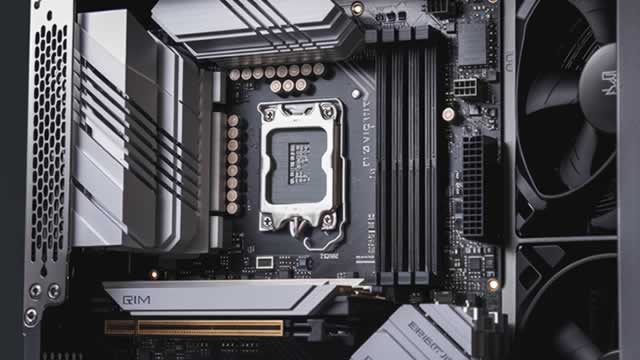
Core Insights - Super Micro is experiencing margin pressure in the latest quarter, which is indicative of a competitive server market [1] Company Summary - The company continues to face challenges related to its profit margins, suggesting that the competitive landscape in the server market is intensifying [1]

Archer Daniels Midland Cuts Outlook on Margin Pressure
WSJ· 2025-11-04 11:53
Group 1 - Archer Daniels Midland has cut its full-year earnings outlook due to pressured margins [1] - The company reported higher profit and revenue in the third quarter [1] - The operating environment remains dynamic for the company [1]


Hershey Shares Slide Despite Strong Q3 Earnings and Revised Full-Year Guidance
Yahoo Finance· 2025-10-30 15:29
Core Insights - Hershey delivered strong third-quarter earnings, significantly exceeding Wall Street expectations, leading to an increase in full-year guidance [1][2][8] Financial Performance - Adjusted earnings per share were $1.30, beating consensus estimates of $1.06 by $0.24, or 22.6% [2] - Revenue reached $3.18 billion, surpassing the $3.12 billion estimate by $66 million [2] - Gross profit declined 15.8% year over year to $1.04 billion, with gross margin contracting by 870 basis points [5] - Operating income fell 29.1% to $434.6 million, and net income dropped 38.1% to $276.3 million [5] Business Segments Performance - North America Confectionery, the largest division, grew 5.6% to $2.62 billion [4] - North America Salty Snacks expanded 10% to $321 million [4] - International revenue climbed 12.1% to $244.8 million, indicating solid global demand [4] Strategic Insights - CEO Kirk Tanner emphasized that strong innovation and strategic brand investments drove momentum across business segments, indicating confidence in the company's strategy [3] - Despite margin pressures from higher commodity costs and tariffs, management raised full-year guidance, suggesting confidence in sustaining volume momentum and pricing actions [6][8]

Is Shake Shack's Expansion Dream A Recipe For Disaster?
Benzinga· 2025-10-06 18:45
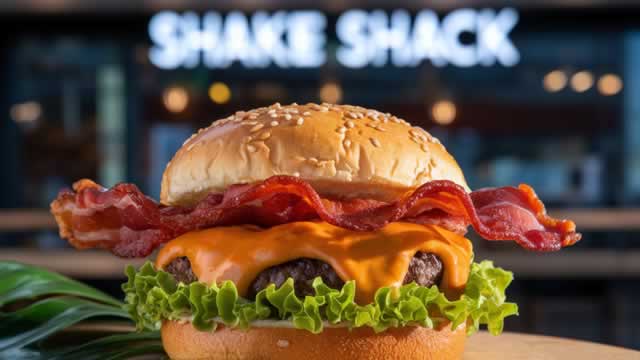
Core Viewpoint - Shake Shack Inc. is experiencing margin pressure and slowing same-store sales growth due to rising beef costs and competitive pricing in the fast-casual sector, leading to a downgrade by Bank of America [1][4]. Financial Performance - Bank of America downgraded Shake Shack to Underperform from Neutral and reduced its price target from $148 to $86, indicating an 11% downside from the current share price of $96.79 [1]. - Analyst Sara Senatore has lowered earnings estimates for Shake Shack, projecting $1.19 per share for 2025 (down from $1.26), $1.53 for 2026 (down from $1.68), and $2.06 for 2027 (down from $2.13) [6]. - The 2026 EBITDA forecast was also cut to $235.8 million from $245.8 million [6]. Market Trends - The fast-casual sector is seeing aggressive pricing strategies, with Shake Shack's menu prices rising approximately 19% since Q3 2023, compared to an 8.6% increase by competitors like Chipotle [4]. - Fast-food hamburger restaurants are focusing on price-led value deals, while casual dining restaurants emphasize quality and portion size [5]. Growth Strategy - Shake Shack plans to accelerate domestic development by approximately 15% year-over-year, aiming for 1,500 U.S. locations despite concerns about market saturation and potential sales cannibalization [5][6]. - The company has seen a slowdown in unit growth from 44% in 2014 to a projected 12% in 2024 [5]. Sales Projections - Bank of America projects same-store sales growth to slow, estimating 2% growth in Q3 versus a 2.7% consensus, 2% in Q4 versus 2.8%, and 1.5% for fiscal 2026 compared to a 2.4% consensus [7]. Valuation - The $86 price forecast is based on the assumption that Shake Shack will grow its store base by 13% annually to about 3,000 global locations in 10 years, with modest average unit volume growth of 1.5% [8].

3 Key Takeaways From Nike's Earnings. Is This a Buying Opportunity?
Yahoo Finance· 2025-10-06 13:53
Core Insights - Nike reported a 1% increase in revenue for fiscal Q1 2026, reaching $11.7 billion, but this growth masks underlying challenges, with a 1% decline on a currency-neutral basis [2][5] - The divergence between Nike's Direct and Wholesale channels indicates a shift in strategy, with Direct sales declining by 4% while Wholesale grew by 7% [3][5] - Regional performance varied, with North America showing strength, particularly in apparel, while Greater China faced significant declines, particularly in footwear and equipment [4][5] Financial Performance - Nike's net income fell by 31%, with diluted EPS dropping from $0.70 to $0.49, reflecting a 30% decline [9] - Gross margin contracted by 320 basis points to 42.2%, impacted by increased discounting, unfavorable channel mix, and tariff pressures [9] - Operating expenses remained stable, with a slight decrease in selling and administrative costs, but were insufficient to counteract margin declines [9]
