
OLED技术

Search documents
中国首条第8.6代AMOLED生产线提前点亮
Zhong Guo Chan Ye Jing Ji Xin Xi Wang· 2026-01-12 22:09
Core Viewpoint - BOE has achieved a significant breakthrough in the research and development of medium-sized OLED technology with the successful lighting of its first product from the newly built 8.6-generation AMOLED production line in Chengdu, laying a solid foundation for future mass production and delivery [1] Investment and Production Capacity - The total investment for the new production line is 63 billion yuan, with a designed capacity of 32,000 glass substrates per month, focusing on high-end touch OLED displays for smart terminals such as laptops and tablets [1] - With the new production line, BOE will operate four AMOLED production lines, continuously enhancing its OLED production capacity [1] Technology and Efficiency - The production line utilizes FMM product technology compatible with flexible OLED and Hybrid OLED, offering significant advantages in yield, production efficiency, product quality, and luminous efficiency compared to other technological routes [1] - The adoption of low-temperature polycrystalline silicon oxide (LTPO) backplane technology and Tandem stacked light-emitting device preparation processes enables the OLED screens to achieve lower power consumption and longer lifespan, driving the iterative upgrade of downstream laptop and tablet products [1] Historical Context and Future Outlook - BOE has already established three 6th-generation flexible AMOLED production lines in Chengdu, Chongqing, and Mianyang, with a cumulative OLED display shipment exceeding 500 million units [1] - The successful lighting of this new production line and its planned mass production next year will further solidify BOE's position in the OLED market [1]

深天马与OLED材料巨头签署长期合作协议
WitsView睿智显示· 2026-01-06 03:57
Group 1 - UDC announced a long-term OLED materials supply and licensing agreement with Tianma Microelectronics, reinforcing their collaboration in advancing OLED technology globally [1] - UDC has been collaborating with Tianma since 2016, with previous agreements extending their partnership in OLED technology [1] - UDC's core product, phosphorescent OLED (PHOLED) materials, is essential for manufacturing high-performance OLED devices, supported by over 6,500 patents [1] Group 2 - UDC reported a cumulative revenue of $477.7 million (approximately 3.336 billion RMB) for the first three quarters of 2025, with material sales revenue of $257.4 million and licensing income of $202.6 million, maintaining net profit at $175.7 million compared to the previous year [3] - In November 2025, UDC reached a final agreement with Merck Group to acquire a portion of OLED-related patent assets, covering over 300 authorized and pending patents globally [4] - The acquired patents focus on advanced OLED device structures and related material technologies, with an average remaining validity of about 10 years, enhancing UDC's patent coverage in key emitting materials [4]


LG Display将推多款车载OLED新品
Xin Lang Cai Jing· 2026-01-05 10:38
Core Viewpoint - LG Display is set to showcase advanced OLED technology products specifically designed for automotive applications at the upcoming International Consumer Electronics Show, highlighting innovations such as a 33-inch flexible rollable OLED panel and a 51-inch "pillar-to-pillar" ultra-wide OLED display [2][3][4] Group 1: Product Innovations - The 33-inch flexible rollable OLED panel is based on P-OLED technology, allowing for local bending with a radius of approximately 3 centimeters, inspired by scrollable mobile devices [2][3] - This panel can display a smaller area for essential information like navigation while driving, and can expand to a full 33-inch screen when the vehicle is in autonomous driving mode or parked, catering to diverse user needs for information and entertainment [2][3] - The 51-inch "pillar-to-pillar" OLED panel features a design that extends from one A-pillar to the other, breaking traditional spatial limitations of in-car displays and enhancing the overall human-machine interaction experience [4] Group 2: Future Developments - LG Display plans to showcase a transparent display using Micro LED technology and a large OLED panel with a peak brightness of up to 4500 nits [3][4] - Starting in 2026, multiple OLED panels for TVs and monitors will upgrade to a four-layer stacked light-emitting structure, incorporating new light management technology to optimize display performance by absorbing and dispersing ambient light, thereby enhancing brightness and picture quality [3][4]
中国首条第8.6代AMOLED生产线首款产品正式点亮
Di Yi Cai Jing· 2025-12-30 09:16
Core Viewpoint - BOE has successfully lit up the first product of its 8.6-generation AMOLED production line five months ahead of schedule, marking a significant milestone in the project and indicating a key breakthrough in medium-sized OLED technology development and mass production preparation [2] Group 1 - The successful lighting of the first product signifies a major milestone following the early completion of the production line [2] - This achievement establishes a solid foundation for subsequent product mass production and delivery [2] - The project has transitioned from the "construction phase" to the "operational phase" [2]
总额近1800亿,京东方、TCL华星、惠科扩产项目盘点
WitsView睿智显示· 2025-12-26 04:09
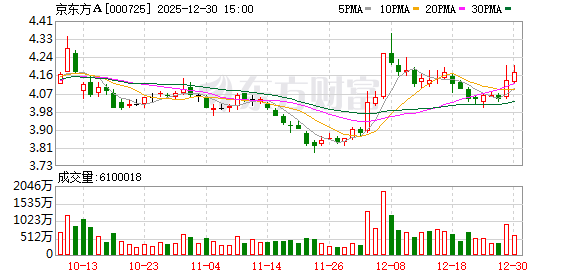
Core Viewpoint - The article emphasizes the ongoing investments by major panel manufacturers in the OLED sector to maintain competitive advantages and enhance technological capabilities, with a significant focus on high-generation OLED production lines [1][6]. Investment Overview - In the past two years, the total planned investment by the three major domestic panel manufacturers amounts to approximately 178.6 billion yuan, covering OLED, LCD, MLED, and E-paper sectors [3]. - The investment breakdown shows that OLED investments account for 55% of the total, with significant projects in the 8.6-generation AMOLED and printed OLED production lines [6]. Company-Specific Investments - BOE (京东方) has focused its investments on the 8.6-generation AMOLED production line, with a total investment of 63 billion yuan, while also consolidating its leadership in the LCD sector [1]. - TCL Huaxing (TCL华星) is investing 29.5 billion yuan in an 8.6-generation printed OLED production line and 1.5 billion yuan in a pilot verification platform for printed OLED technology [1]. - HKC (惠科) plans to invest 3 billion yuan in a new OLED R&D upgrade project in Changsha, aimed at developing OLED materials and devices [1]. Sectoral Investment Focus - The investment in the LCD sector is primarily through mergers and acquisitions, which do not significantly increase overall LCD production capacity but rather facilitate capacity transfers among manufacturers [7]. - In the MLED sector, investments include both Mini LED backlight and direct display technologies, enhancing competitiveness and technological levels, particularly in the mid-size OLED market [8]. Future Outlook - The article anticipates continued investments in OLED technology, with a potential extension into upstream materials to ensure supply chain security [8].


94.43亿!维信诺8.6代OLED项目获新注资
WitsView睿智显示· 2025-12-19 02:39
Core Viewpoint - The company, Visionox, is advancing its investment in the Hefei 8.6 Generation Flexible Active Matrix Organic Light Emitting Diode (AMOLED) production line project, with a total investment of 550 billion yuan, aiming to enhance production capacity and efficiency in the display industry [1][2]. Group 1: Investment Details - On December 18, Visionox announced a capital contribution of 39.18 billion yuan for the second phase of the Hefei Guoxian project, resulting in a shareholding of 37.73% [1]. - The second phase capital contribution totals 94.43 billion yuan, with Hefei Jianxiang and Hefei Xincheng each contributing 27.625 billion yuan, holding 31.13% each [1]. - The total investment for the project is set at 550 billion yuan, with an initial registered capital of 20 billion yuan, where Hefei Jianxiang and Hefei Xincheng contribute 16 billion yuan (80%), and Visionox contributes 4 billion yuan (20%) [2]. Group 2: Project Specifications - The Hefei Guoxian project will cover an area of approximately 800,000 square meters, with a designed capacity of 32,000 glass substrates per month [3]. - This production line will be the world's first to utilize the ViP technology without Fine Metal Mask (FMM), targeting medium-sized applications such as tablets, laptops, and automotive displays [3]. - Construction is scheduled to begin in September 2024, with the main factory roof expected to be completed by August 2025 [3]. Group 3: Financial Implications - The funding for the investment will come from self-raised funds, specifically a new policy financial tool of 39.18 billion yuan applied for by the company [3]. - The project has a long construction cycle, and the registered capital will be injected in phases according to the project's progress, which is not expected to significantly impact the company's financial status or cash flow in the short term [3].

苹果一体机iMac也将采用OLED?
WitsView睿智显示· 2025-12-18 04:56
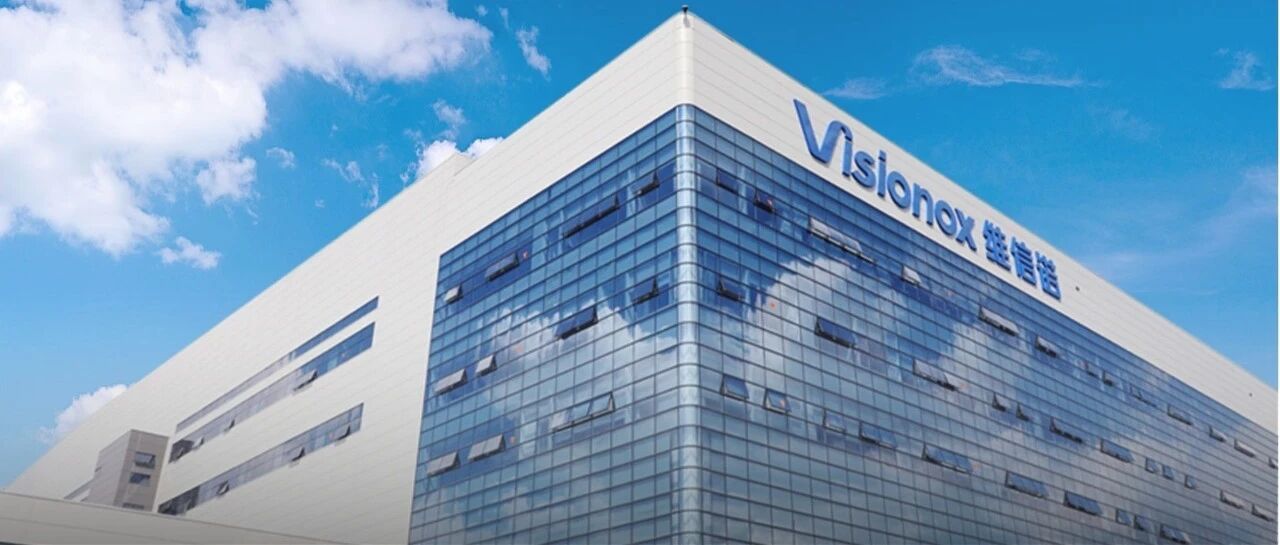
Core Viewpoint - Apple is inquiring about the development of OLED panels for its iMac series, signaling a potential shift from LCD to OLED technology for its all-in-one computers [1][2]. Group 1: OLED Development Inquiry - Apple has issued a Request for Information (RFI) to Samsung Display and LG Display regarding the development of OLED panels for the iMac [1]. - The specifications requested by Apple for the iMac OLED panels include a size of 24 inches, a brightness of 600 nits, and a pixel density of 218 PPI [2]. Group 2: Technology and Manufacturing - Samsung Display is focusing on a 5-layer stacked QD-OLED technology to meet the iMac OLED requirements, enhancing overall brightness by adding a green layer [3]. - LG Display is likely to adopt a 5-layer stacked W-OLED display to address the iMac OLED challenge, similar to Samsung's approach [4]. Group 3: Future Projections - Apple aims to complete the development of the iMac OLED panels by 2027 to 2028, with the actual product release expected to be later than this timeline [4]. - Both Samsung and LG are actively researching RGB OLED solutions for larger displays, although current stable production is limited to smaller sizes [2][4].

维信诺:第四代pTSF技术目前已实现量产商用
Zheng Quan Ri Bao Wang· 2025-12-12 11:15
Core Viewpoint - The company has developed a fourth-generation pTSF technology in collaboration with Tsinghua University, addressing the efficiency decline of OLEDs at high brightness and significantly extending device lifespan [1] Group 1: Technology Development - The new pTSF technology enhances OLED performance by combining the high color purity and stability of fluorescence with the high efficiency of phosphorescence, while also reducing the use of expensive metals [1] - This technology has already achieved mass production and is being utilized in high-end flagship products from brand terminals [1] Group 2: Market Impact - The introduction of this technology significantly improves user experience and is expected to help the company increase its market share in the high-end segment and enhance its competitiveness [1] - The technology represents a breakthrough in the industry, addressing a critical gap in the domestic supply chain and altering the long-standing dominance of foreign companies in the core materials of OLEDs [1]
维信诺第四代pTSF技术量产商用,OLED核心材料取得自主突破
Huan Qiu Wang· 2025-12-08 08:41
Core Insights - The article discusses the significant advancements in OLED technology, particularly the development of the fourth-generation pTSF technology by Visionox in collaboration with Tsinghua University, marking a shift from reliance on foreign materials to self-sufficiency in China [1][5]. Industry Developments - The pTSF technology addresses the "impossible triangle" in OLED materials, achieving high efficiency, long lifespan, and high color purity, which have been longstanding challenges in the industry [2][5]. - The introduction of pTSF technology is expected to enhance user experience by reducing power consumption by over 12% and increasing lifespan by 15%, while also expanding color gamut capabilities [5][6]. Technological Breakthroughs - The pTSF technology utilizes a unique energy transfer mechanism that improves the efficiency of OLED displays, allowing for a significant reduction in the use of expensive metals [2][3]. - The technology has successfully transitioned from laboratory development to mass production, with plans for commercial application in high-end products by 2025 [3][4]. Market Impact - The successful commercialization of pTSF technology is anticipated to reshape the OLED industry landscape, providing Chinese companies with complete intellectual property rights and a competitive edge in the global market [5][6]. - The advancement in OLED technology is expected to drive growth in various applications, including automotive displays and IT displays, which require higher brightness and longevity [5][6].
维信诺(002387.SZ):公司叠层OLED技术已具备量产能力
Ge Long Hui· 2025-11-28 09:36
格隆汇11月28日丨维信诺(002387.SZ)在互动平台表示,公司叠层OLED技术已具备量产能力。 ...