国家安全

Search documents
香港推出国家安全校园互动剧场 寓教于乐推广国安教育
Zhong Guo Xin Wen Wang· 2025-11-11 23:35
香港推出国家安全校园互动剧场 寓教于乐推广国安教育 中新网香港11月11日电 由香港特区政府保安局主办的国家安全校园互动剧场《校园食神大赛》11日在 香港大会堂举行启动礼和首演,约400位嘉宾、校长、老师和小学生出席活动。 据了解,互动剧场以保安局推出的国家安全动漫《安仔与熊仔》为背景。该漫画由保安局2024年7月首 次于网上推出国家安全动漫"安仔与熊仔",合共10集漫画及动画,故事围绕主角安仔与保安熊仔的生活 趣事,以活泼生动的方式推广国家安全教育。 图为香港特区政府保安局推出的国家安全动漫《安仔与熊仔》。(香港特区政府保安局 供图) 互动剧场通过生活化的剧情、问答和互动游戏等形式,以深入浅出的手法带出重要的国家安全概念,加 深认识维护国家主权和安全的重要性以及对抗任何危害国家安全的不当行为。 据悉,互动剧场由香港春天实验剧团制作,11日正式启动后,剧团会在未来数个月到香港各区至少20所 小学作校园演出。(完) 来源:中国新闻网 编辑:董文博 广告等商务合作,请点击这里 香港特区政府保安局局长邓炳强致辞时表示,国家安全的关键概念应从小学习。该互动剧场让学生可在 轻松氛围下认识国家安全和守法的重要概念。他又表 ...


“十五五”如何重构中国增长逻辑?
Sou Hu Cai Jing· 2025-11-10 13:12
"十五五"时期的形势和环境决定了,围绕重塑经济动力机制、推动新旧动能转换等中心任务,"十五五"规划是增长型规划、调整型规划、改革 性规划、动员性规划 文|徐策 "十五五"时期,是基本实现社会主义现代化夯实基础、全面发力的关键时期,也是进一步全面深化改革的攻坚期,国家经济社会发展进入了新 的历史方位。这一时期的外部环境和内部条件也将变得异常复杂。 从国际看,世界百年未有之大变局加速演进,全球化逆流甚嚣尘上,国际环境更趋复杂严峻;从国内看,发展不平衡不充分问题仍然突出,周 期性问题与体制性问题相互交织,总量性矛盾与结构性矛盾相互掣肘,供给侧问题与需求侧问题相互牵绊,发展型问题和治理型问题相互叠 加,改革和发展任务十分艰巨繁重,发展转型和体制转型压力和难度不断加大,这赋予了"十五五"规划新的时代属性。 但无论形势多么严峻复杂,我们都必须善于从"噪音"中发现和淬炼"信号",牢牢抓住世界发展的大势和大局,从中发现战略机遇和发展空间, 为国家的长远发展赢得主动,为国民的福祉改善提供源泉。 习近平总书记针对"十五五"规划编制工作强调,科学制定和接续实施五年规划,是我们党治国理政一条重要经验,也是中国特色社会主义一个 重要政 ...

国安部披露:一国企员工长期访问境外反华网站,观看涉我政治谣言视频并下载传播,被依法逮捕
Xin Lang Cai Jing· 2025-11-10 03:13
诱发连锁违法风险。部分网民在毫无防备的情况下,极易受到欺诈信息、极端思想、政治谣言的侵蚀, 这可能让最初的"好奇浏览"发展为"主动参与",成为违法犯罪行为的受害者、帮凶,带来连锁违法风 险,陷入犯罪泥沼。某国企员工长期访问境外反华网站,观看涉我政治谣言视频并下载传播,被国家安 全机关依法逮捕。 11月10日,微信公众号"国家安全部"发文披露,某国企员工长期访问境外反华网站,观看涉我政治 谣言视频并下载传播,被国家安全机关依法逮捕。 全文如下: 在移动互联网时代,通过互联网获取信息资讯已成为我们了解外部世界的普遍方式,但个别网民法律和 风险防范意识淡薄,违法使用"翻墙"软件(俗称VPN或"梯子")访问境外网站、注册账号以及参与群组 聊天。贪图猎奇不仅可能带来个人信息安全风险,甚至影响国家安全和社会稳定。 "自由"背后的陷阱 个人隐私信息泄露。"翻墙"软件往往宣称保护用户隐私和数据安全。但事实上,"翻墙"服务提供商或外 部攻击者可能利用各种漏洞窃取用户浏览记录、账号密码等个人隐私数据,最终带来难以估量的损失。 某用户曾通过"翻墙"软件浏览境外网站并用信用卡向某机构支付资料费用,半年后信用卡被盗刷数千美 元。 境外 ...
境外间谍借“翻墙”窃密!警惕“自由”背后的陷阱
Yang Shi Xin Wen· 2025-11-10 01:44
Core Points - The article highlights the risks associated with the use of VPNs or "翻墙" software, emphasizing that while these services claim to protect user privacy, they can lead to significant personal and national security risks [1][2][3]. Group 1: Personal Privacy Risks - VPN services may exploit vulnerabilities to steal user data, including browsing history and credit card information, leading to substantial financial losses [2]. - A user experienced credit card fraud amounting to thousands of dollars after using a VPN to access foreign websites [2]. Group 2: National Security Risks - Some VPNs are controlled by foreign entities or intelligence agencies, which can implant malware to access personal information and sensitive data [3]. - An incident is cited where a staff member from a sensitive unit inadvertently installed a VPN developed by foreign intelligence, resulting in the theft of confidential research materials [3]. Group 3: Legal and Ethical Implications - The use of VPNs is illegal under national laws, and accessing unregulated content can expose users to various forms of misinformation and illegal activities [6][7]. - A case is mentioned where an employee of a state-owned enterprise was arrested for accessing and disseminating politically sensitive content from foreign websites [4]. Group 4: Recommendations for Safe Internet Use - Citizens, especially public officials, are urged to comply with national regulations and avoid using VPNs, opting instead for approved channels for legitimate international access [7]. - Users are advised to download applications only from official sources and remain cautious of software that claims to enhance internet access [8]. - Promoting healthy online habits, such as verifying information from official media and avoiding unverified foreign content, is encouraged [9].

为办理子女留学签证,程某多次向境外间谍情报机关提供绝密级、机密级国家秘密,国家安全部披露详情
中国基金报· 2025-11-09 02:05
来源:国家安全部 据"国家安全部"微信公众号11月9日消息,"我只是把文件带回家整理,怎么就泄密了?""退休多年,这 些老材料早没用了,谁还会管?"——这些危险的思想误区,正是泄密风险的温床。近年来,涉密单位 退休人员失泄密事件偶有发生,深刻警示我们:保密无小事,涉密人员退休后仍要时刻绷紧保密这根 弦。 退休不"褪色"保密不松 保密责任不"松懈"。保密责任是终 身烙印,不因岗位变动而消失。退休人员 须时刻牢记"涉密不涉私,离岗不离责", 不向亲友谈论原岗位工作细节,不在社交 平台披露任何与原单位相关的信息,并严 格遵守出国(境)、从业等限制性规定。 离岗密件先"清零"。涉密人员退休 前,须清退全部个人持有、使用的涉密文 件资料、信息设备等,并办理完备的移 交、销毁手续。任何以"留恋""整理"为 名私自留存涉密载体的行为,均属违法违 规行为。 法律意识要"绷紧"。根据保密要 求,涉密文件等涉密载体严禁带出办公场 所,确因工作需要携带涉密载体外出的, 要依规履行审批手续并采取严格的保密防 护措施,使涉密载体始终处于携带人有效 管控之下。涉密计算机等涉密信息设备严 禁接入互联网及其他公共信息网络。返聘 或退休后再就 ...

佩斯科夫:俄发展武器装备为防范“可能的轻率举动”
Yang Shi Xin Wen Ke Hu Duan· 2025-11-06 00:47
Core Viewpoint - Russia is systematically developing its weaponry to ensure national security and predictability in the defense sector, aiming to prevent reckless actions from other nations [1] Group 1: Weapon Development - The "Zircon" nuclear-powered cruise missile and the "Poseidon" nuclear-powered underwater drone are highlighted as key developments that will ensure security and strategic balance for decades to come [1] - President Putin awarded the developers of these weapons, emphasizing their importance for future security [1] Group 2: U.S. Nuclear Testing Plans - Russia has not received any clarification from the U.S. regarding President Trump's statements about initiating nuclear tests in response to other countries' testing plans [1] - Trump's announcement on social media indicated that he has instructed the Department of Defense to commence nuclear weapon testing immediately [1]
美财长将出席最高法院关于特朗普关税政策合法性听证会
Yang Shi Xin Wen Ke Hu Duan· 2025-11-04 04:18
Core Viewpoint - The U.S. Treasury Secretary, Scott Bessenet, will attend a Supreme Court hearing regarding the legality of former President Trump's tariff policy, emphasizing its significance to national security and labeling it an "economic emergency" [2] Group 1 - The Supreme Court hearing on Trump's "reciprocal tariff" policy is scheduled for November 5 [2] - Trump has stated he will not personally attend the Supreme Court hearing [2] - Bessenet expressed a desire to sit in the front row to listen to the proceedings [2]

境外间谍以兼职为名拉拢我青年学生 国安机关披露案件详情
Yang Shi Xin Wen Ke Hu Duan· 2025-11-03 23:21
Core Viewpoint - The article highlights the increasing threat posed by foreign espionage agencies targeting young students in China, using job offers and internships as bait to recruit them for intelligence-gathering activities, which poses a significant risk to national security [1]. Group 1: Recruitment Tactics - Foreign intelligence agencies are specifically targeting young students under the guise of job offers and internships, leading to potential involvement in espionage activities [1]. - A case study involving a student named Jin illustrates how he was lured by a job posting from a foreign embassy, leading to a series of engagements that raised suspicions [2][3]. Group 2: Escalation of Involvement - As the collaboration progressed, the foreign agent requested Jin to sign a consulting agreement, which included higher payments for reports on sensitive topics, further entrenching him in potentially illegal activities [4]. - Jin's initial doubts were overshadowed by the allure of high compensation for relatively simple tasks, demonstrating the manipulative tactics used by foreign agents [3]. Group 3: Resolution and Warnings - Jin eventually distanced himself from the foreign agent upon realizing the risks involved, coinciding with the national security authorities already monitoring the agent's activities [5]. - The national security agency emphasizes the importance of vigilance among students, urging them to recognize and avoid espionage traps, and outlines the legal consequences of engaging in such activities [6].
境外间谍瞄准青年学生群体 国家安全部解析典型案例
Yang Shi Wang· 2025-11-03 22:59
Core Viewpoint - The article highlights the increasing threat posed by foreign espionage agencies targeting young students in China, using job offers as a lure to engage them in espionage activities, which poses a significant risk to national security [1]. Group 1: Recruitment Tactics - Foreign intelligence agencies are specifically targeting young students under the guise of job offers, such as part-time positions, to recruit them for espionage activities [1]. - A case study involving a student named Jin illustrates how he was approached by an individual claiming to be a diplomat from a foreign embassy, leading to a series of engagements that raised suspicions [2][3]. Group 2: Escalation of Involvement - As the collaboration progressed, the foreign agent requested Jin to sign a consulting agreement, which included higher payments for reports on sensitive topics like politics and energy [4]. - Jin was encouraged to gather sensitive data and connect with professionals in related fields, further deepening his involvement and risk [4]. Group 3: Resolution and Warnings - Jin managed to disengage from the situation before any serious harm was done, as the national security authorities had already been monitoring the foreign agent [5]. - The national security agency emphasizes the importance of students being vigilant against such recruitment attempts and understanding the legal implications of espionage activities, including potential criminal charges [6].
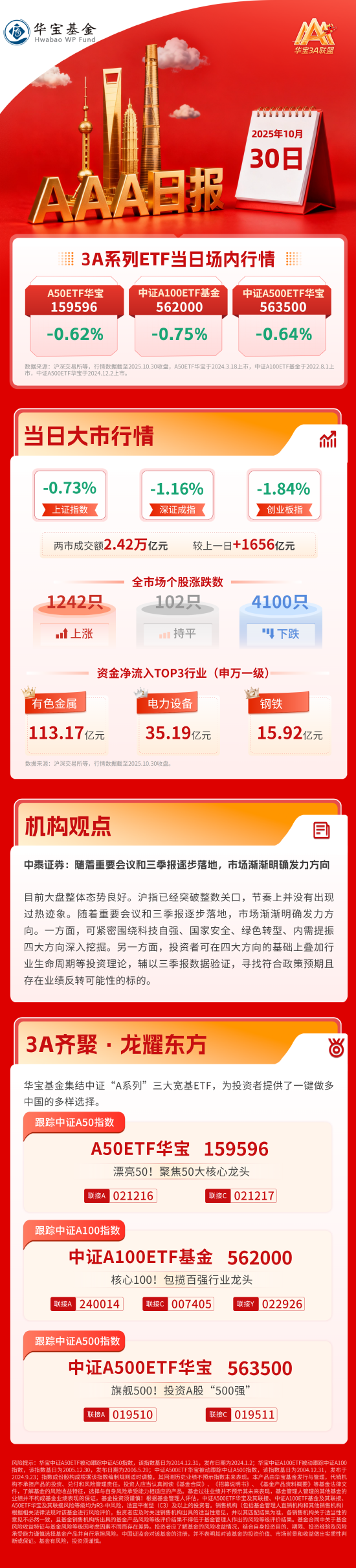
A股三大指数午后走弱,储能板块逆势上扬|华宝3A日报(2025.10.30)
Xin Lang Ji Jin· 2025-10-30 11:16
Group 1 - The overall market sentiment is positive, with the Shanghai Composite Index breaking through key levels, indicating no signs of overheating [2] - The market is gradually clarifying its direction as important meetings and Q3 reports are released, focusing on four main areas: technological self-reliance, national security, green transformation, and boosting domestic demand [2] - Investors are encouraged to explore opportunities based on these four directions, combined with industry lifecycle theories and Q3 data validation, to identify stocks that align with policy expectations and have potential for performance reversal [2] Group 2 - Huabao Fund has launched three major broad-based ETFs tracking the CSI indices, providing investors with diverse options to invest in China [2] - The A50 ETF, launched on March 18, 2024, tracks the CSI A50 Index, focusing on 50 leading companies [2] - The CSI A100 ETF, launched on August 1, 2022, encompasses the top 100 industry leaders, while the CSI A500 ETF, set to launch on December 2, 2024, targets a broader range of 500 stocks [2][3]