精准医疗

Search documents
Castle Biosciences(CSTL) - 2025 Q3 - Earnings Call Transcript
2025-11-03 22:30
Financial Data and Key Metrics Changes - Revenue for Q3 2025 reached $83 million, with a total revenue guidance for 2025 raised to $327-$335 million from the previous range of $310-$320 million [18][19] - Gross margin for Q3 2025 was 74.7%, down from 79.2% in Q3 2024, while adjusted gross margin was 76.8% compared to 81.9% in the same period last year [19] - Net loss for Q3 2025 was $0.5 million, compared to net income of $2.3 million in Q3 2024, with diluted loss per share at $0.02 versus diluted earnings per share of $0.08 in the prior year [21] Business Line Data and Key Metrics Changes - Total test report volume for Q3 2025 was 26,841, with core revenue drivers growing 36% year-over-year [12] - DecisionDx-Melanoma reports reached 10,459, marking a 12% year-over-year increase and surpassing 10,000 reports in a single quarter for the first time [12] - DecisionDx-SCC delivered 4,186 test reports in Q3 2025, maintaining high volume without proactive marketing [13] - TissueCypher achieved 10,609 test reports in Q3 2025, representing 75% year-over-year growth [16] Market Data and Key Metrics Changes - The target patient population for Advanced AD TX is estimated at approximately 13.2 million individuals aged 12 and older with moderate to severe atopic dermatitis, representing a $33 billion total addressable market opportunity in the US [9][10] - Approximately 80% of clinicians sampled indicated they would likely use Advanced AD TX, highlighting its potential value [10] Company Strategy and Development Direction - The launch of Advanced AD TX is aimed at implementing precision medicine in atopic dermatitis management, with plans for phased clinical availability throughout 2026 [11] - The company is focused on leveraging existing laboratory, logistics, and commercial infrastructure to efficiently introduce Advanced AD TX [10] - Continued emphasis on building education and awareness for TissueCypher to drive adoption and utilization [16] Management's Comments on Operating Environment and Future Outlook - Management expressed confidence in the strength of the operating model and strategic initiatives, reinforcing the commitment to improving patient care [12][23] - The company expects to maintain positive net cash flow from operations for 2025, supported by strong top-line performance and disciplined expense management [22] Other Important Information - The company is pursuing multiple reimbursement pathways for Advanced AD TX, recognizing the need to build a new market [10] - New peer-reviewed evidence further validates the clinical utility of DecisionDx-SCC, enhancing its role in patient care [14][15] Q&A Session Summary Question: Addressable patient population for Advanced AD TX - Management estimated that around 10-20% of the 13.2 million patients with moderate to severe atopic dermatitis could be of Medicare age [24] Question: Reimbursement pathways for Advanced AD TX - Management indicated that they are exploring various reimbursement options but did not provide specific details at this time [25] Question: Timing and likelihood of SCC reconsideration requests - Management noted that the timing for reconsideration decisions is uncertain and depends on the pace of Medicare contractors [28] Question: Volume outlook for DecisionDx-Melanoma - Management reiterated expectations for high single-digit volume growth for DecisionDx-Melanoma for the full year 2025 [31] Question: Market penetration for TissueCypher - Management acknowledged that they are in the early growth phase for TissueCypher, with ongoing efforts to educate the market and increase adoption [35] Question: FDA approval impact on DecisionDx-Melanoma - Management does not anticipate a change in the Medicare rate due to FDA approval but sees potential long-term benefits from state biomarker laws [39][40]

登峰前沿·大家说|影创医疗王圣雪:从投行精英到破局者,用血液重塑医学影像
投中网· 2025-11-03 06:26
Core Viewpoint - The article highlights the innovative journey of Wang Shengxue, founder of Suzhou Yingchuang Medical Technology Co., Ltd., who aims to revolutionize medical imaging safety through the development of self-blood contrast agents, addressing long-standing safety concerns in traditional contrast agents [5][6][12]. Group 1: Entrepreneurial Journey - Wang Shengxue transitioned from investment banking to entrepreneurship, driven by a desire to solve clinical pain points in the field of medical imaging [8][10]. - The company was founded in September 2024, focusing on cutting-edge technology in the medical sector [10]. Group 2: Technological Innovation - The self-blood NOCA technology represents a significant advancement in medical imaging, utilizing the patient's own blood to enhance MRI scans, thus eliminating the risks associated with traditional metal-based contrast agents [12]. - This innovative approach has completed large animal experiments and is moving towards human trials, positioning the company at the forefront of global medical technology [12]. Group 3: Management Philosophy - As a non-technical CEO, Wang Shengxue emphasizes a management philosophy based on trust in the project and the team's expertise, ensuring that professionals handle their respective areas [14]. - Participation in the "Pudong Science and Technology - Haiwang Summit CEO Training Camp" has further refined her management approach, allowing her to understand the operational models of other high-tech industries [16][18]. Group 4: Industry Insights - The training camp provided insights into various hard technology sectors, enabling Wang to learn from the successes and challenges faced by entrepreneurs in different fields, which can be applied to the medical industry [18]. - The curriculum of the training camp was designed to offer practical knowledge and real-world case studies, helping early-stage entrepreneurs avoid common pitfalls [18].


何氏眼科助力打造精准医疗新生态
Zheng Quan Ri Bao Wang· 2025-11-03 06:11
Core Viewpoint - The "2025 International Genomics Conference on Ophthalmology (ICG EYE) and CGT Innovation and Industrial Transformation Summit" highlighted the integration of cell and gene therapy (CGT) in eye health and anti-aging applications, showcasing new ideas, trends, technologies, and results [1] Group 1: Event Overview - The conference featured a forum themed "CGT + Anti-Aging Mechanisms and Applications," where experts and industry leaders engaged in discussions on practical applications of CGT in eye health and anti-aging [1] - The event served as a platform for international exchange, fostering innovation in the integration of CGT technology with eye health and anti-aging fields [1] Group 2: Company Initiatives - Liaoning He’s Eye Hospital Group Co., Ltd. (301103) collaborated with various institutions to form a synergistic innovation matrix, focusing on precision medicine [1] - The company established the first eye gene bank and clinical application research center for ophthalmic stem cells in China, targeting eye health, anti-aging, and longevity technology [1] Group 3: Research Focus - The company is concentrating on three core areas: gene therapy, stem cell regenerative medicine, and intelligent ophthalmic equipment data applications [1] - The aim is to conduct cutting-edge technology research to address complex eye disease issues and promote the deep integration of technology with healthcare data [1] Group 4: Market Expansion - The company is actively expanding into overseas markets to promote the globalization and accessibility of regenerative medical technologies [1] - The successful forum is expected to inject innovative momentum into the high-quality development of eye health and longevity industries as related technologies accelerate and the ecosystem improves [1]
艾德生物涨2.01%,成交额1.21亿元,主力资金净流入581.73万元
Xin Lang Cai Jing· 2025-11-03 05:40
Core Viewpoint - The stock of Aide Biological has shown a modest increase, with a current price of 23.30 CNY per share and a market capitalization of 9.123 billion CNY, reflecting a stable performance in the medical diagnostics sector [1]. Financial Performance - For the period from January to September 2025, Aide Biological reported a revenue of 866 million CNY, representing a year-on-year growth of 2.08%, while the net profit attributable to shareholders was 263 million CNY, marking a 15.50% increase compared to the previous year [2]. - The company has distributed a total of 421 million CNY in dividends since its A-share listing, with 232 million CNY distributed over the last three years [3]. Shareholder Information - As of September 30, 2025, the number of shareholders for Aide Biological increased to 26,600, up by 5.23%, while the average number of circulating shares per person decreased by 4.97% to 14,628 shares [2]. - The second-largest circulating shareholder is Hong Kong Central Clearing Limited, holding 35.3892 million shares, an increase of 3.7186 million shares from the previous period [3]. Stock Performance - Aide Biological's stock has increased by 3.56% year-to-date, with a 1.48% rise over the last five trading days and a 3.74% increase over the last 20 days, although it has seen a decline of 1.81% over the past 60 days [1]. Business Overview - Aide Biological, established on February 21, 2008, and listed on August 2, 2017, specializes in the research, production, and sales of molecular diagnostic products for precision oncology, with a revenue composition of 83.43% from testing reagents, 9.84% from clinical research services, and 5.61% from testing services [1]. - The company operates within the pharmaceutical and biotechnology sector, specifically in medical devices and in vitro diagnostics, and is associated with concepts such as gene sequencing and precision medicine [1].

联影医疗跌2.05%,成交额4.05亿元,主力资金净流出5488.82万元
Xin Lang Cai Jing· 2025-11-03 02:56
Core Viewpoint - The stock of United Imaging Healthcare has experienced fluctuations, with a recent decline of 2.05% and a total market capitalization of 1129.51 billion yuan, reflecting mixed investor sentiment and market activity [1] Financial Performance - For the period from January to September 2025, United Imaging Healthcare reported a revenue of 88.59 billion yuan, marking a year-on-year increase of 27.39% [2] - The net profit attributable to shareholders for the same period was 11.20 billion yuan, showing a significant year-on-year growth of 66.91% [2] Stock and Market Activity - As of November 3, the stock price was 137.05 yuan per share, with a trading volume of 4.05 billion yuan and a turnover rate of 0.35% [1] - The stock has increased by 8.61% year-to-date, but has seen a decline of 4.71% over the last five trading days and 4.95% over the last twenty days [1] Shareholder and Institutional Holdings - As of September 30, the number of shareholders increased to 32,400, a rise of 96.28%, while the average number of circulating shares per person decreased by 29.23% to 25,444 shares [2] - The top ten circulating shareholders include Hong Kong Central Clearing Limited, which holds 19.04 million shares, a decrease of 2.98 million shares from the previous period [3]

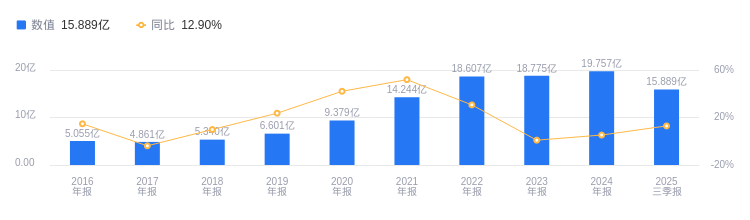
诚迈科技的前世今生:2025年三季度营收15.89亿排行业17,净利润亏损排82
Xin Lang Cai Jing· 2025-11-01 00:21
Core Viewpoint - Chengmai Technology is a leading provider of mobile intelligent terminal software technology in China, maintaining a competitive edge in the industry since its establishment in 2006 and listing in 2017 [1] Group 1: Business Performance - For Q3 2025, Chengmai Technology reported revenue of 1.589 billion yuan, ranking 17th among 102 companies in the industry, while the industry leader, Shanghai Steel Union, achieved revenue of 57.318 billion yuan [2] - The company's net profit for the same period was -75.5179 million yuan, placing it 82nd in the industry, with the top performer, Desay SV, reporting a net profit of 1.805 billion yuan [2] Group 2: Financial Ratios - As of Q3 2025, Chengmai Technology's debt-to-asset ratio was 46.07%, significantly higher than the previous year's 30.37% and the industry average of 31.94% [3] - The company's gross profit margin for Q3 2025 was 13.46%, down from 16.37% year-on-year and below the industry average of 41.71% [3] Group 3: Executive Compensation - Chairman Wang Jiping's salary for 2024 was 980,000 yuan, an increase of 309,000 yuan from 2023 [4] - General Manager Liu Bingbing's salary for 2024 was 872,200 yuan, up by 201,200 yuan from the previous year [4] Group 4: Shareholder Information - As of September 30, 2025, the number of A-share shareholders decreased by 1.57% to 51,700, while the average number of shares held per shareholder increased by 1.60% to 4,199.58 shares [5] Group 5: Future Projections - According to Zhongtai Securities, Chengmai Technology's revenue is projected to reach 2.493 billion yuan in 2025, 3.128 billion yuan in 2026, and 3.800 billion yuan in 2027, with net profits of 10 million yuan, 81 million yuan, and 146 million yuan respectively [6] - The company has seen significant growth in its intelligent terminal solutions business, with a revenue increase of 22.04% year-on-year [6] - The digital solutions sector also reported a revenue increase of 18.89% year-on-year [6]

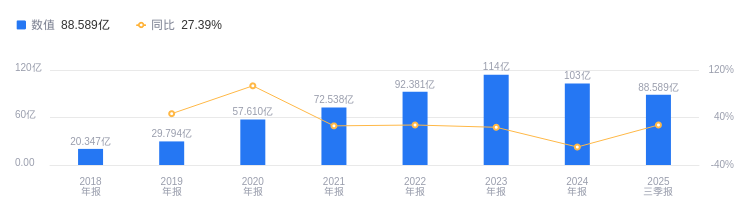
联影医疗的前世今生:2025年三季度营收88.59亿行业第二,高于行业平均3.5倍,净利润11.02亿排名第三
Xin Lang Cai Jing· 2025-10-31 16:12
Core Viewpoint - 联影医疗 is a leading player in the domestic medical imaging industry, providing a full range of high-performance medical imaging equipment and solutions, and has successfully broken the foreign monopoly in the high-end medical imaging equipment sector [1] Group 1: Business Performance - In Q3 2025, 联影医疗 reported revenue of 8.859 billion yuan, ranking second among 42 companies in the industry, while the industry leader, 迈瑞医疗, achieved revenue of 25.834 billion yuan [2] - The net profit for 联影医疗 in the same period was 1.102 billion yuan, placing it third in the industry, with 迈瑞医疗 leading at 7.814 billion yuan [2] Group 2: Financial Ratios - As of Q3 2025, 联影医疗's asset-liability ratio was 30.08%, higher than the previous year's 26.10% and above the industry average of 27.21% [3] - The gross profit margin for 联影医疗 in Q3 2025 was 47.02%, down from 49.41% year-on-year and below the industry average of 48.67% [3] Group 3: Shareholder Information - As of September 30, 2025, the number of A-share shareholders for 联影医疗 increased by 96.28% to 32,400, while the average number of circulating A-shares held per shareholder decreased by 29.23% to 25,400 [5] Group 4: Executive Compensation - The chairman, 张强, received a salary of 2.6521 million yuan in 2024, a decrease of 531,000 yuan from 2023 [4] - The president, JUN BAO, saw a reduction in salary from 2.5667 million yuan in 2023 to 2.2551 million yuan in 2024, a decrease of 311,600 yuan [4] Group 5: Future Outlook - 华泰证券 forecasts that 联影医疗 will achieve a net profit of 2.005 billion yuan in 2025, with projected profits of 2.419 billion yuan and 2.916 billion yuan in 2026 and 2027, respectively [6] - The company is expected to maintain a strong performance in its core equipment business, with significant growth in overseas revenue [6]
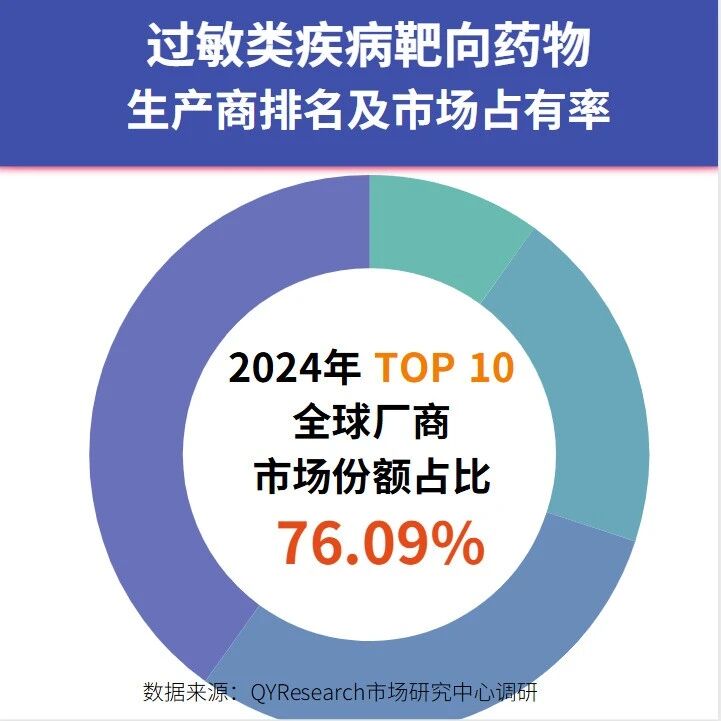
行业聚焦:全球过敏类疾病靶向药物市场头部企业份额调研(附Top 10 厂商名单)
QYResearch· 2025-10-31 10:48
Core Viewpoint - The targeted drug market for allergic diseases is rapidly evolving due to increased understanding of immune pathways and the rising burden of allergic diseases globally, with a focus on precision medicine and innovative therapies [3][4]. Group 1: Definition and Overview - Allergic diseases affect approximately 25% of the global population, with type 2 immune pathway abnormalities being a significant factor in their development [2]. - Targeted drugs, including biologics and small molecule inhibitors, are becoming mainstream in the treatment of allergic diseases, showing better efficacy and safety compared to traditional therapies [2][3]. Group 2: Market Development - The market for targeted drugs is expanding from monoclonal antibodies to a diverse range of biologics and small molecule inhibitors, with several products already approved for conditions like asthma and atopic dermatitis [4]. - Major pharmaceutical companies and emerging biotech firms are actively participating in this market, driving innovation and expanding treatment indications [4]. Group 3: Future Trends - Future drug development will focus on new mediators related to allergic inflammation, such as IL-33, and will integrate precision medicine approaches to enhance treatment efficacy [5]. - The market is expected to see a rise in small molecule therapies and oral treatments, providing more convenient administration options [5]. Group 4: SWOT Analysis - Strengths include a solid scientific foundation based on advances in immunology and molecular biology, leading to effective targeted therapies [6]. - Opportunities arise from the increasing prevalence of allergic diseases and the potential for new targets and combination therapies [8]. Group 5: Market Size and Competition - The global market for targeted drugs for allergic diseases is projected to reach approximately $37.15 billion by 2024, with a compound annual growth rate (CAGR) of 16.07% [10]. - Major manufacturers like Sanofi, AbbVie, and Novartis hold about 76.09% of the market share, with IL-4R being the leading product type [12][14]. Group 6: Regional Market Insights - North America leads the market due to advanced healthcare systems and high patient awareness, while Europe shows strong growth supported by regulatory frameworks [20]. - Emerging markets, particularly in Asia, are experiencing rapid growth due to rising prevalence and expanding healthcare coverage [20].
荣联科技涨2.51%,成交额1.09亿元,主力资金净流出583.13万元
Xin Lang Zheng Quan· 2025-10-31 03:28
Core Viewpoint - Ronglian Technology's stock has shown a mixed performance in recent trading, with a year-to-date increase of 25.45% but a decline of 9.49% over the past 20 days [2] Group 1: Stock Performance - As of October 31, Ronglian Technology's stock price increased by 2.51% to 8.97 CNY per share, with a trading volume of 1.09 billion CNY and a turnover rate of 1.86% [1] - The stock has experienced a year-to-date increase of 25.45%, a decline of 0.88% in the last 5 trading days, and a decline of 9.49% in the last 20 trading days [2] Group 2: Financial Performance - For the period from January to September 2025, Ronglian Technology reported a revenue of 1.056 billion CNY, a year-on-year decrease of 23.14%, and a net profit attributable to shareholders of 6.4043 million CNY, down 38.87% year-on-year [3] - The company has cumulatively distributed 157 million CNY in dividends since its A-share listing, with no dividends distributed in the last three years [4] Group 3: Shareholder Information - As of September 30, 2025, the number of shareholders of Ronglian Technology increased by 34.69% to 101,700, while the average number of circulating shares per person decreased by 25.75% to 6,505 shares [3] - The fourth largest circulating shareholder is Huabao Zhongzheng Financial Technology Theme ETF, holding 8.2938 million shares, an increase of 3.9904 million shares compared to the previous period [4]

艾德生物的前世今生:2025年三季度营收8.66亿行业排12,净利润2.63亿行业排5,均高于行业平均
Xin Lang Cai Jing· 2025-10-31 03:13
Core Viewpoint - Aied Bio, a leading company in the field of tumor precision medical molecular diagnostics in China, has shown strong financial performance and growth potential, with plans for strategic investments to enhance its competitive edge in the industry [1][2][6]. Financial Performance - In Q3 2025, Aied Bio achieved a revenue of 866 million yuan, ranking 12th among 39 companies in the industry, with the industry leader generating 3.428 billion yuan [2]. - The company's net profit for the same period was 263 million yuan, placing it 5th in the industry, while the top performer reported a net profit of 1.588 billion yuan [2]. - The main business revenue composition includes testing reagents at 483 million yuan (83.43%), clinical research services at 56.99 million yuan (9.84%), and testing services at 32.50 million yuan (5.61%) [2]. Financial Ratios - Aied Bio's debt-to-asset ratio stood at 12.79% in Q3 2025, an increase from 11.16% year-on-year, which is lower than the industry average of 18.29%, indicating strong solvency [3]. - The gross profit margin for Q3 2025 was 83.74%, slightly down from 84.74% year-on-year, but still above the industry average of 56.20%, reflecting robust profitability [3]. Shareholder Information - As of September 30, 2025, the number of A-share shareholders increased by 5.23% to 26,600, while the average number of shares held per shareholder decreased by 4.97% to 14,600 [5]. - The top circulating shareholder, Hong Kong Central Clearing Limited, increased its holdings by 3.53892 million shares [5]. Strategic Investments - The company plans to invest 50 million yuan in Sailu Medical to enhance its upstream sequencing instrument capabilities and improve industry chain collaboration [6]. - Aied Bio anticipates stable overall revenue growth in Q3 2025, with higher growth expected in Q4 due to improved domestic and overseas business conditions [6]. Future Projections - Revenue forecasts for Aied Bio from 2025 to 2027 are projected at 1.239 billion, 1.435 billion, and 1.658 billion yuan, with year-on-year growth rates of 11.73%, 15.83%, and 15.50% respectively [6]. - Expected net profits for the same period are 330 million, 389 million, and 459 million yuan, with growth rates of 29.43%, 17.94%, and 17.96% respectively [6].