
网络安全

Search documents
业界共探AI与工业安全融合新路径
Zhong Guo Hua Gong Bao· 2026-01-14 23:22
Core Insights - The "AI Empowering Industrial Safety" forum at the 2026 "Gongfu Shanghai" Innovation Conference focused on the integration of AI and industrial safety, discussing new paths for technological innovation, industry collaboration, and risk prevention [1][2] Group 1: Government and Regulatory Perspectives - The head of the Cybersecurity Administration of the Ministry of Industry and Information Technology emphasized the need to build a cybersecurity system that aligns with the characteristics of new industrialization during the 14th Five-Year Plan, advocating for a new security framework to support development [1] - The importance of systematic thinking in formulating new cybersecurity policies and enhancing the cybersecurity institutional framework was highlighted, along with the need for innovative security technologies driven by AI [1] Group 2: Industry Collaboration and Innovation - Experts from various sectors, including China Mobile and data analysis firms, shared their experiences in the "AI + Industrial Safety" domain, indicating a collaborative effort to enhance industrial cybersecurity [2] - The forum introduced the "Guanan Industrial Intelligent Security Matrix" and launched a tracking plan for the "Top Ten AI Security Risks in the Industrial Sector," aiming to gather insights for an AI security capability map [2] Group 3: Technological Advancements and Challenges - The dual-edged nature of technology was discussed, where AI not only enhances industrial efficiency but also reshapes the landscape of cybersecurity threats, necessitating stronger regulatory and protective measures [1] - The deputy director of the Shanghai Communications Administration called for a reinforced security regulatory framework and collaborative efforts to build a sustainable industrial internet security ecosystem [1]
当论文演讲仅限3分钟
Xin Lang Cai Jing· 2026-01-14 12:27
Core Insights - The article discusses the success of the "Three Minute Thesis" (3MT) competition held at Nanjing University of Posts and Telecommunications, highlighting its innovative approach to academic presentations and the engagement of graduate students in diverse fields [1][5][12]. Group 1: Event Overview - The 3MT competition introduced a unique format where participants had only three minutes to present their research using a single static PowerPoint slide, fostering concise and engaging communication [2][5]. - A total of 319 graduate students participated, representing 13 different academic disciplines, showcasing a wide range of research topics [1][5]. Group 2: Presentation Challenges - Participants faced the challenge of condensing complex academic content into a brief presentation, requiring them to focus on core messages rather than technical details [6][11]. - The scoring system included peer evaluations, encouraging participants to make their presentations accessible and interesting to a non-specialist audience [5][12]. Group 3: Educational Impact - The 3MT format aims to shift students' thinking from a research-focused perspective to a communication-oriented approach, enhancing their ability to convey the significance of their work [11][21]. - The competition serves not only as a platform for academic expression but also as a means to cultivate essential skills in public speaking and interdisciplinary collaboration among students [17][19]. Group 4: Future Potential - The growing popularity of the 3MT format in various universities indicates its potential for further development and integration into academic training programs [15][16]. - There is a vision for expanding the 3MT model to facilitate deeper connections between academia and industry, enhancing the practical application of research findings [20][21].
广西院校志愿服务队走进小学开展安全守护服务活动
Xin Lang Cai Jing· 2026-01-14 09:22
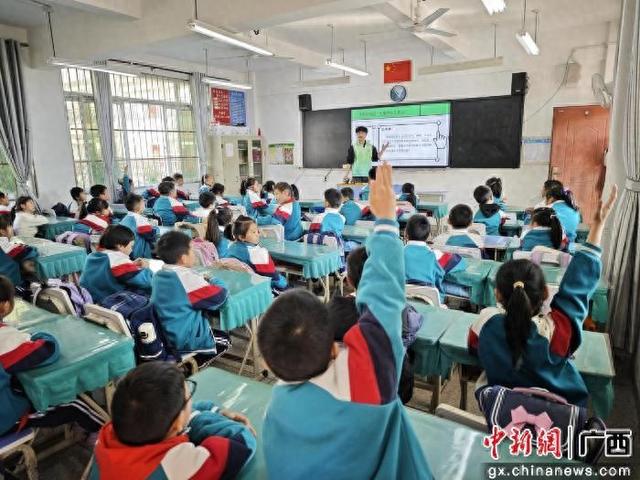
Group 1 - The core theme of the volunteer service activity is the "Youth Safety Guardian Plan," focusing on energy safety and internet security [1][5] - The event utilized engaging methods such as interactive presentations, scenario-based discussions, and VR experiences to teach elementary students about safety knowledge and self-protection skills [1][5] - The AI internet security class explained artificial intelligence concepts and potential safety risks through relatable scenarios, emphasizing the importance of not disclosing personal information and verifying requests before taking action [3][5] Group 2 - The VR experience was a highlight, where students created their own VR goggles and engaged in immersive learning about pipeline safety and internet fraud prevention [5] - The event was well-received by the school, with the principal noting its innovative format and practical content, which helped students gain knowledge in energy protection and internet safety while enhancing their practical skills [5] - The "Red Brick Youth" volunteer service team plans to continue innovating their service methods by integrating AI and VR technologies with safety education to support the healthy development of youth [5]

2025年全球防火墙行业市场发展现状——需求稳步增长【组图】
Qian Zhan Wang· 2026-01-14 08:17
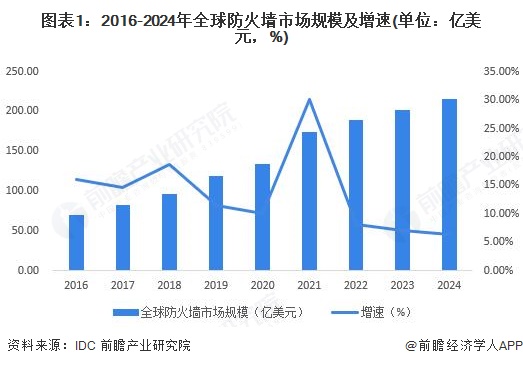
Global Firewall Market Overview - The global firewall market is projected to grow from $6.924 billion in 2016 to $22.415 billion by 2024, with a peak growth rate of 30.03% in 2021 due to increased demand for cybersecurity solutions amid the pandemic [1] - The surge in demand is attributed to the need for businesses to upgrade or acquire firewall devices to protect against cyber threats and secure internal data [1] Next-Generation Firewall Market Outlook - The global next-generation firewall market is expected to grow from $18.1 billion in 2024 to $21.8 billion by 2028, indicating a positive growth trend [2] - The U.S. market for next-generation firewalls, which is the largest globally, is projected to increase from $7.3 billion in 2024 to $9 billion by 2028, representing 40.3% of the global market share [5] Importance of Firewalls in Cybersecurity - Firewalls are considered a fundamental necessity in network security, serving as the first line of defense for end-users [6] - According to IDC's 2024 global survey, 53.4% of customers believe that hardware firewall products will account for more than half of their overall security solutions by 2030 [6][8] Future Growth Projections - The global firewall market is anticipated to have a compound annual growth rate (CAGR) of 10.41% from 2025 to 2030, with the market size expected to reach approximately $23.8 billion in 2025 and $39 billion by 2030 [9]





数码视讯涨3.05%,成交额6.49亿元,后市是否有机会?
Xin Lang Cai Jing· 2026-01-14 07:30
Core Viewpoint - The company, Digital Video Technology Co., Ltd., is actively leveraging blockchain technology and cloud computing to enhance its business operations and expand into new markets, particularly in digital content rights management and internet finance. Group 1: Business Operations and Innovations - The subsidiary, Kuaishiting, is focused on utilizing blockchain technology to empower the industry, particularly in the metaverse, by issuing digital collectibles that provide new rights and copyright verification for digital content across various sectors such as culture, art, and retail [2] - The company has made significant advancements in copyright protection by integrating blockchain technology, which allows for timely rights confirmation and clearer ownership compared to traditional methods [3] - The company offers a comprehensive cloud video platform solution that integrates AI technologies for various media applications, enabling unified access and management of resources [2] Group 2: Financial Performance - For the period from January to September 2025, the company achieved a revenue of 465 million yuan, representing a year-on-year growth of 24.58%, with a net profit attributable to shareholders of 24.62 million yuan, up 10.34% year-on-year [8] - The company has distributed a total of 370 million yuan in dividends since its A-share listing, with 42.83 million yuan distributed over the past three years [9] Group 3: Market Position and Shareholder Information - As of January 9, 2025, the company had 70,000 shareholders, a decrease of 13.97% from the previous period, with an average of 18,306 circulating shares per shareholder, an increase of 16.24% [8] - The top ten circulating shareholders include significant entities such as Hong Kong Central Clearing Limited and various ETFs, indicating a diversified shareholder base [9]

银信科技涨2.04%,成交额5218.22万元,主力资金净流入264.95万元
Xin Lang Cai Jing· 2026-01-14 03:00
Core Viewpoint - Silver Trust Technology has shown a positive stock performance with a year-to-date increase of 9.12% and a market capitalization of 5.105 billion yuan as of January 14 [1] Group 1: Stock Performance - On January 14, Silver Trust Technology's stock rose by 2.04%, reaching 11.49 yuan per share with a trading volume of 52.1822 million yuan and a turnover rate of 1.03% [1] - The stock has increased by 8.60% over the last five trading days, 13.65% over the last twenty days, and 5.61% over the last sixty days [1] - As of September 30, the number of shareholders decreased by 8.92% to 45,600, while the average circulating shares per person increased by 9.79% to 9,741 shares [2] Group 2: Financial Performance - For the period from January to September 2025, Silver Trust Technology reported a revenue of 1.262 billion yuan, representing a year-on-year growth of 9.08%, and a net profit attributable to shareholders of 52.6858 million yuan, up 3.42% year-on-year [2] - The company has distributed a total of 719 million yuan in dividends since its A-share listing, with 212 million yuan distributed over the last three years [3] Group 3: Business Overview - Silver Trust Technology, established on May 31, 2004, and listed on June 15, 2011, is located in Beijing and specializes in IT infrastructure solutions for government and enterprise data centers [1] - The company's revenue composition includes 48.15% from system integration services, 44.96% from IT infrastructure operation services, 5.68% from computing power services, and 1.21% from software development and sales [1] - The company operates within the computer-IT services sector and is involved in concepts such as digital economy, smart cities, cybersecurity, computing power, and artificial intelligence [2] Group 4: Shareholder Information - As of September 30, 2025, the third-largest circulating shareholder is the Huabao Zhongzheng Financial Technology Theme ETF, holding 5.4677 million shares, an increase of 2.5358 million shares from the previous period [3] - The sixth-largest circulating shareholder is the Hong Kong Central Clearing Limited, holding 2.2465 million shares, a decrease of 256,900 shares from the previous period [3]

万亿元消费城市之争,中部不再“缺位”
Mei Ri Jing Ji Xin Wen· 2026-01-14 02:01
Core Viewpoint - Wuhan is positioning itself as a competitive consumer city, aiming to achieve a retail sales target of over 1.07 trillion yuan by 2027, with a projected GDP growth of around 6% in 2025, marking the highest growth rate in four years [1][2]. Group 1: Economic Growth and Consumer Market - Wuhan's retail sales of consumer goods are expected to exceed 900 billion yuan in 2025, reflecting a growth of approximately 5% [1]. - The city aims to reach a retail sales target of over 1.07 trillion yuan by 2027, indicating a significant step towards becoming a trillion-yuan consumer city [1][2]. - In 2024, Wuhan's retail sales reached approximately 793.2 billion yuan, showcasing a strong recovery and growth trajectory [2]. Group 2: Emerging Consumer Trends - The rise of "internet celebrity" products, such as the "garlic bird" plush toy, has helped Wuhan gain visibility in the consumer market, achieving over 1 million yuan in sales in a single month [3]. - The cherry blossom season in Wuhan has attracted over 1 million visitors, with a 16.8% increase in attendance compared to the previous year, indicating a growing trend in tourism-related consumption [4]. - The integration of cultural and tourism events, such as the cherry blossom marathon, has created new outdoor consumption scenarios, enhancing the city's appeal [4]. Group 3: Tourism and External Consumer Attraction - In 2025, 77.33% of visitors to the East Lake Cherry Blossom Garden were from outside Wuhan, generating direct consumption of 120 million yuan and a total consumption effect of nearly 300 million yuan [7]. - During the National Day and Mid-Autumn Festival in 2025, Wuhan received approximately 34.6 million tourists, achieving a tourism revenue of 21.7 billion yuan, with a year-on-year growth of 16.35% [7]. - Wuhan's tourism performance in 2024 included 360 million visitors and a revenue of 420 billion yuan, significantly surpassing that of Hangzhou and Nanjing [8]. Group 4: Local Consumption and Economic Structure - Despite strong tourism figures, local consumer spending remains lower than that of Nanjing and Hangzhou, with per capita spending in Wuhan at 39,600 yuan compared to 44,600 yuan and 53,000 yuan respectively [13]. - The per capita disposable income in Wuhan is 59,700 yuan, lagging behind Nanjing and Hangzhou, which are 75,200 yuan and 76,800 yuan respectively [13]. - The digital transformation in Wuhan's manufacturing sector has led to a 9.51% increase in online retail sales, reaching approximately 268.1 billion yuan in the first eight months of 2025 [10]. Group 5: Future Opportunities and Challenges - Wuhan's geographical advantage as a transportation hub allows it to attract consumers from surrounding provinces, enhancing its role as a new product and scene development center [9]. - The city is focusing on the development of the new energy vehicle industry, leveraging its historical strengths in manufacturing to capture emerging market opportunities [14]. - There is potential for growth in high-tech sectors such as low-altitude economy and artificial intelligence, which could drive new consumer products and high-net-worth demographics [14].
上证早知道|机构逆势买入AI应用;事关工业互联网 重要方案印发
Shang Hai Zheng Quan Bao· 2026-01-13 23:10
Group 1 - The State Council's Tariff Commission decided to continue imposing anti-dumping duties on imported solar-grade polysilicon from the US and South Korea for five years starting January 14, 2026, due to potential harm to China's polysilicon industry [4] - The railway system in China will implement a new train operation schedule starting January 26, 2025, increasing the number of scheduled passenger trains to 12,130 and freight trains to 23,748, enhancing transportation capacity and efficiency [2] - The Ministry of Industry and Information Technology released an action plan for the high-quality development of industrial internet platforms from 2026 to 2028, aiming for over 450 influential platforms and a significant increase in industrial equipment connectivity [6] Group 2 - Japan's corporate bankruptcy cases reached a new high since 2013 in 2025, with 10,300 cases involving debts over 10 million yen, marking a 2.9% increase from the previous year [3] - The second China eVTOL Innovation Development Conference will be held on January 15-16, 2026, focusing on technological breakthroughs and commercialization in the electric vertical takeoff and landing aircraft sector [7] - Companies like TCL Technology and Dazhu CNC are projecting significant profit increases for 2025, with TCL expecting a net profit of 4.21 billion to 4.55 billion yuan, a year-on-year growth of 169% to 191% [8]


万亿元消费城市之争 中部不再“缺位”
Mei Ri Jing Ji Xin Wen· 2026-01-13 17:24
Core Insights - Wuhan's GDP is projected to grow by approximately 6% by 2025, marking the highest growth rate in four years, with retail sales expected to exceed 900 billion yuan, indicating progress towards a trillion yuan consumption target [1][2] - The city is emerging as a competitive player in the consumption market, alongside Hangzhou and Nanjing, with retail sales rebounding to 700 billion yuan in 2023 and expected to surpass 900 billion yuan in 2025 [2][3] Economic Growth and Consumption - Wuhan's government aims for a retail sales target of over 1.07 trillion yuan by 2027 as part of its action plan to establish itself as an international consumption center [1] - The retail sales growth reflects a shift in consumer behavior and market dynamics, with Wuhan's consumption market showing new momentum [2] Emerging Trends and Cultural Impact - The rise of "internet celebrity" products, such as the "Garlic Bird," has provided Wuhan with a unique opportunity to enhance its cultural and consumption appeal, achieving over 1 million yuan in sales in a single month [3][4] - The cherry blossom season has become a significant draw for tourism, with over 1 million visitors in 2025, indicating a blend of cultural and commercial activities that enhance consumer engagement [4][8] Tourism and External Consumption - A significant portion of visitors during the cherry blossom season are from outside Wuhan, contributing to local economic growth, with external tourists generating approximately 1.2 billion yuan in direct consumption [8][9] - Wuhan's tourism revenue reached 217.04 billion yuan during the 2025 National Day and Mid-Autumn Festival, showcasing its position as a leading economic city [8][9] Retail and E-commerce Growth - Wuhan's online retail sales grew by 9.51% to 268.06 billion yuan in the first eight months of 2025, indicating a shift towards digital consumption [11] - The transformation of traditional retail spaces, such as Han Zheng Street, into hubs for live-streaming commerce has significantly boosted sales, with clothing revenue surpassing 100 billion yuan [11] Challenges and Opportunities - Despite strong growth, Wuhan's per capita tourism spending remains lower than that of Nanjing and Hangzhou, highlighting potential for further development in local consumption [12][14] - The city is focusing on enhancing local consumer spending through initiatives aimed at increasing disposable income and promoting new consumption trends, such as outdoor camping and electric vehicles [12][15] Strategic Positioning - Wuhan's geographical advantage as a transportation hub allows it to connect with surrounding provinces, enhancing its role as a consumption center [10] - The city's focus on emerging industries, including new energy vehicles and technology sectors, positions it to capture future consumer trends and drive economic growth [15]
万亿元消费城市之争,中部不再“缺位”
Mei Ri Jing Ji Xin Wen· 2026-01-13 13:04
Core Insights - Wuhan's GDP is projected to grow by approximately 6% by 2025, marking the highest growth rate in four years, with retail sales expected to exceed 900 billion yuan, moving closer to the goal of a trillion yuan in consumption [1][2] - The city is positioning itself as a competitive player in the race for a trillion-yuan consumption market alongside Hangzhou and Nanjing, with a focus on enhancing its consumer market dynamics [2][3] Economic Growth and Consumption - Wuhan's retail sales of consumer goods rebounded to 700 billion yuan in 2023, with expectations to reach 793.19 billion yuan in 2024 and surpass 900 billion yuan in 2025 [1][2] - The city aims for a retail sales target of over 1.07 trillion yuan by 2027 as part of its action plan to establish itself as an international consumption center [1] Emerging Trends and Cultural Impact - The rise of "internet celebrity" products, such as the "garlic bird" plush toy, has highlighted Wuhan's potential for viral consumer trends, achieving over 1 million yuan in sales in its first month [2][3] - The cherry blossom season in 2025 saw over 1 million visitors, with a significant portion being from outside the city, indicating a growing trend in attracting external tourism [3][7] Tourism and Visitor Engagement - In 2025, Wuhan received 34.63 million tourists during the National Day and Mid-Autumn Festival, achieving a tourism revenue of 21.70 billion yuan, reflecting a year-on-year growth of 12.06% and 16.35% respectively [7][8] - The city is leveraging its geographical advantages as a transportation hub to attract visitors from surrounding provinces, enhancing its tourism appeal [9] Retail and E-commerce Growth - Wuhan's online retail sales grew by 9.51% to 268.06 billion yuan in the first eight months of 2025, with live-streaming e-commerce also showing significant growth [10] - Traditional retail models in areas like Hanzheng Street are evolving, with over 100 live-streaming teams contributing to a revenue increase in the clothing sector [10] Challenges and Opportunities - Despite strong performance, Wuhan's per capita tourism spending remains lower than that of Nanjing and Hangzhou, indicating room for growth in local consumer spending [11][13] - The city is focusing on enhancing local consumption through innovative products and experiences, such as camping and RV-related offerings, to attract more visitors and boost spending [12][14] Future Prospects - Wuhan is positioning itself to capitalize on emerging industries like new energy vehicles and technology sectors, which could drive future consumer trends and economic growth [14][15] - The city's ability to attract high-value consumers and innovate in product offerings will be crucial for its competitive edge in the evolving market landscape [15]