零碳园区

Search documents
全国首个国家级工业园区国际绿色能源合作项目落地珠海经开区
Sou Hu Cai Jing· 2025-11-15 04:19
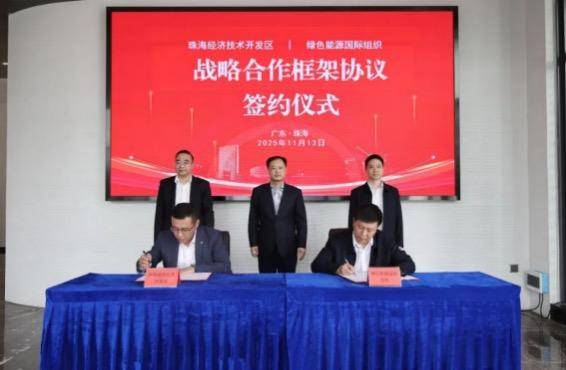
11月13日,珠海经济技术开发区与绿色能源国际组织(GEIO)战略合作框架协议签约仪式在珠海度假 村经开企业之家举行,标志着我国首个国家级工业园区国际绿色能源合作正式落地。珠海经开区党工委 书记周乐伟,区党工委副书记、管委会主任侯文涛,绿色能源国际组织筹备组综合管理组组长、南方电 网公司产业发展集团副总经理刘宪明,珠海供电局党委书记、副总经理高志华,珠海供电局总经理何建 宗出席仪式并见证签约。 共建零碳园区标准体系。依托GEIO正在制定的零碳园区碳排放核算与评价指南,为珠海经开区创建国 家级零碳园区提供技术支撑和实施路径,助力打造可复制、可推广的园区转型样板。助力企业应对国际 绿色贸易壁垒。针对欧盟碳边境调节机制(CBAM)等国际规则,GEIO将为企业提供专业解析、数据 申报辅导和节能降碳方案,有效降低产品出口合规成本,提升国际市场竞争力。支持企业绿色低碳转 型。通过提供绿色能源认证、碳足迹管理、政策咨询等专业服务,帮助企业优化能源结构,降低碳排放 双控政策合规成本,实现可持续发展。 此次合作创新构建了"国际组织+地方政府+龙头企业"的三方联动机制,不仅为珠海经开区及区内企业 提升绿色竞争力,同时也将为粤港澳 ...

关于举办绿电直连及零碳园区创建研讨培训的通知丨系列培训
中国能源报· 2025-11-15 01:33
Core Viewpoint - The article emphasizes the importance of green electricity consumption and the establishment of zero-carbon parks as key components in the low-carbon transition of energy utilization in industrial parks. It highlights the government's initiative to create approximately 100 national-level zero-carbon parks during the "14th Five-Year Plan" period, moving from concept to project implementation [2]. Group 1: Policy and Initiatives - The "Notice on the Construction of Zero-Carbon Parks" outlines the construction conditions, key tasks, and organizational measures for zero-carbon parks [2]. - Various provinces are actively applying for national-level zero-carbon parks and promoting provincial-level zero-carbon park construction [2]. - The government aims to increase the proportion of green electricity consumption in key energy-consuming units and industries, encouraging the establishment of green electricity factories and parks with 100% green electricity consumption [2]. Group 2: Training Details - A seminar and training on green electricity direct connection and zero-carbon park creation will be held from November 21 to 22 in Chengdu [3]. - The training is organized by China Energy News and supported by the China Energy Economic Research Institute, targeting various stakeholders including power companies, renewable energy enterprises, and consulting firms [3][4]. Group 3: Course Modules - The training will cover topics such as green electricity direct connection policies, application scenarios, pricing mechanisms, project planning, investment and returns, and the integration of renewable energy stations [5]. - It will also address the evaluation index system for zero-carbon parks, construction status, investment analysis, key technology paths, and certification processes [5]. Group 4: Fees and Contact Information - The training fee is set at 3,900 yuan per person, excluding transportation and accommodation costs [5]. - Payment can be made via bank transfer, and contact information for inquiries is provided [5].

新城市(300778.SZ):拟使用募集资金逐级向子公司增资或借款以实施募投项目
Ge Long Hui A P P· 2025-11-14 08:28
Core Viewpoint - The company has approved a proposal to use raised funds for incremental capital increases or loans to subsidiaries to implement the fundraising project focused on the "Construction of Green Energy and Zero Carbon Park Planning and Construction Project" [1] Group 1: Fundraising Project Details - The implementation entity for the fundraising project is the company's wholly-owned subsidiary, New City (Shenzhen) Energy Technology Co., Ltd. [1] - The project will involve the establishment of multiple directly or indirectly 100% owned companies (referred to as "project companies") based on the construction and operation needs of distributed photovoltaic power plants [1] Group 2: Financial Management and Execution - The board has agreed to incrementally provide capital increases or loans to the wholly-owned subsidiary Shenzhen Mingyuan Zhixing Energy Technology Co., Ltd. and its project companies to facilitate the implementation of the fundraising project [1] - The progress of the capital increase or loan will be based on the actual needs of the fundraising project, with loan terms extending from the date of issuance until the completion of the relevant fundraising project [1] - The board has authorized the company's management and its representatives to handle the specific work and related matters for the aforementioned activities [1]
关于举办绿电直连及零碳园区创建研讨培训的通知丨系列培训
中国能源报· 2025-11-14 08:13
Core Viewpoint - The article emphasizes the importance of low-carbon transformation in industrial parks and the promotion of green electricity consumption, highlighting the establishment of zero-carbon parks as a key initiative supported by national policies [2]. Group 1: Policy and Initiatives - The "14th Five-Year Plan" aims to establish around 100 national-level zero-carbon parks, with provinces actively applying for national and provincial-level zero-carbon park construction [2]. - The government is accelerating the increase of green electricity consumption in key energy-consuming units and industries, encouraging the creation of green electricity factories and parks that achieve 100% green electricity consumption [2]. Group 2: Training Details - A seminar and training on green electricity direct connection and zero-carbon park creation will be held from November 21 to 22 in Chengdu, organized by China Energy News and supported by the China Energy Economic Research Institute [3][4]. - The training targets various stakeholders, including power companies, renewable energy enterprises, energy service companies, and professionals interested in zero-carbon park construction [3]. Group 3: Course Modules - The training will cover topics such as green electricity direct connection policies, application scenarios, pricing mechanisms, investment and returns, and the integration of renewable energy stations [5]. - It will also address zero-carbon park creation policies, evaluation indicators, construction status, investment analysis, and certification processes [5]. Group 4: Financial Information - The training fee is set at 3,900 yuan per person, excluding transportation and accommodation costs, with payment options available through bank transfer [5].

新型电力系统:需求牵引与涨价共振,上下游后续汇报
2025-11-14 03:48
Summary of Conference Call Records Industry Overview - The new power system is witnessing a decline in domestic thermal power proportion, with an increase in independent energy storage demand. The overseas energy storage market, particularly in Southeast Asia, Australia, and Europe, shows promising prospects. In the U.S., the utilization hours of energy storage in AI data centers are expected to increase, potentially driving storage products to evolve towards 6-8 hours [1][2]. Key Insights and Arguments - **Energy Storage Demand**: The demand for energy storage is expected to exceed expectations, with growth rates revised from approximately 15% to over 20%, potentially nearing 30%. This is primarily driven by energy storage needs, which may lead to a continued shortage of battery cells and a tight supply-demand situation lasting until mid-next year [1][4]. - **Price Increases in Battery Materials**: Key battery upstream materials such as lithium hexafluorophosphate, VC additives, iron lithium, and needle coke are entering a price increase cycle. Manufacturers of aluminum foil, separators, and copper foil are also considering price hikes, indicating a broader trend in material costs [1][5]. - **Integration of New Energy Development**: The development path for new energy includes integration with traditional and emerging industries, such as coal, oil and gas development, computing power, and hydrogen production. Concepts like zero-carbon factories, zero-carbon parks, and virtual power plants are also highlighted as important supplements to new energy demand [1][6]. - **Photovoltaic and Wind Power Industry**: The photovoltaic industry is advised to pay attention to policy changes, while the wind power sector should focus on offshore wind, particularly deep-sea wind-related segments, which are expected to develop significantly under policy support [1][7]. Noteworthy Companies - In the energy storage integrated products and battery cell sectors, companies such as Sungrow Power Supply, HIBOR, Canadian Solar, CATL, EVE Energy, and Xinwangda are recommended for continued observation. Additionally, companies involved in non-electric utilization pathways, such as China Tianying, China Shipbuilding Technology, and Shuangliang Eco-Energy, are also highlighted [2][3][8]. Additional Important Insights - **Chemical Industry Upstream**: The chemical industry is seeing growth in upstream materials like iron phosphate and sulfur. The phosphate market is expected to remain tight due to insufficient new mining projects, while sulfur prices have surged due to increased demand from the energy sector [9][10]. - **Lithium Carbonate Market Dynamics**: The price of lithium carbonate has risen significantly, with expectations of further increases due to improved storage demand. The overall growth of power batteries is projected to reach 10-15% next year [19][20]. - **Future Supply and Demand for Lithium**: The supply-demand balance for lithium is expected to remain tight, with risks of shortages increasing in the coming years due to limited new projects and rising demand from downstream sectors [20][21]. This summary encapsulates the key points from the conference call, providing a comprehensive overview of the current state and future outlook of the energy storage and related industries.
“能碳未来 绿动全球”第十七届无锡国际新能源展览会开展
Zhong Guo Jing Ji Wang· 2025-11-14 02:07
Group 1: Event Overview - The 17th Wuxi International New Energy Exhibition opened on November 13, showcasing approximately 20,000 square meters of new technologies, products, and applications across five key areas: energy equipment, green energy, AI + energy, energy infrastructure, and sustainable energy development [1] - Over 100 industry leaders, including GCL Group and Trina Solar, participated in the exhibition, which featured seven high-level industry matchmaking activities for comprehensive insights and networking opportunities [1] Group 2: Technological Innovations - Far East Holdings presented an "AI + computing power + electricity" approach, demonstrating a smart ecosystem integrating computing power, storage, and transmission to maximize the synergy between energy and computing [1] - Huaguang Huaneng showcased its under-construction Huaguang Industrial Green Microgrid demonstration project, while the debut "Energy Integration" exhibition area featured groundbreaking products like a 5G-connected drone cockpit from China Telecom and a vertical take-off security drone from Superwing Technology [1] Group 3: Industry Insights - GCL Group Chairman Zhu Gongshan emphasized that the energy transformation will shift from "dual control of energy consumption" to "dual control of carbon emissions" over the next five years, highlighting technology, low carbon, and digitalization as key competitive advantages in the new energy sector [2] - The China Energy Research Society Chairman Shi Yubo pointed out the growing demand for electricity from high-value industries like artificial intelligence and commercial aerospace, advocating for the establishment of zero-carbon computing hubs in industrial clusters like the Yangtze River Delta [2] Group 4: International Collaboration - The European Energy Storage Association's global supply chain and finance leader, Zhuang Bowen, called for strengthened collaboration to promote global clean energy development, noting Europe's insufficient battery manufacturing capacity and the need for partnerships with Chinese manufacturers [3] - The exhibition attracted international guests from 16 countries, showcasing Wuxi's increasing global influence and resource connectivity, particularly in the context of Europe's strong demand for Chinese new energy products and technologies [3] Group 5: New Platforms and Initiatives - Several important platforms were launched during the opening ceremony, including the expansion of the Wuxi New Energy Overseas Liaison Center and the establishment of the United Nations/International Organizations Sustainable Procurement Service Center in Wuxi [4] - The Global Green Low Carbon Innovation Center was inaugurated to serve as an international comprehensive innovation platform aimed at integrating resources to promote the development and application of new energy technologies [4]
到无锡这里,感受新能源行业的“进博会”
Yang Zi Wan Bao Wang· 2025-11-13 15:06
Core Insights - The COP30 summit in Brazil highlights China's commitment to green development and its leadership in global renewable energy efforts [1] - The 17th Wuxi International Renewable Energy Exhibition (CREC2025) showcases advancements in renewable energy and aims to engage the public and industry [1][2] Industry Development - The exhibition focuses on five key areas: energy equipment, energy infrastructure, green energy, AI+energy, and sustainable development (ESG), featuring six hot topics including solid-state batteries and zero-carbon parks [1][2] - The event includes seven industry matchmaking activities, attracting participants from various countries and regions, emphasizing global collaboration in renewable energy [2] Local Industry Strength - Wuxi has 321 large-scale renewable energy enterprises, with an industrial output value of 180.5 billion yuan and revenue of 148.65 billion yuan from January to September [4] - The city has nurtured 49 national-level "little giant" enterprises and established multiple innovation platforms, demonstrating strong innovation momentum in the renewable energy sector [4] International Collaboration - The unveiling of the "UN/International Organization Sustainable Procurement Service Center Wuxi Station" aims to facilitate access for Wuxi's quality renewable energy products to international public procurement markets [5] - Wuxi's overseas liaison centers cover all five continents, serving as a bridge for local enterprises to expand into international renewable energy markets [5] Future Prospects - The Global Green Low-Carbon Innovation Center, initiated by a prominent industry figure, aims to be a comprehensive international innovation platform focusing on renewable energy applications and technology development [6] - Wuxi's renewable energy industry is poised for further growth, attracting attention from both domestic and international markets [6]
新工业实现零碳供电新突破!AI电力系统正式发布
中国能源报· 2025-11-13 12:48
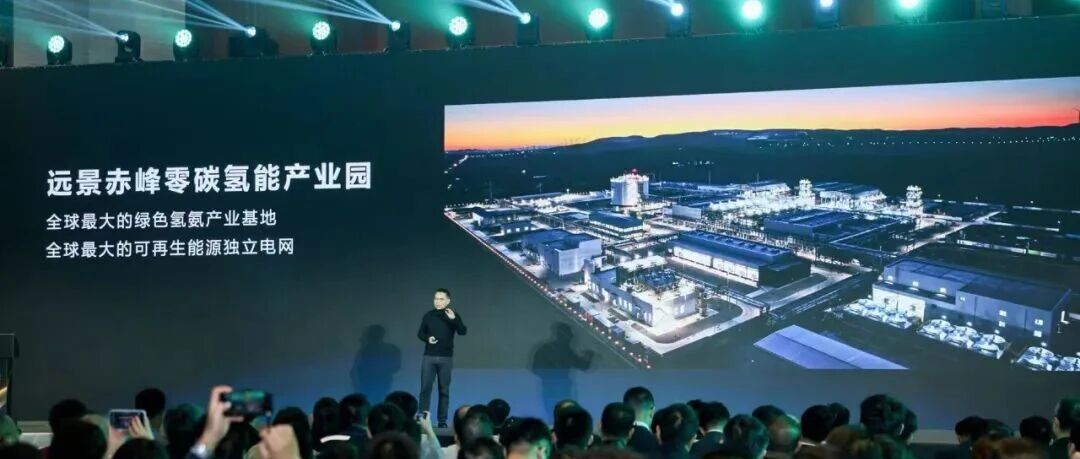
Core Viewpoint - The future energy system will be restructured by physical artificial intelligence, which will serve as the most important experimental field and platform for AI in the next 30 years, as highlighted by Zhang Lei, Chairman of Envision Technology Group [1]. Group 1: AI Power System Development - Envision Technology has developed an AI power system to support the global clean energy transition, leveraging its deep expertise in the renewable energy sector [2]. - The AI power system integrates the "Envision Tianji" meteorological model and the "Envision Tianshu" energy model, enhancing capabilities in planning, forecasting, scheduling, and operation [2][5]. Group 2: Applications and Benefits - The AI power system offers high-precision forecasting with minute-level resolution for wind and solar resources, and it ensures power supply-demand balance while reducing operational costs through intelligent scheduling [5]. - It has broad applications, including hybrid power stations, off-grid systems, and zero-carbon industrial parks, providing economical, stable, and green power solutions for various industries [5]. Group 3: Zero-Carbon Hydrogen Energy Industrial Park - The Envision Chifeng Zero-Carbon Hydrogen Energy Industrial Park is a model for the successful application of the AI power system, with a planned capacity of 1.52 million tons, utilizing abundant wind and solar resources [5][7]. - The park has achieved a commercial closed-loop from production to refueling, successfully completing the world's first green ship fuel ammonia refueling operation [5]. Group 4: Government Support and Policy Environment - The success of the Chifeng Zero-Carbon Park is supported by national and local government policies that encourage the development of renewable energy and zero-carbon parks, including financial subsidies and tax incentives [9][10]. - The park effectively reduces the carbon footprint of products, aiding companies in meeting international carbon tariff requirements [10]. Group 5: Replicability and Economic Impact - The successful practices of the Chifeng Zero-Carbon Park provide valuable experience for constructing zero-carbon parks in other regions, emphasizing the need for tailored strategies based on local conditions [12]. - Green electricity direct connection significantly lowers electricity costs for enterprises, enhancing their market competitiveness and providing a "green passport" for international markets [12][13].
关于举办绿电直连及零碳园区创建研讨培训的通知丨系列培训
中国能源报· 2025-11-13 03:49
Core Viewpoint - The article emphasizes the importance of low-carbon transformation in industrial parks and the promotion of green electricity consumption, highlighting the establishment of zero-carbon parks as a key initiative supported by national policies [2]. Group 1: Policy and Initiatives - The "14th Five-Year Plan" aims to establish around 100 national-level zero-carbon parks, with provinces actively applying for national and provincial-level zero-carbon park construction [2]. - The government is accelerating the increase of green electricity consumption in key energy-consuming units and industries, encouraging the creation of green electricity factories and parks that achieve 100% green electricity consumption [2]. Group 2: Training Details - A seminar and training on green electricity direct connection and zero-carbon park creation will be held from November 21 to 22 in Chengdu, organized by China Energy News and supported by the China Energy Economic Research Institute [3][4]. - The training targets various stakeholders, including power companies, renewable energy enterprises, energy service companies, and professionals interested in zero-carbon park construction [3]. Group 3: Course Modules - The training will cover topics such as green electricity direct connection policies, project pricing mechanisms, planning and design points, investment and returns, and the application of green electricity in zero-carbon parks [5]. - It will also address the evaluation index system for zero-carbon parks, construction status, investment analysis, key technology paths, and certification processes [5]. Group 4: Financial Information - The training fee is set at 3,900 yuan per person, excluding transportation and accommodation costs, with payment options available through bank transfer [5].

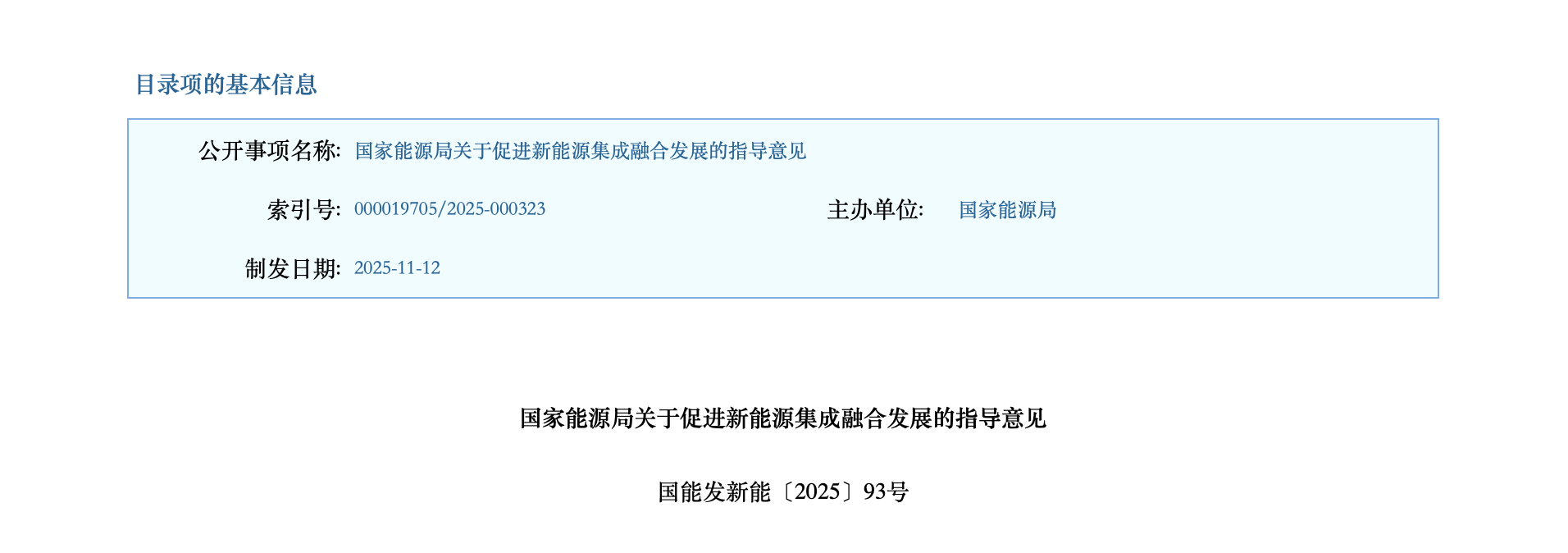
新能源升级版来了!国家能源局发文 集成融合发展撬动新产业
2 1 Shi Ji Jing Ji Bao Dao· 2025-11-12 15:45
Core Viewpoint - The National Energy Administration issued guidelines to promote the integrated development of renewable energy, aiming to enhance resilience, efficiency, and sustainability in the sector, marking a new phase in China's renewable energy development [1][4]. Group 1: Integrated Development - The guidelines emphasize the need for a shift from isolated operations to integrated development in the renewable energy sector, addressing challenges such as system consumption pressure and land resource constraints [4]. - By 2030, integrated development is expected to become a key approach in renewable energy, significantly enhancing reliability and market competitiveness, thus supporting a comprehensive green transition in the economy [4]. - The framework outlined in the guidelines focuses on "horizontal integration" to enhance energy supply reliability, "vertical integration" to convert resource advantages into industrial and economic benefits, and "forward-backward integration" to better link production and consumption of renewable energy [4]. Group 2: Collaboration with Emerging Industries - The guidelines highlight the importance of smart technology in fostering new industrial ecosystems, particularly through the integration of renewable energy with computing power infrastructure [6]. - The document encourages the development of "zero-carbon parks" through green electricity direct connections and smart microgrids, aiming to reduce carbon emissions and enhance international competitiveness of renewable energy products [6]. - It supports the establishment of new business models such as green certificate trading and the development of low-carbon parks that promote multi-energy complementarity and high self-sufficiency [6]. Group 3: Diversified Non-Electric Utilization - A significant focus of the guidelines is on promoting diversified non-electric utilization of renewable energy, particularly in sectors like transportation, chemicals, and textiles, where electricity consumption is relatively low [7][8]. - The guidelines advocate for enhancing the collaborative development of wind, solar, and hydrogen storage, as well as establishing comprehensive industrial bases for green hydrogen and ammonia [7][9]. - It emphasizes the need for technological support and the exploration of application scenarios in hydrogen-based energy and renewable heating, aiming to reduce reliance on the main power grid [8][9].