
基层治理

Search documents
人民日报关注|江苏昆仑新能董事长刘怀平:更好平衡兼顾数据安全与流通
Sou Hu Cai Jing· 2025-12-03 23:29
Group 1 - The core viewpoint emphasizes the need to balance data security and data flow, highlighting that data security and utilization are complementary rather than opposing [1] - Establishing a clear and actionable set of rules is crucial for ensuring data security, particularly in key sectors like industry and energy [1] - The proposal includes the development of practical guidelines for data classification and protection requirements based on the importance of the data [1] Group 2 - Legislative efforts are being made to support emerging industries, particularly in the context of artificial intelligence and semiconductors, reflecting the needs of enterprises [6] - The Guangdong Province has adopted suggestions to encourage technological innovation and fair competition, demonstrating a proactive legislative approach [6] - Local legislative contact points are actively engaging with small and medium-sized enterprises to gather feedback and address their concerns [6][8] Group 3 - The establishment of legislative contact points has expanded significantly, with over 11,500 supporting units and a service network covering approximately 186 million people [10] - The focus on grassroots governance is evident, as contact points are integrating their work with local community needs and legal education [10] - The recent legislation in Shaanxi Province aims to protect wild birds, marking a significant step in environmental law and community involvement in conservation efforts [12][14]

多地推进体育运动融入基层治理 全民健身丰富社区生态(体育大看台)
Ren Min Ri Bao· 2025-12-03 23:06
Core Viewpoint - The integration of sports into community life enhances public health, fosters community governance, and enriches the social fabric, leading to a more vibrant community life. Group 1: Community Sports Initiatives - In Jiangsu's Yonglian Village, a strong sports culture has developed, with activities like tug-of-war, badminton, and basketball attracting community participation and boosting local tourism and economy, generating direct economic benefits of 186,000 yuan from a local tug-of-war event [1][2] - The Yonglian Sports and Cultural Center, covering 8,000 square meters, was renovated to provide various sports facilities, allowing villagers to access sports services at a minimal annual fee [2] Group 2: Elderly Engagement in Sports - In Wuhan's Baibuting Community, sports activities such as Tai Chi and fitness dancing have become integral to the daily lives of elderly residents, fostering a sense of belonging and community spirit [3][4] - The community boasts over 30 self-organized sports teams, with members participating in competitions, enhancing the community's reputation and cohesion [3][5] Group 3: Smart Fitness and Community Feedback - In Sichuan's Tianfu New District, the introduction of a 400-square-meter outdoor smart fitness area has improved residents' exercise experiences, featuring equipment that tracks performance and allows for online competition [6] - Community micro-grid member Rao Min plays a crucial role in connecting residents with community management, reporting maintenance issues and gathering feedback, thus enhancing community engagement and trust [6][7]
南通:“金点子”激活基层治理新动能
Xin Hua Ri Bao· 2025-12-03 21:57
初冬时节,寒意袭人,海安市星海社区的"港经亭"里却暖意融融。居民们正围坐一起,讨论着小区环境 整治的实施方案,大家你一言我一语,逐渐达成了共识…… 群众的智慧,是基层治理创新的源头活水;基层的活力,则关乎现代城市发展的底蕴厚度。近年来,南 通市坚持以党建为引领,聚焦群众的身边事、烦心事,积极搭建平台、创新机制、整合资源,引导群众 从"围着看"转变为"一起干",让一个个来自群众的"金点子",转化为破解基层治理难题的"金钥匙",激 活共建共治共享的"一池春水"。 "好通议事"合力画好"最大同心圆" 让"金点子"落地成景,既要鼓励社区居民乐于"出声",也要汇聚辖区内多方力量共同"出手"。在南通市 崇川区龙湖佳苑社区,一条贯穿中轴线的"最美回家路",让居民一走进社区就能感受到温馨的"回家"氛 围——这正是社区依托多方协商议事机制,成功落地的100多件群众"关键小事"之一。 "我们构建起由社区党组织引领,业委会、物业公司、党员骨干、热心业主等共同组成的协商共治平 台,定期开展会商,集众人之智、成众人之事,解决了小区电动车充电难、楼道乱堆乱放等许多热点难 题。"龙湖佳苑社区党总支书记徐小燕介绍,"我们还在社区开设了孝老爱 ...
从翻台账到秒查询 呼和浩特网格员绘方寸地图藏民生答卷
Zhong Guo Xin Wen Wang· 2025-12-02 10:09
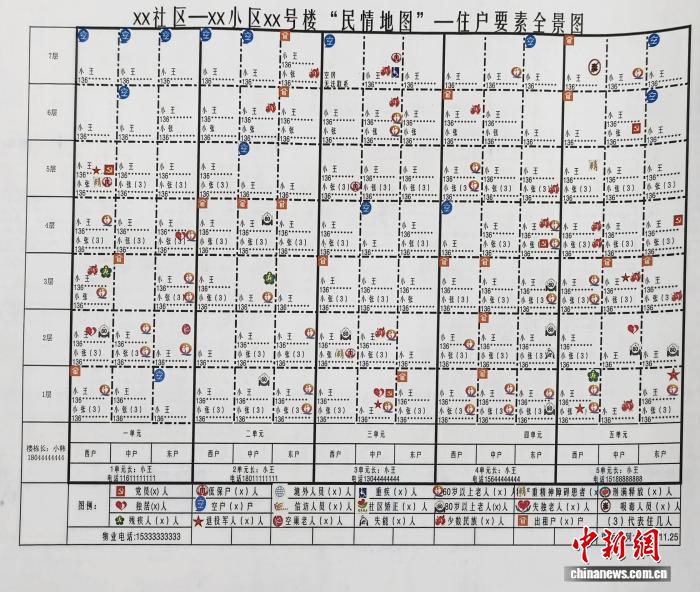
中新网呼和浩特12月2日电 题:从翻台账到秒查询 呼和浩特网格员绘方寸地图藏民生答卷 中新网记者 张林虎 "以前找居民信息得翻厚厚的台账,现在一张地图在手,谁家的情况都能秒查到。"呼和浩特市咱家社区 网格员陈金荣指着墙上的《咱家社区"民情地图"——住户要素全景图》,语气里满是自豪。 这张由她创新绘制的"民情地图",将抽象的居民信息转化为直观的可视化图表,让基层治理从粗放式转 向精准化,为当地的社区服务注入了温暖活力。 图为陈金荣绘制的"民情地图"。 中新网记者 张林虎 摄 绘图破治理难题 基层网格工作繁杂,居民信息管理曾是困扰社区工作者的难题。"过去全靠纸质户卡和电子表格,紧急 情况下找个信息得翻半天,走访时也没法快速掌握住户情况。"陈金荣从事网格员工作多年,深知信息 不畅带来的不便。 为破解这一困境,陈金荣琢磨着将零散的居民数据整合起来,推出了"民情地图"工作法。 在咱家社区的"民情地图"上,小区楼栋结构、单元分布、住户信息一目了然。陈金荣用黑色粗实线勾勒 楼栋轮廓,虚线划分户室网格,每个户室框内清晰标注着住户姓名和联系电话。 更贴心的是,陈金荣设计了20种形象化图例,分别对应党员、独居老人、残疾人、退役军 ...
新华网视评|别让面具遮住了责任
Xin Hua Wang· 2025-12-02 03:42
Core Viewpoint - The incident involving community officials in Wenzhou, Zhejiang, who allegedly falsified attendance records, highlights issues of work attitude and governance at the grassroots level, emphasizing the need for accountability and genuine service to the public [1] Group 1: Governance Issues - The act of using facial masks for attendance fraud reflects a deeper problem of work ethics among community officials, who are expected to be reliable and present for their constituents [1] - Community workers are seen as the frontline of governance, directly impacting residents' sense of happiness and security, thus their integrity is crucial [1] Group 2: Call for Accountability - There is a strong public expectation for community officials to be diligent and responsible, and any form of deception undermines this trust [1] - Authorities are urged to investigate and address the issue promptly to restore faith in community governance and ensure that officials are genuinely fulfilling their duties [1]

学习贯彻党的二十届四中全会精神丨“银发和事佬”激活基层治理末梢神经
He Nan Ri Bao· 2025-12-01 23:39
Core Viewpoint - The establishment of the "Silver-Haired Mediators" volunteer service team in Juqiao Town effectively addresses local conflicts and enhances community harmony through the involvement of respected elderly individuals [1][2]. Group 1: Community Conflict Resolution - Juqiao Town faces challenges in rural governance due to numerous construction projects and land requisitions, leading to potential conflicts [1]. - The "Silver-Haired Mediators" team consists of retired officials, party members, and teachers who are selected based on their political reliability and community respect [1]. - The town implements a "pre-mediation, central petition, judicial guarantee, and platform operation" model to streamline conflict resolution, ensuring that residents only need to visit one location for assistance [1]. Group 2: Mediation Success Stories - Mediators like Xiong Jinxiu share numerous successful mediation stories, including helping dropouts return to school and reconciling family disputes [2]. - The mediators utilize three key skills: "foot power" for community engagement, "eye power" for discernment, and "heart power" for persuasion [2]. - The "Silver-Haired Mediators" have developed a five-step working method to enhance their mediation effectiveness, contributing to improved neighborly relations and a harmonious rural atmosphere [2]. Group 3: Future Governance Initiatives - The local government plans to further implement the spirit of the 20th National Congress, encouraging community participation in social governance to modernize grassroots governance systems [2]. - The ongoing efforts of the "Silver-Haired Mediators" reflect the modernization of the national governance system at the grassroots level, emphasizing the importance of community harmony and conflict resolution [2].
瞭望·治国理政纪事|“后陈经验”日进日新
Xin Hua She· 2025-12-01 09:25
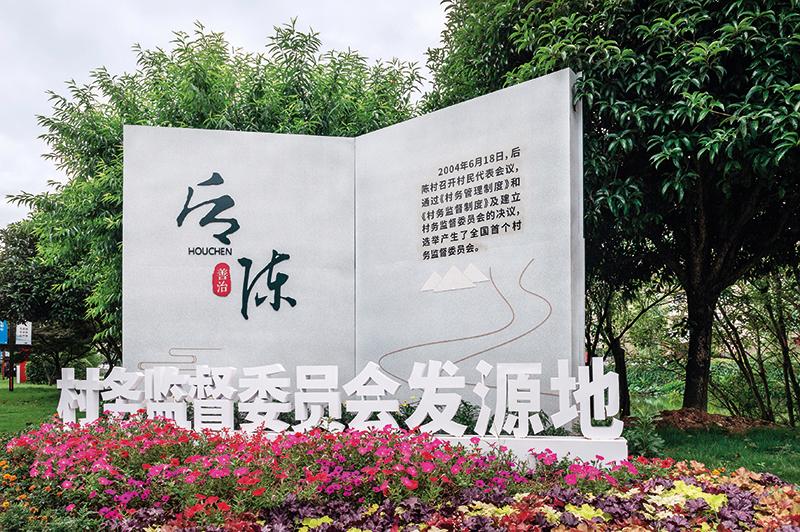
Core Points - The "Hou Chen Experience" represents a pioneering model of grassroots democratic supervision in rural governance, initiated in Hou Chen Village, Zhejiang Province, and is now being promoted across the country [1][3][4] - This model emphasizes the establishment of village supervisory committees to ensure comprehensive oversight of village affairs, enhancing transparency and accountability [1][5][11] Group 1: Background and Development - Hou Chen Village faced a trust crisis due to financial mismanagement and misconduct among officials, prompting the community to explore new paths for democratic supervision [4][8] - The first village supervisory committee was established on June 18, 2004, marking a significant innovation in rural governance and leading to improved management and conflict resolution [4][9] - The model gained national attention and was incorporated into the legal framework with the revision of the Village Committee Organization Law in 2010 [4][5] Group 2: Mechanisms and Implementation - The village supervisory committee is elected by the villagers and has the authority to attend village meetings, handle complaints, audit financial documents, and call for meetings to resolve supervisory issues [1][9][11] - The committee's oversight extends beyond financial matters to include decision-making processes, project management, and the implementation of agricultural policies [11][12] - Digital platforms have been introduced to enhance the efficiency of supervision, covering over 258 administrative villages and managing significant financial transactions [12][20] Group 3: Impact and Recognition - The "Hou Chen Experience" has significantly improved village governance, leading to increased satisfaction among villagers and a reduction in complaints [10][12] - This model has been recognized as a successful example of "whole-process people's democracy," contributing to rural revitalization and governance modernization [1][11][29] - The experience has inspired similar initiatives across various regions, demonstrating its adaptability and effectiveness in enhancing grassroots governance [18][20][24]
杨晋柏参加省委八届八次全会分组讨论
Hai Nan Ri Bao· 2025-12-01 01:21
Group 1 - The core viewpoint emphasizes the importance of implementing the spirit of the conference effectively and thoroughly [2] - The discussions focused on key documents related to the construction of the Hainan Free Trade Port and the 15th Five-Year Plan, highlighting their ideological, strategic, and practical significance [2][3] - There is a strong emphasis on enhancing tropical characteristic efficient agriculture, promoting the integration of technological and industrial innovation, and increasing farmers' income [3] Group 2 - The need for risk prevention and safety assurance is underscored, with a focus on political security and the assessment of key risks such as smuggling [3] - The responsibility for party governance and police management is highlighted, aiming to purify the political environment and ensure a loyal and accountable law enforcement team [3] - The goal is to create a high-level open environment that is among the safest regions in the country [3]
从“抢车位”到“安心停”,余杭闲林以清廉建设打通便民服务“最后一公里”
Hang Zhou Ri Bao· 2025-11-28 02:28
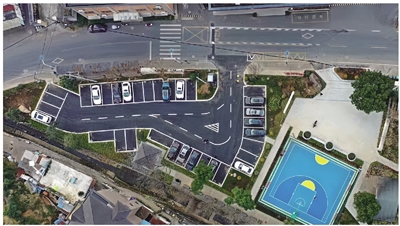
Core Insights - The construction of a new parking lot in the Sunjiawu community has significantly improved parking convenience for residents, alleviating previous issues of parking shortages and disputes among neighbors [2] - The community engaged residents in the planning process through various platforms, ensuring that the project addressed local needs and utilized available resources effectively [2] - The project has added 33 standard parking spaces, with plans to add an additional 145 spaces across three more parking projects by the end of the year [2] Community Engagement and Oversight - The Sunjiawu community is implementing a "three openness and one supervision" mechanism to enhance transparency and community involvement in the parking lot project [2] - The community's supervisory body is actively monitoring the project to ensure that resident feedback is incorporated throughout the construction process [3] - The initiative aims to transform residents from passive observers into active participants and overseers of community projects [3] Future Management and Governance - The community is exploring a resident self-management model for the parking lot to ensure effective ongoing management [3] - The local governance aims to integrate integrity and transparency into community service improvements and public projects [3] - The goal is to ensure that all community projects reflect fairness and justice, aligning with the principle of responding to residents' needs [3]
【韩城】筑巢暖“新” 一路同行
Shan Xi Ri Bao· 2025-11-26 22:44
11月18日,韩城市新城街道梅苑社区暖"新"驿站里暖意融融:外卖骑手捧着热水杯休息,志愿者为 几位小哥讲解医保政策,党员骨干围着社区治理台账与大家交流……这个集休憩、补给、议事于一体的 阵地,凝聚起基层治理合力。 暖"新"驿站成温馨港湾 目前,韩城已建成10个标准化暖"新"驿站,各驿站因地制宜打造各自的特色品牌。 精准施策做好服务 暖"新"服务的核心,是解决实际难题。 金城街道惠民居社区是韩城市移民搬迁规模较大的社区,下辖10个城市居民小区,共有1.3万余 人。"小区实行人车分流,电动车不让进。但是,从小区门口走到最里面的楼栋需要15分钟,遇上高峰 期,送餐超时是常事。"前段时间,骑手杨胜在驿站休息时,无意间向社区工作人员倾诉的困扰,被详 细记录在"新就业群体诉求台账"上。 "以前,跑累了只能蹲在路边啃馒头。现在,驿站里热水、空调、急救箱样样齐全,连换电都不用 等。"外卖骑手杨胜拧开保温杯的瞬间,热气模糊了护目镜。 梅苑社区暖"新"驿站是韩城市精准服务新就业群体的首个试点阵地。"这些小哥常年在街头奔波, 却没有固定的服务阵地,有的曾在摩托车上待单到深夜。"梅苑社区工作人员王震回忆,2023年初,社 区调研时发 ...