
新能源消纳

Search documents
上海、浙江、福建、重庆100%消纳!
中国能源报· 2025-10-09 03:55
Core Insights - The article discusses the national renewable energy grid consumption situation as of August 2025, released by the National Renewable Energy Consumption Monitoring and Early Warning Center [1]. Summary by Sections Renewable Energy Utilization Rates - The article provides detailed statistics on electricity utilization rates and photovoltaic (PV) utilization rates across various regions in China for the first eight months of 2025 and specifically for August [2]. - Notable regions with high electricity utilization rates include: - Beijing: 100.0% in August and 90.3% for the first eight months - Shanghai: 100.0% in both August and the first eight months - Jiangsu: 100.0% in August and 97.8% for the first eight months [2][3]. - The article highlights that several regions, such as Henan and Hubei, have shown significant utilization rates, with Henan reaching 99.9% in August and 96.8% for the first eight months [2]. Regional Performance - The article lists various provinces and their respective electricity and PV utilization rates, indicating a generally high performance across the board, with most regions achieving above 90% utilization [2][3]. - Specific mentions include: - Shandong: 99.8% in August for electricity utilization - Inner Mongolia: 95.8% in August for electricity utilization [2]. Policy Context - The data is released in accordance with the National Energy Administration's guidelines aimed at promoting rational investment and orderly construction in the renewable energy sector [1][3].


国内首座500千伏全自主可控新一代变电站在辽投运
Liao Ning Ri Bao· 2025-10-09 01:23
Core Insights - The first fully domestically controlled 500 kV substation in China, the Tieling Power Transmission and Transformation Project, has officially commenced operation, marking a significant step in Liaoning's energy transition and new power system construction [1][2] Group 1: Project Overview - The Tieling substation is located in a resource-rich area for wind and solar energy in northern Liaoning, contributing to the province's renewable energy development [1] - The project includes the 500 kV Tieling-Shiling line and the 500 kV Xiquan substation, with a total line length of 320 kilometers and the construction of 825 new towers [1] - The substation is equipped with two 1.2 million kVA transformers and will have 2 outgoing lines at 500 kV and 5 outgoing lines at 220 kV [1] Group 2: Environmental Impact - The project is expected to increase clean energy consumption by over 3 billion kWh annually, equivalent to a reduction of 900,000 tons of standard coal consumption [1] - It will meet the grid connection needs of over 2 million kW of wind and solar power generation, significantly promoting renewable energy construction in northern Liaoning [1] Group 3: Technological Innovation - The Xiquan substation has successfully applied 16 types of original technological achievements, addressing challenges related to the economic efficiency, stability, and safety of renewable energy grids [2] - This project has been recognized as a technology demonstration project by the State Grid Corporation of China and serves as a model for similar regions to solve renewable energy consumption issues [2]

单次可储存5万度电!广西一钠离子电池储能电站再扩容
Xin Hua Wang· 2025-10-08 14:28
Core Viewpoint - The expansion of the sodium-ion battery energy storage station in Wuming District, Nanning, Guangxi, has officially commenced operations, increasing its capacity from 10 MWh to 50 MWh, thereby enhancing its role in renewable energy consumption and grid regulation [1][3]. Group 1: Project Expansion - The second phase of the energy storage station has been completed, increasing the total capacity to 50 MWh, which can store 50,000 kWh of green electricity [1][3]. - The upgraded system utilizes newly developed 240 Ah sodium-ion batteries, which represent a 14% increase in capacity compared to the first phase [3]. Group 2: Operational Impact - Since its launch in May 2024, the first phase has stored and released over 1.3 million kWh of green electricity, playing a significant role in grid regulation and renewable energy consumption [3]. - The expanded station can charge and discharge up to 600 times annually, contributing an additional 30 million kWh of renewable energy consumption, equivalent to reducing coal consumption by 9,000 tons and cutting CO2 emissions by 13,500 tons [3]. Group 3: Technological Significance - Sodium-ion batteries are emerging as a crucial supplement in the energy storage technology matrix due to their unique advantages, supporting the broader adoption of renewable energy [3].
地上逛吃、地下供电 西安商圈下藏着一个“电力大拿”
Yang Shi Xin Wen Ke Hu Duan· 2025-10-06 17:01
Core Insights - China's energy sector is rapidly transitioning to green energy during the "14th Five-Year Plan," with a focus on building a robust power grid that integrates renewable energy sources [1][3] - The province of Shaanxi has achieved a renewable energy consumption rate of over 90% for five consecutive years, significantly contributing to its trillion-yuan economy [1] - The construction of advanced infrastructure, such as the underground 330 kV substation and the 750 kV transmission project, is enhancing the efficiency and reliability of electricity supply in the region [1][3] Energy Infrastructure Development - Shaanxi has completed 75 projects during the "14th Five-Year Plan," improving the electricity distribution network and ensuring a stable power supply [1] - The 750 kV transmission project spanning 1,271 kilometers will enable rapid delivery of green electricity from northern Shaanxi to 40 million households in the central region [1][3] - The Zhen'an pumped storage power station is designed to optimize energy storage and generation, allowing for better management of renewable energy sources [1][2] Environmental Impact - The Zhen'an pumped storage power station can absorb surplus wind and solar energy, saving approximately 11.7 million tons of standard coal annually [3] - The high-voltage direct current projects in Shaanxi are expected to save 18 million tons of standard coal per year for the central region [3] - The largest "green battery" in Northwest China is projected to reduce carbon dioxide emissions by 305,000 tons annually [2]
粤港澳大湾区抽水蓄能电站在运规模突破1000万千瓦
中国能源报· 2025-10-03 07:08
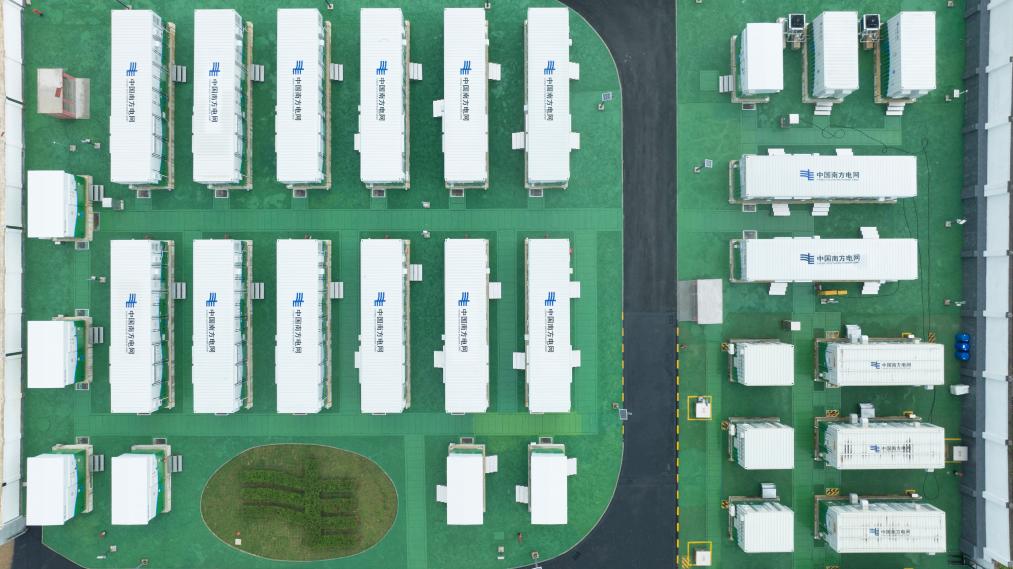
Core Viewpoint - The operational scale of pumped storage power stations in the Guangdong-Hong Kong-Macao Greater Bay Area has surpassed 10 million kilowatts, marking a significant milestone in energy management and renewable energy integration in the region [1][5]. Group 1: Project Developments - The second unit of the Meizhou pumped storage power station's second phase has been put into operation, with a capacity of 300,000 kilowatts, contributing to a total operational capacity of 10.28 million kilowatts in the Greater Bay Area, which is approximately one-sixth of the national total [1]. - The new unit is now participating in the Southern regional electricity market, capable of absorbing 1.8 million kilowatts of new energy generation [1]. Group 2: Energy Regulation Impact - As of the end of September this year, six pumped storage power stations in cities like Guangzhou, Shenzhen, and Yangjiang have collectively adjusted electricity supply by 326.5 billion kilowatt-hours, equivalent to the electricity demand of 5.5 million residential users over 30 years [5]. Group 3: Future Prospects - The second phase of the Meizhou pumped storage project is expected to be fully operational by the end of the year, aiming for complete domestic production of the entire pump storage unit's chip-level components [3].

粤港澳大湾区抽水蓄能电站在运规模突破1000万千瓦
Huan Qiu Wang· 2025-10-01 23:51
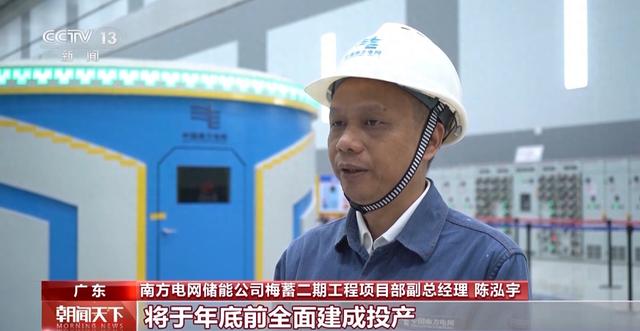
来源:央视新闻客户端 记者从南方电网了解到,今天(2日),随着梅州抽水蓄能电站二期工程第二台机组投产发电,粤港澳 大湾区抽水蓄能电站在运规模突破1000万千瓦。 截至今年9月底,广州、深圳、阳江等6座抽蓄电站已累计为粤港澳大湾区调节电量3265亿千瓦时,相当 于550万居民用户30年的用电需求。 南方电网储能公司梅蓄二期工程项目部副总经理 陈泓宇:梅蓄电站二期工程将于年底前全面建成投 产,将实现抽蓄机组的整机芯片级国产化。 梅州抽水蓄能电站二期工程第二台机组的装机容量为30万千瓦,随着它的成功启动,粤港澳大湾区抽水 蓄能在运规模达到1028万千瓦,约为全国在运总量的六分之一。与此同时,新投产机组也已进入南方区 域电力市场参与交易,可以消纳180万千瓦新能源发电量。 ...
2025新能源产业创新合作暨第十五届新能源企业500强论坛成功举办
中国能源报· 2025-09-28 08:57
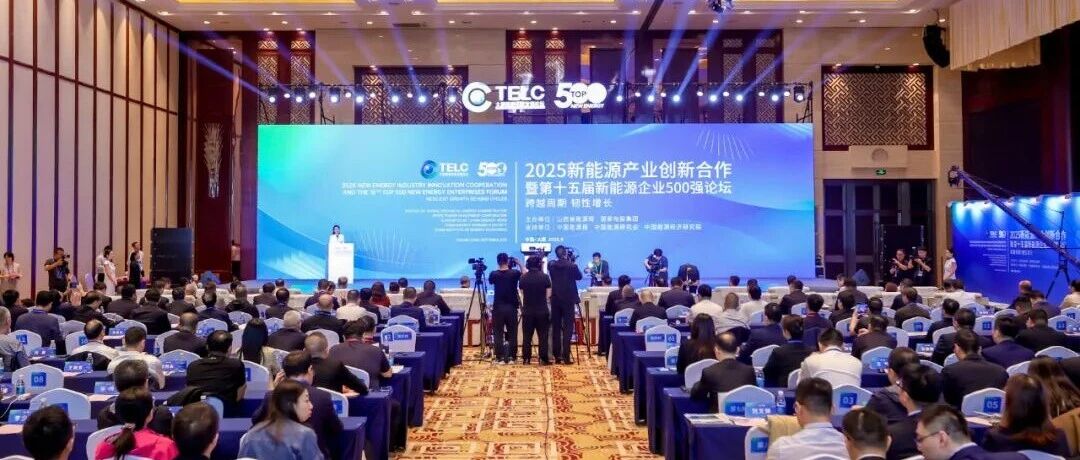
Core Viewpoint - The forum held in Shanxi focused on the sustainable and high-quality development of the renewable energy industry, addressing challenges such as cyclical fluctuations and intensified competition [2][4]. Group 1: Industry Development and Achievements - China has made significant technological breakthroughs in sectors like electric vehicles, wind, solar, and smart grids, achieving world-leading levels in battery technology and solar conversion efficiency [4]. - As of July 2023, China's renewable energy installed capacity reached 2.171 billion kilowatts, accounting for nearly 60% of the total installed capacity, with wind and solar power surpassing thermal power for the first time [4]. - According to the "500 Strong Report," seven out of the top ten global renewable energy companies are Chinese, indicating strong domestic and international market performance [5]. Group 2: Challenges and Market Dynamics - The rapid growth of clean energy installations has led to challenges in energy consumption, with policies shifting from scale-driven to application-driven approaches [7]. - The industry is transitioning from simple scale expansion to a focus on quality and efficiency, leading to increased competition among renewable energy companies [8]. - Price wars and international trade barriers are creating significant challenges for companies, impacting profitability and innovation [8]. Group 3: Future Directions and Strategies - Technological innovation is seen as a key driver for overcoming cyclical challenges and avoiding homogenized competition [9]. - Collaboration across the industry is essential, with a focus on creating a cooperative ecosystem that fosters both competition and mutual benefits [9]. - The Chinese government aims for non-fossil energy consumption to reach over 30% of total energy consumption by 2035, with wind and solar capacity projected to increase significantly [9].
宁夏华严第一储能电站:全球最大电网侧分布式模块化储能电站的储能之道
Xin Hua Wang· 2025-09-28 01:39
Core Insights - The article highlights the significance of the Huayan First Energy Storage Power Station in Ningxia, which is positioned as a model for modular distributed energy storage technology and plays a crucial role in China's energy transition strategy [2][4][8]. Industry Overview - The global energy transition has made energy storage a core component of carbon neutrality strategies, with China leading as the largest market for new energy storage applications, accounting for over 40% of global installed capacity [2]. - Ningxia is designated as a national comprehensive demonstration zone for new energy, promoting a "wind-solar-fire-storage integration" policy to foster industry development [2]. Project Details - The Huayan First Energy Storage Power Station, with a capacity of 200MW/400MWh, is set to be the largest distributed modular energy storage station on the grid side globally, officially operational since December 30, 2023 [2]. - The location in Zhongning County, Ningxia, is strategic due to the region's high renewable energy output, exceeding 80% of installed capacity, necessitating enhanced grid regulation capabilities [3]. Operational Efficiency - The station has achieved a cumulative charge and discharge efficiency of nearly 90%, surpassing the industry average of 84%-85% [6]. - Key operational metrics include an online rate of 99.93%, a capacity retention rate of 98%, and a single charge and discharge depth exceeding 98%, all contributing to the station's long-term profitability [6][7][8]. Future Prospects - The energy storage sector is poised for significant growth, with a target of reaching 180 million kilowatts by the end of 2027 as outlined in the newly released "New Energy Storage Scale Construction Special Action Plan (2025-2027)" [9]. - The Huayan First Energy Storage Power Station serves as a benchmark for future projects, emphasizing the importance of translating technical details into energy revenue [8][9].
绿电直连成“十五五”能源转型关键抓手 市场为何没“炸”?
Di Yi Cai Jing· 2025-09-25 14:30
Core Viewpoint - The recent policies regarding direct green electricity connections are seen as a significant breakthrough for promoting renewable energy consumption and meeting EU carbon tariff requirements, following the issuance of the 650 and 1192 documents [1] Group 1: Policy Developments - The 650 document encourages private enterprises to invest in direct green electricity connection projects, while the 1192 document clarifies the pricing mechanism for nearby renewable energy consumption, serving as a crucial supplement to the 650 document [1] - The 1192 document emphasizes a "who benefits, who bears" principle for the costs associated with stable supply services in the electricity system, ensuring equal participation of direct green electricity connections in the electricity market [3] Group 2: Objectives and Benefits - Direct green electricity connections aim to alleviate the pressure on renewable energy consumption at the generation end, reduce electricity costs for users, and assist export enterprises in managing carbon footprints and complying with international green trade regulations [2] - The model is particularly beneficial for high-energy-consuming industries such as data centers, steel, and cement, as it accelerates the green electrification process and reduces reliance on public electricity grids [2] Group 3: Economic Considerations - The new pricing mechanism introduced in the 1192 document is more favorable for renewable energy investors, as it reduces system operation and line loss costs, thereby creating a reasonable price difference for investors [3] - The economic viability of direct green electricity projects is influenced by regional resource endowments and policy differences, necessitating detailed calculations by developers and electricity users [5] Group 4: Implementation Challenges - Despite the promising outlook, the lack of clear operational pathways for direct green electricity connections has resulted in limited market response to the new policies [4] - Significant financial pressures arise from the need for dedicated line construction, and the mismatch in lifecycle between power sources and load enterprises may impact project investment returns [4] - The current policies may have conflicting elements, complicating the decision-making process for renewable energy investors regarding whether to opt for direct connections or grid integration [4][5]
我国电力现货市场建设迈入关键阶段
Jing Ji Ri Bao· 2025-09-25 00:16
Group 1 - The construction of China's electricity spot market has entered a critical stage, with seven provincial-level markets officially operational as of August this year, and six others in trial operation [1] - The spot market serves as a core platform for electricity resource allocation and is crucial for ensuring energy security, with a trading system covering 26 provinces and over 6,000 power generation entities [1] - The inter-provincial spot market has demonstrated its capacity to alleviate supply pressure during peak electricity usage, with a maximum mutual assistance power of 14.32 million kilowatts recorded this summer [1] Group 2 - The guiding role of the spot market in the consumption of renewable energy has begun to show results, with inter-provincial market transactions of renewable energy reaching 7.75 billion kilowatt-hours, accounting for 36.5% of total transactions in the first eight months of this year [2] - Zhejiang's spot market has effectively utilized market price signals to guide users in shifting their electricity usage, achieving a peak load reduction of 3 million kilowatts [2] - The increasing share of renewable energy is significantly altering the operational characteristics of the power system, with negative electricity prices becoming a common issue in regions with high penetration of renewables [2] Group 3 - Future market development should focus on a multi-layered system that includes energy markets, capacity markets, and ancillary service markets to ensure long-term supply capabilities and reasonable returns for flexible resources [3]